
.svg)
%20(1).svg)
%20(3).svg)
Back to articles
20 Best AI Marketing Tools to Grow Your Business in 2026
August 5, 2026
By
Irina Maltseva
Every marketer I know has a graveyard of unused subscriptions.
The AI writing tool from January. The "game-changing" SEO platform from Q2. The automation suite that was going to replace three other tools — and didn't. The result? Bloated stacks, fractured workflows, and a finance team asking pointed questions at the end of the quarter.
Here's the uncomfortable truth: AI has stopped being a differentiator and started being table stakes. The question in 2026 isn't whether to use AI marketing tools — it's which ones actually move the needle and which ones are just burning your budget.
This guide cuts through the noise. I've organized the 20 best AI marketing tools by category so you can skip straight to your biggest bottleneck — whether that's content creation, SEO, outbound sales, or paid advertising. Every tool here earns its place.
Did you know that 73% of B2B buyers now use AI tools like ChatGPT and Perplexity during their research process? Separately, AI search traffic converts at 14.2% compared to Google's 2.8% — making each AI-referred visitor dramatically more valuable than a solely traditional organic one.
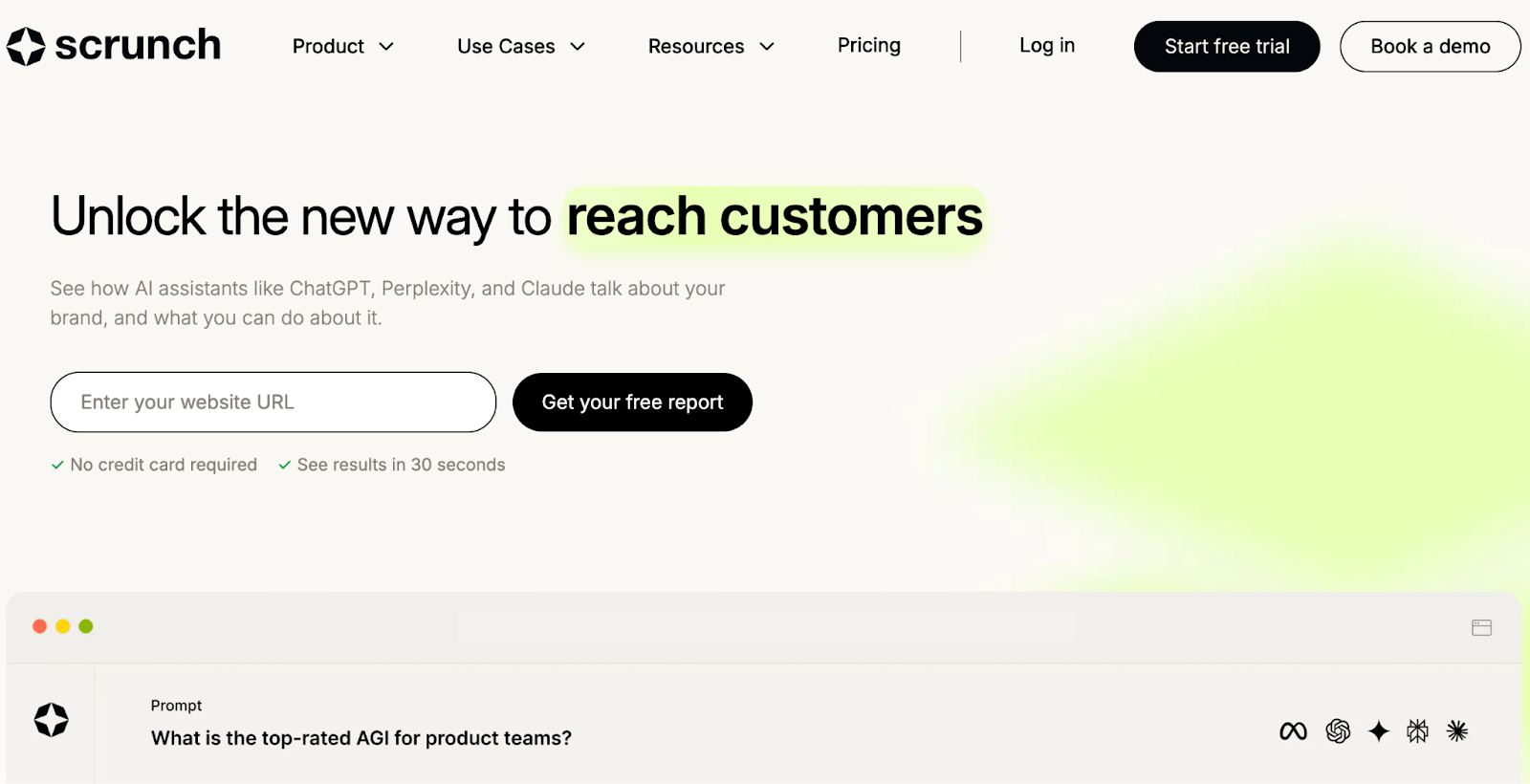
Niche: AI search monitoring and content optimization for LLM citation
Best for: B2B marketing teams, agencies, and enterprises
Founded: 2022
HQ: Vancouver, Canada
When someone asks ChatGPT which CRM to buy or prompts Perplexity for the best project management tools, your traditional keyword rankings are irrelevant. What matters is whether AI systems read your content, trust it, and cite it.
Scrunch is the only platform on this list built specifically for that reality — not as a bolt-on to an existing SEO tool, but from the ground up. Its flagship Agent Experience Platform (AXP) delivers a structured version of your site to LLM crawlers at the CDN layer — stripping excess JavaScript and code that burns through token budgets — without touching the human-facing experience. Your visitors see your full site. AI crawlers see a clean, parseable version engineered to be cited.
Real-time citation monitoring tracks where and how you're referenced across ChatGPT, Perplexity, Claude, Gemini, and Bing Chat — filtered by persona, competitor, model, and trend. The AI-focused site audit surfaces where content is difficult for bots to parse. No SEO incumbent currently replicates this combination.
.svg)
Built AI-first, not retrofitted from an existing SEO platform
AXP optimizes content delivery to AI bots at CDN layer without touching human UX
Real-time citation monitoring across ChatGPT, Perplexity, Gemini, Claude, and Bing Chat
SOC 2 Type II, RBAC, API access, and multi-brand management for enterprise teams
.svg)
Pricing starts high — built for teams with a clear AEO mandate
Overkill if your entire strategy is Google optimization
Pricing: From $250/month
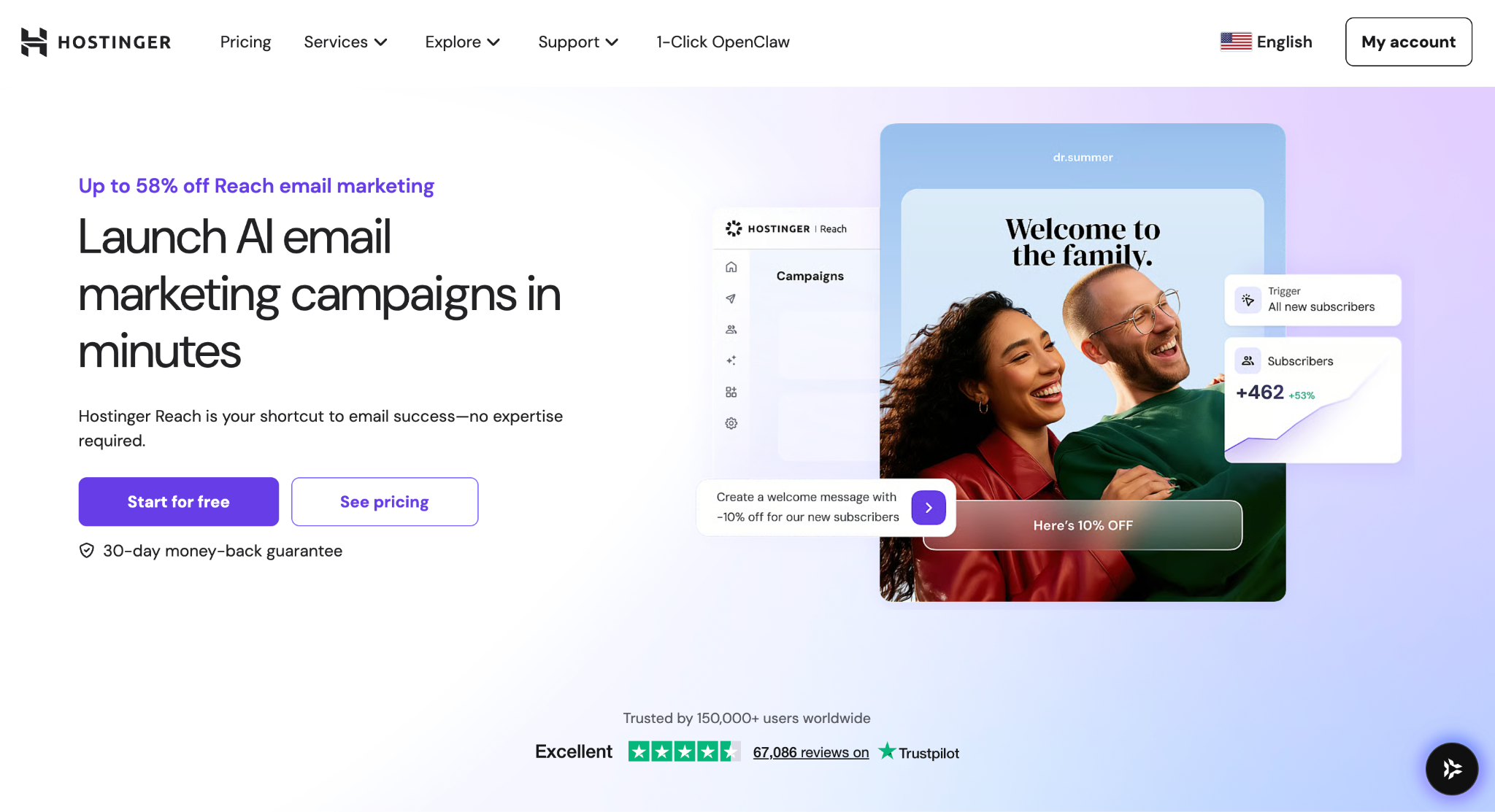
Niche: AI-powered email marketing for small businesses and creators
Best for: Solo entrepreneurs, creators, and small teams who want professional campaigns without the technical setup
Founded: 2025
HQ: Vilnius, Lithuania
Most email tools assume you already know what you're doing. Hostinger Reach doesn't. Describe your campaign in plain language – a product launch, a weekly newsletter, a seasonal offer – and the AI email template creator generates a ready-to-send, mobile-friendly email with content, layout, and design already in place. Your brand colors, logo, and fonts are saved once and applied automatically from that point forward.
The AI-powered form builder handles list growth the same way: generate a branded signup form from a prompt, customize it, and embed it anywhere with a few lines of code. Contacts are tagged automatically on submission. If you use Hostinger Website Builder, form submissions sync in real time. WordPress users connect via the Reach plugin, which works with Contact Form 7 and WPForms. Running a WooCommerce store? Reach automatically collects customer contact details from every order and syncs them directly – then puts that data to work with targeted ecommerce campaigns. Segmentation is AI-driven too – describe the audience you want to reach in natural language and Reach builds the group based on contact details and activity.
Deliverability is handled automatically. Reach configures SPF, DKIM, and DMARC records without any manual setup, and every template ships CAN-SPAM and GDPR compliant by default. For teams already in the Hostinger ecosystem, setup takes one click. For everyone else, it still takes minutes.
AI generates complete emails – content, layout, and design – from a single prompt
AI form builder grows your list without third-party tools
Automatic SPF, DKIM, and DMARC setup for inbox deliverability
Free plan available with 24/7 support included on all tiers
Currently limited third-party integrations outside the Hostinger ecosystem
Newer platform – some advanced features still rolling out
Pricing: Free (100 subscribers, 200 emails/month) / paid plans from $1.99/month
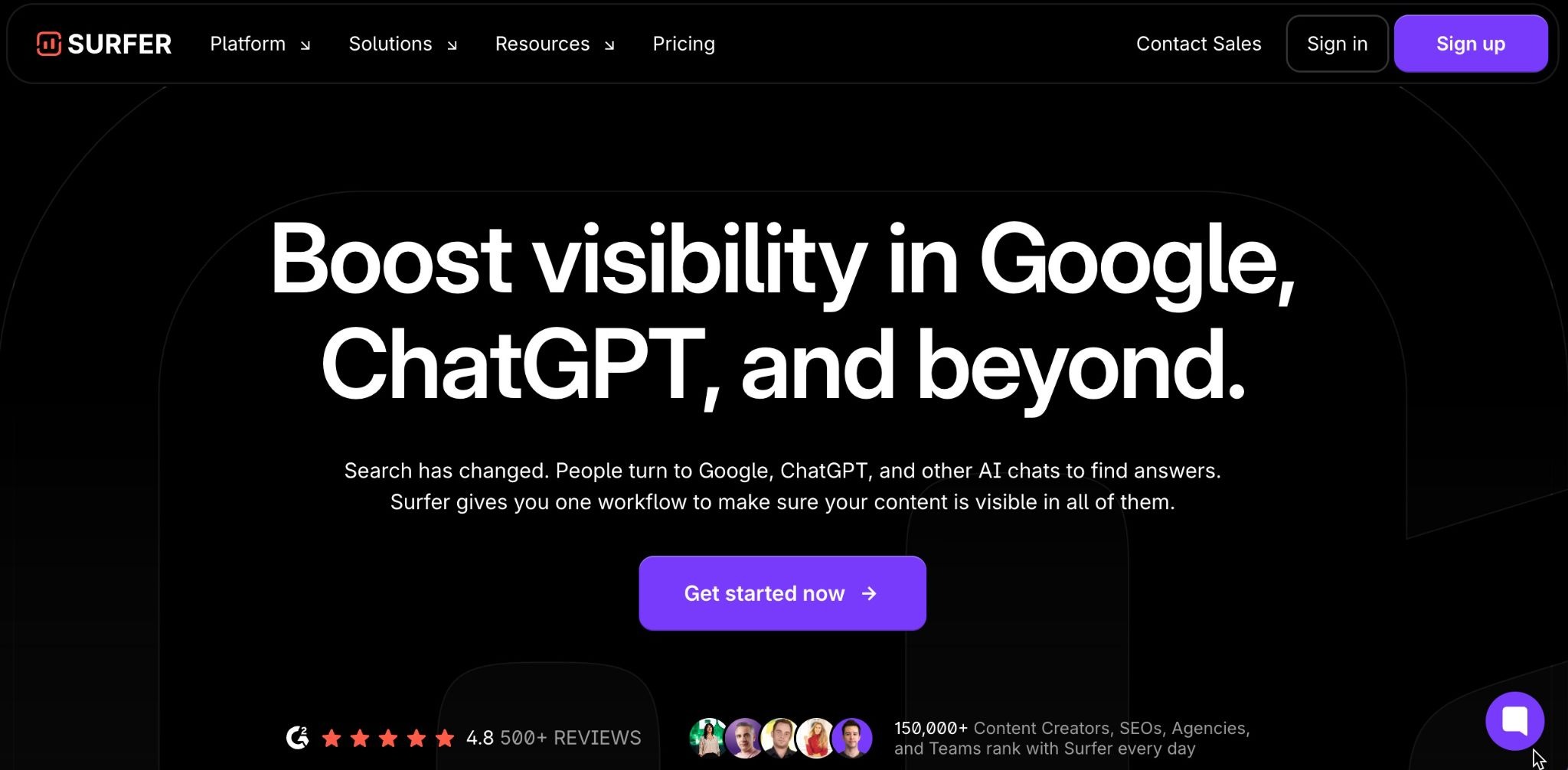
Niche: SEO content optimization
Best for: SEO specialists, content marketers, and agencies
Founded: 2017
HQ: Wrocław, Poland
Surfer does one thing exceptionally well: it tells you exactly what your content needs to rank, in real time, as you write it.
The Content Editor scores your draft against top-ranking competitors using NLP-based term analysis and keyword density signals. The SERP analyzer reverse-engineers what's working on page one. The content planner maps topical clusters so your entire strategy hangs together.
AI-generated outlines and NLP-based term suggestions have sharpened significantly in recent updates, reducing the research-to-draft time considerably. Native Jasper and Google Docs integrations make it a natural pairing for teams running content at volume. Shopify, FedEx, and Viacom are among its established clients.
Real-time content scoring as you write
Deep SERP and competitor analysis
Native integration with Jasper and Google Docs
Trusted by Shopify, FedEx, and Viacom
Expensive for solo users or small budgets
Learning curve for new SEO practitioners
Pricing: From $99/month
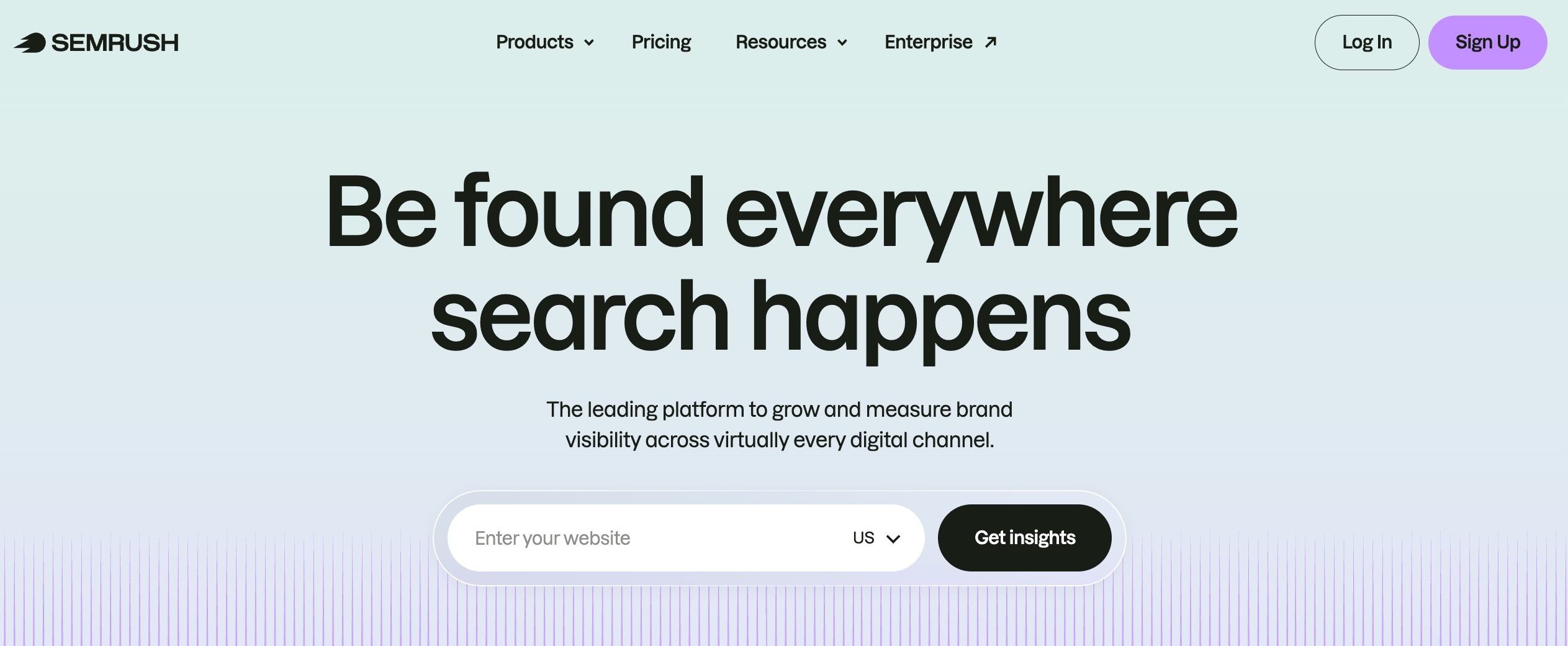
Niche: AI visibility and brand monitoring
Best for: In-house marketing teams and agencies tracking AI search presence
Founded: 2008
HQ: Boston, U.S.
The AI Visibility Toolkit from Semrush tracks your brand mentions across ChatGPT, Gemini, Perplexity, and Google AI Overviews — with sentiment analysis, prompt research, daily ranking updates, and an AI site audit that flags content AI systems are likely to skip.
At $99/month standalone, it's an accessible entry point into answer engine optimization (AEO) for teams not ready to commit to the full Semrush One plan. Coverage spans eight regions. The base plan limits you to one domain — a real constraint for agencies — but as an entry-level AI visibility tracker, it's one of the most practical options available.
Tracks brand presence in ChatGPT, Gemini, and Perplexity
Prompt research and daily ranking updates
Available standalone without a full Semrush subscription
Covers 8 regions, including the US, UK, and Japan
$99/month is steep for smaller teams
Limited to 1 domain on the base plan
Pricing: $99/month standalone / $199/month Semrush One
Nowadays, 93% of marketers who use AI say their primary reason is to create content more quickly. Among them, AI-driven campaigns deliver 22% higher ROI on average than traditional methods.
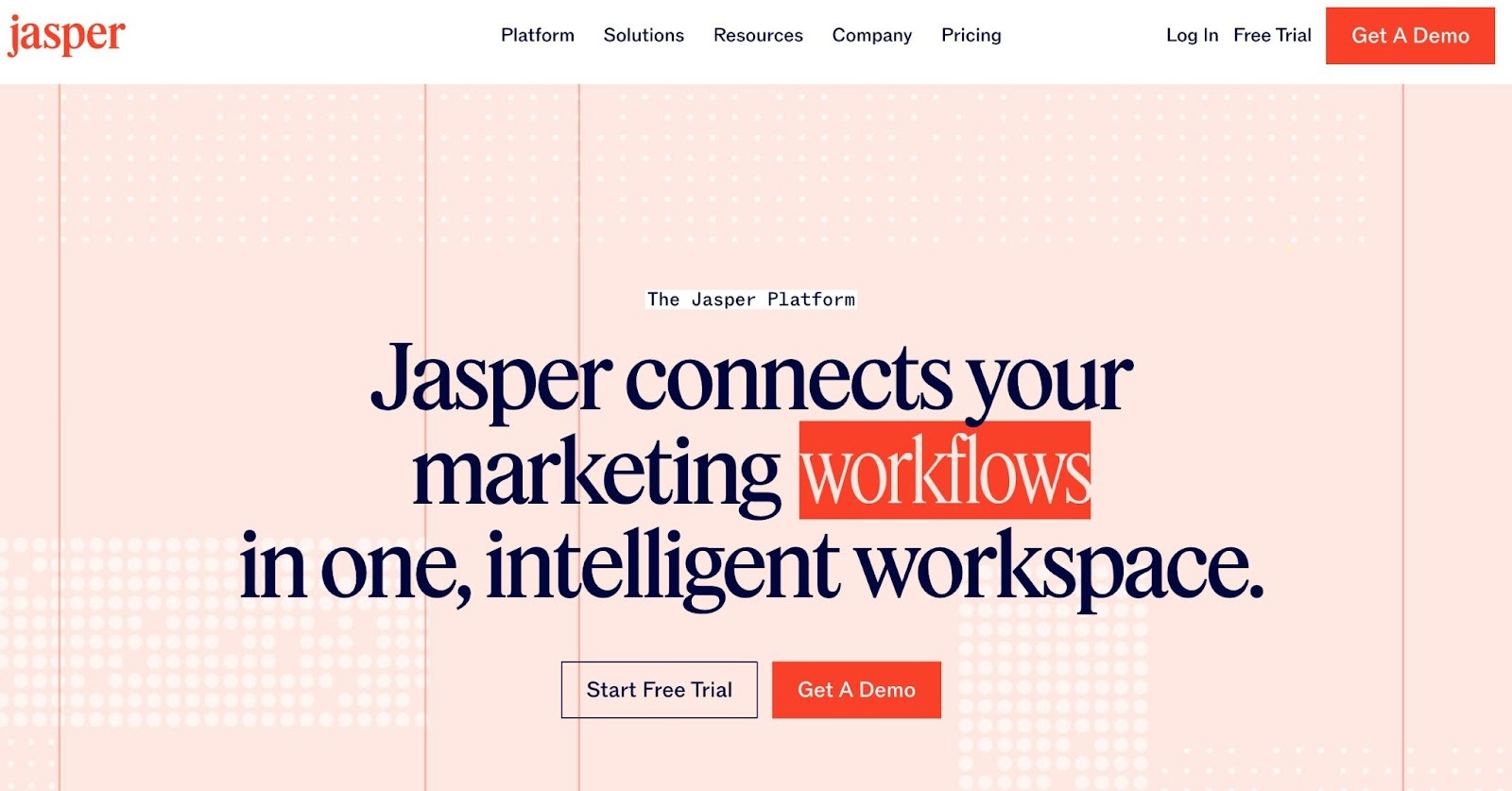
Niche: AI copywriting
Best for: Marketing teams producing high-volume, on-brand content across campaigns
Founded: 2021
HQ: Austin, U.S.
The case for Jasper isn't raw output quality — it's consistency at scale. Feed it your brand style guide and tone parameters and it holds the line across blog posts, email sequences, ad copy, and product descriptions in 30+ languages — simultaneously, across ten campaigns.
The 50+ template library covers every major marketing format. The native Surfer integration means content can be SEO-optimized as it's being written. The honest caveat: outputs still need a human pass for facts and nuance. But for teams where volume is the bottleneck, Jasper removes that constraint efficiently.
Maintains brand voice across all content types
50+ templates covering every major marketing format
Native Surfer SEO integration
Supports 30+ languages
No free plan
Outputs require human editing and fact-checking
Pricing: From $59/month (varies by usage)

Niche: AI video generation
Best for: Content creators, marketers, and businesses who want to turn text prompts into ready-to-use videos in minutes
Magichour Text-to-Video AI is a next-generation content creation tool that transforms simple text prompts into fully generated videos. Instead of spending hours editing footage or hiring production teams, users can simply describe their idea and let the AI build scenes, visuals, and motion automatically.
It’s especially useful for social media content, ad creatives, product explainers, and storytelling videos where speed and scale matter. The tool bridges the gap between imagination and production by automating video creation from script to final output.
Converts text prompts into full videos instantly
Great for social media ads and marketing content
No editing or production skills required
Speeds up content creation workflow significantly
Limited creative control compared to manual editing tools
Output quality depends on prompt clarity
Pricing: Free plan available. Paid plans start at around $10/month with higher tiers offering more credits and advanced video generation features.
Niche: AI video enhancement / video upscaling
Best for: Creators, marketers, educators, ecommerce teams, and anyone who needs to improve low-quality, blurry, compressed, or low-resolution videos online
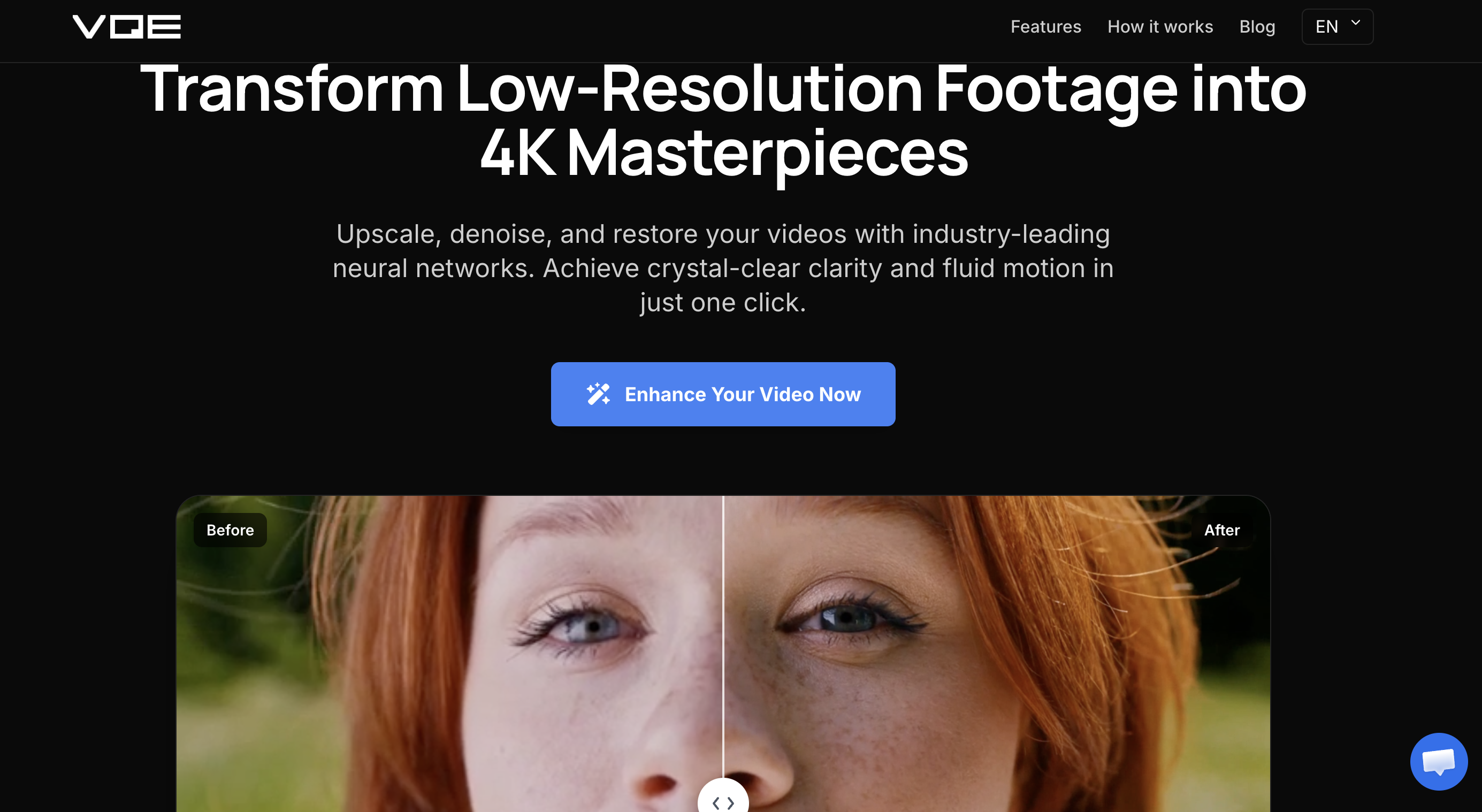
Video Quality Enhancer is an AI-powered video restoration tool designed to improve low-resolution or blurry footage with minimal effort. It can upscale videos up to 4K or 8K, reduce noise, sharpen details, recover facial features, and generate smoother motion using AI frame interpolation, making older or compressed videos look significantly clearer.
It delivers professional-looking results without requiring advanced editing skills or software installation.
Uses AI to improve low-resolution and blurry videos
Can upscale videos up to 4K
Helps reduce noise and improve overall clarity
Works online with no advanced editing skills required
Useful for improving older clips, social media videos, demos, and other important content assets
Best suited for enhancing existing footage rather than replacing professional filming
Very poor-quality source files may still have enhancement limits
Processing time can vary depending on file size and video length
Pricing: Free to try; paid usage details are shown in-app when applicable.

Niche: AI design and visual content
Best for: Solo creators, small teams, and marketers who need fast, on-brand visuals without a designer
Founded: 2013
HQ: Sydney, Australia
Canva was already the world's most-used design tool before it got serious about AI — and the features it's added feel genuinely native rather than bolted on. Magic Design generates full templates from a text prompt. Brand Kit enforces visual identity at scale. Background removal takes seconds.
The AI video features added in 2025–2026 have made Canva a credible option for short-form social content, not just static graphics. The free plan covers 80% of day-to-day design needs without spending a dollar.
Free plan is genuinely comprehensive
AI design tools feel native, not bolted on
Brand Kit keeps visuals consistent at scale
Works for video, images, and presentations
Advanced AI features require paid plan
Not a substitute for complex design work
Pricing: Free / Pro from ~$15/month
Niche: AI podcast and video studio
Best for: Content marketers, podcasters, and teams producing remote video content
Founded: 2019
HQ: Tel Aviv, Israel
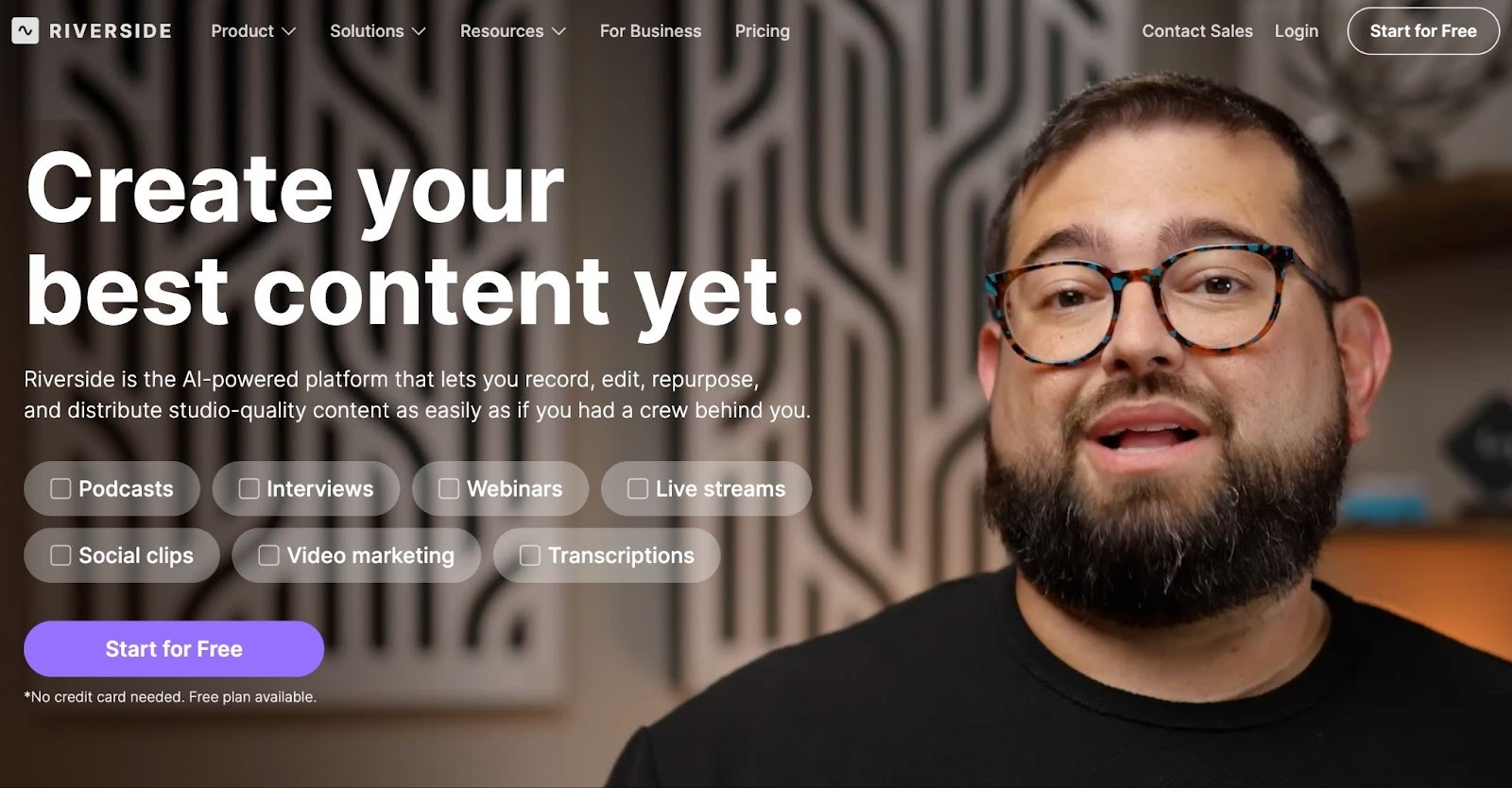
Riverside records audio and video locally on each participant's device — uncompressed 4K, studio-quality audio — regardless of internet quality. Around that core capability sits a full production platform:
Magic Clips auto-generates social-ready short clips from long recordings, text-based editing lets you cut video by editing the transcript, and AI transcription, show notes, and chapter generation are included. AI audio cleanup removes background noise automatically. For content teams producing podcasts or thought leadership video, Riverside removes the post-production bottleneck without a video editor on staff.
Local recording guarantees studio quality regardless of connection
Magic Clips auto-generates social shorts from long recordings
Text-based editing — cut video by editing the transcript
Record, edit, and publish in one platform
Team plans have a steep pricing jump from solo tiers
Advanced editing has a learning curve for new users
Pricing: Free / Pro from ~$24/month
Niche: AI talking photo and avatar video generation
Best for: Marketing teams, SaaS platforms, and content apps that want to turn static images into realistic presenter-style videos
Founded: 2016
HQ: Dubai, United Arab Emirates
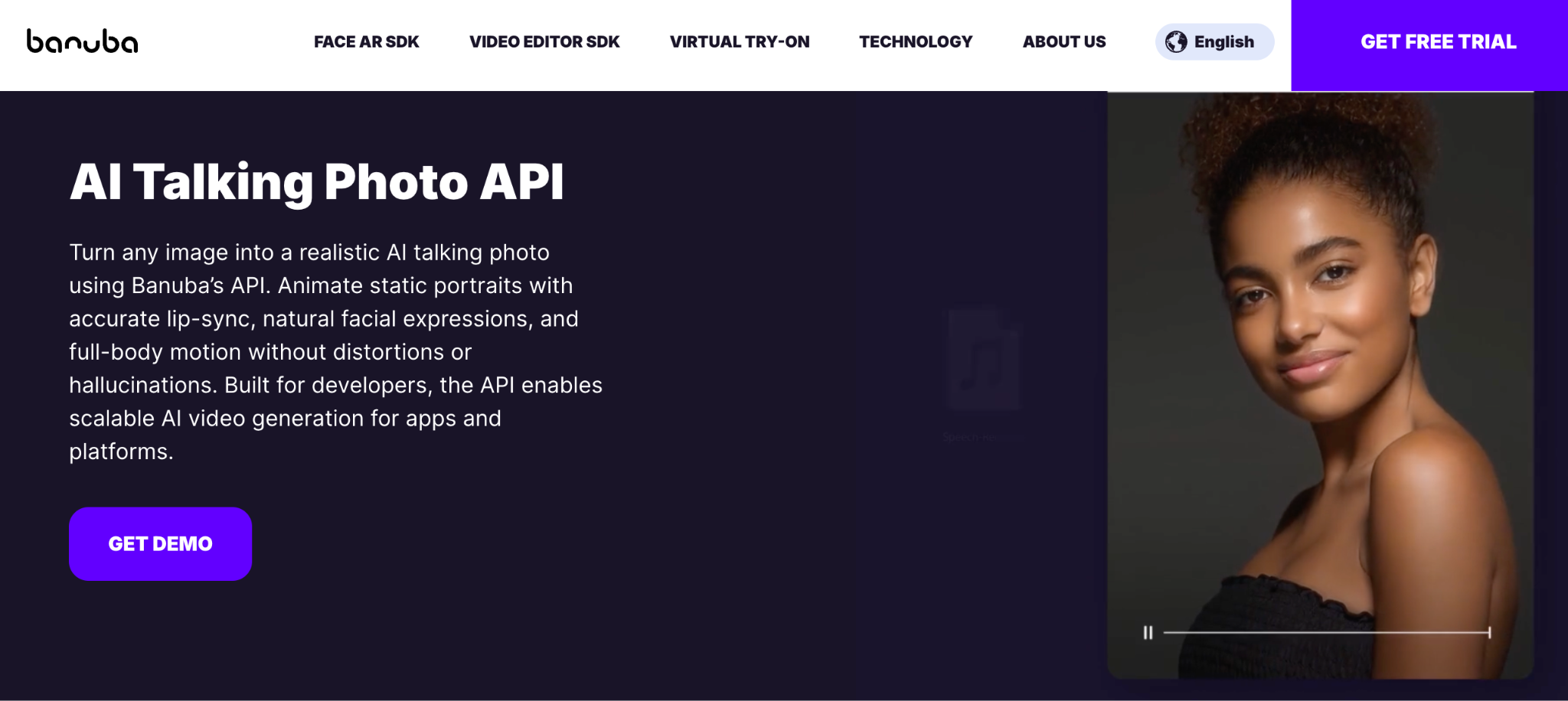
Banuba AI Talking Photo API turns a static portrait into a talking video with lip-sync, facial animation, and natural movement. Upload an image, add a script or audio input, and the API generates a realistic video file that can be used inside apps, platforms, or marketing workflows.
For marketing teams, the use case is simple: more video content without booking shoots, presenters, or full production teams. Banuba can help teams create product explainers, social ads, onboarding clips, promotional videos, and personalized presenter-style content from a single image. Since it is API-first, it is especially useful for SaaS products, content platforms, and developer teams that want to add AI video generation directly into their own product instead of using a standalone editor.
Turns static images into realistic talking videos
Supports scripts, text-to-speech, and custom audio input
Useful for explainers, ads, onboarding, and personalized video content
API-first setup works well for SaaS platforms and content apps
More developer-focused than simple AI video generators
Pricing is not publicly listed
Less suitable for marketers who only need occasional one-off videos
Pricing: Custom pricing
Automation with AI has boosted marketing department productivity by 14.5% while cutting marketing spend by 12.2%, and 60% of organizations achieve ROI within 12 months of implementation, with average productivity increases of 25–30% in automated processes.
Niche: No-code AI workflow automation
Best for: Growth teams wanting AI-powered automation without engineering support
Founded: 2023
HQ: San Francisco, U.S.
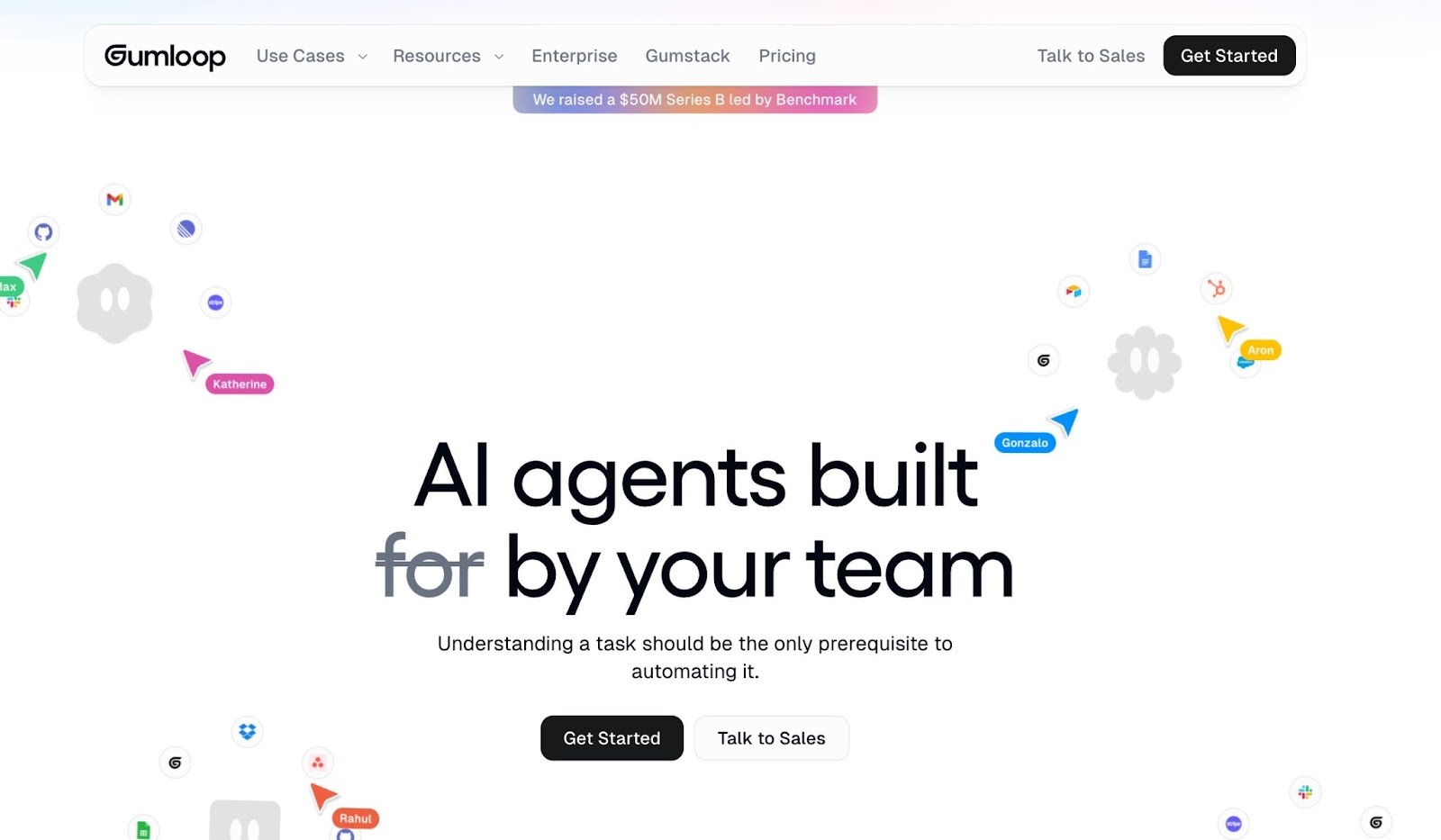
Gumloop's visual, node-based flow builder lets growth teams assemble complex AI-powered workflows by connecting blocks — no code, no waiting on engineering. GPT-4, Claude, and Gemini are built in with no API keys required.
The library covers 130+ integrations and 115+ prebuilt blocks. Gummie, the AI assistant, builds entire agents from plain language descriptions: tell it what you want the workflow to do, and it builds the flow for you. SOC 2 and GDPR compliant.
GPT-4, Claude, and Gemini built in — no API keys needed
130+ integrations and 115+ prebuilt automation blocks
Gummie builds agents from plain language descriptions
SOC 2 and GDPR compliant
Credit costs can add up on large, high-frequency workflows
Pricing: Free / Solo from $37/month
Niche: AI assistant for writing, strategy, and workflow
Best for: Content creators, marketing strategists, and teams needing high-quality, brand-consistent output
Founded: 2021 (Anthropic)
HQ: San Francisco, U.S.
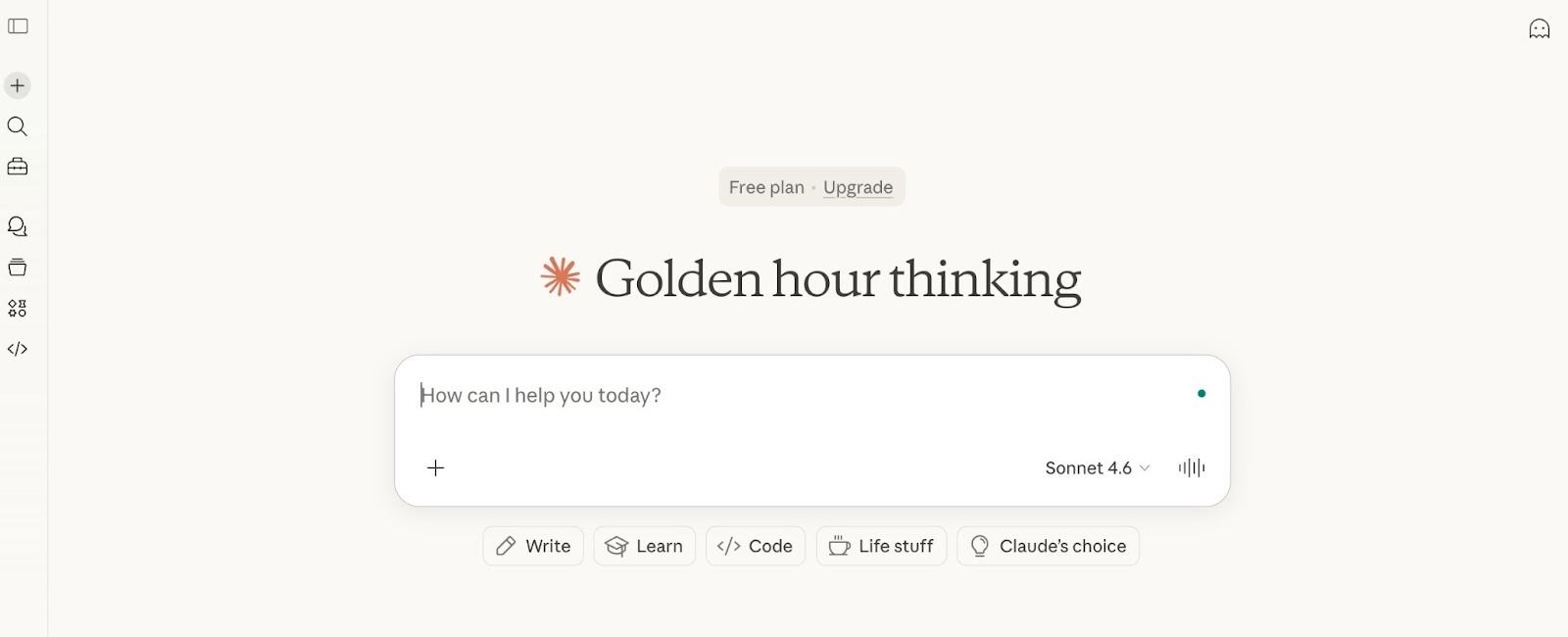
What separates Claude from other general-purpose assistants in a marketing context is the Projects feature — persistent brand context, tone guidelines, and previous outputs carried across sessions — combined with a 200K context window that lets you feed it an entire content strategy, competitor analysis, and brand guide simultaneously.
MCP integrations with Semrush, Google Drive, and Slack turn it from a writing tool into a connected marketing workflow. Claude holds 32% enterprise AI market share versus OpenAI's 25%, reflecting how seriously large organizations take its reliability for complex work.
Projects maintain brand voice and context across sessions
200K context window for long strategy documents
MCP integrates with Semrush, Drive, Slack, and more
32% enterprise AI market share
No native image generation
Free plan hits limits quickly under heavy use
Pricing: Free / Pro $20/month / Max $100/month
Email generates between $36 and $42 for every dollar spent — the highest ROI of any marketing channel. Automated emails account for just 2% of email volume but drive 30% of revenue, earning 16x more per send than scheduled campaigns.
Niche: Email marketing and automation
Best for: Brands wanting AI-driven personalization at scale
Founded: 2004
HQ: Nashville, U.S.
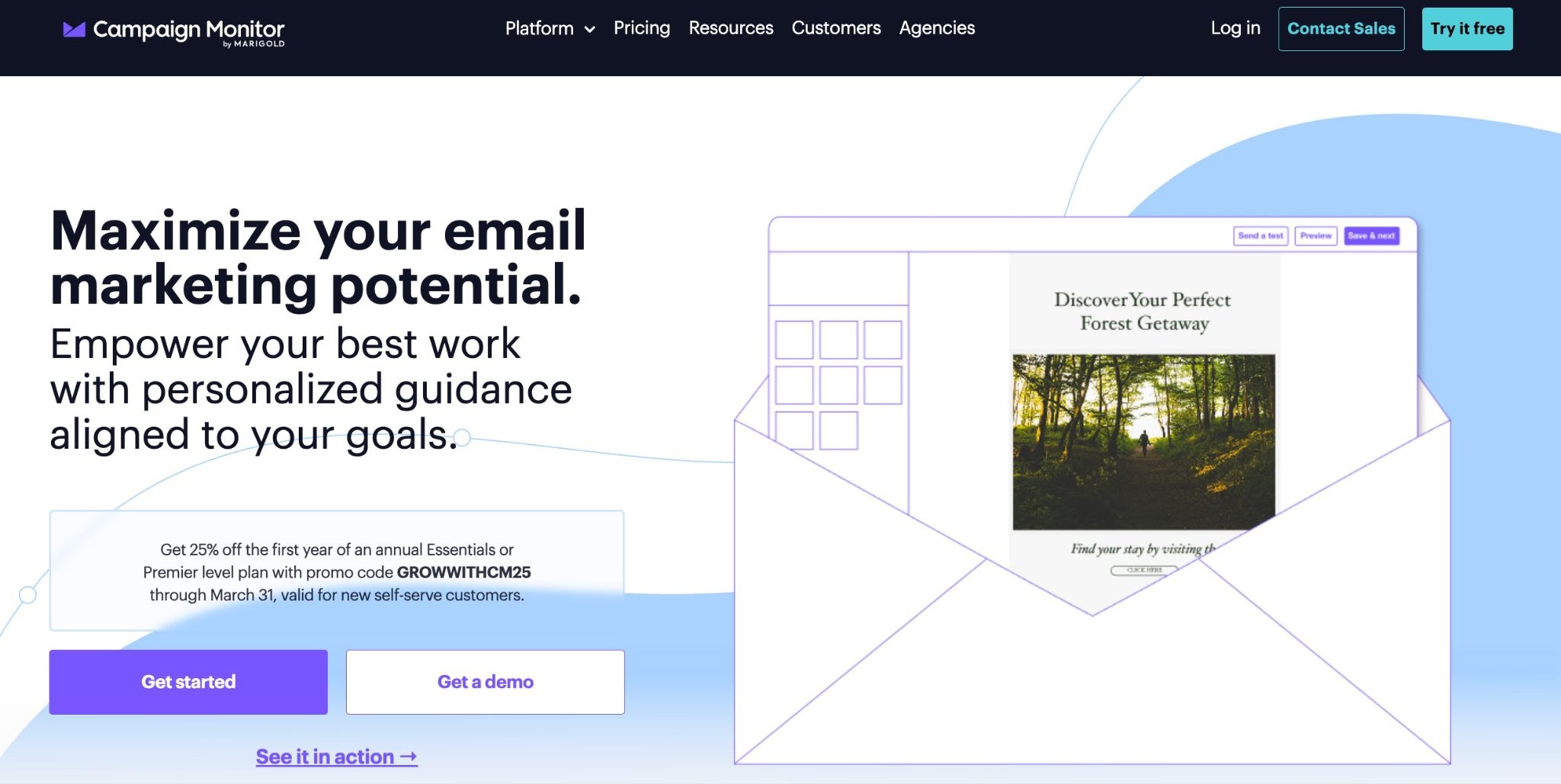
Campaign Monitor's AI Writer handles subject lines and body copy. Dynamic content blocks serve different messaging to different segments within the same send. Journey-based automation responds to subscriber behavior rather than calendar triggers. Send-time optimization ensures each email lands when that specific subscriber is most likely to open it.
The interface is clean and accessible for lean teams where email isn't managed by a dedicated specialist. Pricing scales steeply with list size, and the strongest AI features are gated behind higher tiers.
AI-powered send-time optimization
Strong audience segmentation and journey automation
Clean, beginner-friendly interface
Pricing scales steeply with list size
AI features limited on lower-tier plans
Pricing: From $11/month
Teams that implement AI see sales ROI improve by 10–20% on average, but only 9% of total marketing budgets currently go to AI tools — meaning most teams are underinvesting relative to the returns available.
Niche: AI SDR and outbound sales automation
Best for: B2B sales teams automating prospecting and outreach at scale
Founded: 2023
HQ: San Francisco, U.S.
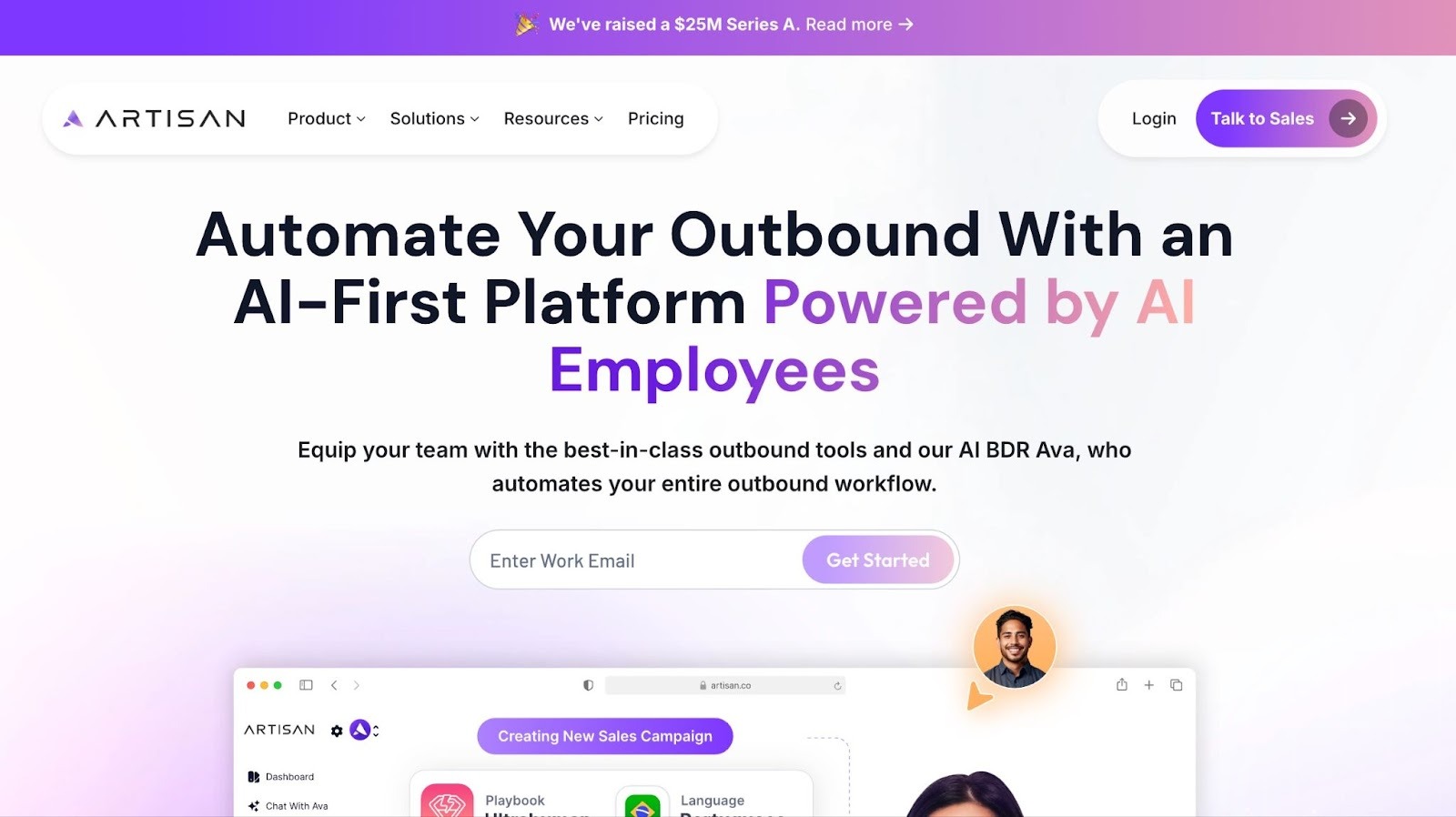
Artisan's AI BDR Ava automates lead discovery from a 300M+ B2B contact database, runs prospect research using firmographic and intent data, generates personalized email sequences, and handles LinkedIn outreach — all in one platform that integrates natively with HubSpot and Salesforce.
The Personalization Waterfall identifies the optimal outreach angle per prospect. Intent signal detection triggers outreach based on real events like funding announcements or hiring surges. The honest caveats: custom pricing only, personalization quality drops without careful ICP setup, and results on deliverability and lead quality at scale are mixed.
Automates up to 80% of BDR workflow end-to-end
300M+ B2B contact database built in
Intent signal detection for better-timed outreach
Native HubSpot and Salesforce integration
Custom pricing only — no transparency without a sales call
Personalization can feel generic without careful ICP configuration
Pricing: Custom — estimated ~$1,500–2,000/month
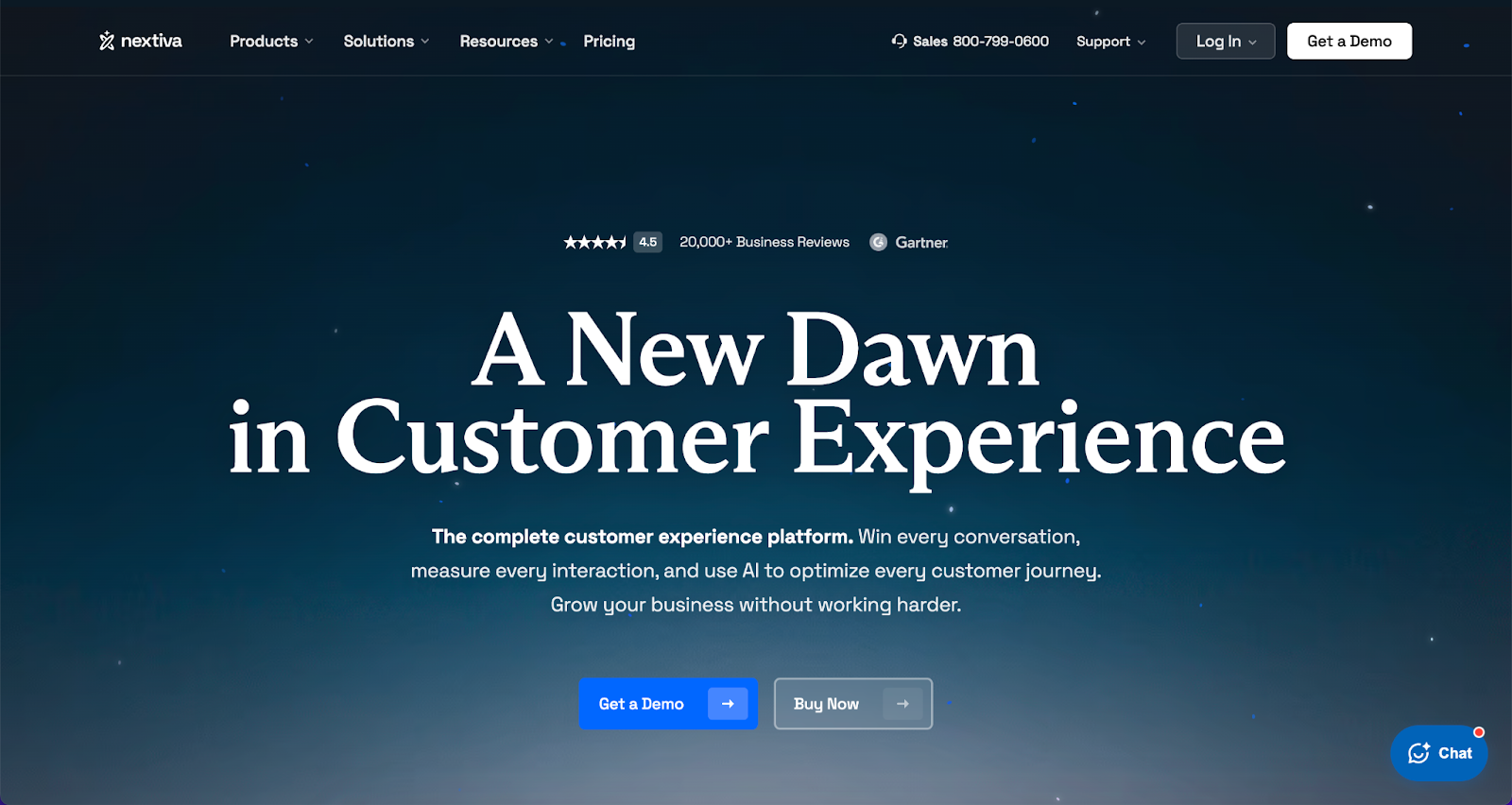
Niche: Unified customer experience and communications platform
Best for: Growing teams managing customer conversations across voice, chat, email, and social
Founded: 2006
HQ: Scottsdale, U.S.
XBert, Nextiva's AI receptionist, handles inbound calls, texts, and web chats 24/7 — answering questions, booking appointments, and routing complex requests to human agents with full context. The omnichannel inbox unifies voice, video, SMS, live chat, email, and social in a single view.
AI call transcription and summaries, real-time sentiment analysis, and journey orchestration round out a platform that sits at the intersection of CRM, communications, and contact centre. The 99.999% uptime commitment and 24/7 US-based support across all plans make it credible for teams where downtime has a direct customer cost.
XBert AI handles calls, chats, and texts 24/7
Unifies voice, chat, email, social, and SMS in one platform
AI call summaries and sentiment analysis built into mid-tier plans
99.999% uptime with 24/7 US-based support
Per-user pricing adds up quickly for larger teams
Advanced AI features locked behind higher-tier plans
Pricing: From $15/user/month (Core) / Power Suite CX from $75/user/month

Niche: AI-powered CRM and sales automation
Best for: Teams focused on converting marketing efforts into revenue
Founded: 2006
HQ: Cambridge, U.S.
HubSpot's value is in the connection — marketing and sales living in the same platform, with AI running across both. The content assistant handles landing pages, blogs, and emails. Predictive lead scoring surfaces prospects most likely to close. Conversation intelligence analyzes sales calls and flags coaching opportunities.
The free CRM tier is genuinely useful, not a bait-and-switch. The honest limitation: the full AI suite lives behind the expensive Marketing Hub plan, which changes the ROI math for teams who need it.
Free CRM tier with solid AI features
Covers marketing and sales in one unified platform
Predictive lead scoring and conversation intelligence built in
Full AI suite requires expensive Marketing Hub plan
Can feel complex for small teams
Pricing: Free / Starter from $20/month
Generative AI adoption in marketing surged 116% year-over-year, now deployed across 15.1% of marketing activities compared to just 7% the prior year.
Niche: AI social media management
Best for: Agencies, brands, and social media managers who need publishing, engagement, and analytics across all major networks from one platform
Founded: 2022
HQ: New York, U.S.
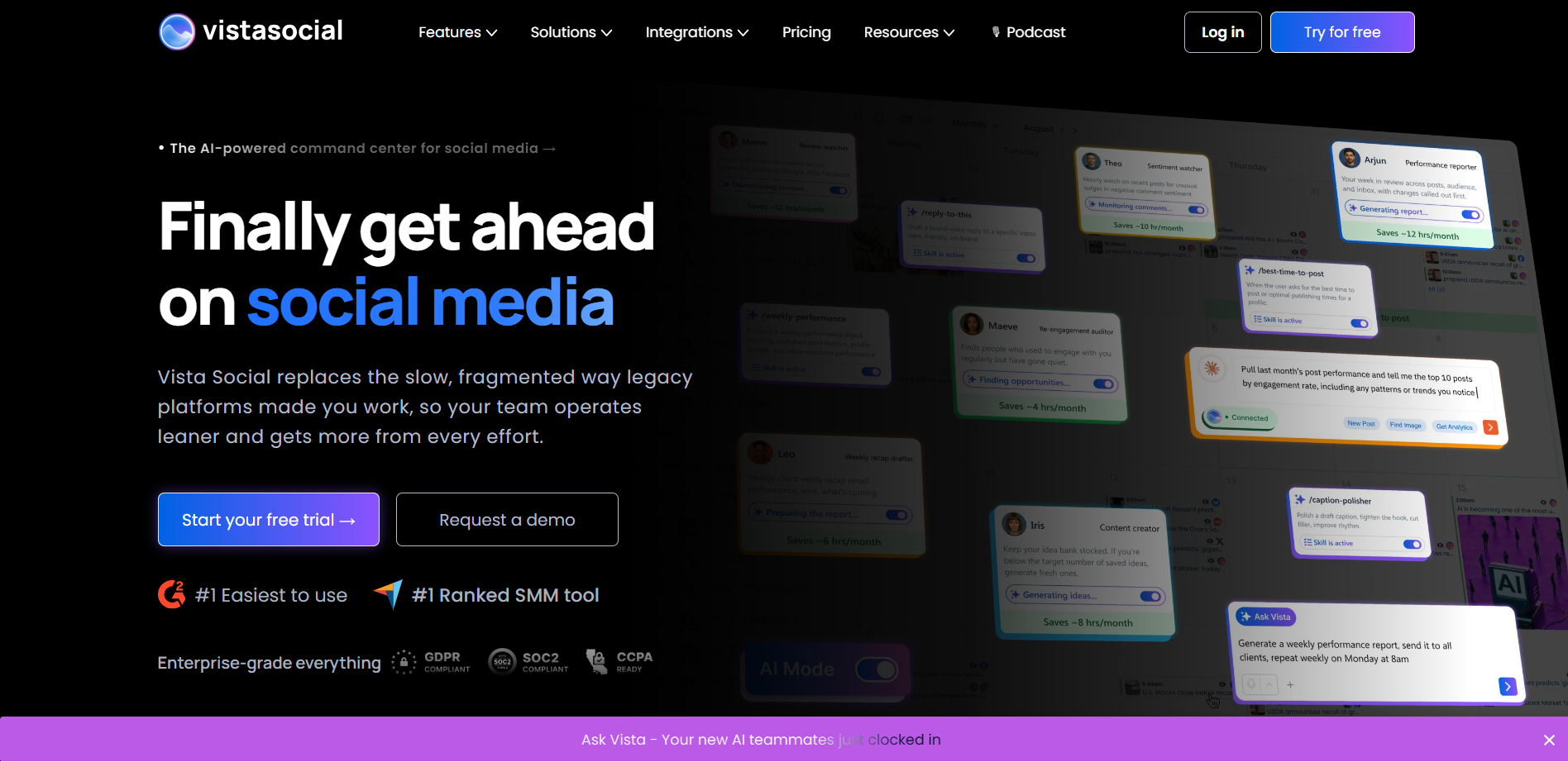
Most social media tools make you choose: scheduling or analytics or inbox management. Vista Social doesn't. It covers the full stack, from publishing, DM automation, cross-platform analytics, approval workflows, to review management from a single dashboard. Vista, the built-in AI assistant, generates captions, hashtags, and post ideas on demand. Smart scheduling handles optimal posting times automatically. This platform removes the operational overhead without requiring five separate subscriptions to do it.
The unified social inbox is where it earns its keep for agencies. Every comment, DM, and mention from every connected platform in one place, with DM automation workflows handling routine replies and lead capture in the background. Multi-level approval workflows keep client content organized without email chains, and cross-platform analytics surface AI-generated recommendations rather than just raw numbers.
Full social media management stack in one platform — no tool-stitching required
Ask Vista generates on-brand content across all connected profiles instantly
DM automation and lead capture available on all plans
Approval workflows built for agencies managing multiple clients
Supports Facebook, Instagram, LinkedIn, TikTok, YouTube, Pinterest, Google Business Profile, Threads, Bluesky, Reddit, Snapchat, and Tumblr
Social listening is a paid add-on ($75/month) on all plans
X (Twitter) integration requires an additional $29/month
Sentiment analysis is only available on the Enterprise plan
Pricing: From $79/month. 14-day free trial with no credit card required.

Niche: AI social media content generation
Best for: Solo creators and small teams needing AI-generated social posts fast
Founded: 2021
HQ: Bengaluru, India
Feed Predis.ai a blog URL, product page, or single prompt, and it generates ready-to-post content for Instagram, LinkedIn, TikTok, Facebook, Pinterest, and X simultaneously. The competitor analysis feature surfaces what's working in your niche. The content calendar organizes your pipeline.
Output quality varies by platform — LinkedIn thought leadership needs more human refinement than Instagram captions — and scheduling is limited on lower tiers. But for turning existing content into multi-platform social assets quickly, it's one of the most efficient tools in this category.
Generates posts for 6+ platforms simultaneously from a single prompt
Competitor analysis built into the dashboard
Turns blog URLs into ready-to-post social content
Free plan available
Output quality varies by platform and niche
Limited scheduling features on lower plans
Pricing: Free / from $29/month
Today, 75% of PPC professionals say they use AI at least sometimes to write their ads, and 71% of those who use AI say they're satisfied with the results.
Niche: AI PPC management and optimization
Best for: PPC specialists and agencies managing Google and Microsoft Ads at scale
Founded: 2013
HQ: San Jose, U.S.
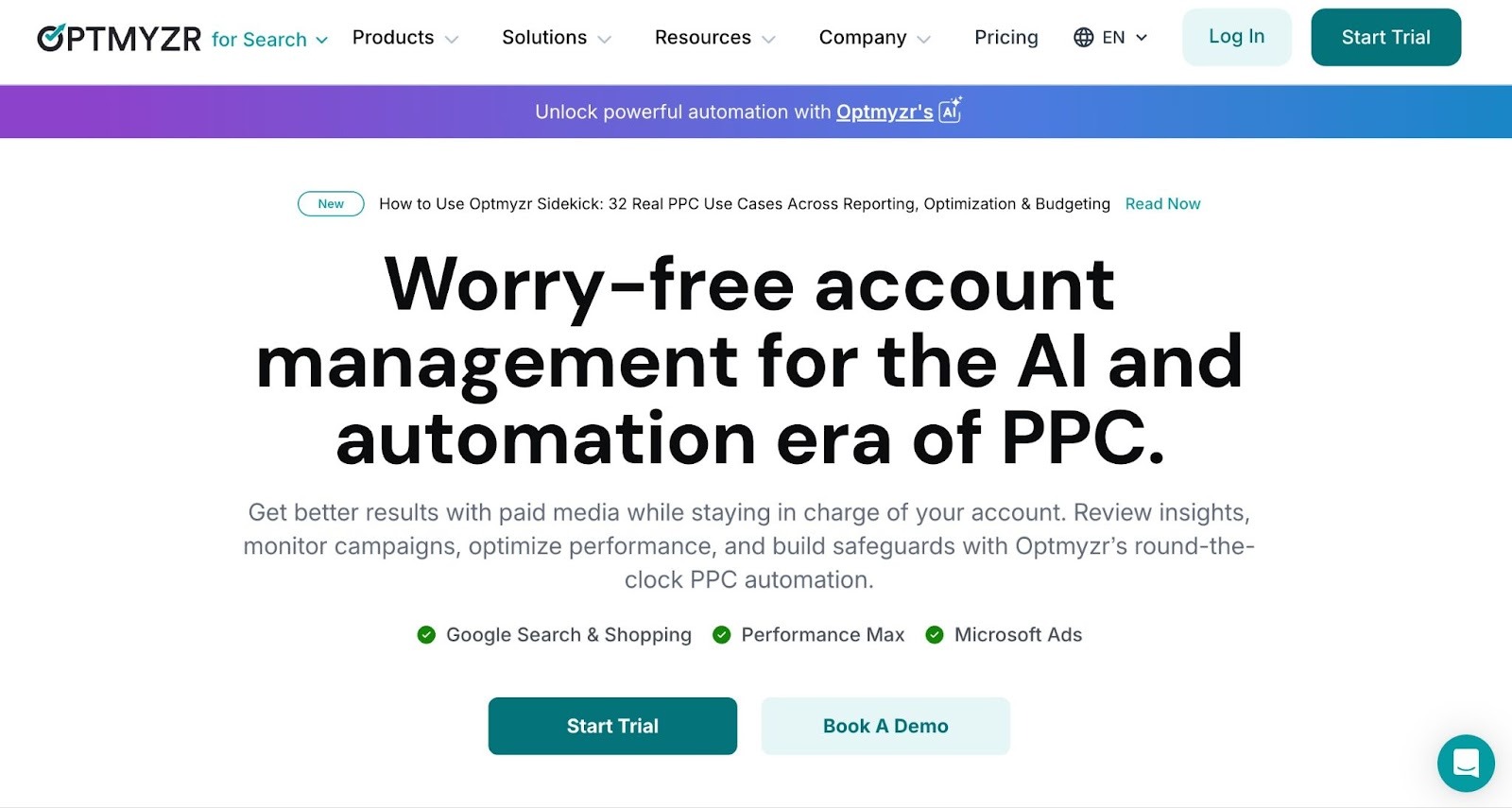
Optmyzr sits in the gap between Google's free-but-limited Smart Bidding and enterprise platforms like Skai that require massive spend to justify. The AI bid management incorporates business context — profit margins, seasonal patterns, inventory constraints — that native automation can't access.
The one-click optimization engine surfaces specific fixes and implements them instantly. Automation rules monitor accounts continuously across Search, Shopping, Performance Max, and Responsive Search Ads. Steep at $209/month for simple setups, but for agencies managing multiple large accounts, the ROI math is straightforward.
AI bid management goes beyond Smart Bidding with business context
One-click optimizations implement fixes without platform-hopping
Strong Shopping and Performance Max support
Trusted by agencies managing multiple large accounts
$209/month is steep for smaller or single-account setups
Learning curve for teams new to PPC automation
Pricing: From $209/month based on monthly ad spend managed
A typical 1,500-word blog post that previously required 8–10 hours of work now takes under 2 hours from concept to publication with AI assistance — and 94% of marketers plan to use AI in their content creation workflows throughout 2026.
Niche: AI writing assistant and communication tool
Best for: Marketing teams producing high volumes of copy across multiple channels and contributors
Founded: 2009
HQ: San Francisco, U.S. (Ukrainian-founded)
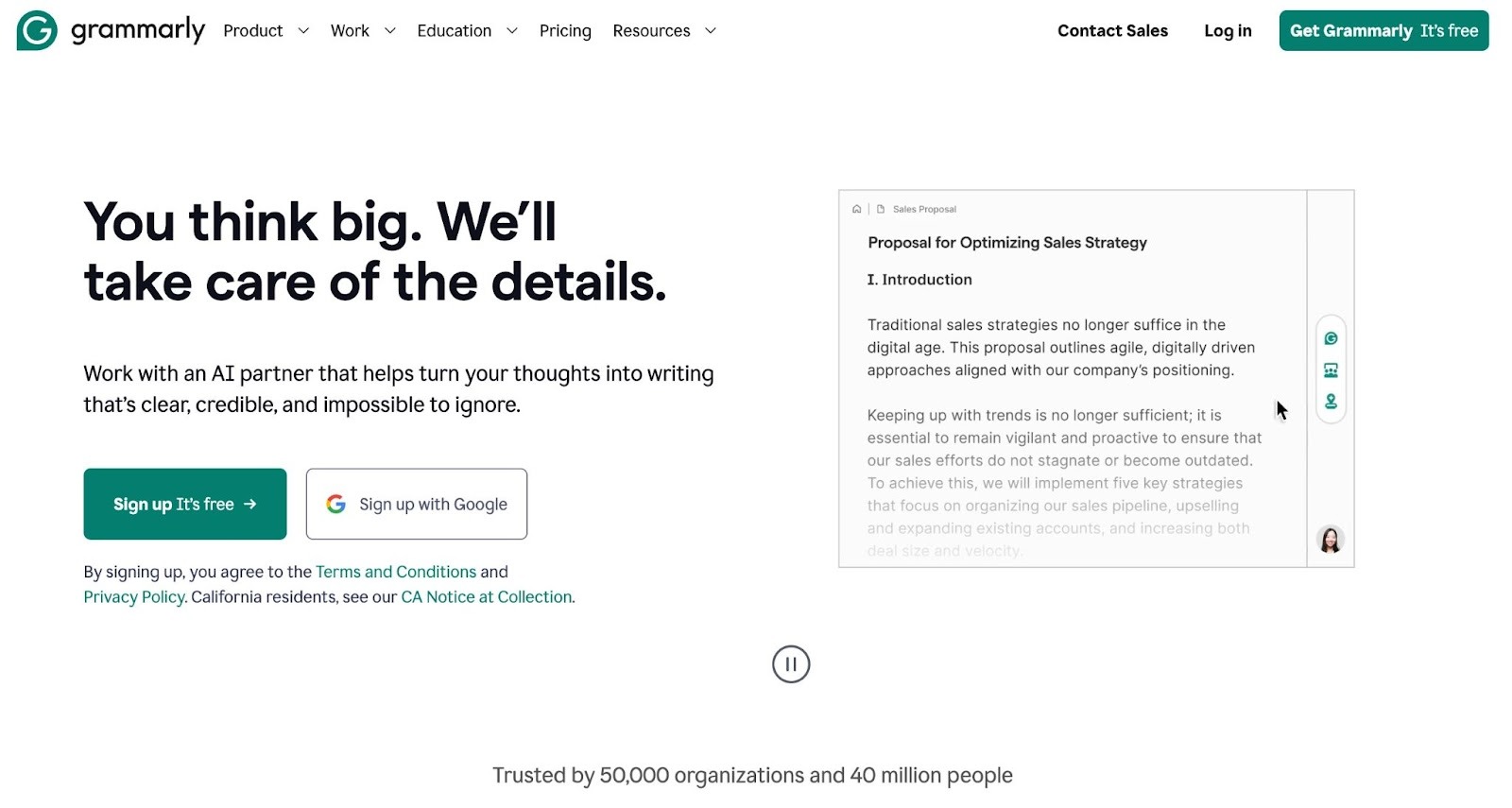
Think of Grammarly less as a writing tool and more as a communication consistency layer across your entire team's output. The real-time overlay works across 1M+ apps — Gmail, Slack, Google Docs, Word, your CMS — without disrupting how your team works.
Team style guides enforce brand tone across every contributor. GrammarlyGO drafts and rewrites on command with 2,000 monthly AI prompts on Pro. For teams where multiple people write customer-facing copy daily, the style guide enforcement alone pays for the subscription.
Works across 1M+ apps with no workflow disruption
Team style guides enforce brand voice at scale
GrammarlyGO drafts and rewrites on command
Free plan covers core grammar and spelling
Full AI features require Pro plan
Can over-correct creative or informal writing
Pricing: Free / Pro from $19.50/month
This is the section most "best of" roundups skip. It's also the most important part.
Identify the single marketing task consuming the most hours weekly and solve that first. One well-chosen tool saving five hours a week delivers more ROI than five tools used occasionally.
Tool sprawl is the silent killer of marketing productivity. A focused stack covers content, distribution, visibility, and workflow — one tool per lane. When in doubt, cut.
The highest-leverage combinations compound: Surfer + Jasper for SEO-optimized content at volume, Gumloop + Claude for automated workflow pipelines, Semrush AI Toolkit + Notion for strategy and tracking. Integrations multiply the value of individual tools.
The AI tool landscape moves faster than any other software category. Cut anything with low adoption, consolidate where one tool now covers what two used to, and reallocate budget to what's delivering results. The best stack is never finished — it's maintained.
The marketers winning in 2026 aren't running the biggest stacks. They're running the most focused ones.
Start with one use case, deploy one tool, and prove the value before expanding. Once you've solved your biggest bottleneck, move to the next one — deliberately, not reactively.
The best AI marketing stack isn't the one with the most tools. It's the one where every tool earns its seat at the table.
It depends on your biggest bottleneck. For content at scale: Jasper. For SEO: Surfer. For AI search visibility: Scrunch or the Semrush AI Toolkit. For all-purpose strategy and writing: Claude. Start with the tool that solves your most expensive problem first.
A strong foundational stack for most teams: Scrunch (AI search and visibility), Surfer (SEO), Jasper (content volume), Canva (visuals), and HubSpot (CRM and pipeline). Adjust based on your channel mix and team size.
Capable, but general-purpose. For brand-consistent output across sessions and long-context strategy work, Claude tends to outperform it for professional marketing teams. Neither replaces a strategic marketer — they remove the cognitive friction so that person can focus on higher-value work.
For autonomous outbound sales: Artisan's Ava. For no-code workflow automation: Gumloop. For always-on customer communications: Nextiva's XBert. The right answer depends on whether you're automating content, sales, or operations.
The strongest lean stack: Canva (free tier), Claude (free to $20/month), Predis.ai (free tier), Campaign Monitor (from $11/month), and HubSpot's free CRM. Full coverage of content, social, email, and pipeline management for under $50/month to start.

Irina is a Founder at ONSAAS, Growth Lead at Aura, and a SaaS marketing consultant. She helps companies to grow their revenue with SEO and inbound marketing. In her spare time, Irina entertains her cat Persie and collects airline miles.
.svg)
.svg)
.svg)
.svg)
.svg)