
.svg)
%20(1).svg)
%20(3).svg)
Back to articles
8 Best LLM Optimization Tools for AI Visibility in 2026
June 25, 2026
By
Irina Maltseva
If you're still measuring search performance by rankings and clicks alone, you're missing half the picture in 2026.
A growing share of discovery now happens inside AI-generated answers like ChatGPT, Perplexity, and Claude, where users get product recommendations without ever clicking through to a website. I've seen companies rank #1 on Google for their core terms but get completely shut out of AI answers, while smaller competitors with weaker SEO dominate AI recommendations.
SEO hasn't died. But traditional rank trackers and Google Analytics can't measure how AI models perceive your brand, which sources they trust, or how you stack up against competitors in AI-generated answers. You need different tools for that.
In this article, I've tested the top LLM optimization tools and ranked them based on real-world use, not marketing claims. You'll learn where you appear in AI answers, why you appear (or don't), and what to actually do about it.
After testing nearly a dozen AI visibility tools over the past few months, I've learned that most of them promise similar things but deliver wildly different experiences. Some give you data without direction. Others overwhelm you with features you'll never use. A few actually help you make decisions.
Here's what I'd focus on if I were choosing one today:
I've tested dozens of AI visibility tools over the past few months, and honestly, a lot of them feel half-baked. Some deliver real insights. Others just wrap basic prompt tracking in a fancy dashboard and call it "optimization."
The eight tools below actually helped me understand visibility gaps and what to do about them. I'll walk you through what using each one is really like.
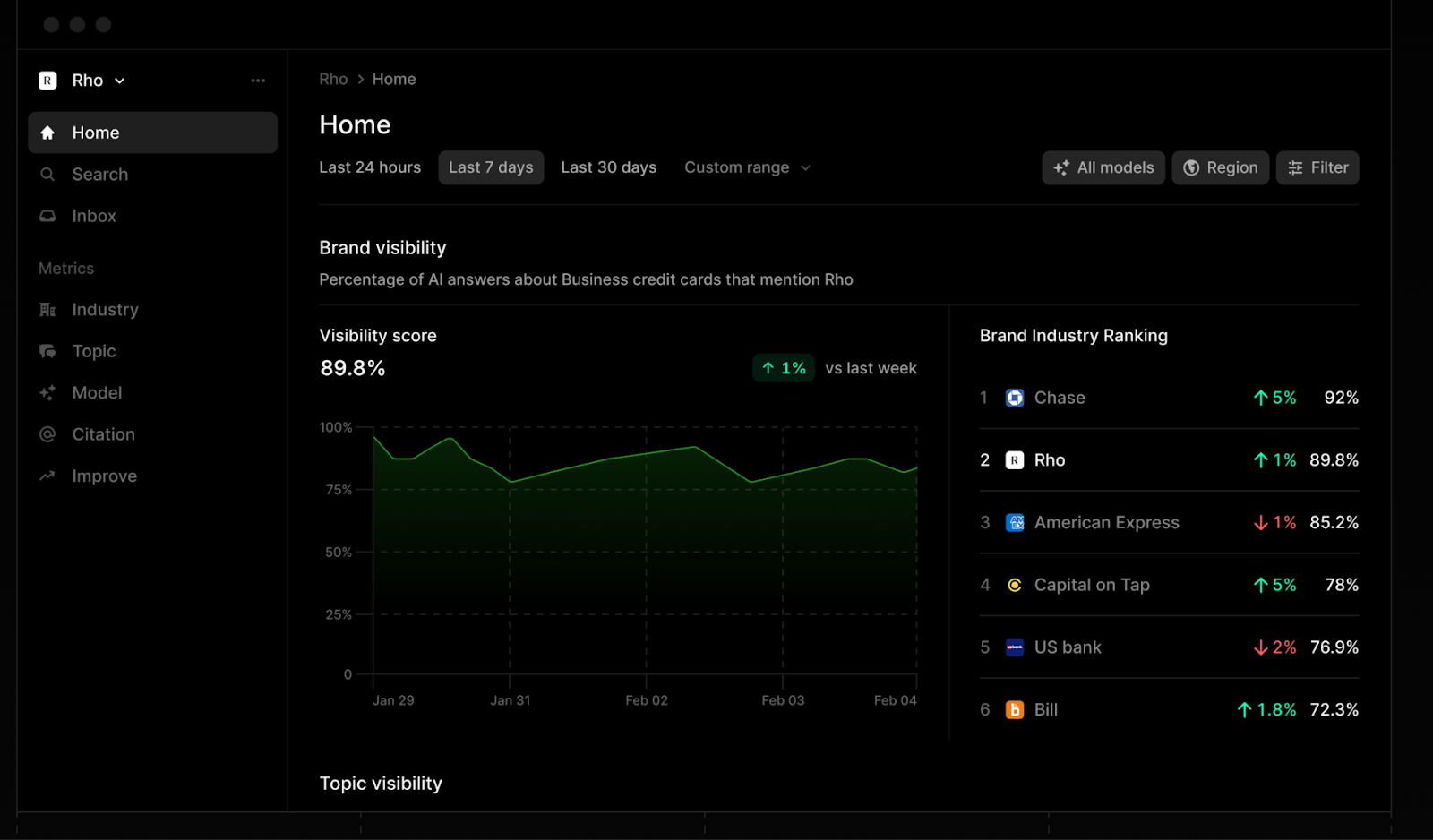
Profound isn't just another AI monitoring tool, it's the first "read/write" platform for AI search, meaning you don't just track visibility, you actively optimize it in real-time. Backed by $35M from Sequoia Capital and trusted by over 2,000 marketers at Fortune 500 companies like Ramp, US Bank, Indeed, and MongoDB, the platform processes over 5 million citations daily and tracks your brand across ChatGPT, Perplexity, Google AI Overviews, Claude, Gemini, Microsoft Copilot, and more. Some clients have seen 700% increases in AI referrals, with six-figure revenue generated directly from AI recommendations.
What sets Profound apart is the Conversation Explorer. It’s a breakthrough feature that reveals actual AI search volume data that was previously invisible to marketers. While other tools require you to guess which prompts to track, Profound shows you exactly which topics are being discussed across AI platforms and how often. Beyond tracking, it generates AI-optimized content with one click and provides optimization suggestions tied directly to tracked prompts.
Teams treating AI visibility as a strategic channel and need broad model coverage, competitive context, and prescriptive guidance.
.svg)
Comprehensive, enterprise-grade LLM visibility platform
Tracks visibility across the widest range of answer engines
Strong competitor benchmarking and citation analysis
Research-driven approach with transparent knowledge sharing
Actionable content generation and optimization features
Hands-on onboarding with dedicated account management
.svg)
Visibility is limited to tracked prompts
No free trial (demo only)
Pricing and prompt limits skew heavily toward enterprise teams
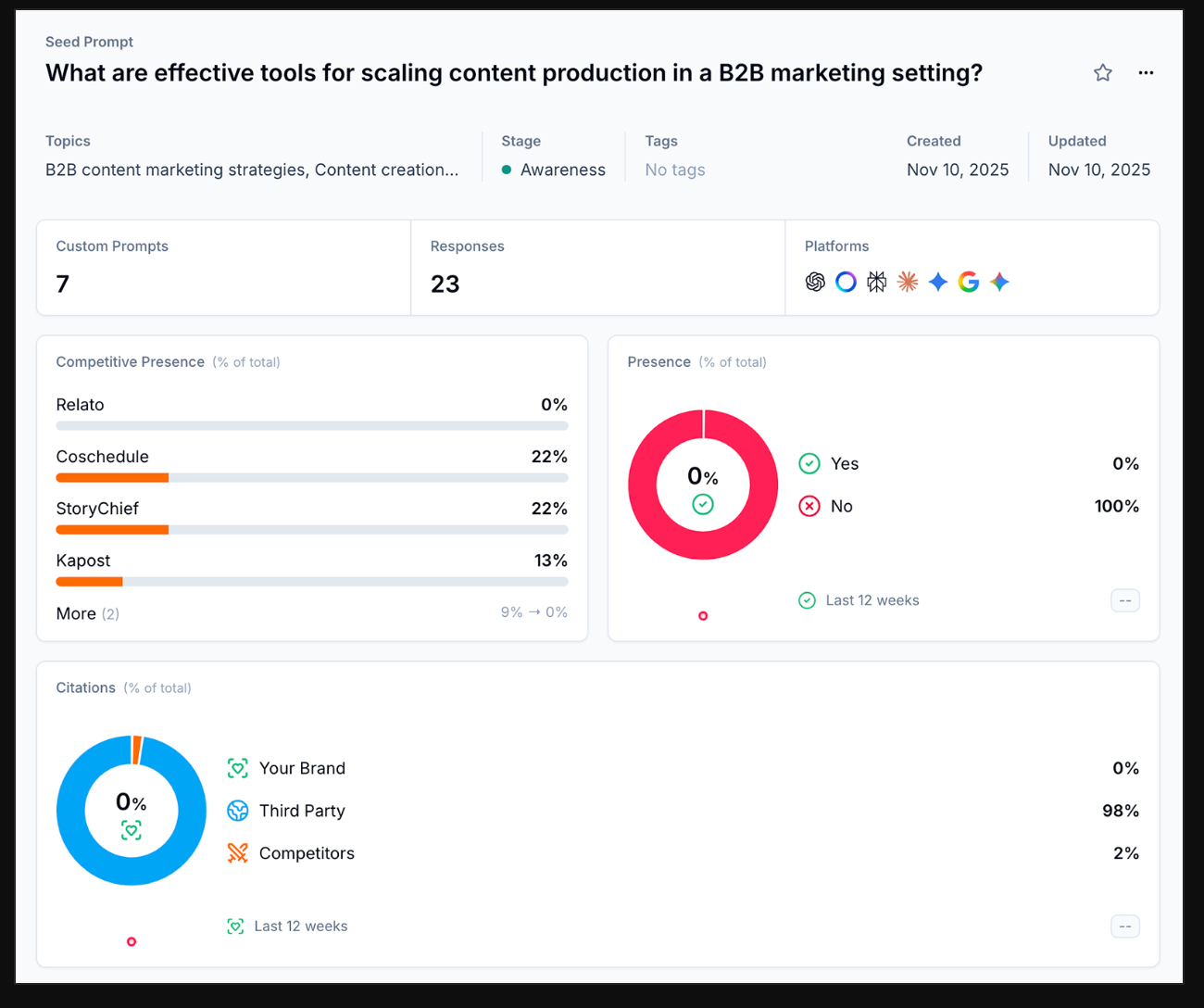
Scrunch now serves over 500 brands monitoring their AI visibility. What makes Scrunch stand out is its obsessive focus on source explainability. It doesn't just tell you that your brand appeared in an AI answer, it shows you exactly which URLs the LLM pulled from, whether those are your own pages, third-party mentions, or competitor sites masquerading as neutral sources. Customers report an average 40% increase in referral traffic and up to 4x improvement in visibility after using the platform.
The real power is in how Scrunch breaks down citations. While most tools treat all mentions equally, Scrunch categorizes them as owned (your content), third-party (external sites mentioning you), or indirect (competitors appearing in your search territory). This makes it incredibly valuable for diagnosing why you're losing to competitors—maybe they're getting cited by higher-authority sources, or maybe AI models are pulling outdated pricing from a deprecated page on your site. Scrunch catches these gaps and gives you a clear path forward.
Teams starting their AI visibility efforts who need to understand how sources are being used and gain internal buy-in before investing in more complex optimization tools.
Strong focus on explainability and source-level visibility
Clear breakdown of brand mentions and citations in AI answers
Easy for non-technical and content teams to understand
Useful for diagnosing early AI visibility gaps
More observational than action-oriented
Limited optimization and content execution features
Narrower answer-engine coverage than enterprise platforms
Also read: 11 Best SEO Reporting Software Compared
Athena analyzes over 3 million AI responses and maps them to 300,000+ citation sites, but what makes AthenaHQ stand out is speed—it scans your content and delivers precise optimization recommendations in minutes, not days. Companies like AutoRFP.ai report that over 30% of their inbound leads research with ChatGPT before booking demos, and AthenaHQ helps them influence that research by identifying new prompts and content opportunities.
Marketing teams and agencies that need quick, actionable insights rather than deep data analysis, especially SaaS and ecommerce brands tracking AI-driven discovery.
Fastest platform for getting actionable GEO recommendations
Founded by former Google Search and DeepMind experts
Strong focus on turning insights into specific optimization tasks
Time-saving automation frequently praised by users
Trusted by 80+ companies already using the platform
Premium pricing geared toward larger teams
No free trial available (demo only)
Less depth for teams focused on heavy prompt experimentation
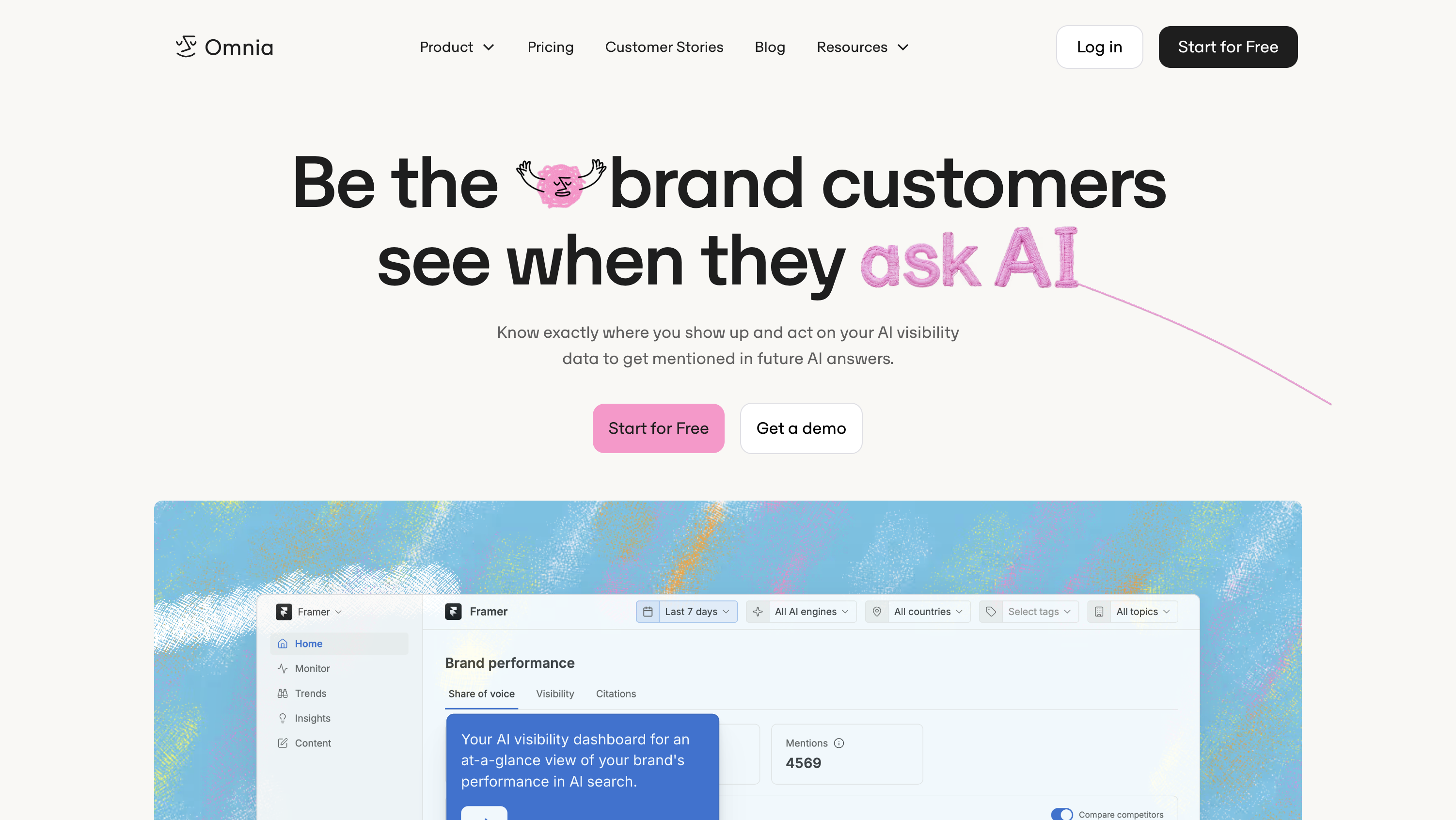
Omnia is an AI visibility platform that doesn't just show how AI sees your brand, it helps you take action on it. The platform surfaces the most searched topics in AI engines, monitors your positioning, reveals which sources AI engines cite, and generates a prioritized action plan so teams know exactly what to do next.
The platform works in four stages: first, it discovers the real prompts and questions your customers are asking AI. Then, it monitors those prompts to show how AI sees your brand, how you benchmark against competitors, and what sources AI engines pull information from. From there, Omnia generates concrete actions based on automated citation analysis. Finally, it helps you create gap-filling content designed to get cited in future AI answers.
Marketing teams that want to move beyond dashboards to actual execution, especially SaaS and growth teams handling high content volumes.
SEO and marketing teams that want to go beyond dashboards and get a clear roadmap to improve their AI visibility. Growing startups getting started with AI visibility, scaleups and agencies actively optimizing to dominate AI search results, and companies with a strong digital presence managing multiple products or brands.
Three clear action paths (create, improve, get featured) with ready-to-use content briefs
Affordable entry point at €79/month with a free trial, no credit card required
Prompt discovery reveals real user search behavior, not just generic keywords
Daily monitoring provides fast feedback loops to measure impact quickly
Founded by experienced operators from Klarna, GitHub, and Fastly
Strong early traction with notable European tech companies and agencies
Raised €3.5M pre-seed led by Visionaries Club, with KFund and Baobab Ventures
Less suited for large enterprise teams requiring SOC 2 compliance or dedicated account management
Growth plan limited to 25 prompts, which may not be enough for teams tracking multiple product lines or competitors
Sentiment analysis not yet live (coming soon on Pro)
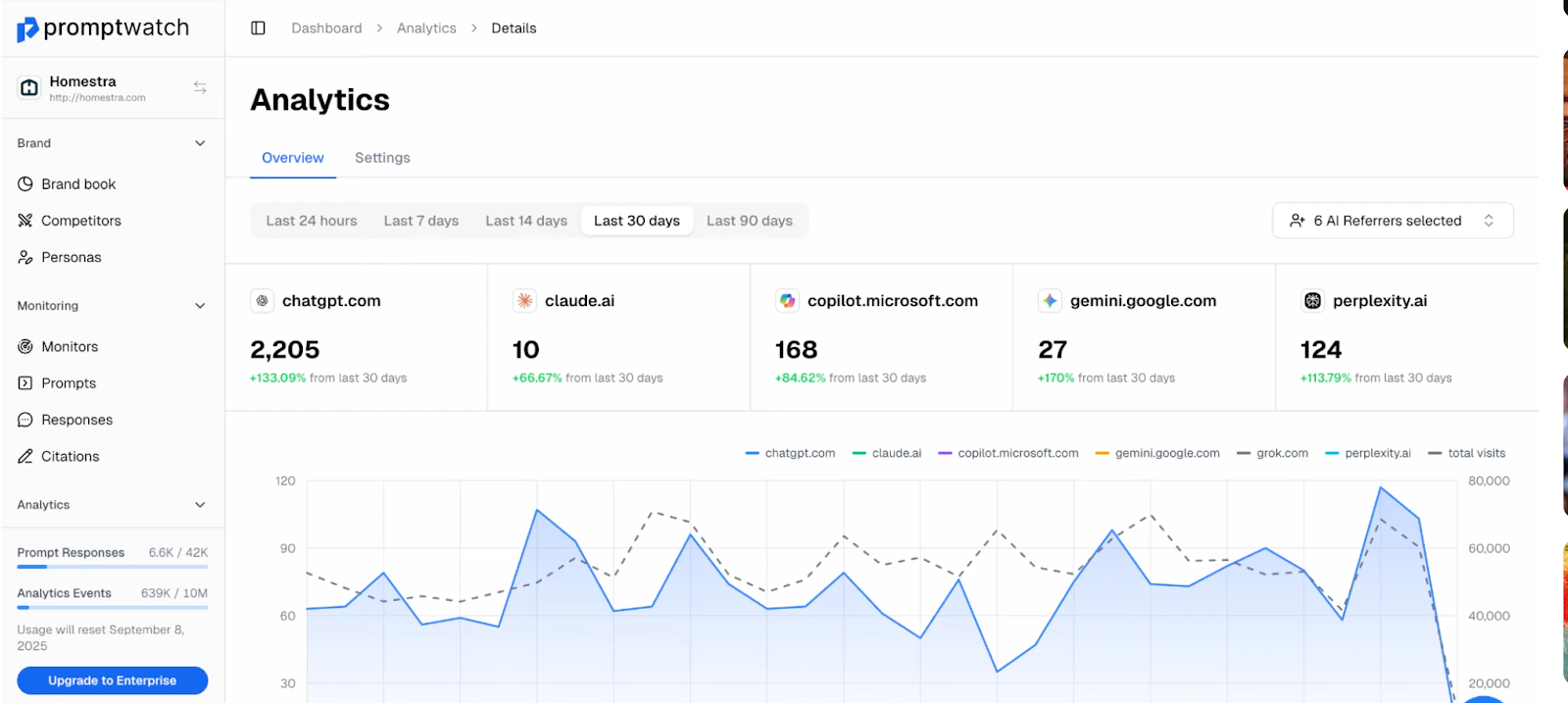
PromptWatch is Amsterdam-based PromptWatch raised €1.2M from Arches Capital and built a platform specifically for technical teams who want raw data, not polished dashboards. Founded in 2025 by Gijs de Groot and Klaas Foppen, the platform has already tracked millions of citations and offers transparent prompt-response data that lets you see exactly how different prompts perform across multiple LLMs and which sources get cited for each answer.
Advanced, technical teams that treat AI visibility as an experimental discipline and want deep insight into prompt behavior and citation mechanics
Strong prompt-level tracking
Detailed citation and source visibility
Transparent, raw prompt–response data instead of abstract visibility scores
Useful for experimentation, debugging, and hypothesis testing
Supports model-by-model comparison to spot response variance
Requires clearly defined prompts upfront; limited value without a strong prompt strategy
Interface can feel dense when managing large prompt sets
Minimal guidance on what actions to take next
Not designed for high-level brand monitoring or exec reporting
Less accessible for non-technical or content-only teams
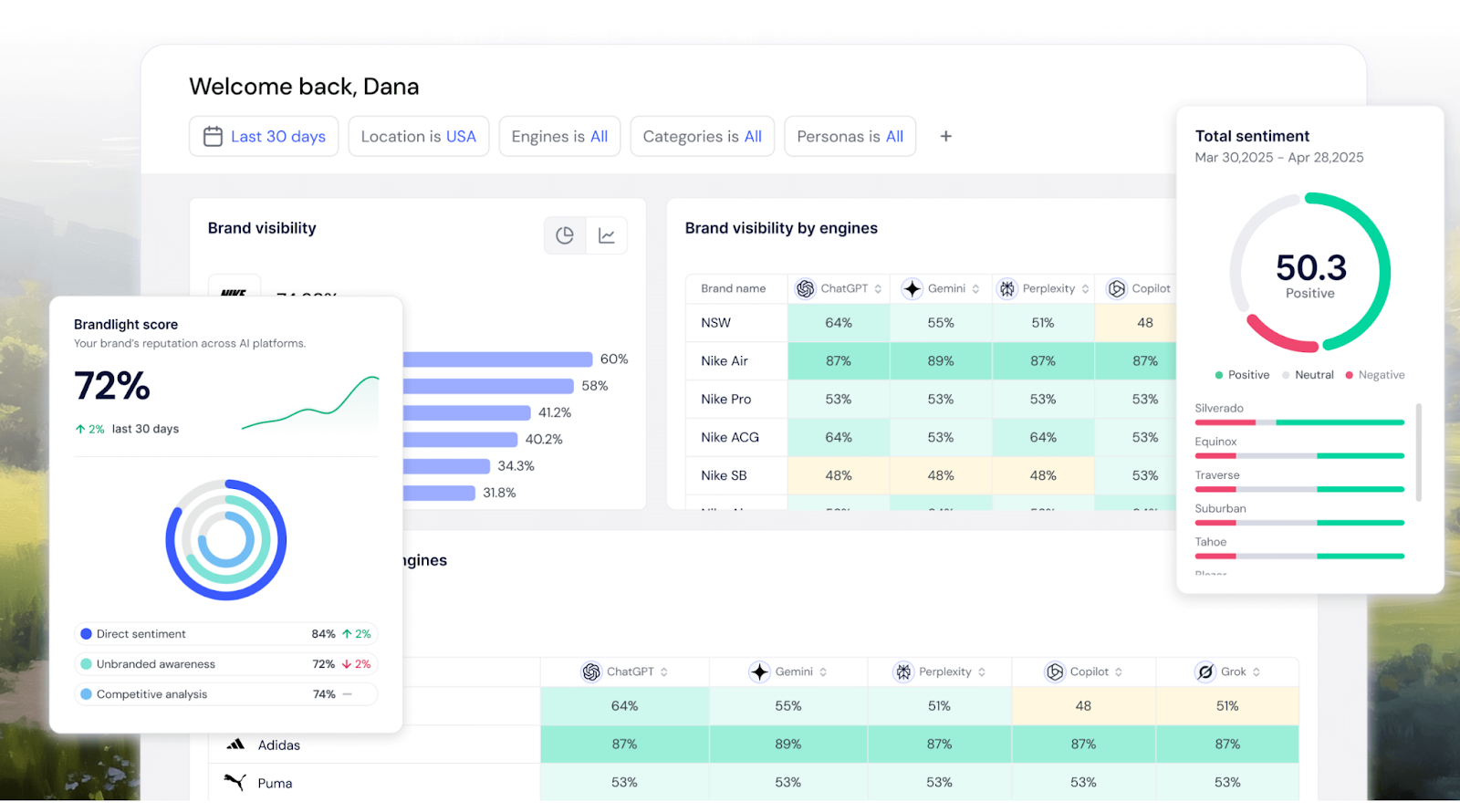
Brandlight is built specifically for PR and communications teams who need to control brand narrative across AI systems—tracking not just visibility, but sentiment, context, and which third-party sources are shaping how ChatGPT, Perplexity, and other AI engines describe your brand.
Large enterprises, agencies, and PR or communications teams in regulated or high-stakes environments that need AI-driven reputation and narrative monitoring at scale.
Deep brand mention, citation, and sentiment analysis across major AI answer engines
Strong focus on reputation and narrative monitoring, not just visibility counts
Enterprise-grade dashboards for multi-brand and multi-region oversight
Enterprise-only pricing, out of reach for most SMBs
Limited public documentation and third-party reviews
Not designed for content execution or prompt experimentation
Contact Brandlight for custom pricing.
Further read: Our Curated List: 12 AI tools for Business Success
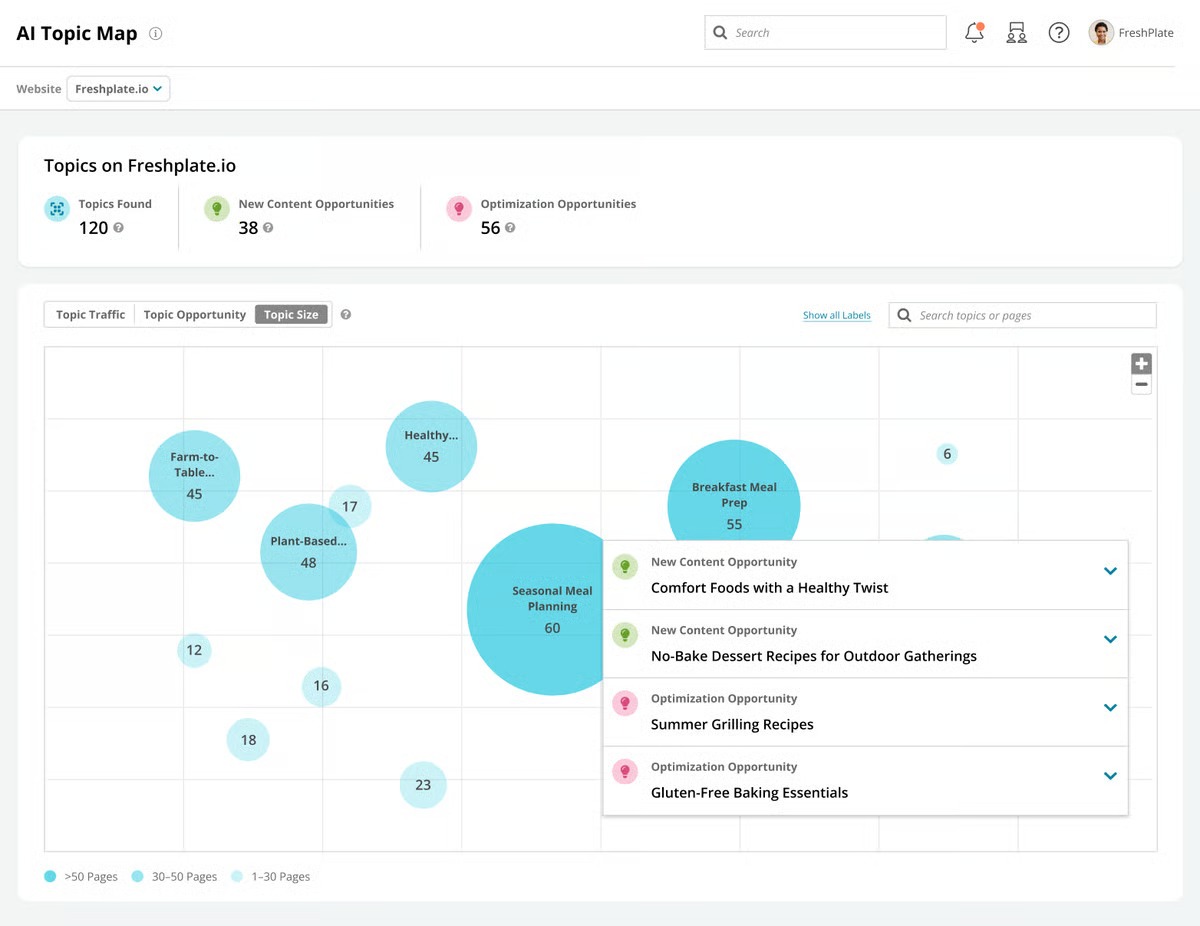
Conductor merges SEO and AI visibility into a single workflow, letting teams monitor across ChatGPT, Perplexity, and Google's AI surfaces in a single unified platform. It's strongest for organizations already investing in SEO infrastructure who want to expand into AI discovery without starting over.
Mature SEO teams already running structured programs who want to extend their strategy into AI search without rebuilding their workflows.
Combines traditional SEO intelligence + AI visibility (ChatGPT/Perplexity + Google surfaces) in one workflow
Strong content intelligence + optimization tooling for teams running high-volume SEO programs
Mature, enterprise-grade platform with a large user base and support ecosystem
Steeper learning curve if you’re not already running a structured SEO program
Pricing is custom/enterprise-oriented, and can be overkill for SMBs
More “hybrid SEO + AEO” than “GEO-native”; prompt-level experimentation is not the core strength
Conductor does not publish fixed pricing and follows a flexible, enterprise-oriented model across its product suite (Creator, Intelligence, and Monitoring). Plans are structured around usage factors such as site size, content volume, tracking depth, and collaboration needs, with tiers ranging from Essentials through Enterprise.
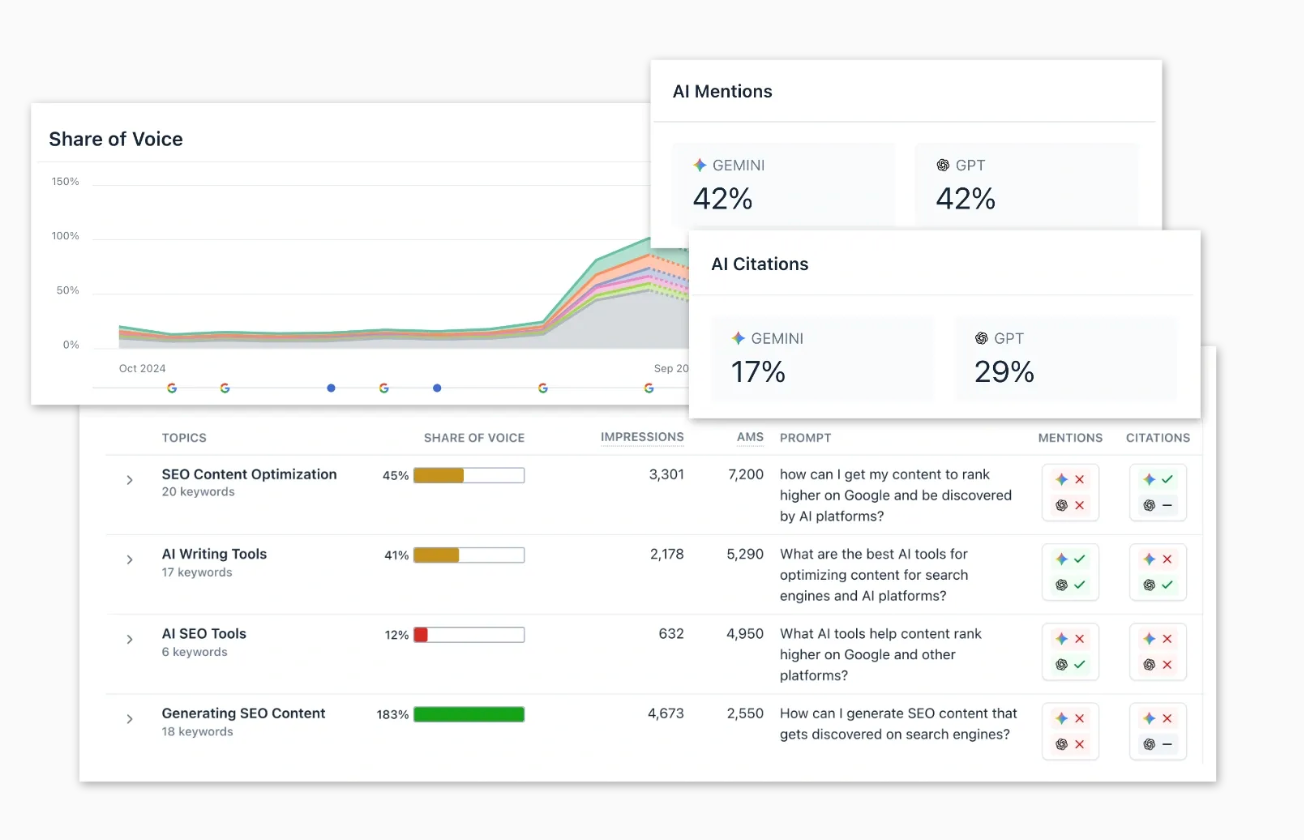
Clearscope is built for content and SEO teams that want seamless AI visibility integrated into their existing optimization workflow. It extends proven SEO content fundamentals to GEO, helping teams understand which content actually influences AI-generated answers and improving share of voice across both search and AI surfaces.
Content-led SEO teams transitioning into GEO who want AI visibility without abandoning their existing optimization workflow or learning new tools.
Established leader in SEO content optimization, now thoughtfully extended into GEO
Excellent for AI-driven content creation and topic-based optimization
No support for custom prompt tracking
LLM visibility limited to ChatGPT, Gemini, and Perplexity
The right tool depends on where you are now and what you need most:
Pick the tool that matches your starting point, but plan to graduate from passive observation to active optimization as AI answers become a bigger part of your discovery funnel.

Irina is a Founder at ONSAAS, Growth Lead at Aura, and a SaaS marketing consultant. She helps companies to grow their revenue with SEO and inbound marketing. In her spare time, Irina entertains her cat Persie and collects airline miles.
.svg)
.svg)
.svg)
.svg)
.svg)