Google's algorithm updates are the driving force behind SEO. With each new update's introduction, the ranking rules in search engine results change. There is no one-size-fits-all approach to SEO anymore.
If you want your website or business to succeed online, you need to stay on top of each Google algorithm update and be prepared for the changes already on the way. Thankfully, some SEO reporting tools will help you organize your campaigns.
Whether you own a business or a marketing agency, SEO reporting software is necessary. But finding the best tool can be a challenge. This guide will first analyze the main features you need to choose the best software depending on your needs and preferences.
By the end of this reading, you will also know the 1best SEO reporting software for professionals in 2026. Shall we get started?
Let us first take a look at an analytical overview table we created for the best SEO reporting software for 2026:
There are multiple factors you can consider when choosing SEO reporting software. Some essential criteria you can evaluate include:
Apart from all these criteria, you should always focus on the software's features. In some cases, it is understandable that you feel unsure when choosing the reporting features you need from an SEO tool. Let us look at the most important ones you should pay attention to.
This is the decision most buyers get wrong. All-in-one suites (SE Ranking, Semrush, Serpstat) collect, analyze, and report inside one platform. Dedicated reporting tools (AgencyAnalytics, Whatagraph, Advanced Web Ranking) pull data from multiple sources and package it for clients — but don't generate the underlying SEO data themselves. If you run an agency managing 10+ clients across different channels, a dedicated reporting tool will save you more time. If you are a business or in-house team focused on a single site, an all-in-one suite likely covers everything you need. Many professionals use both: a suite for the data, a reporting tool for delivery.
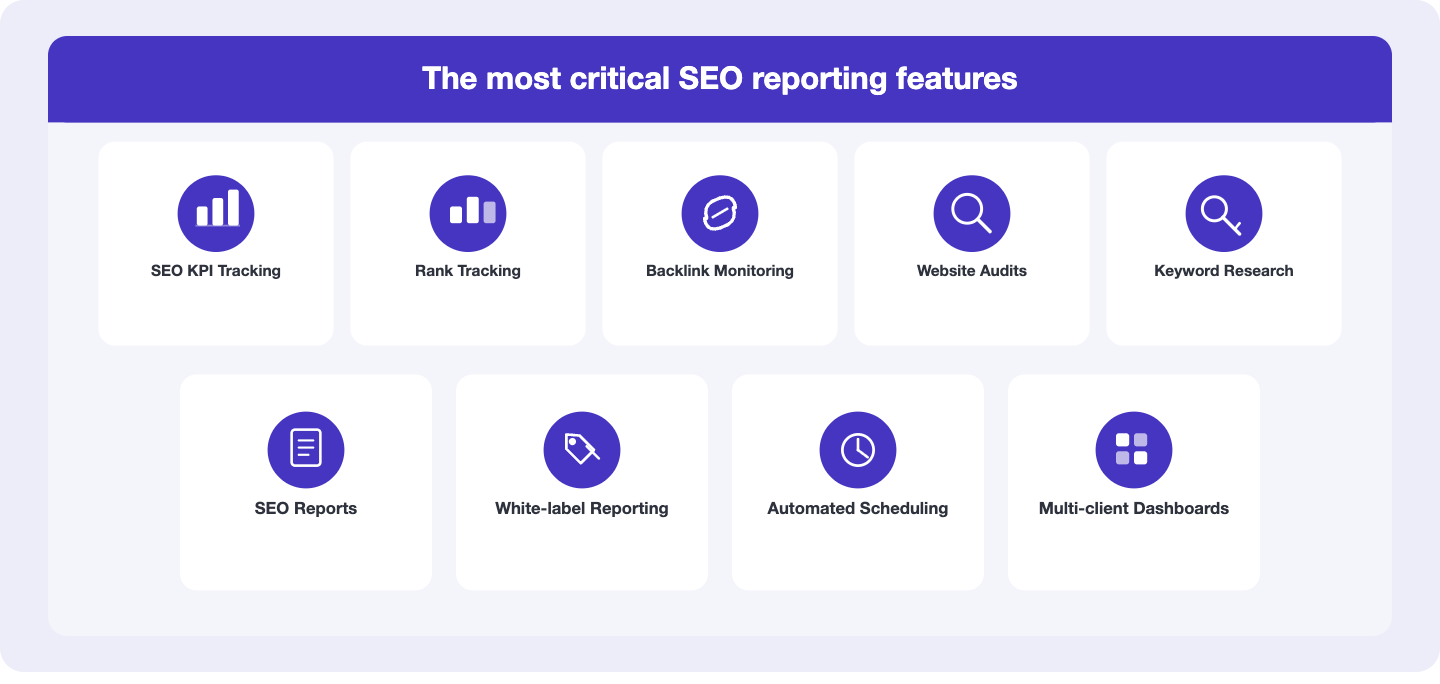
Here are the most critical SEO reporting features:
Generating reports on an individual web page, domain, or search engine is an invaluable resource for successful SEO. It allows SEO professionals to keep track of their progress, highlight areas that need improvement, and accurately quantify the success of any strategies they have in place.
To make life easier, there are a variety of software packages that offer efficient and actionable reporting solutions for SEO campaigns. Here we will discuss the ten best SEO reporting software packages available.
If you are looking for an all-rounder for SEO reports, SE Ranking is probably your best choice. The tool made it to the top of our selection for all the right reasons. It is one of the most comprehensive SEO reporting platforms. It is designed specifically for entrepreneurs and marketers.
In terms of features, SE Ranking has it all. Everything is included here, from a top-notch keyword rank tracker to a backlink checker to a website audit tool. When it comes to SEO reports, SE Ranking automatically generates reports that you can share and download.
Most reporting tools worked without issues during our test, and the platform is user-friendly.
Genuinely all-in-one — rank tracking, site audit, backlink analysis, and white-label reporting under one roof. Competitive pricing that doesn't punish small teams.
The keyword database is smaller than Semrush's. Advanced users may eventually hit the ceiling on competitor intelligence.
The pricing structure for SE Ranking is competitive, with monthly and annual subscriptions available. Monthly subscriptions start at $99.99 per month and can be upgraded to unlock more features. Annual subscriptions are discounted compared to monthly plans and come with an extended feature set that allows access to more advanced customization options. SE Ranking offers considerable value for the money, especially compared to other SEO tools on the market.
Like SE Ranking, Semrush is an all-in-one solution for any professional looking to improve their SEO performance. The platform does not focus only on SEO. On the contrary, SEMrush reveals valuable information about your website. This helps you improve your overall online presence.
Regarding SEO reporting tools, Semrush lets you look at every little piece of information you need. From position tracking to keyword performance to website audits, everything is included.
What we particularly liked was the on-page SEO suggestions report. The platform scans your website in just a few minutes and provides you with an analytical report. This report includes everything you can improve to boost your performance.
The broadest competitive dataset in the industry. Its on-page SEO audit and content gap tools are genuinely best-in-class.
Pricing jumps fast. The Pro plan at $119.95/mo is limiting for agencies — you'll likely need Pro at minimum, which adds up.
The pricing plans for Semrush are varied, allowing different types of organizations to purchase the tool that best fits their budget and needs. There are three available plans, starting with the Pro Plan at $117.33 per month, following the Guru Plan for $208.33, and finishing with the Business plan, which costs $416.66 per month. Three higher-level plans provide access to more features and larger request quotas for large enterprises or agencies.
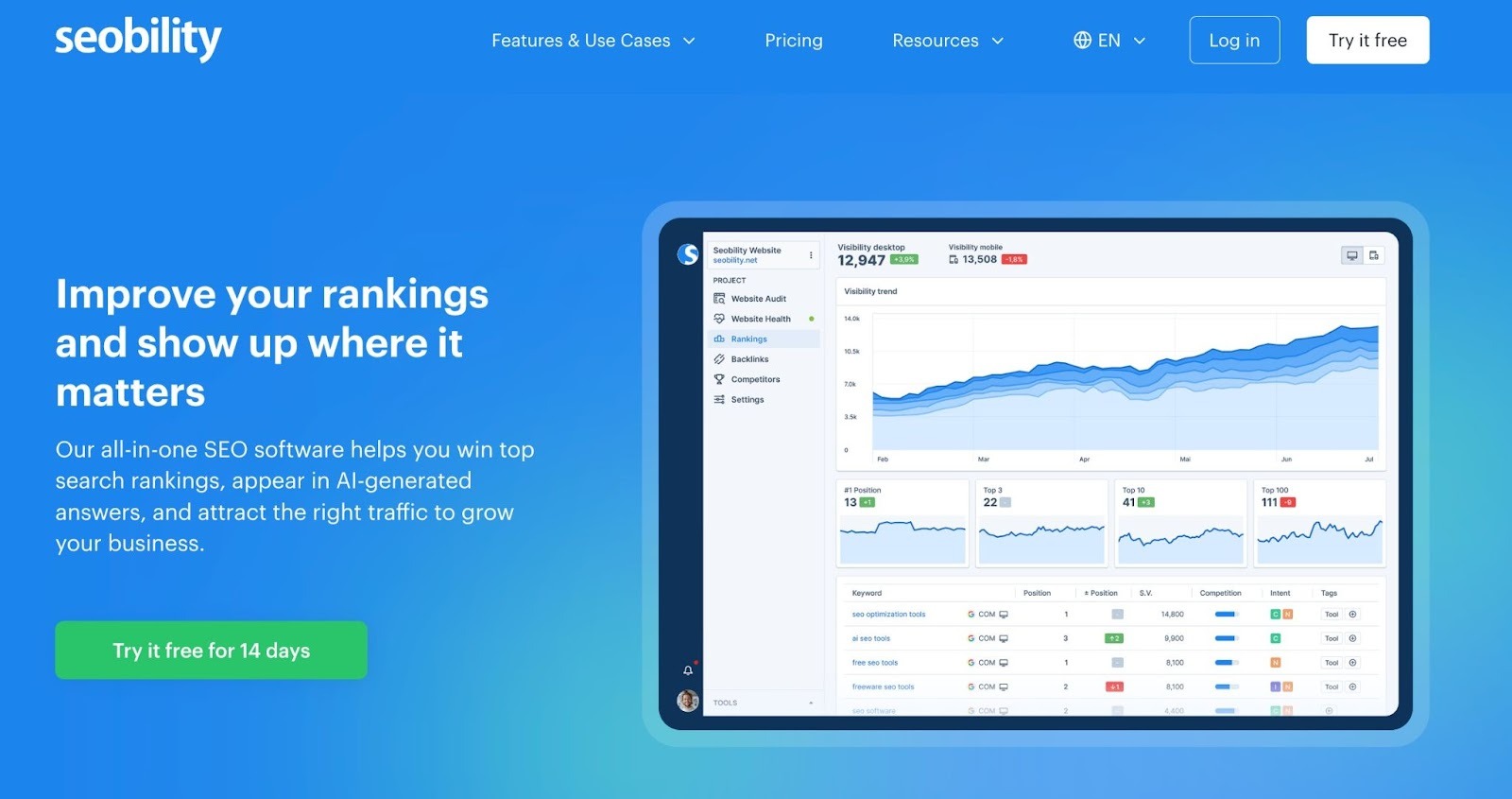
If you want an all-in-one SEO suite that covers the essentials without bloat, Seobility is a strong budget-friendly pick.
Seobility bundles a comprehensive Website Audit (duplicate content, broken links, metadata, JS crawling), Ranking Monitoring (desktop and mobile, country/city, local pack, competitor tracking), and Backlink Monitoring (weekly updates, anchor text and broken-link checks, plus competitor backlink tracking).
Seobility’s reporting is practical: export white-label PDFs/CSVs, share read-only project links, and set automated email recipients, good enough for most SMBs and agencies. Also, Uptime Monitoring feature is set to be released soon
In day-to-day use, Seobility’s built-in reports are quick to generate and easy to share.
Rank updates are frequent (desktop daily; mobile every three days on paid plans), and Premium includes 3 projects / 25k pages per crawl / 300 tracked keywords, roomy for most small sites.
Agencies get higher ceilings (15 projects, 100k pages per crawl, 1,500 keywords) and team accounts.
Delivers the core audit, rank tracking, and backlink monitoring stack without unnecessary complexity. The free plan is genuinely usable, not a stripped demo.
Reporting customization is limited compared to agency-focused tools. The backlink database is smaller than Semrush or Ahrefs — treat it as a site health monitor, not a link research tool.
Basic is free. Premium is $57.22/month with a 14-day free trial; Enterprise is $206.28/month plus VAT.
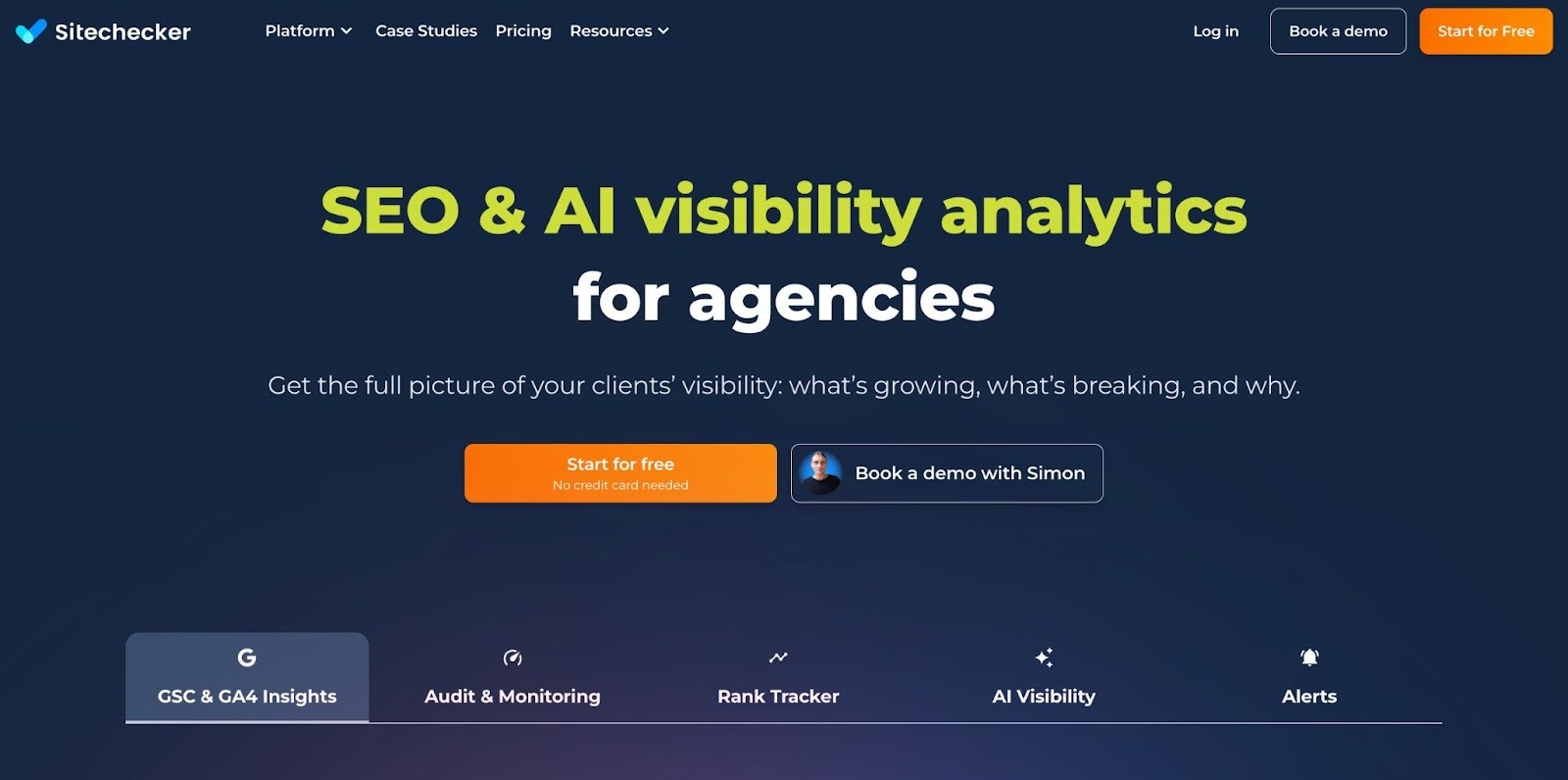
Sitechecker is a powerful reporting tool designed to give website owners comprehensive insights into their site’s performance. Much like Woorank, Sitechecker offers features such as keyword research, ranking data tracking, and automated reports.
However, one of the main advantages of Sitechecker over other similar tools is its wide range of additional features that take website optimization to the next level. With Sitechecker, users can analyze multiple websites at once and receive detailed reports on various metrics related to their SEO strategy.
These metrics include page speed scores, keyword density, backlinks analysis, HTML tag optimization, and more.
Multi-site monitoring in one dashboard is genuinely useful for freelancers and small agencies juggling several clients. Page speed and HTML tag analysis are more detailed than most tools at this price point.
Keyword and backlink data depth lags behind the bigger suites. Best used as a monitoring and audit tool rather than a primary SEO research platform.
Sitechecker's premium plans start from $83 per month and range up to $375 per month, depending on the features you need.
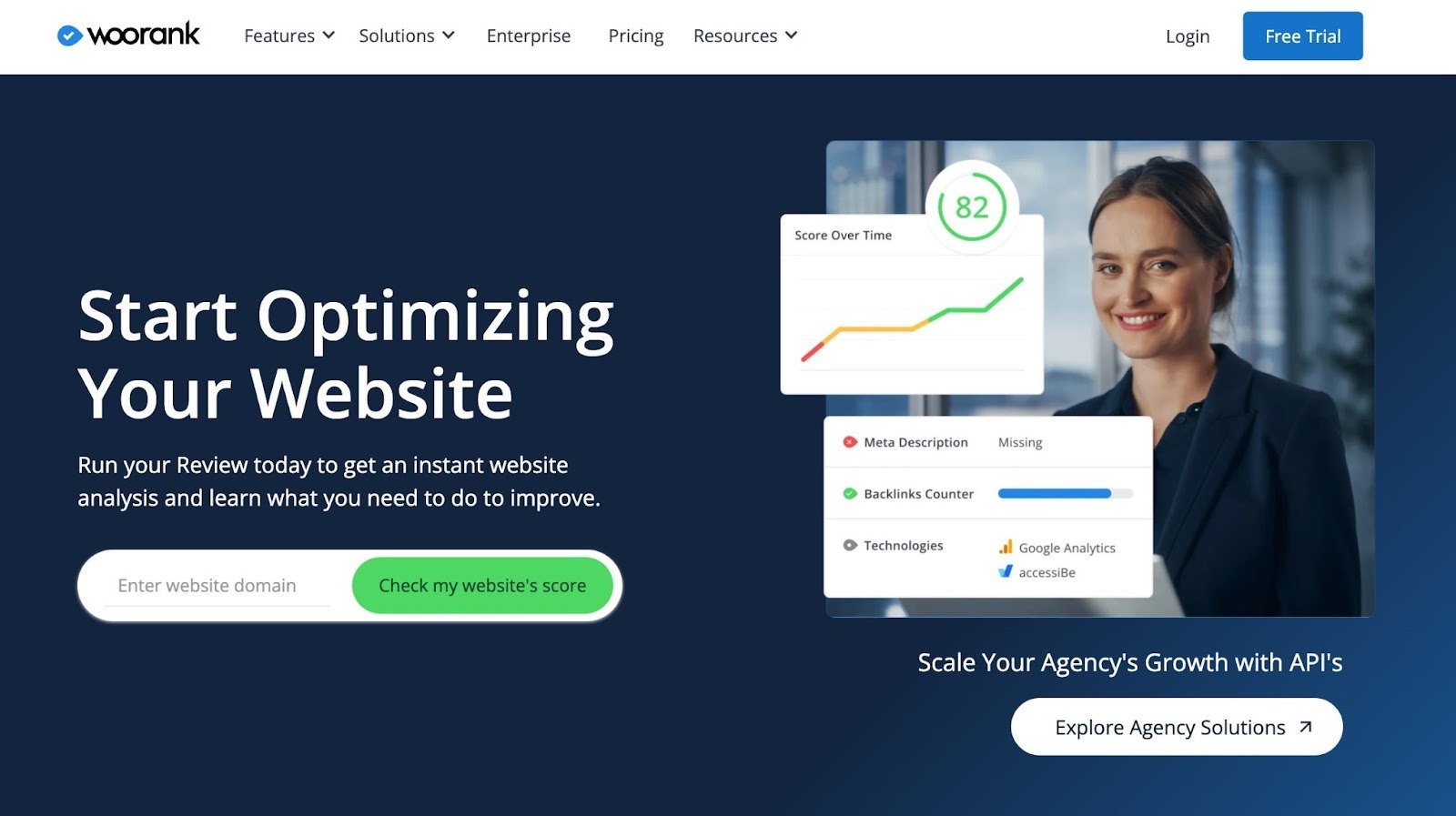
Woorank is an SEO reporting tool that provides comprehensive insights into the performance of websites. This tool can track a website's progress, discover potential opportunities for improvement, and monitor competitor performance.
Woorank also helps users identify what keywords their site ranks for and how those rankings compare to their competitors. Additionally, Woorank has many valuable features, such as keyword research tools, ranking data tracking, and automated reports. All these features combined make Woorank an invaluable resource for any website owner looking to improve their online presence.
Fast, clean site audits that non-technical clients can actually read. The competitor tracking feature surfaces quick wins without requiring deep expertise to interpret.
Less depth on rank tracking and backlink analysis than all-in-one suites. Better suited as a diagnostic and client communication tool than a full SEO research platform.
You can test Woorank for 3 days using their free trial. The tool offers feature-rich plans for more advanced users, including full keyword research tools and automated reports. The prices for these plans start from $12.99 per month (billed annually) up to $133.25 per month, depending on the features you need.
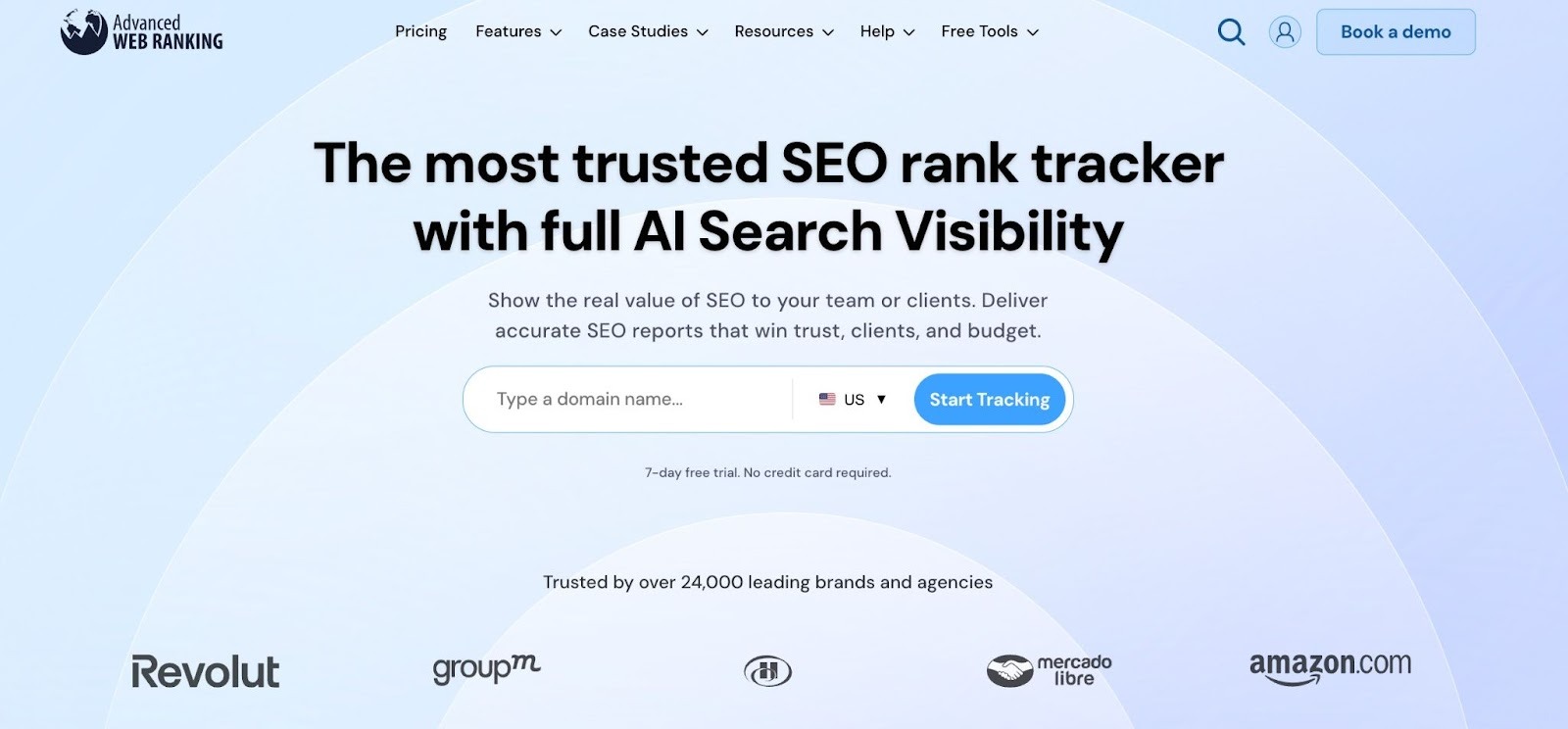
If you’re looking for software that will beautifully pack your rank data into white-label reports, Advanced Web Ranking is an intelligent solution. The platform comes with most of the key features a team of professional marketers needs.
During our testing, we had no issues using the SERP and competitor research features during our testing. The technical SEO reports are fully customizable. The platform allows you to integrate third-party reporting tools.
The best pure rank-data presentation on this list. White-label reports are polished enough to send directly to clients without further editing. Third-party integrations are broad and reliable.
It is a rank tracking and reporting tool first — not an all-in-one SEO suite. Site audits and keyword research require supplementing with another platform.
AWR's pricing plans start from the essential Pro Plan, which costs $125 per month and includes plenty of features for rank tracking, competitor research, keyword research, and detailed reporting. The top-tier Enterprise Plus starts at $882 per month and offers additional features like Security Audits, Custom Billing Quotes, Custom MSAs and SLAs, and more.
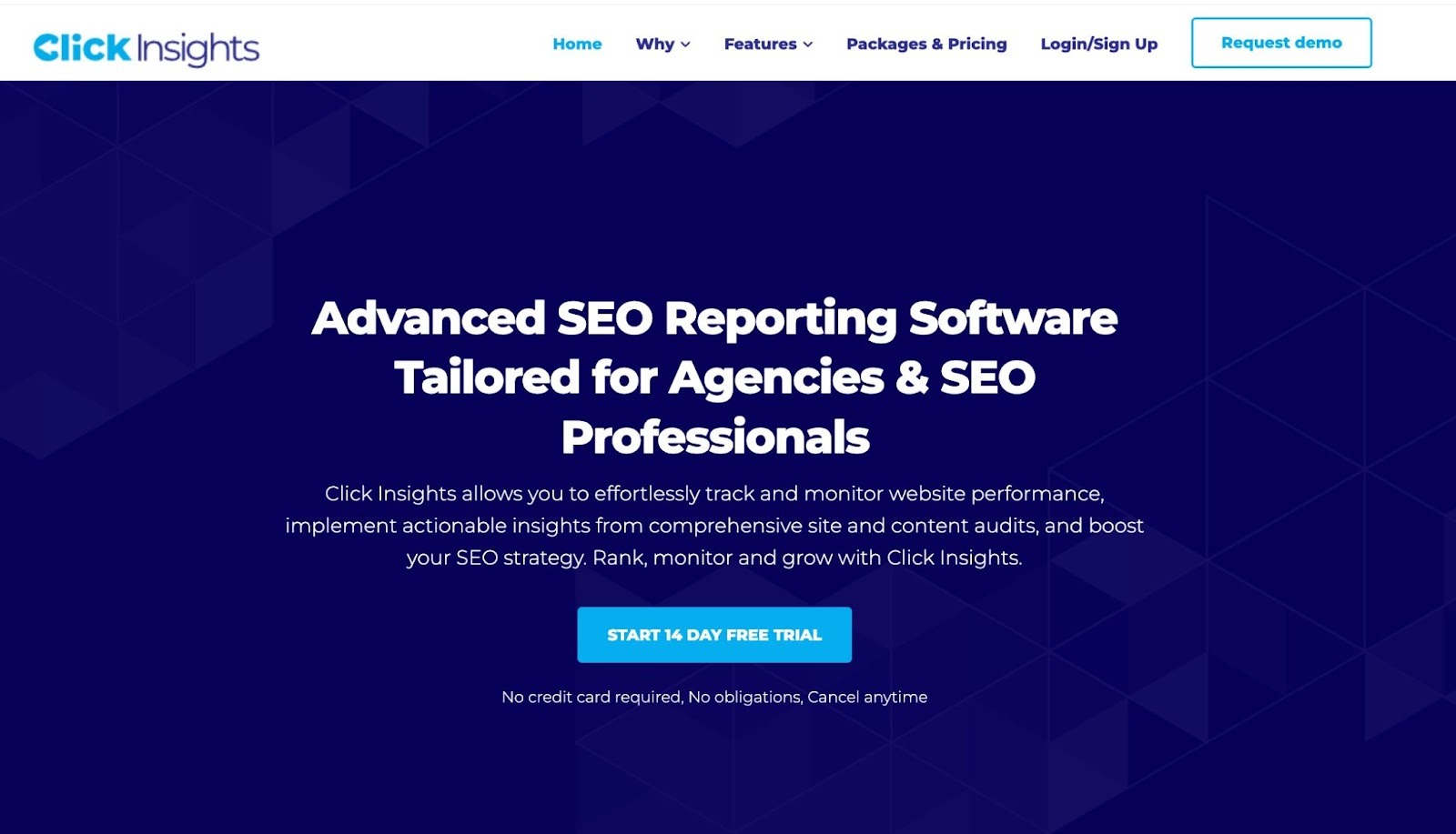
If you’re looking for transparent SEO monthly reports to make sure your campaign is hitting all your targets, Click Insights is the ideal tool. This handy tool is created by the award-winning agency, Click Intelligence, and provides an easy-to-understand dashboard, pulling data from Google Search Console and GA4. It doesn’t only focus on SEO elements, but it also explores content audits and AI overviews.
Click Insights has a simple overview dashboard, which shows everything from engagement rate to keyword movements, and then has a number of tabs to delve deeper into this important data. You can also use Click Insights for white label campaigns; your brand logo and colours will appear on the reports generated.
Pulls GSC and GA4 into a single, clean dashboard without the setup overhead of Looker Studio. The AI overviews tracking is a forward-looking feature that most tools haven't caught up to yet.
Data sourcing depends entirely on GSC and GA4 — it surfaces and packages what Google gives you, rather than generating independent SEO intelligence. Not a substitute for a full audit or rank tracking suite.
You can try to explore Click Insights for a 14-day free trial. You don’t have to input credit card information, and you can cancel at any time. It allows you to test the tool for yourself and to see how it will benefit your business. If you want to sign up for the tool, you can choose a range of subscriptions, starting at Standard for $12 per month and Enterprise at $1647, the highest level.
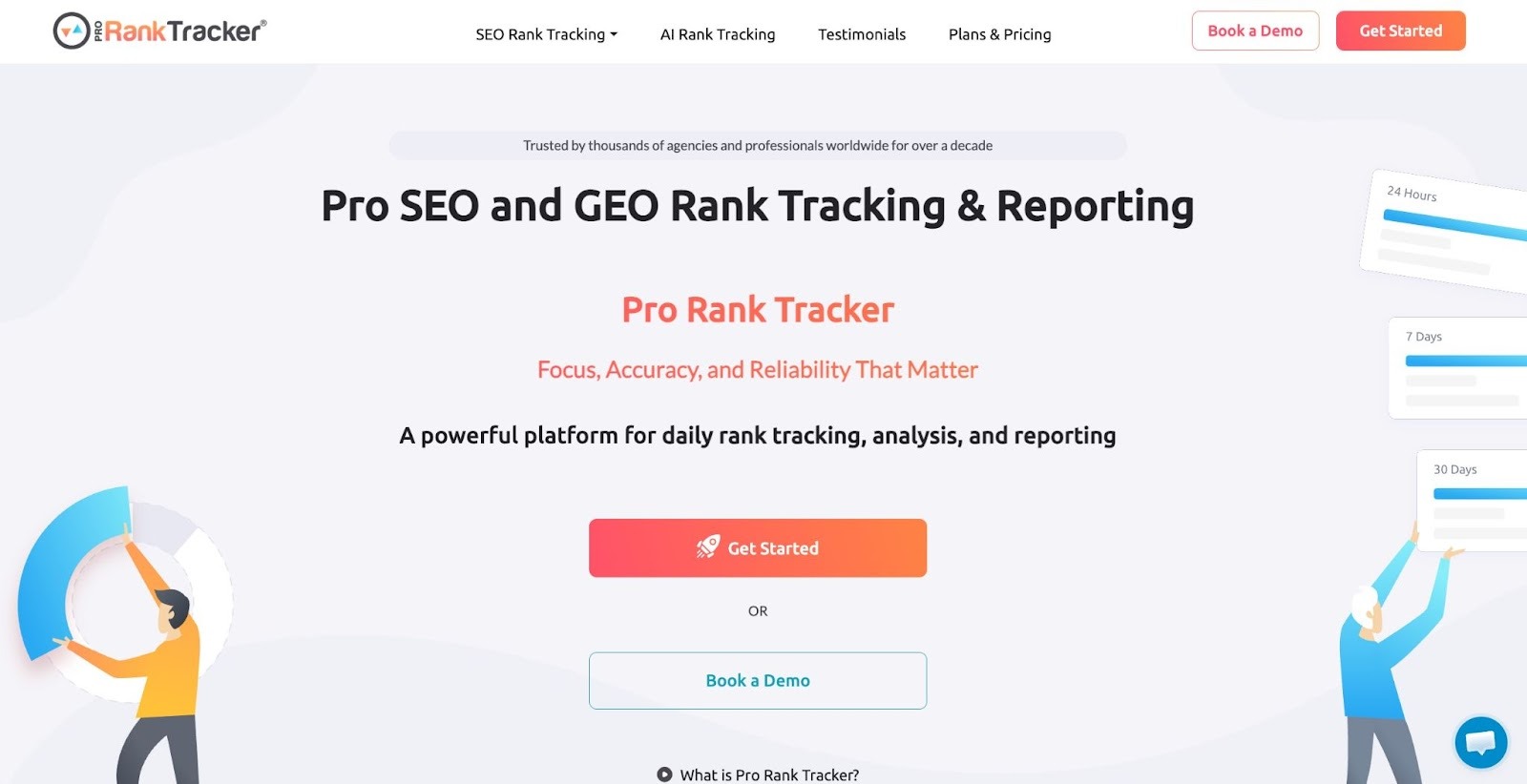
Unlike other SEO reporting software on our list, Pro Rank Tracker is mainly used by agencies and enterprises. Of course, that doesn’t mean that small website owners can’t use the tool effectively. On the contrary, Pro Rank Tracker is the only software on the list that comes with a free forever plan.
When it comes to SEO reporting, Pro Rank Tracker allows you to track your rank in real-time and visualize your SEO data via analytic reports. A feature that we particularly enjoyed using is the MyRanks app.
With this app lets you quickly create and share your reports with your clients or teammates. The report templates are customizable, and the creation process is straightforward. The starter striking plan is by far the most affordable on the list. If you are on a tight budget, this is a must-try software.
The only tool on this list with a free forever plan that holds up under real use. The MyRanks client app makes sharing rank reports genuinely frictionless.
Focused narrowly on rank tracking — no site audit, no backlink analysis, no keyword research. Works best as one piece of a broader toolstack, not a standalone solution.
Pro Rank Tracker offers flexible pricing plans for all budgets. New users can test the platform with a 7-day Test Drive for just $1 (100 terms, all premium features, no auto-renewal). Paid plans start at $99/month for 1,000 tracked terms (Starter), $149/month for 2,000 terms with multi-user access and Looker Studio integration (Pro), and from $199/month for agency-grade plans with API access, unlimited users, and a dedicated Customer Success Manager.
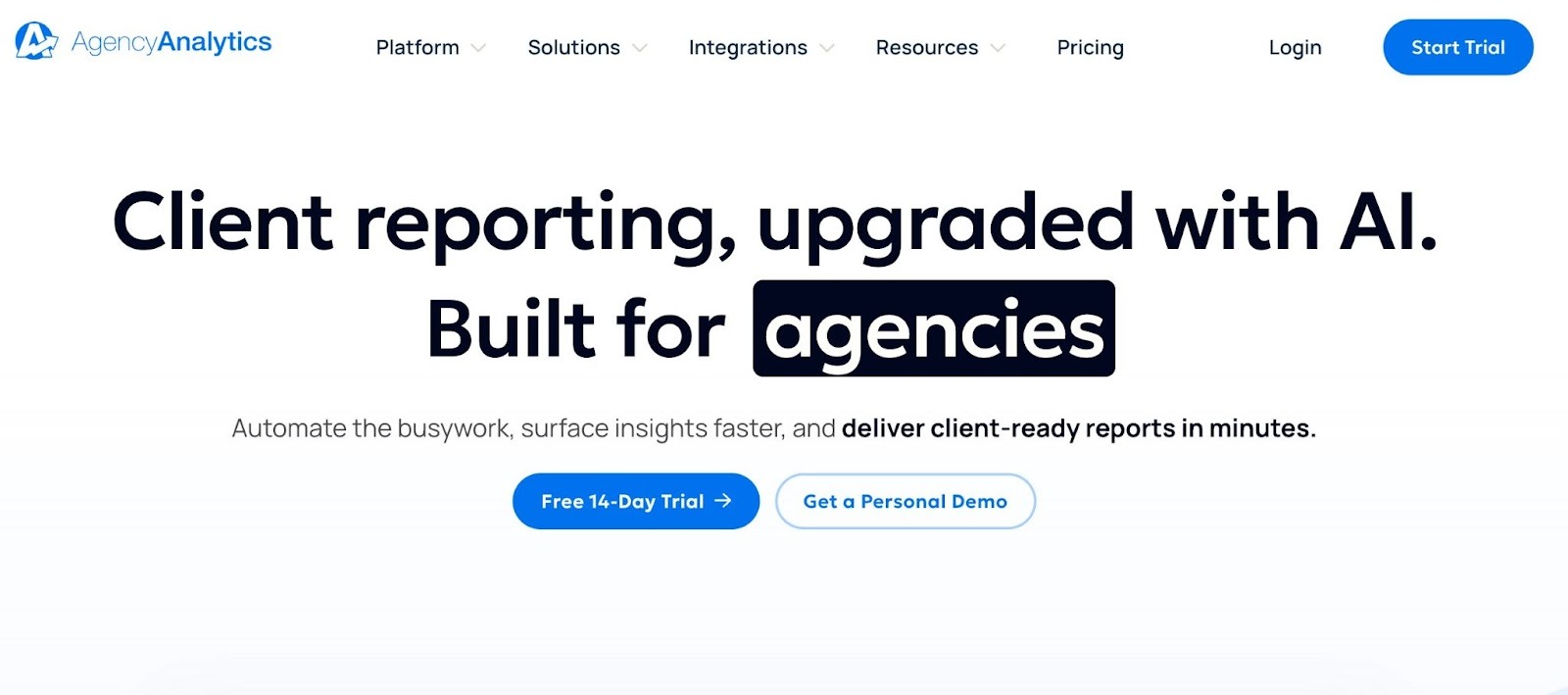
AgencyAnalytics is built from the ground up for one purpose: making client reporting fast, clean, and scalable. While most tools on this list treat reporting as a feature, AgencyAnalytics treats it as the product.
The platform connects to over 80 data sources — Google Analytics, Search Console, Google Ads, social media, and more — and pulls everything into a single, white-labeled client dashboard. Each client gets their own login and a live view of their performance, cutting down on the "how are things going?" emails.
Set your cadence, choose your template, and reports go out without you touching them. For agencies billing 20+ clients monthly, that compounds into serious time savings. The rank tracker is functional but not the deepest on the market — AgencyAnalytics is best paired with a data-rich suite like Semrush or SE Ranking rather than used as a standalone SEO tool.
The cleanest client-facing dashboards available. Setup is fast, white-labeling is thorough, and the 80+ integrations mean you rarely need to leave the platform.
It is a reporting and dashboard tool, not an SEO research tool. You need a separate suite for keyword research and technical audits.
Plans start at $59 per 5 clients per month on the Freelancer tier. The Agency plan runs $179/month per 10 clients and unlocks custom metrics, task management, full branding, and more features. A 14-day free trial is available without a credit card.
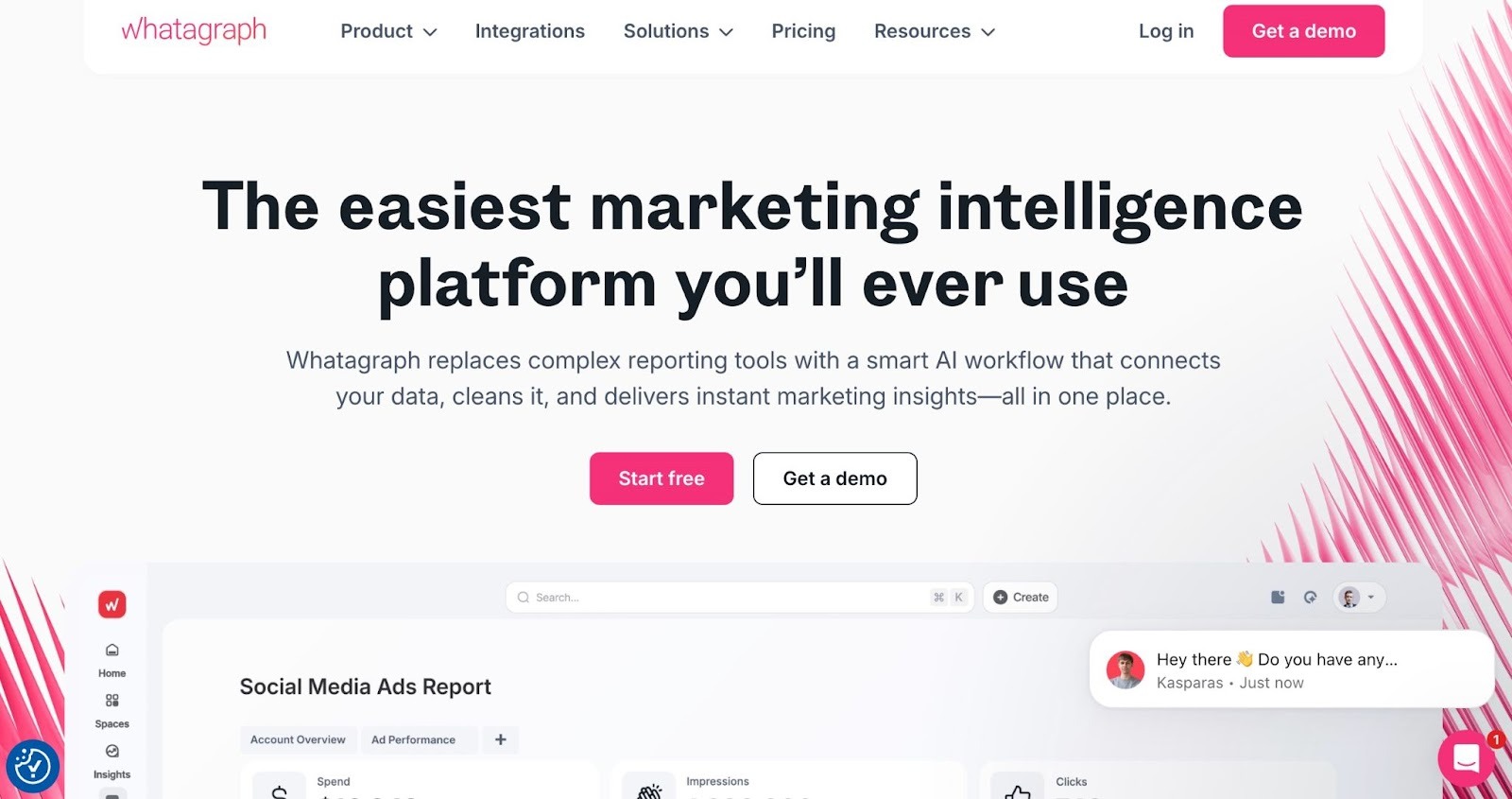
Whatagraph solves the problem that no one wants to admit takes hours every month: aggregating data from a dozen different channels into one coherent client report.
It is not an SEO tool — it is a reporting automation platform that happens to cover SEO exceptionally well alongside PPC, social, email, and more. Connect Google Search Console, Google Analytics, your rank tracker, and five other sources, and Whatagraph weaves them into a single visual report. The templates are polished enough to send directly to C-suite clients. The drag-and-drop report builder means you can customize without touching a line of code.
If you're producing 30 reports a month manually, this platform turns that into a one-time setup. Its cross-channel view also makes it easier to show clients how their SEO investment connects to overall business performance — not just rankings.
Multi-channel reporting done right. Clients get a single source of truth, and agencies stop drowning in spreadsheets.
Premium pricing makes it a harder sell for freelancers or small agencies. At its entry price, you are paying for scale — if you manage fewer than 10 clients, the cost-to-value ratio gets harder to justify.
Plans start at $229/month for teams who’d use 20 source credits. Higher tiers unlock more users, sources, and custom branding. A free trial is available.
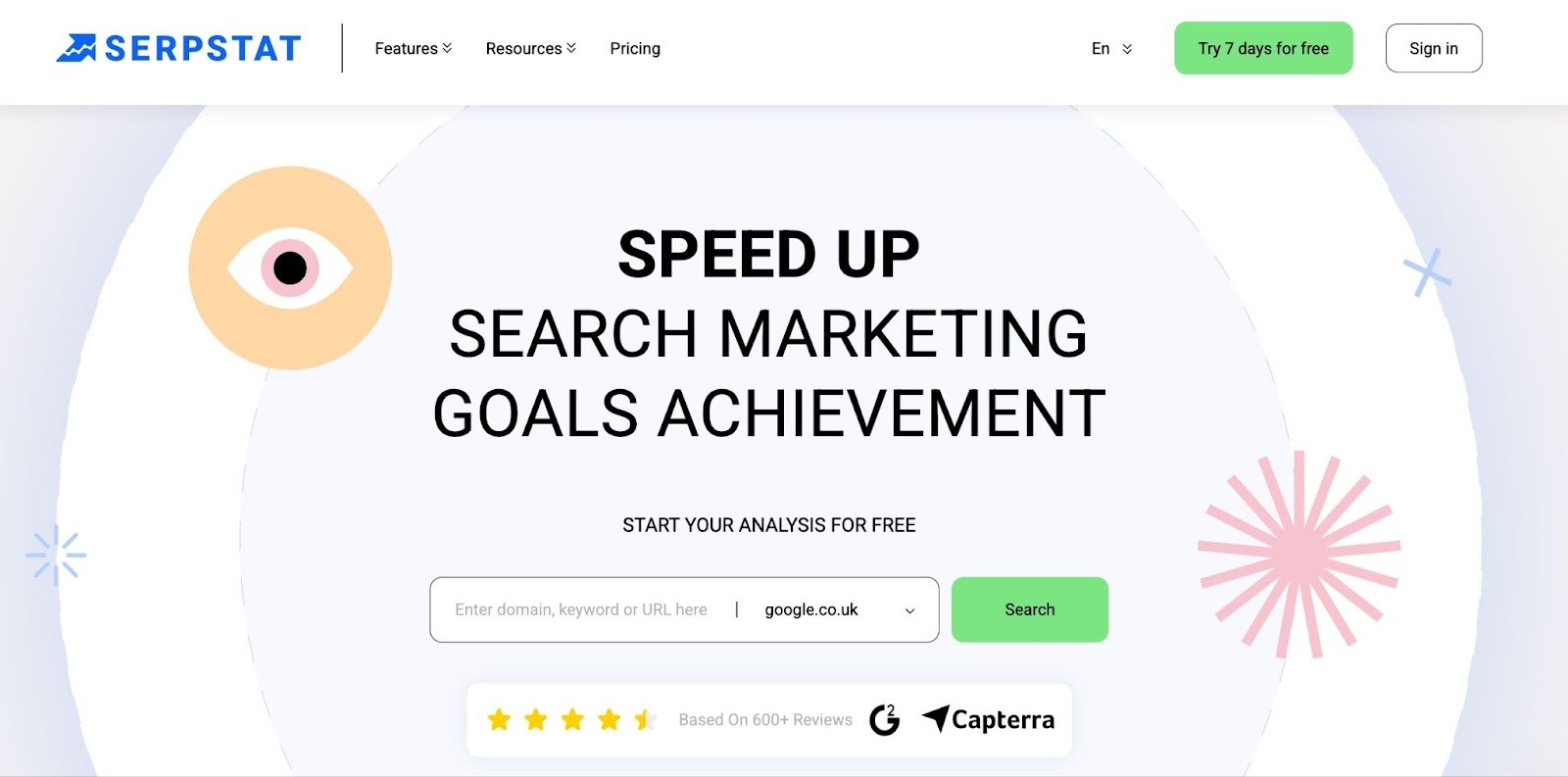
With more than 50 SEO-related tools and widgets, it is no overstatement to say that Serpstat is a complete solution for SEO professionals. The platform allows you to analyze your competitors, generate SEO audits, conduct keyword research, check your backlinks report, and much more.
With a daily rank-tracking feature, Serpstat can automatically generate SEO reports for you and your clients. You can base your SEO research on niche leaders and use ad examples for your campaigns.
The platform seamlessly integrates with third-party tools for SEO metrics acquisition and reporting.
The sheer breadth — 50+ tools covering rank tracking, site audits, keyword research, competitor analysis, and backlink monitoring. The keyword clustering feature alone saves hours of manual work.
The interface has a steeper learning curve than most tools on this list. Data coverage is strong for major markets but thinner for niche or non-English markets.
On a tight budget, you can take advantage of the simple but effective "Individual" plan and access all essential tools at $50/mo. The more robust plans offer unlimited result sets, extended data analytics capabilities, and more.
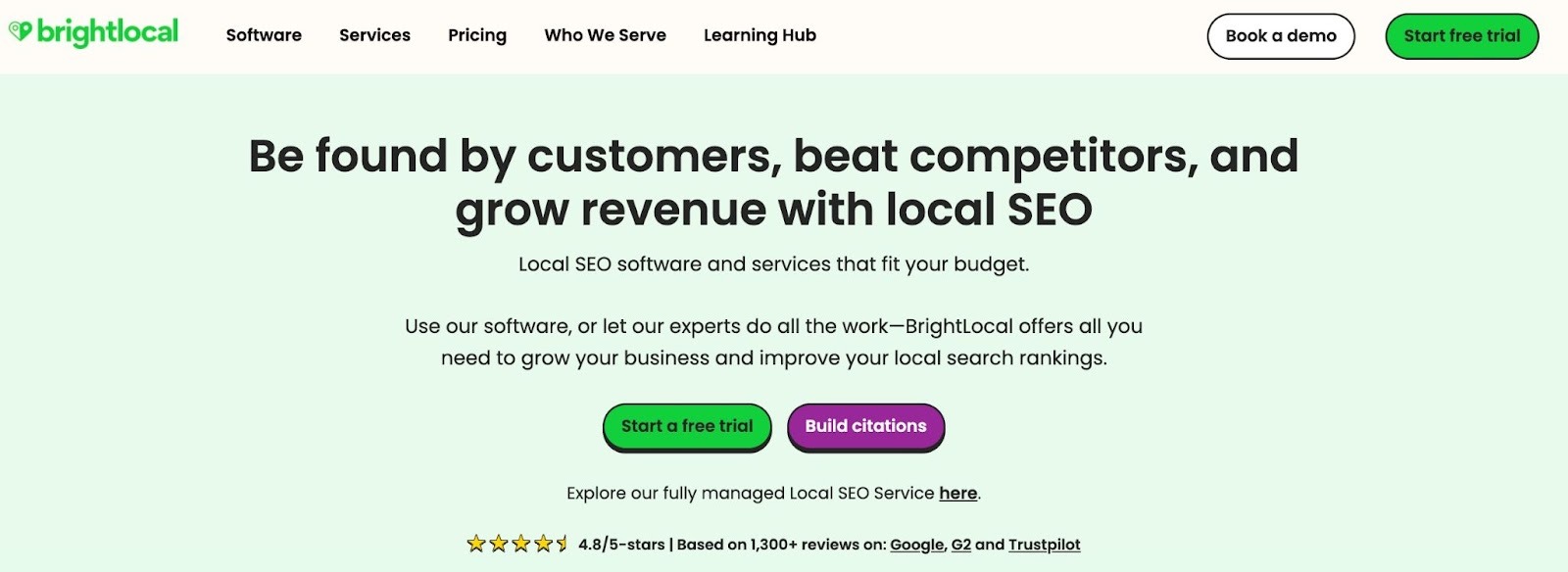
BrightLocal is the last premium software we’re reviewing for the purposes of this in-depth guide. Like most platforms reviewed so far, this is search engine optimization software for professionals.
The platform focuses on local rank tracking and helps you create local SEO reports. This is the best way to go if you need software that provides valuable information about your client’s performance based on location. SEO reports are fully white-labeled and customizable.
Finally, this is one of the few SEO reporting software that allows you to create reports for your Google Business Profile. This is also one of the most affordable SEO software.
The most complete local SEO reporting stack available. Google Business Profile reporting alone justifies the cost for local-focused agencies.
Narrow scope by design. If you need broader technical SEO or content analysis, you'll need a second tool alongside it.
BrightLocal's pricing plans start from the “Track” plan, which costs $29 per month and is perfect for small businesses and agencies. Mid-size businesses will benefit from the “Manage” plan that starts at $36/mo. You can try BrightLocal for free during the first 14 days.
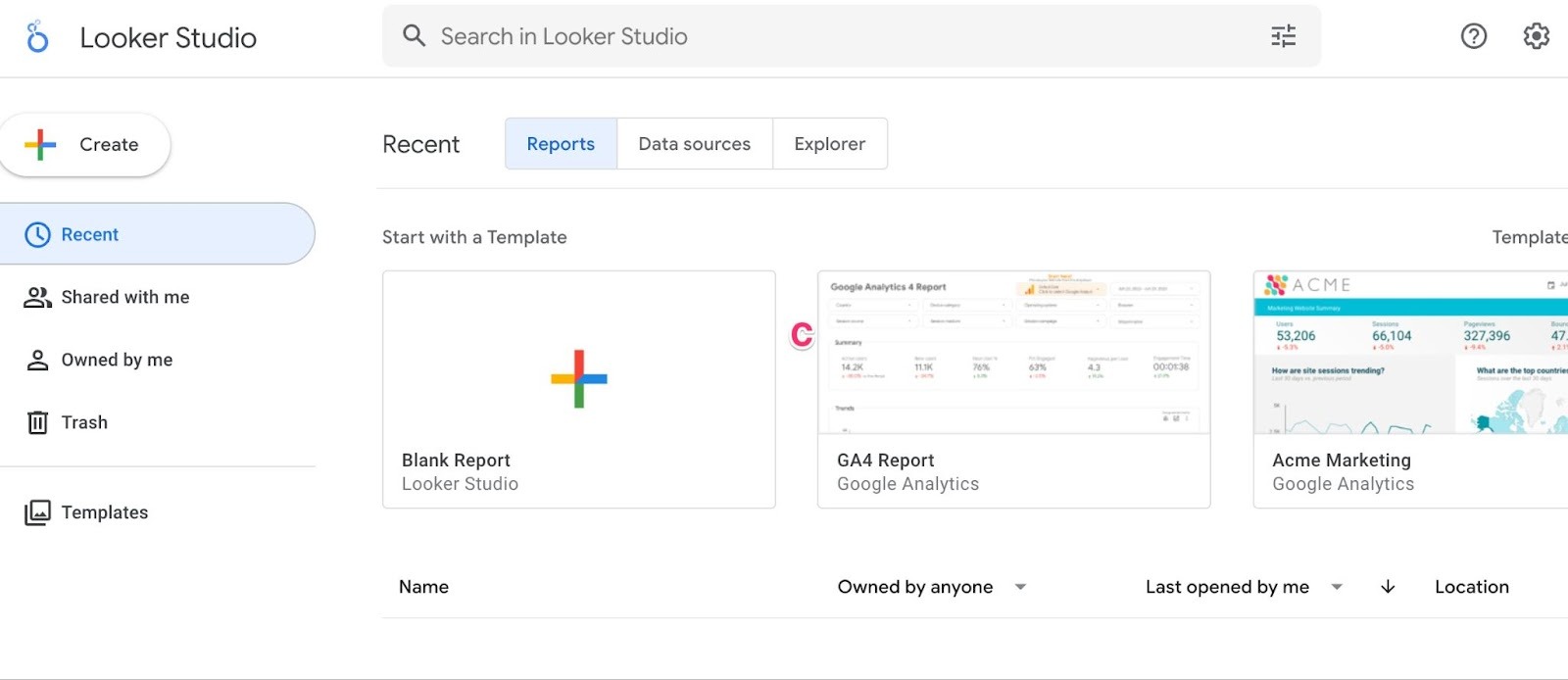
Our last suggestion is actually two different tools offered for free by Google. If you do not want to spend any money on creating your analytics reports, you can use the Looker Studio platform. The software comes with plenty of pre-built reports and data source templates. As such, you can use the platform to generate detailed reports for yourself or your clients quickly.
On the other hand, the Google Analytics platform is used for real-time data collection. Through the platform, you can access important data about your website visitors. From ROI statistics to behavior and traffic sources (organic traffic, social media, etc.), nothing is left out. The tool integrates with other Google platforms, such as the Google Search Console.
Google Analytics also offers a customization section where you can find the custom reports you have created.
Free, deeply integrated with Google's own data, and endlessly customizable. Looker Studio reports can look as polished as anything produced by a paid platform — if you put in the setup time.
Neither tool generates SEO data independently. You are only ever reporting what other sources feed in. The manual configuration required to build useful reports is a real barrier — expect hours of setup before anything client-ready comes out.
Both tools are free, but you can upgrade to Looker Studio Pro for extended capabilities at a cost of $9 per user per project per month.
Producing a thorough SEO report is only half the job. How you present it determines whether a client renews, refers, or quietly starts shopping for a new agency.
Clients do not care about crawl errors. They care about revenue, leads, and visibility. Open every report with the metrics that connect directly to their business goals — organic traffic growth, lead volume from search, ranking movement on their five most important keywords. The technical detail belongs further down, not in the executive summary.
Monthly reporting is the standard for most retainers. Weekly snapshots work well for clients in competitive or fast-moving niches who need tighter feedback loops. Quarterly reviews are best reserved for strategy sessions where you zoom out and assess progress against longer-term goals. Whatever cadence you agree on, hold to it — inconsistent reporting erodes trust faster than a bad month of rankings.
Clients build pattern recognition. When the report structure changes month to month, they spend cognitive energy navigating the document instead of absorbing the data. Lock in a template: executive summary → key wins this period → ranking and traffic trends → technical health → next month's priorities. Repeat it every time.
A 12% drop in organic traffic means nothing without context. Was there a Google algorithm update? Did a competitor publish aggressively? Did the client make site changes mid-month? Your job is to explain the story behind the numbers, not just present them. Clients who understand the why are far less likely to panic at a bad month — and far more likely to trust your long-term strategy.
Every report should end with a clear action list — what you are doing next, what you need from the client, and what success looks like in the following period. A report that ends without a direction leaves clients wondering what they are paying for. Close it with momentum.
All of the above tools are more than capable of improving your SEO. As long as you learn to use them properly, they can also help you create analytical SEO reports. These reports are the best way to adjust your marketing campaigns properly.
SE Ranking and SEMrush are the most comprehensive platforms for SEO research and reporting combined — the right default for businesses and in-house teams. For agencies managing multiple clients, AgencyAnalytics and Whatagraph will save more time than any all-in-one suite. If budget is the primary constraint, Pro Rank Tracker's free plan and Google Looker Studio get you further than most people expect. And if local SEO is your focus, nothing comes close to BrightLocal. The best SEO reporting tool is not the one with the most features — it is the one that matches how you actually work.
SEO reporting is the process of tracking and analyzing data related to website visibility, content marketing engagement, organic search traffic, and more. SEO reports combine data from multiple sources, such as search engine result pages (SERPs), analytics platforms, keyword research tools, and other online monitoring tools.
Through the use of SEO reports, businesses can gain insights into how their website is performing in terms of ranking and visibility, as well as identify any potential areas for improvement.
Opting for SEO reporting software is the best way to ensure that your SEO campaigns will actually impact your performance. Most of the software reviewed in this guide will help you craft a flawless SEO strategy from scratch.
There are many reasons why SEO reporting software is beneficial for you. If you own a digital marketing agency, such tools will allow you to create SEO reports for your clients and optimize their strategies. On the flip side, if you own a business or website, you can use the software reviewed above to outrank your competitors and have a general overview of your SEO efforts.

Irina is a Founder at ONSAAS, Growth Lead at Aura, and a SaaS marketing consultant. She helps companies to grow their revenue with SEO and inbound marketing. In her spare time, Irina entertains her cat Persie and collects airline miles.
.svg)
.svg)
.svg)

.svg)
%20(1).svg)
%20(3).svg)
.svg)
.svg)