
.svg)
%20(1).svg)
%20(3).svg)
Back to articles
10 Best AI SEO Tools For Optimizing Content And AI Citations
August 25, 2026
By
Irina Maltseva
Ask ten marketers what an “AI SEO tool” is, and you’ll get ten different definitions. Some think it’s software that helps rank on Google. Others think it’s a way to appear in ChatGPT answers. Tool vendors happily blur these together, even though Google optimization and AI engine optimization rely on different signals, different data flows, and different formats. No wonder marketers feel confused.
This guide untangles the mess. We separate tools into those built for Google first and those built for AI engines first — not based on features added in 2025–2026, but based on the core architecture and purpose they were originally designed for. If “AI SEO” has felt muddy, this is the map you’ve been missing.
Marketers in 2026 face a tricky reality: the term “AI SEO” has become a catch-all, covering everything from traditional search optimization to getting cited in AI engines. Vendors don’t always help — words like “AI-powered,” “LLM-friendly,” and “AI-ready” are tossed around liberally, often without clarifying which signals the tools actually optimize for.
The confusion is compounded because Google SEO signals don’t always align with AI engine signals. In fact, roughly 80% of URLs cited in AI engine responses don't rank in Google's top 100 results for the same query — meaning traditional SEO performance and AI citation performance are increasingly decoupled. Teams that want to verify this gap for their own keywords at scale often pull raw ranking data through a SERP scraper API rather than checking positions by hand.
Some tools emphasize keyword rankings, others focus on AI visibility, and a few clearly communicate which KPIs are relevant for each channel. For marketers, this creates uncertainty: which metrics matter, which workflows actually move the needle, and how to measure ROI in a landscape where AI citations are increasingly important.
It’s not black and white — you don’t absolutely need two separate tools, but knowing the difference helps. Some marketers choose to use one tool for Google and another for AI engine visibility. Others opt for tools that offer “double capabilities” — platforms designed to handle both traditional SEO and AI-focused optimization.
The catch: tools that claim double duty can sometimes fall short in one area. For instance, a Google-first platform with AI features might still lag at driving citations in LLMs, while an AI-first tool could miss fine-grained ranking opportunities in search results. The key is understanding the tool’s core strength and aligning it with your primary objectives.
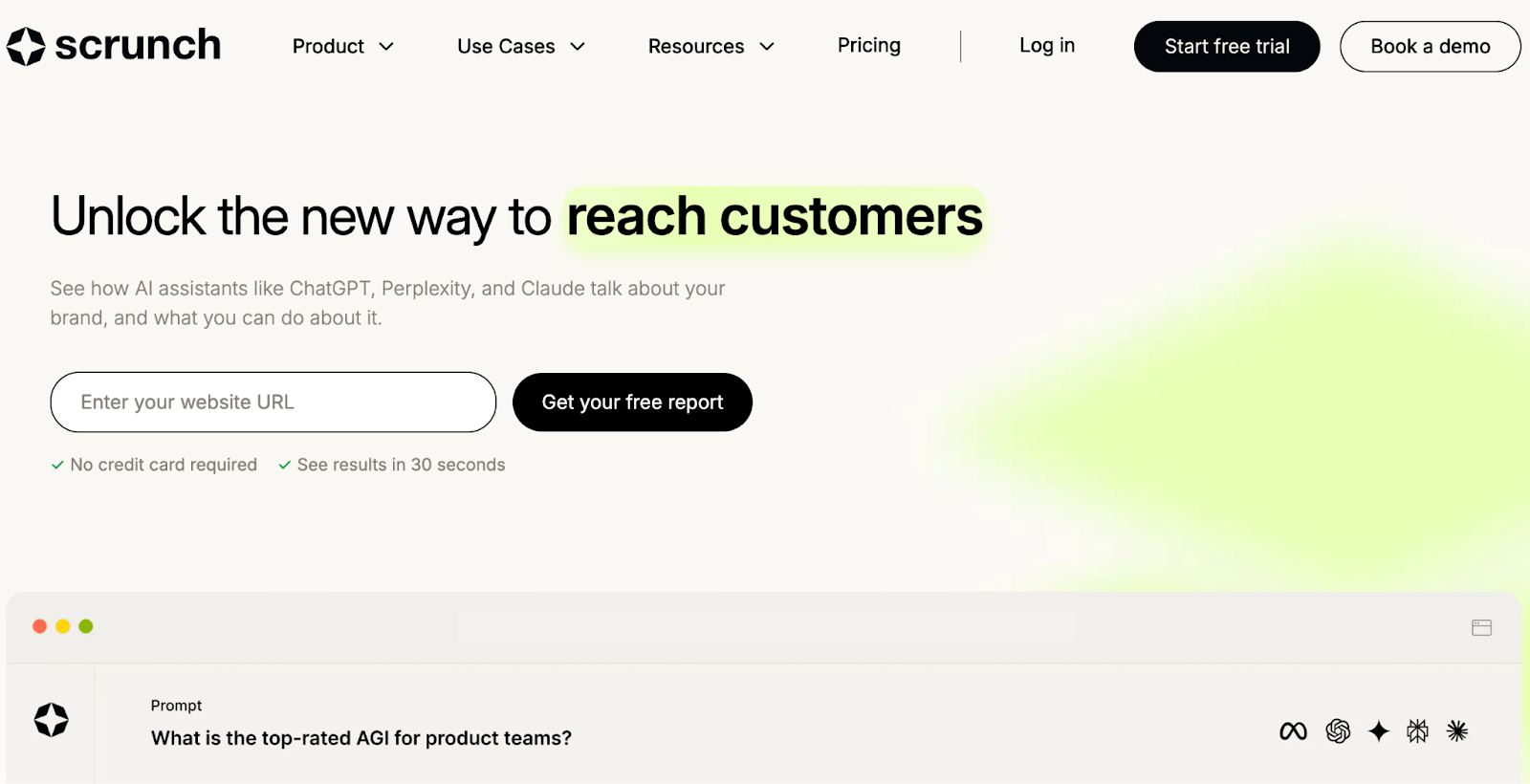
Category: AEO / Agent Experience Platform
Best for: B2B teams, agencies, and enterprises diagnosing and acting on AI citation gaps
Pricing: From $300/month
AI Engines Covered: ChatGPT, Perplexity, Claude, Gemini, Copilot, Bing
Most SEO tools tell you what to write. Scrunch changes what AI systems actually read. In fact, today, about 85% of brand mentions in AI-generated responses originate from third-party pages, not the brand's own website — but for brands that do get crawled directly, the infrastructure quality of their own site determines how much signal AI systems actually extract.
That's not a marketing line — it's a genuine technical distinction that separates Scrunch from every other tool on this list. While competitors offer AI citation monitoring as a dashboard feature, Scrunch closes the full loop: from tracking where you're cited in AI engines, to modifying how those engines ingest your content at the infrastructure level. No other tool operates at this depth.
Here's what makes it work:
What Scrunch doesn't do: it's not a content brief tool. It won't help you score your article for Google or suggest NLP terms. Teams that need both Google optimization and AI visibility will need to stack Scrunch with a content optimizer like Surfer or Clearscope.
If AI engine visibility isn't a nice-to-have but a genuine business priority, Scrunch is the only tool that addresses it at the infrastructure level.
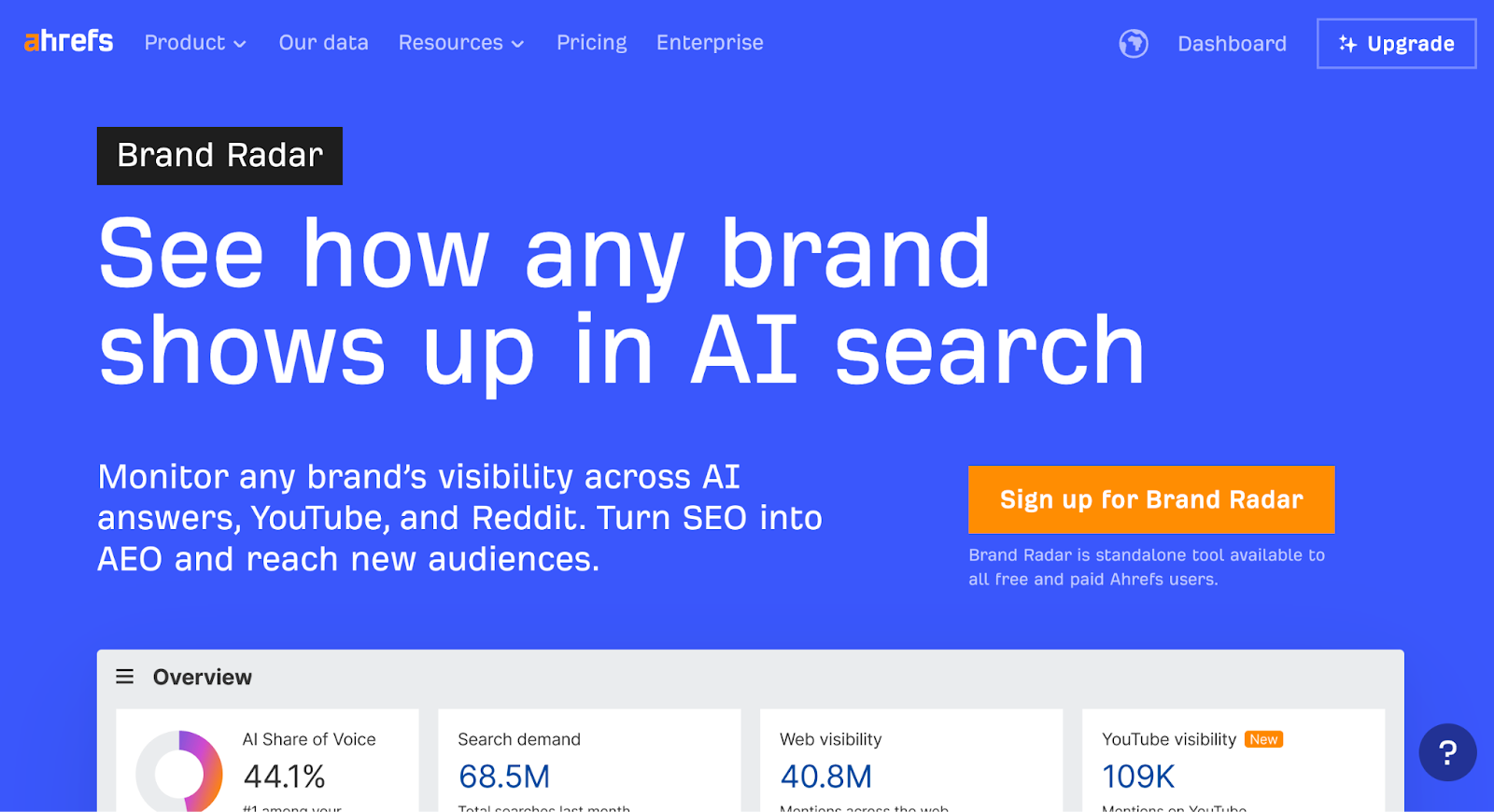
Category: Full SEO suite + Brand Radar
Best for: SEO professionals who lead with link building and keyword research
Pricing: From $129/month
AI Engines Covered: ChatGPT, Perplexity, Gemini, Copilot, AI Overviews, AI Mode, YouTube, TikTok, Reddit
Most roundups underserve Ahrefs — which is a mistake, because Brand Radar is a genuine differentiator that most competitors haven't caught up to.
The core platform needs no introduction: 110B+ keyword database, 15 years of backlink data, and AI-enhanced keyword research and content tools that have been the backbone of professional SEO for years. If you're running a serious link-building operation or conducting deep keyword gap analysis, Ahrefs is still the most powerful foundation available.
What's changed and worth covering: Brand Radar draws on 243M+ monthly prompts from real "People Also Ask" data. This isn't synthetic query data manufactured by the tool — it's derived from actual search behavior, which makes the AI visibility tracking more grounded. Coverage spans ChatGPT, Perplexity, Gemini, Copilot, AI Overviews, and AI Mode — and then goes further, into YouTube, TikTok, and Reddit. For brands where discovery happens across multiple surfaces, not just traditional search, that breadth is legitimately differentiated.
The honest positioning: Ahrefs was built for a world organized around backlinks, keywords, and SERPs — and it's very good at that world. The AI monitoring is a meaningful addition, not a checkbox. But for teams whose primary workflow is AEO-first, Scrunch or Otterly AI will feel more purpose-built. Ahrefs is the right tool when traditional SEO is the primary job and AI monitoring is a valuable secondary lens.
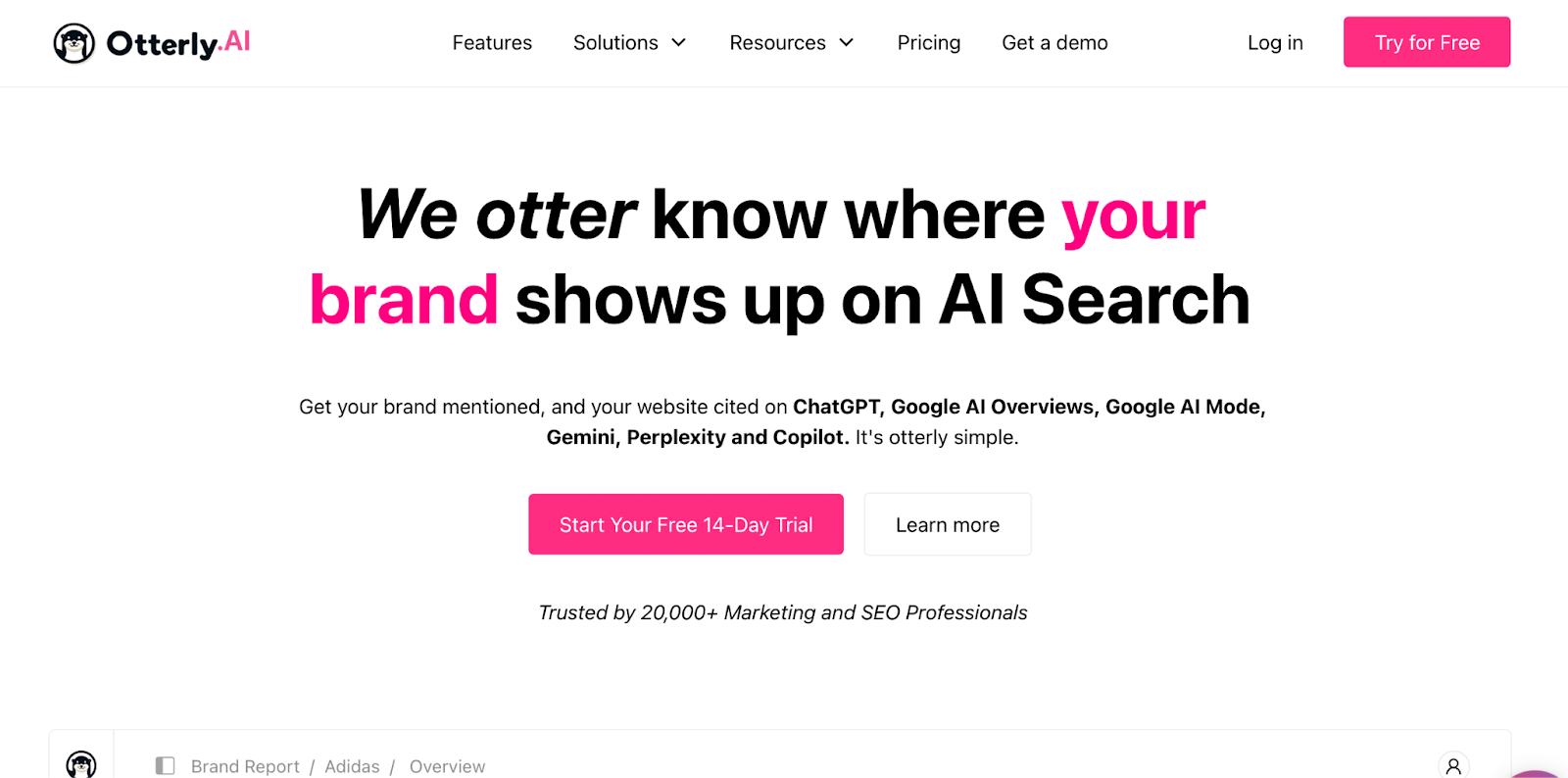
Category: GEO audit tool
Best for: Businesses starting their AEO journey
Pricing: From $189/month
AI Engines Covered: ChatGPT, Perplexity, Google AI Overviews, Google AI Mode, Gemini, Microsoft Copilot
If you're not sure where you stand in AI engine visibility before committing to a full AEO platform, Otterly AI is the right first step. It's purpose-built for the audit phase: monitoring six AI platforms and delivering a structured analysis of 25+ factors across content, technical SEO, structured data, and authority signals — with specific recommendations attached to each gap.
The standout feature is the Brand Visibility Index, a unique metric not replicated in other tools at this price point. It gives you a single number that reflects your aggregated AI citation performance — useful both for internal benchmarking and for client-facing reporting when you're building the business case for an AEO investment.
Otterly AI isn't trying to be a full AEO platform. It's a diagnostic layer that answers a specific question: "Where am I in AI search, and what specifically do I fix first?" Teams that run an Otterly audit and find significant gaps are typically the buyers who graduate to Scrunch. The two tools serve sequential needs — diagnosis, then infrastructure.
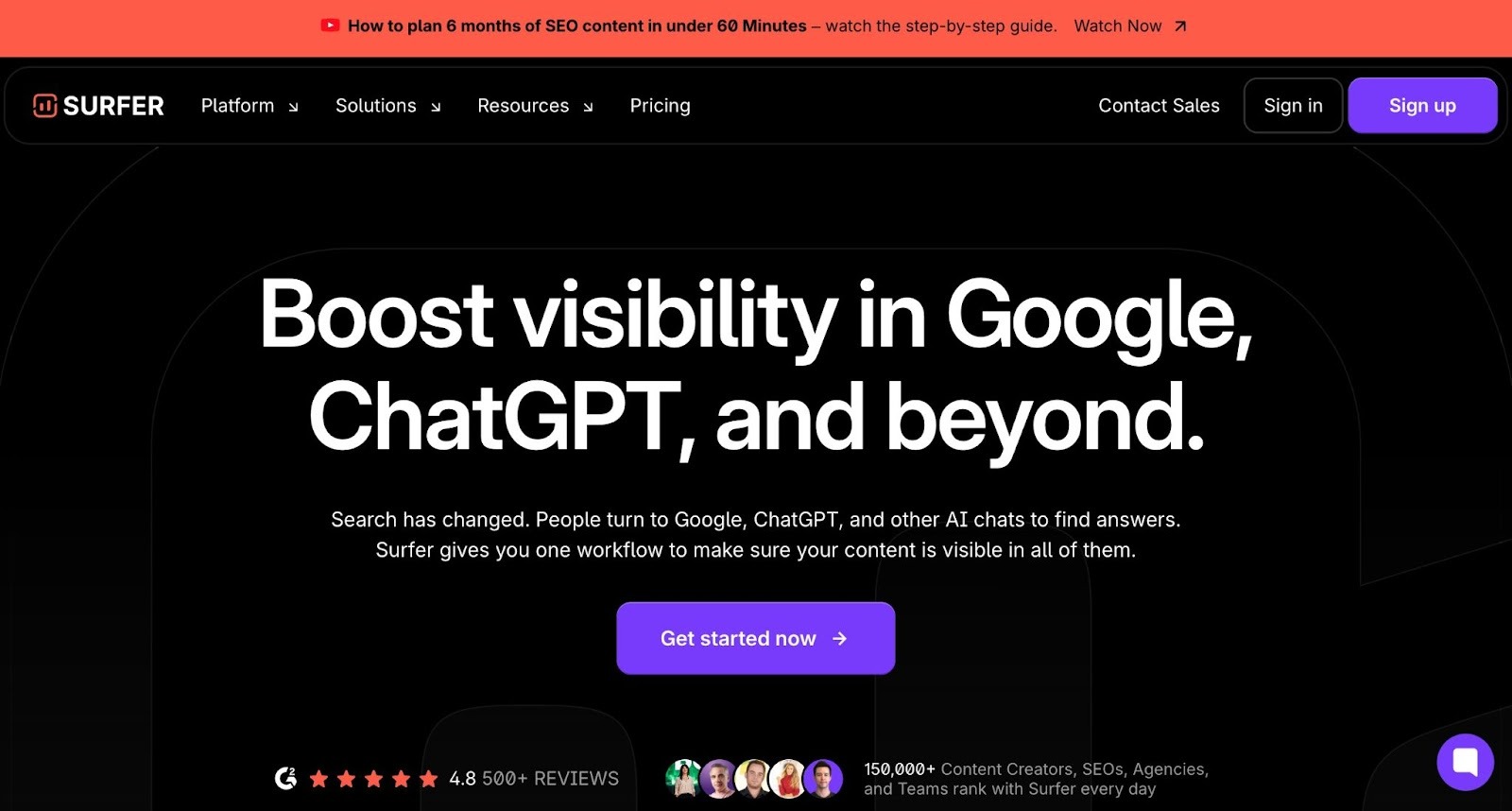
Category: Content optimizer + AI visibility layer
Best for: Content agencies and teams publishing 10+ articles/month
Pricing: From $89/month
AI Engines Covered: ChatGPT, Perplexity, AI Overviews
Surferis, for most content teams, the default choice — and it's earned that position. It's one of the few tools on this list genuinely crossing both categories: strong Google content optimization with meaningful AI visibility layered on, rather than bolted on as an afterthought.
The core product works: real-time content scoring with NLP term suggestions as you write, telling you not just what topics to cover but how much coverage each concept needs relative to top-ranking competitors. The scoring engine is fast, the interface is clean, and the workflow integrations (Google Docs, WordPress) mean writers can use it without being pulled out of their existing environment.
What's worth highlighting in 2026 is Surfer's AI Tracker (available on Pro plans), which monitors your brand's visibility across ChatGPT, Perplexity, and AI Overviews — alongside traditional rank tracking. For most content teams, this is the right entry point into AEO monitoring: meaningful visibility, no extra tool, no extra subscription.
The honest gap: Surfer's AI visibility is a monitoring layer. It tells you where you appear in AI engine responses. It doesn't change how AI bots consume your site. Teams with serious AEO gaps will eventually hit the ceiling of what monitoring alone can fix — and that's where Scrunch's AXP becomes relevant.
Additional features worth noting: topical maps, an AI writer, Auto-Optimize (for refreshing existing content), and rank-drop detection that flags pages losing ground before you notice in Search Console.
For content agencies and in-house teams publishing at volume, Surfer is the strongest all-round entry point into this list.
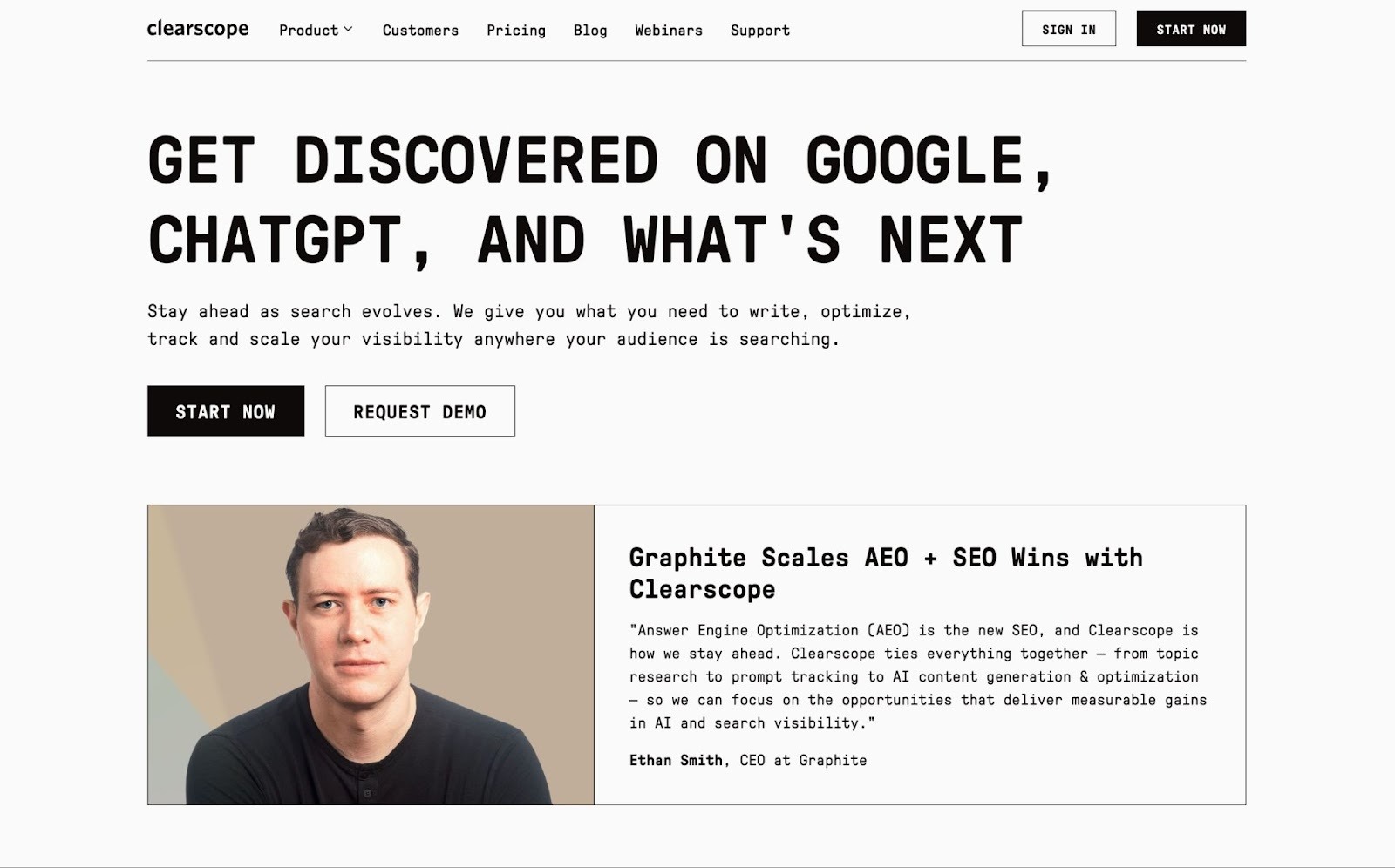
Category: Pure content optimizer
Best for: Large editorial teams with dedicated writers
Pricing: From $189/month
AI Engines Covered: None
Clearscope is a deliberate product. It does one thing — semantic content optimization for Google — and it does it with more precision than anything else in the category. There are no AI writing features, no AI engine monitoring, no adjacent tools trying to be a platform. That's not a limitation; it's a positioning choice that makes Clearscope the right tool for a specific buyer.
The core experience: letter-grade content scoring powered by NLP analysis of top-ranking pages. The grades are consistently the most accurate in the category — editorial teams with high content standards trust the signal because it doesn't fluctuate based on feature bloat or algorithm changes in the tool itself.
The clean interface is part of the value proposition. Major editorial brands and content-heavy enterprises use Clearscope specifically because it fits into a professional writing workflow without friction. Writers don't have to become SEO technicians to use it.
What's true and worth stating clearly: Clearscope offers zero AI engine visibility coverage. If AEO is in scope for your team, you'll need to stack Clearscope with a monitoring tool like Scrunch or Otterly AI. This is a conscious product decision on Clearscope's part — they're not missing the trend, they're serving a buyer who wants the best possible optimization tool without platform creep.
If you have dedicated writers and you care deeply about content accuracy over feature breadth, Clearscope is the standard.
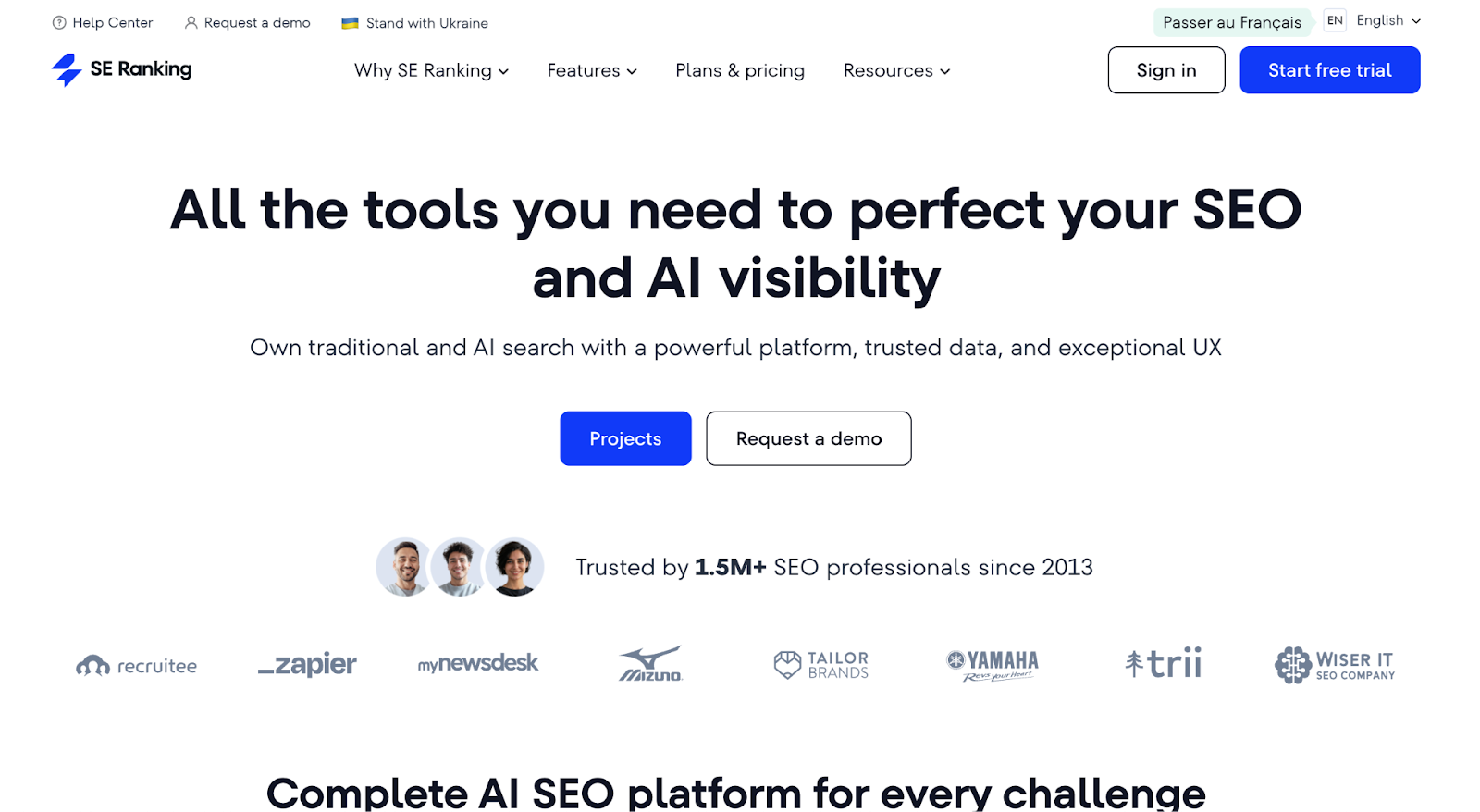
Category: Full SEO suite + AI visibility
Best for: SEO professionals and mid-size agencies wanting one tool
Pricing: From $65/month (content marketing add-on required for full features)
AI Engines Covered: Google AI Overviews, ChatGPT
SE Ranking's core value proposition is honest and consistent: genuine breadth at a price point that doesn't punish you for growing. It's a full platform — content optimization, AI visibility tracking, rank tracking, and site audit — under one subscription, with fewer forced upgrades than category leaders.
A few details worth calling out: the AI visibility monitoring refreshes daily, covering Google AI Overviews and ChatGPT. The content editor includes a small but genuinely useful feature — one-click removal of irrelevant NLP suggestions. Small thing. Saves real time when you're editing briefs at volume. Google Docs integration in the content editor means writers can stay in their environment.
The honest trade-off: SE Ranking is the strongest all-in-one value play on this list, but "all-in-one" always means depth compromises somewhere. It's not the most precise content optimizer (Clearscope wins that), not the most powerful backlink tool (Ahrefs wins that), and not the most purpose-built AEO platform (Scrunch wins that). What it is: the most complete single-tool option for agencies that need coverage across the full SEO workflow without building a multi-tool stack.
If you're running a mid-size agency managing 10–30 client accounts and a multi-tool stack isn't practical, SE Ranking is the strongest choice on this list.
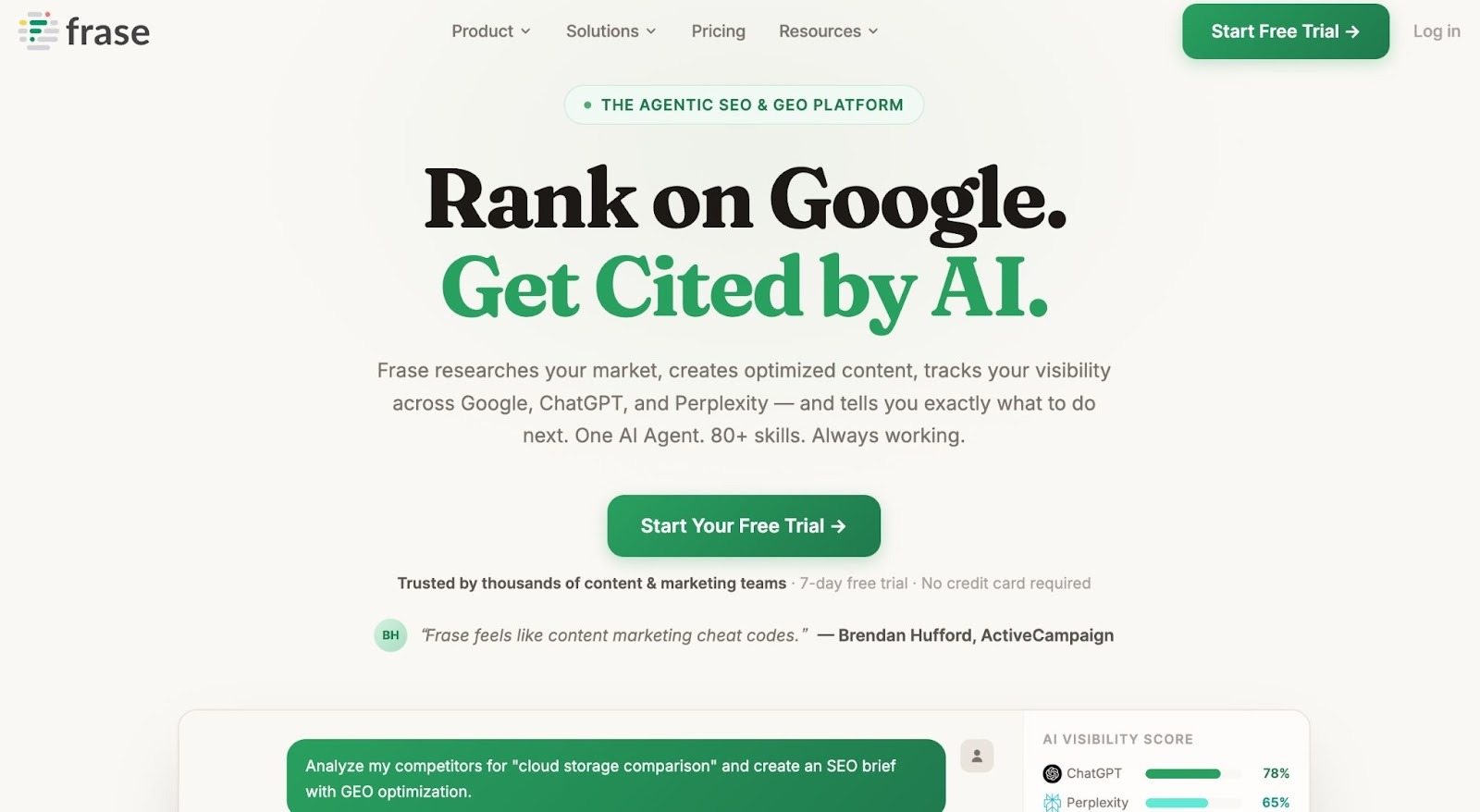
Category: Brief generator + GEO scoring
Best for: Solo creators, freelancers, and small teams
Pricing: From $45/month
AI Engines Covered: ChatGPT, Perplexity, Claude, Gemini
Frase is consistently underestimated in competitor roundups, which tend to position it as a Google-only SEO tool stuck at the affordable end of the market. That framing is now outdated.
Frase's dual SEO + GEO scoring is the feature most roundups miss: it shows how well your content aligns with both Google's ranking signals and with AI platforms — specifically ChatGPT, Perplexity, Claude, and Gemini. For a $45/month tool, that's a meaningful capability, not a feature checkbox. Solo creators and small teams building an AEO strategy without enterprise budgets now have a viable entry point.
The core product remains strong: fast content brief generation from SERP research, AI writing included at every plan level, and solid NLP scoring that covers the fundamentals for Google optimization. It's not as granular as Surfer or Clearscope — the NLP scoring is a tier below in precision — but for the price and workflow simplicity, it punches well above its bracket.
If you're a solo creator or small team looking for the lowest combined entry point into both SEO optimization and AI visibility, the Frase + Scrunch stack is worth serious consideration.
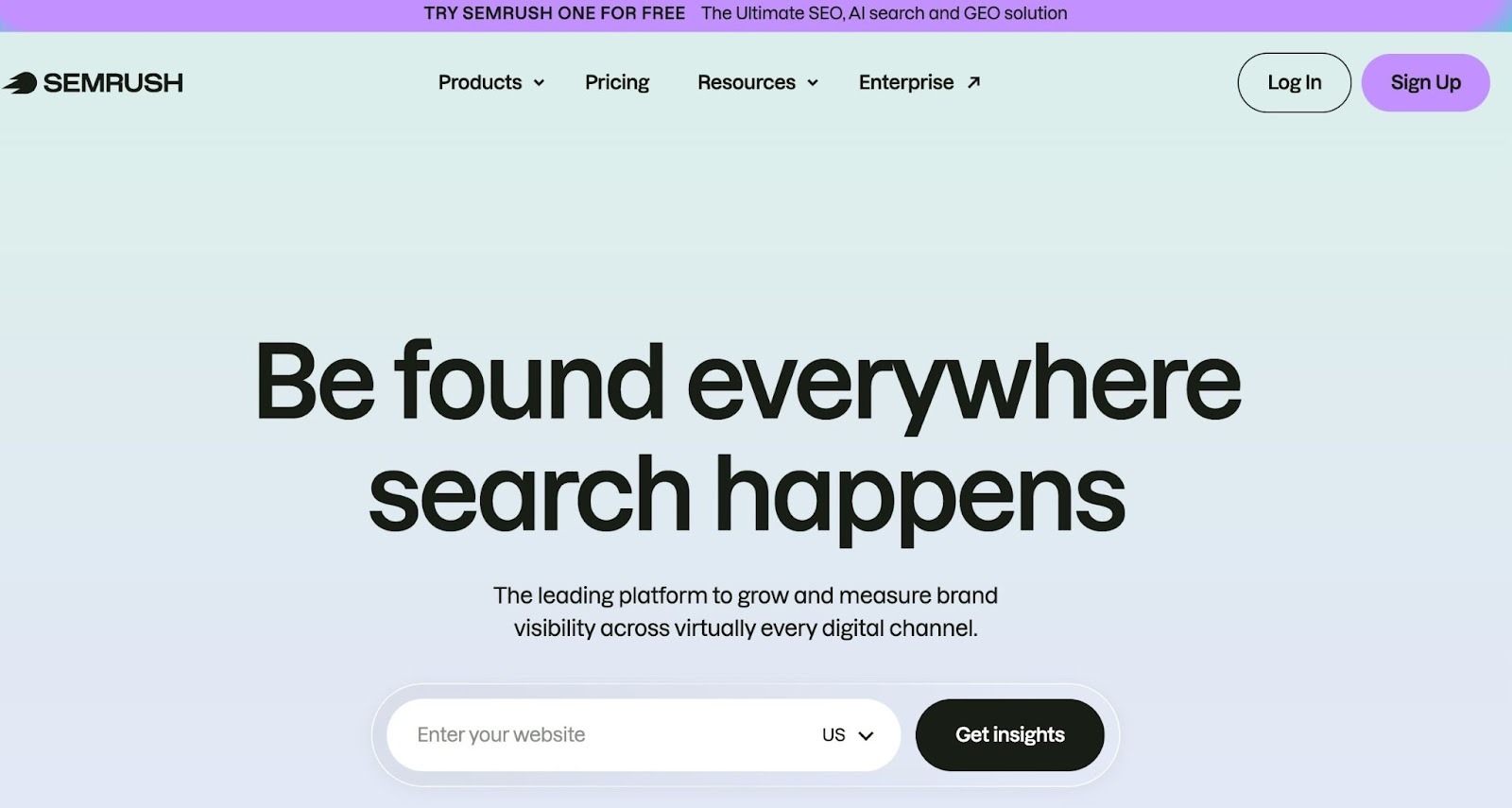
Category: Full SEO suite + AI visibility toolkit
Best for: In-house teams and agencies already running Semrush
Pricing: From $199/month
AI Engines Covered: ChatGPT, Gemini, AI Mode, AI Overviews
Semrush remains one of the most powerful platforms in the category, and its AI visibility toolkit is built on a dataset that no competitor matches in scale: 213M+ prompts derived from real "People Also Ask" data — the largest prompt database in the category. The AI Visibility Toolkit tracks citations across six regions (US, UK, Canada, Australia, India, Spain), covering AI Overviews, AI Mode, ChatGPT, and Gemini. For globally distributed teams tracking AI visibility across markets, that regional coverage is a genuine differentiator.
The honest caveat: Semrush's AI features are a layer on top of an SEO-first platform — because that's exactly what they are. Powerful dataset, strong coverage, but the AEO workflow isn't purpose-built. Teams whose primary need is AI citation monitoring and infrastructure-level optimization will find Scrunch more aligned to that job. Semrush is at its strongest when you're already in the ecosystem and adding AI visibility without adding another subscription.
One relevant note: the Adobe acquisition adds some roadmap uncertainty. Not a dealbreaker, but worth tracking for teams making multi-year platform decisions.
No real-time content scoring as you write — if that's a requirement, pair Semrush with Surfer or Clearscope.
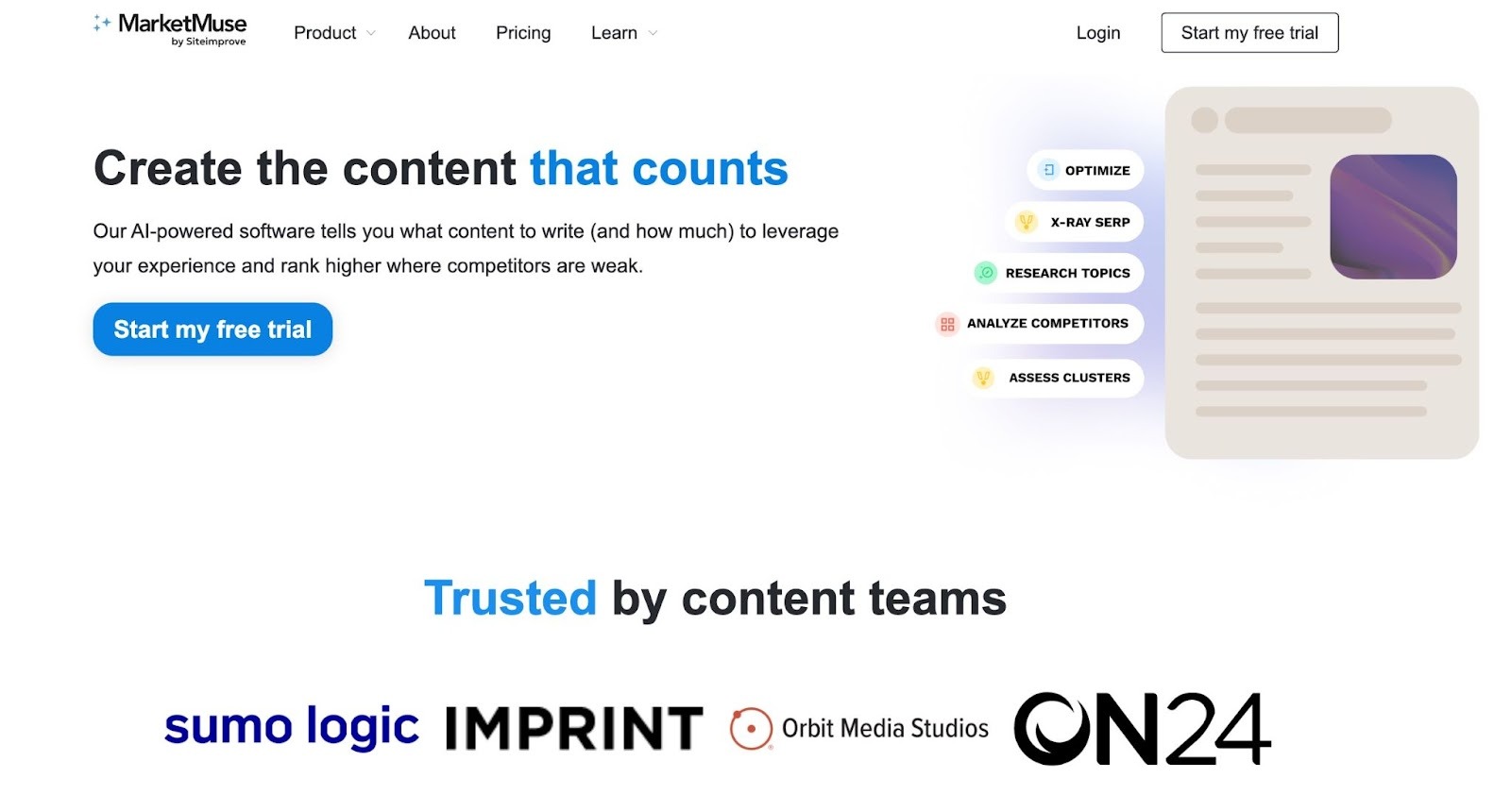
Category: Content strategy platform
Best for: SEO strategists managing large content portfolios (100+ published pages)
Pricing: From $99/month
AI Engines Covered: None
MarketMuse operates at a different altitude than most tools on this list. Where Surfer helps you optimize a single article, MarketMuse helps you decide which articles to build in the first place — and which gaps in your existing content are costing you topical authority against competitors.
The core capability: AI-driven content inventory analysis across 100+ published pages, mapping your existing coverage against competitor content and identifying where authority gaps exist at the topic cluster level. It's a planning tool, not a writing tool — and that distinction matters. MarketMuse answers the strategic question ("where should we build?") before the execution question ("how do we write it?") even gets asked.
What it doesn't do: there is no AI engine monitoring here. No AEO coverage, no citation tracking, no GEO scoring. If AI engine visibility is in scope, you'll need to stack MarketMuse with a dedicated AEO tool.
The right buyer for MarketMuse is an SEO strategist or content director managing a large portfolio who needs to make resource allocation decisions at scale. If you're debating whether to write 10 more articles on Topic A or pivot to Topic B, MarketMuse is the tool that answers that question with data.
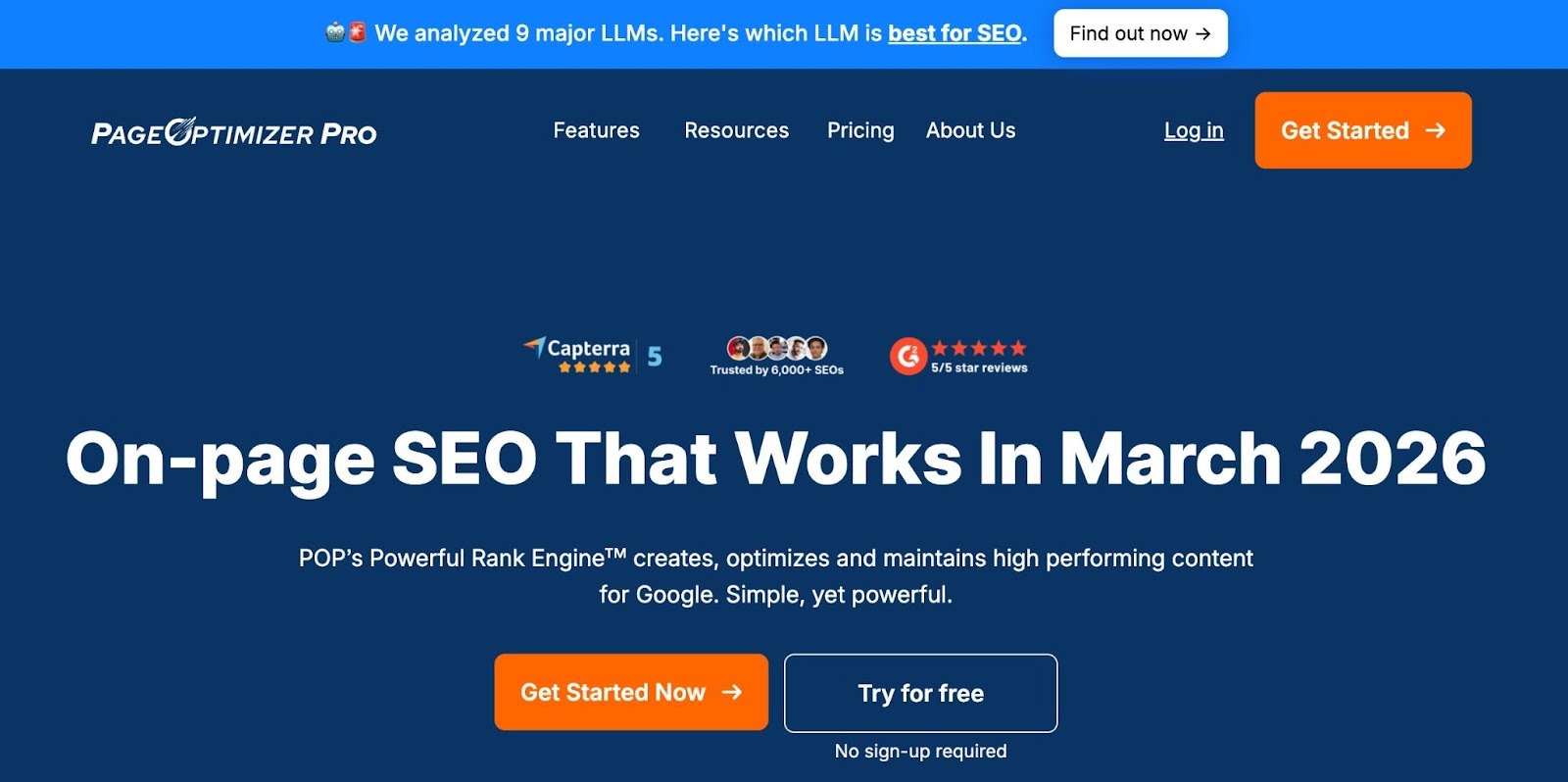
Category: On-page optimizer
Best for: Budget-conscious SEOs wanting data-driven accuracy
Pricing: From $37/month
AI Engines Covered: None
PageOptimizer Pro doesn't try to be a platform. It's a rigorous on-page optimization tool — 400+ tests and 100+ SEO factors per report — that delivers more analytical depth than its price point suggests. For SEOs who want signal-dense optimization data without paying for platform features they'll never use, POP is a reliable choice.
The POP Watchdog feature is worth calling out specifically: it monitors your already-optimized pages and alerts you when algorithmic shifts or competitor changes mean your optimization needs updating. Content decay is real and expensive; Watchdog addresses it without requiring you to manually re-audit your full content inventory.
No AI engine visibility here — POP is a Google-focused on-page tool, and it makes no pretense otherwise. For teams building a lean, budget-conscious SEO stack, POP handles the on-page layer while a dedicated AEO tool handles AI visibility.
Several tools made the research shortlist but didn't meet the bar for a main entry.
Rankability offers a solid content optimization workflow but lacks meaningful differentiation from Surfer or Clearscope at its price point.
Writesonic leads with its AI writing capabilities — it's genuinely strong there — but its SEO optimization layer isn't deep enough to compete with purpose-built optimizers.
Scalenut covers keyword research and content briefs competently for its audience but doesn't advance the state of the art in any category.
NeuronWriter is a capable mid-market optimizer worth consideration, but limited to Google-only optimization and a thinner backlink dataset.
GrowthBar targets bloggers and content creators effectively, but its SEO feature set is too surface-level for the professional audience this guide is written for.
The stakes are shifting fast: just two years ago, fewer than 1 in 10 B2B companies tracked AI visibility at all. Today, nearly half do — and the gap between teams who've built a deliberate AI SEO stack and those still treating it as a future concern is widening every quarter.
Start with the problem you need to solve, then select the tool that best aligns — not the other way around.
Ultimately, the best approach is to match the tool — or combination of tools — to your specific goals, balancing coverage, specialization, and budget rather than chasing a “one-size-fits-all” solution.
The most expensive mistake in this category isn't buying the wrong tool. It's buying a tool before clearly identifying which problem it's supposed to solve.
In 2026, no single tool wins across all SEO use cases — and that's fine, as long as you know what you're buying. Google optimization and AI engine visibility are different jobs with different tooling requirements. The overlap between traditional top-10 organic rankings and AI Overview citations has dropped from roughly 76% in mid-2025 to somewhere between 17% and 38% by early 2026 — a structural divergence that makes relying on one strategy to serve both jobs increasingly indefensible.
The teams getting outpaced are the ones treating AI visibility as a feature checkbox on their existing SEO platform, rather than as a separate discipline with dedicated infrastructure.
Start with the problem. Then match the tool. If AI citation visibility is a real business goal — not a hypothetical future concern — don't address it with a monitoring dashboard on an SEO platform. Address it with a tool built specifically for that job.

Irina is a Founder at ONSAAS, Growth Lead at Aura, and a SaaS marketing consultant. She helps companies to grow their revenue with SEO and inbound marketing. In her spare time, Irina entertains her cat Persie and collects airline miles.
.svg)
.svg)
.svg)
.svg)
.svg)