You already know the game changed in SEO. Traffic's down, AI Overviews are everywhere, and ChatGPT is answering questions that used to send people to your site.
You probably also know you need GEO tools by now. The problem now is there are dozens of them, and half feel like they just slapped "AI optimization" onto their existing SEO platform and called it a day.
I have been trying these tools for weeks to figure out which ones are worth it. Tested them on real content, tracked what happened to our citations, and honestly, most didn't move the needle.
But seven did. Here's what stood out.
I tested each tool using five criteria based on what actually matters for AI search visibility.
I used each tool for at least two weeks on real content to see which ones actually moved the needle on AI citations.
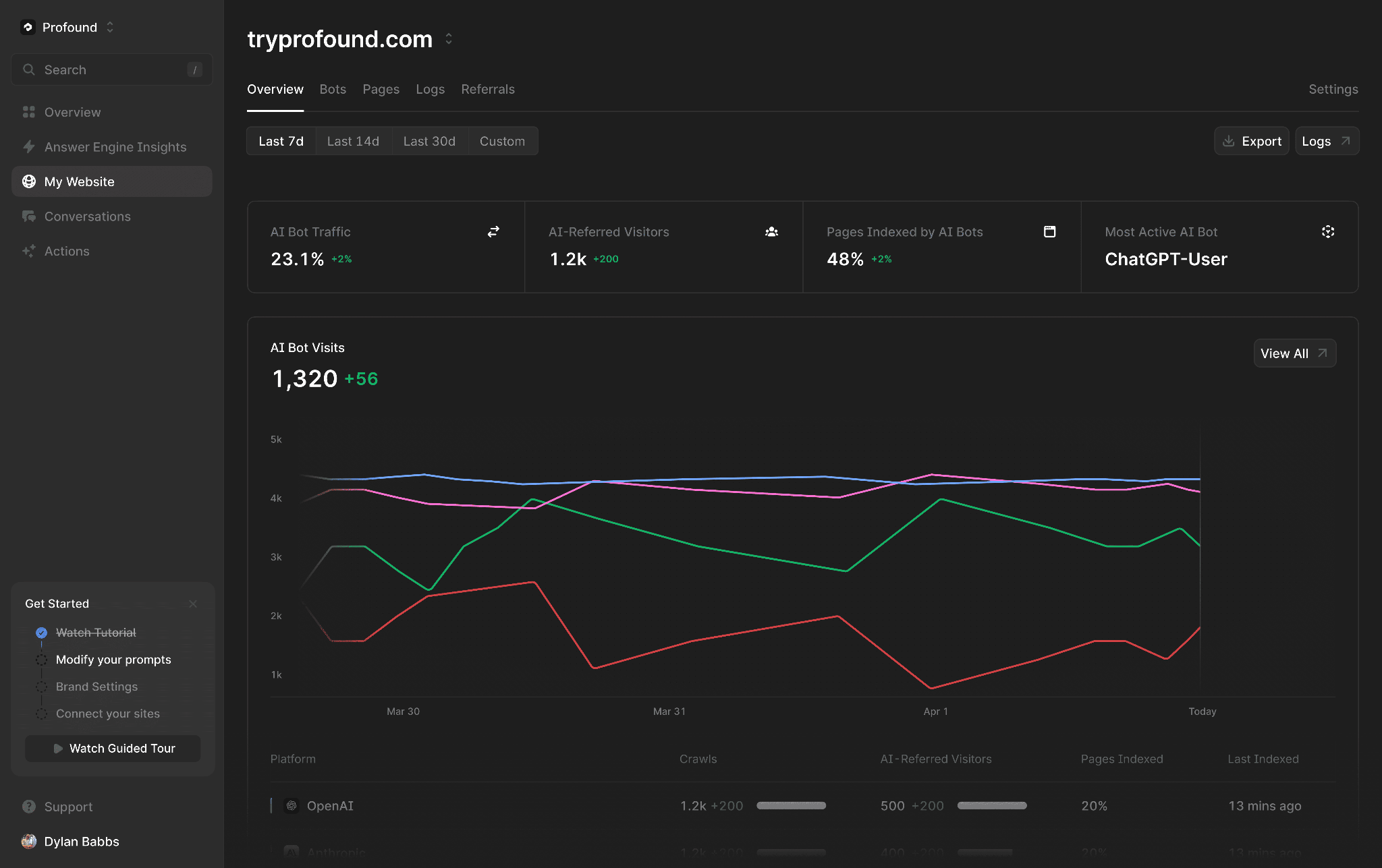
Profound is the first tool I've used that actually tracks your citations across multiple AI engines in real time. Most SEO tools added a "GEO dashboard" that just estimates visibility. Profound shows you the exact queries where ChatGPT, Perplexity, or Claude cited your content.
Best for: Teams serious about AI search visibility who need hard data on citations, not estimates.
.svg)
The citation tracking is genuinely innovative. It shows the actual AI responses that cite your content.
The ChatGPT Shopping feature is valuable if you sell products online.
The recommendations are specific and actionable, without overwhelming you with dozens of metrics.
.svg)
The tool works best if you already have a decent amount of content published. New sites may not have enough data for citation tracking to be valuable.
They offer a free trial with full access to all features for the Growth Plan.

Scrunch surprised me. Scrunch is one of the newer GEO tools, and while it costs about the same as Profound, it takes a completely different approach. Their Agent Experience Platform (AXP) actually creates a separate, AI-optimized version of your site that only AI agents see.
Scrunch actively makes your site more consumable for AI crawlers. It's the only tool I tested that intervenes at the infrastructure level instead of just analyzing content.
Best for: Teams that want to optimize their entire site for AI crawlers, not just individual articles. Especially valuable if you have technical resources to integrate with your CDN.
The AXP feature is genuinely innovative — no other tool creates a parallel AI-optimized site for you.
The Google Docs integration is seamless, with no copying and pasting between tools.
The AI readiness audit is comprehensive and easy to understand, and setup via Cloudflare is surprisingly simple.
Citation tracking isn’t very detailed — you see estimated citation potential rather than actual citations.
The tool works better for optimizing existing content than creating new content from scratch.
The interface can feel sluggish when analyzing longer articles (3,000+ words).
They offer a 7 day free trial for the Explorer Plan.

Athena takes a different approach. Instead of tracking citations, it focuses on helping you create content that LLMs naturally want to cite.
I was skeptical at first. How can software predict what an AI engine will cite? But after using Athena for a month, I understood the logic: LLMs prefer content that's factual, well-sourced, clearly structured, and directly answers questions. Athena optimizes for all four.
Best for: Content creators who want to build citation-worthy content from the ground up.
The source suggestions are incredibly useful, helping you spend less time researching and more time writing.
LLM scoring provides immediate feedback on content quality as you write.
The answer-first builder improves writing structure, even for non-GEO use cases.
There’s no actual citation tracking — only predictive insights.
The tool focuses on content creation rather than analyzing what’s already performing well.
It doesn’t integrate with as many platforms as tools like Scrunch or Profound.
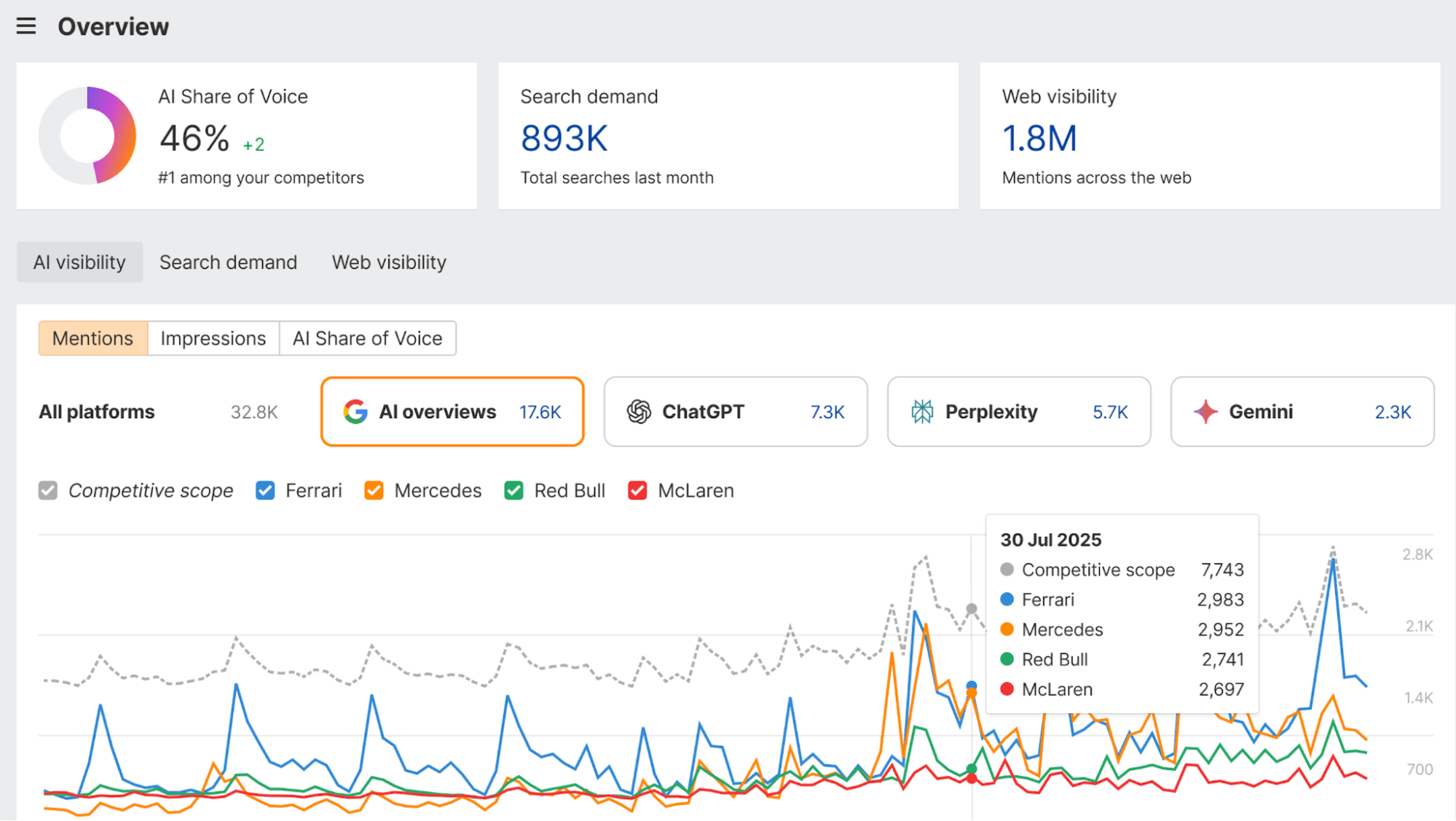
Ahrefs launched Brand Radar as a standalone tool specifically for tracking brand visibility in AI search. It's separate from their main SEO platform, which makes sense, monitoring brand mentions is different from traditional keyword tracking.
Before we dive into Brand Radar, it's worth noting that regular Ahrefs subscriptions include some basic AI visibility features. You can see AI Overview appearances in Site Explorer and track AI citations in their standard reports. These are decent for basic monitoring, but they're limited compared to what Brand Radar offers.
I tested both the included features and Brand Radar. The free AI features gave me a surface-level view, but Brand Radar is where the real insights live if you're serious about brand monitoring in AI search.
Best for: Brands focused on monitoring and improving their visibility in AI responses rather than optimizing individual content pieces. If you just want basic AI visibility tacking, the features included in regular Ahrefs might be enough.
Brand Radar is standalone, you don't need an Ahrefs subscription (though regular Ahrefs subscriptions do include basic AI visibility features)
The multi-platform coverage (ChatGPT, Perplexity, Gemini, Copilot, AI Overviews) is more comprehensive than most competitors. YouTube and Reddit tracking adds value beyond just AI search.
The custom prompts feature lets you monitor specific queries relevant to your business. The interface is clean and easy to navigate.
GEO features feel half-baked compared to specialized tools.
Citation tracking is slow and seems less accurate.
At $699/month for all AI platforms, it's expensive if you only care about one or two AI engines. Even if you already pay for Ahrefs, Brand Radar is an additional cost, it's not included in your subscription.
It's brand-focused, not content-focused, if you want to optimize articles for citations, other tools work better.
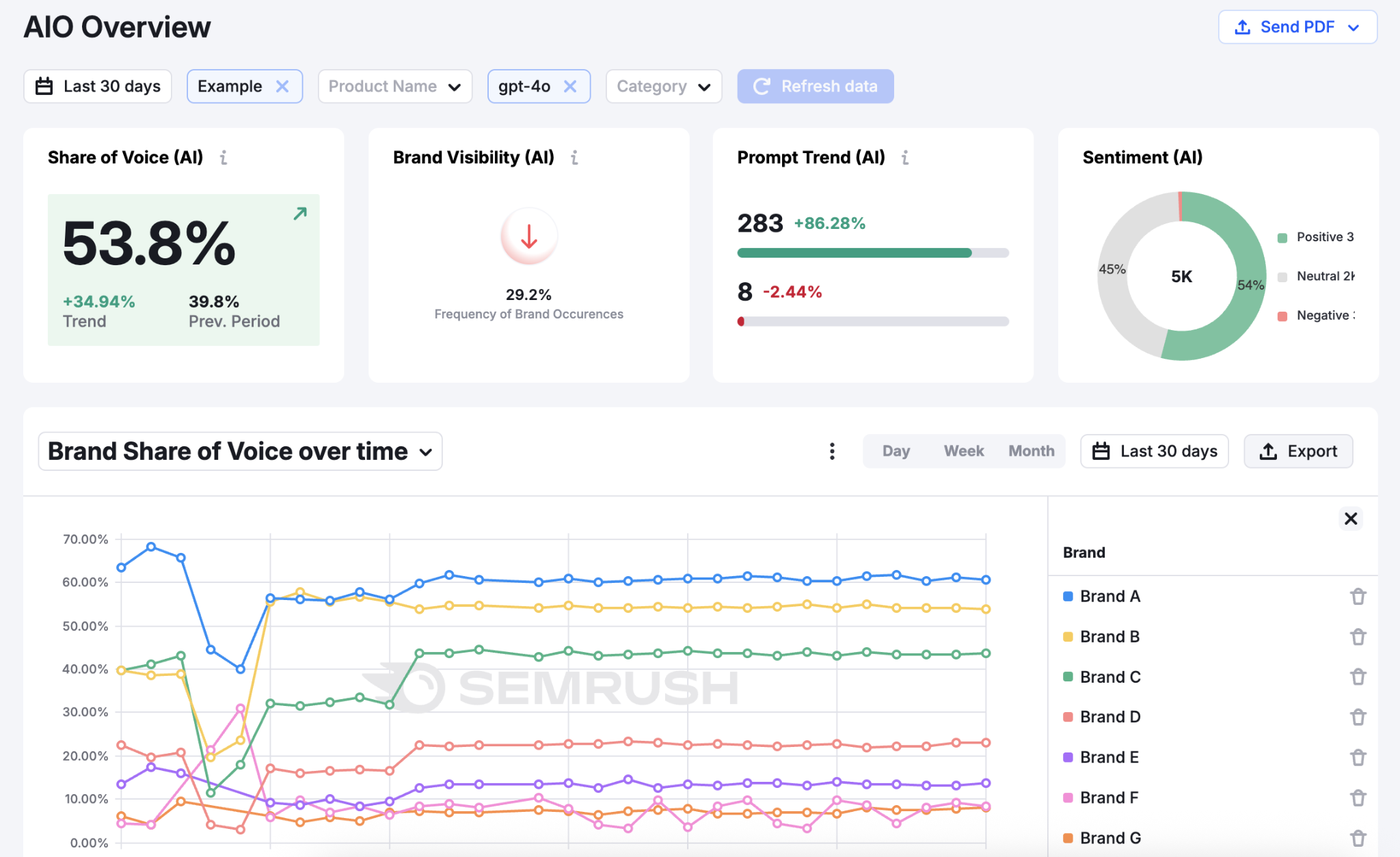
Like Ahrefs, Semrush added GEO capabilities to their existing SEO platform. Their implementation is slightly better than Ahrefs', but it still trails behind specialized GEO tools.
I've used Semrush for competitor analysis and rank tracking for years, so I approached their GEO features with realistic expectations. They're useful for getting started, but you'll likely outgrow them if you're serious about AI search.
Best for: Current Semrush users who want to dip their toes into GEO without committing to a specialized tool.
Included with existing Semrush subscriptions at no extra cost.
Writing assistant is helpful for beginners.
Competitor AI analysis saves time on manual research.
Good integration with the broader Semrush SEO platform.
AI visibility score feels oversimplified and hard to validate.
Citation tracking is less detailed than specialized GEO tools.
Writing assistant provides surface-level suggestions.
Limited features compared to dedicated GEO platforms.
They offer a 7-day free trial.
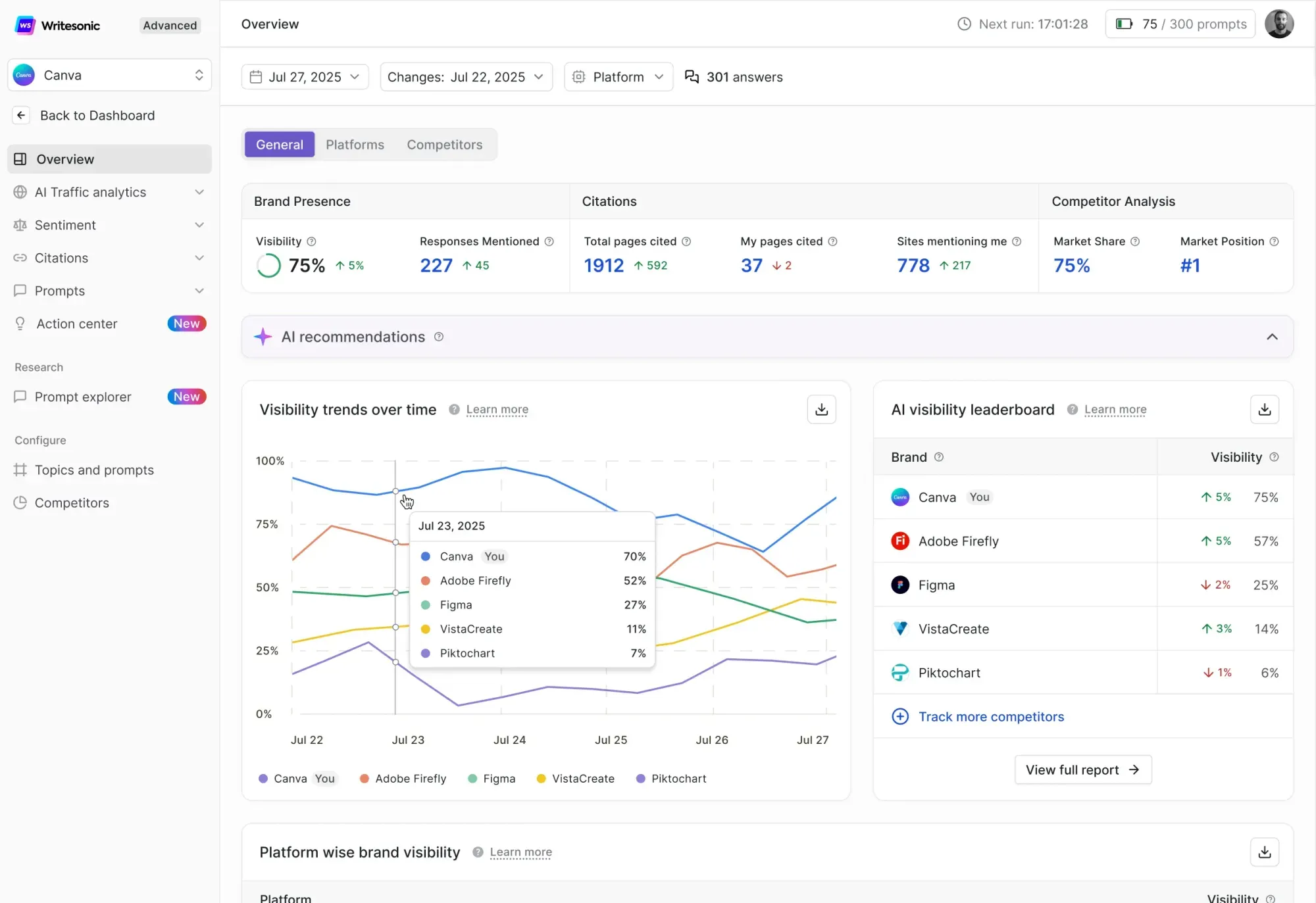
Writesonic takes a completely different approach from every other tool on this list. Instead of analyzing and optimizing existing content, it generates GEO-optimized content from scratch using AI.
I was skeptical because I've tried dozens of AI writing tools and most produce generic, low-quality content. Writesonic is different. It's specifically trained to create content that AI engines want to cite.
Best for: Content teams who need to produce GEO-optimized articles quickly or want AI assistance with writing.
Dramatically speeds up content creation.
AI-generated content is genuinely useful as a starting point.
Templates save time when structuring articles.
Built-in fact-checking helps catch errors before publishing.
More affordable than many other tools on this list.
The AI-generated tone can feel robotic without manual edits.
Limited analytical features, as the tool focuses more on creation than tracking.
They offer a free trial.
After three months of testing, here's what I learned about choosing the right GEO tool.
If you need serious citation tracking, Profound is the clear winner. The real-time monitoring and detailed analytics justify the higher price if AI search is a priority for your business. I saw a 34% increase in verified citations within six weeks of using their recommendations.
If you're just starting with GEO, go with Scrunch or Athena. Both offer excellent value without overwhelming you with features. Scrunch is better if you want to optimize existing content. Athena is better if you need help creating new content quickly.
If you already use Ahrefs or Semrush, test their GEO features before buying a separate tool. They're not as powerful as specialized platforms, but they might be enough if you're just dipping your toes into AI search optimization. I'd recommend trying their features for a month and upgrading to a dedicated GEO tool if you're not seeing results.
Do you need multiple tools? Probably not. I found that one good GEO tool plus your existing SEO stack is enough. The exception: pairing a citation tracker (like Profound) with a content generator (like Writesonic) can be powerful if you're scaling content production.
Currently, there aren't really any robust free GEO tools yet. Some SEO tools have basic AI visibility features at no extra cost, but they're limited. I'd recommend starting with tools that offer free trials to see if GEO tools are worth the investment for your specific situation.
Focus on creating genuinely useful content first. Then use GEO tools to make sure AI engines can find, understand, and cite your work. That order matters.

Irina is a Founder at ONSAAS, Growth Lead at Aura, and a SaaS marketing consultant. She helps companies to grow their revenue with SEO and inbound marketing. In her spare time, Irina entertains her cat Persie and collects airline miles.
.svg)
.svg)
.svg)

.svg)
%20(1).svg)
%20(3).svg)
.svg)
.svg)