You've probably already done the homework. You've added TL;DR sections to your articles. You've included FAQ blocks. You've structured content to answer specific questions clearly.
But here's the problem: you have no idea if it's working.
Is ChatGPT citing your content? Is Perplexity using your data? Without AEO tools, you're flying blind - checking multiple LLMs manually and spending hours trying to measure performance that should take minutes.
We tested nine AEO tools to find out which ones actually help you track, optimize, and win citations in AI answer engines. Here's what we learned.
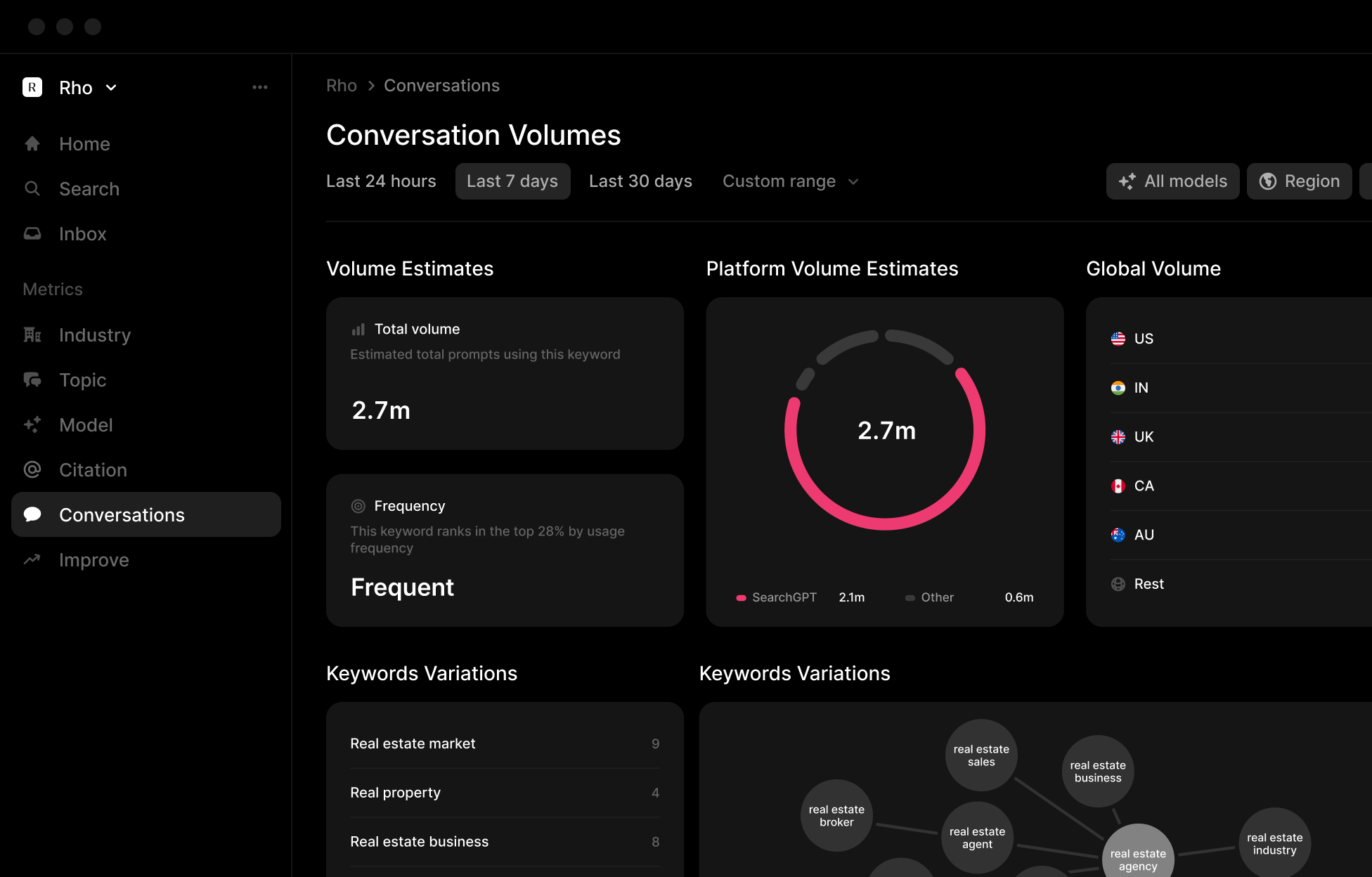
Profound is a dedicated AEO platform built specifically for tracking AI engine citations. Unlike traditional SEO tools that added AEO as an afterthought, Profound was designed from the ground up to monitor how AI engines cite your content. The platform tracks your content across ChatGPT, Perplexity, Google AI Overviews, and Claude.
Profound also offers a unique ChatGPT Shopping visibility feature that tracks how your products appear in ChatGPT's shopping recommendations, monitors product attributes, and analyzes competitor placement.
Key features:
Best for: Content teams needing comprehensive AEO tracking across multiple AI engines, and e-commerce brands wanting to monitor product visibility in ChatGPT Shopping.
.svg)
Multi-engine tracking revealed that our content performed very differently across AI platforms.
Citation sentiment analysis helped identify outdated content being referenced negatively in AI answers.
Intuitive interface—running meaningful queries took less than 10 minutes.
.svg)
Data updates can lag by 24–48 hours, which may be limiting for time-sensitive monitoring.
Occasional false negatives where content was cited but not detected.
Pricing: start from $99/month.
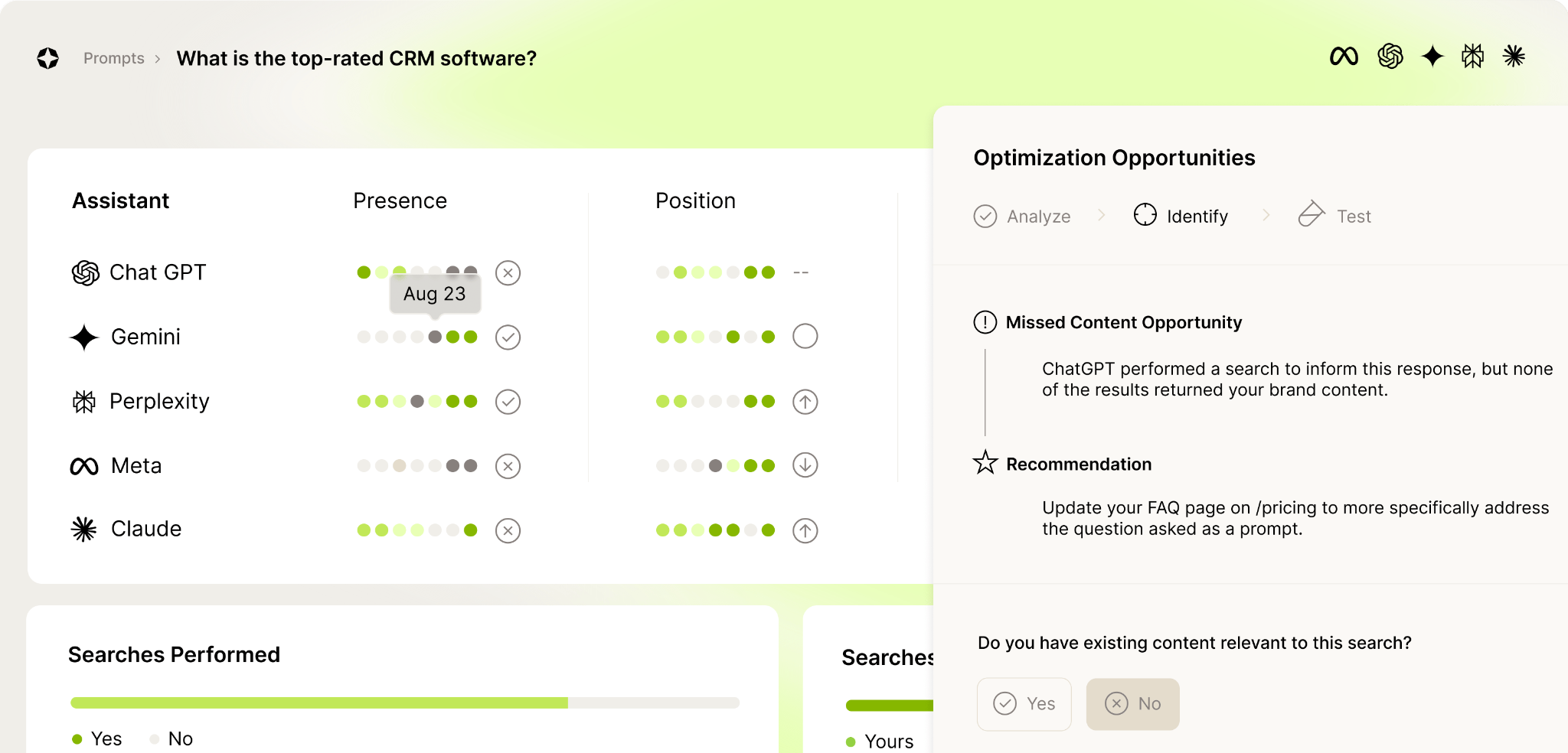
Scrunch takes a different approach to AEO by focusing on brand mentions and authority tracking rather than just content citations. The tool was built specifically for monitoring how AI engines reference your brand across queries. This is particularly valuable for companies concerned about brand reputation in AI-generated responses.
What makes Scrunch stand out is its citation quality scoring system. It doesn't just tell you if you were mentioned, but rates each citation from 1-10 based on how prominently you were featured and in what context. This helps you distinguish between a brief passing mention and being cited as the primary authoritative source, which is crucial for understanding your actual influence in AI answers.
Scrunch also offers an Agent Experience Platform (AXP) that automatically generates AI-friendly versions of your website pages for bot traffic, intercepting AI crawlers and serving them optimized content without affecting your human visitors' experience.
Key features:
Best for: Brands focused on building authority in AI engines and companies that want to serve optimized content to AI crawlers without affecting their site's user experience.
Automated query generation saved hours of manual brainstorming.
Quality scoring helps prioritize meaningful citations over brief or low-value mentions.
Alerts trigger when citation rates drop by 30%, making issues easy to spot early.
Steeper learning curve compared to simpler AI search monitoring tools.
Lacks screenshot evidence for individual AI responses.
Higher pricing may be a barrier for solopreneurs and small teams.
Pricing: Start from $250/month.
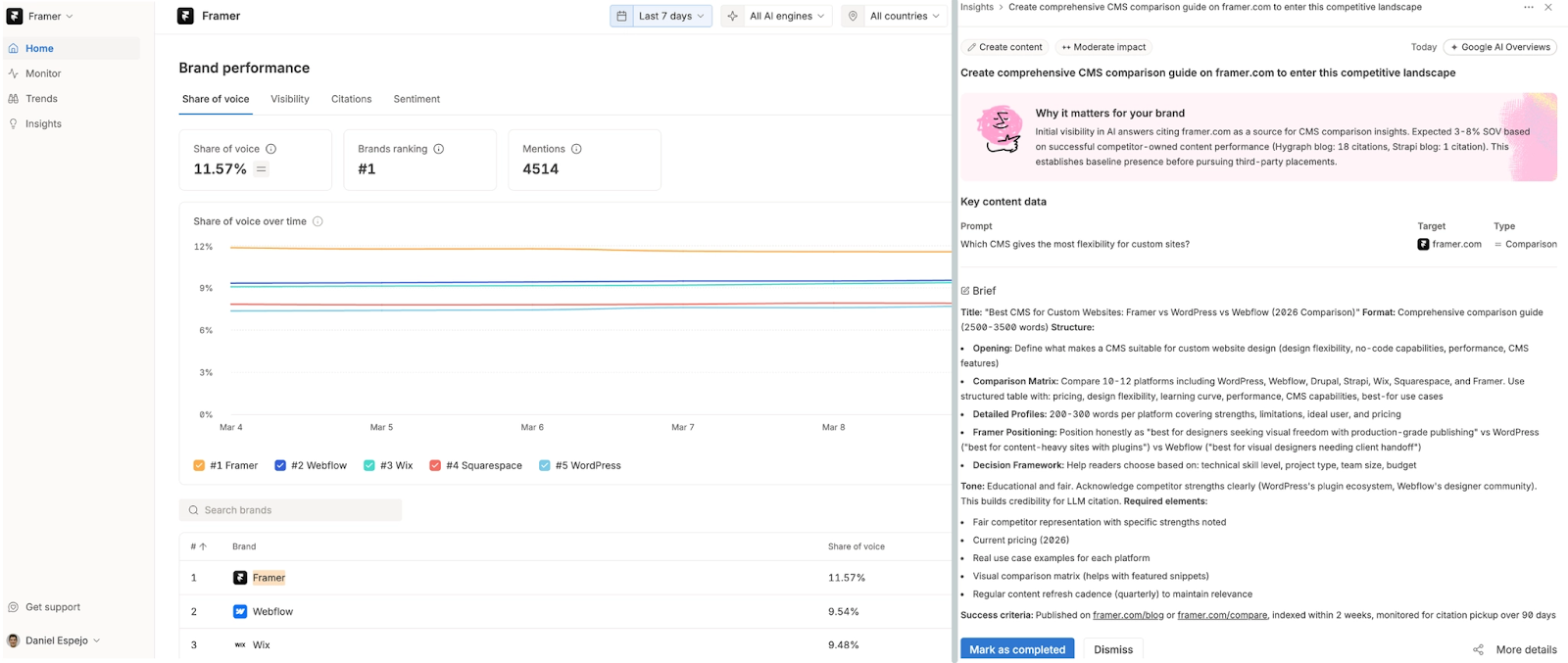
Omnia is an AI visibility platform that doesn't just show how AI sees your brand, it helps you take action on it. The platform surfaces the most searched topics in AI engines, monitors your positioning, reveals which sources AI engines cite, and generates a prioritized action plan so teams know exactly what to do next.
The platform works in four stages: first, it discovers the real prompts and questions your customers are asking AI. Then, it monitors those prompts to show how AI sees your brand, how you benchmark against competitors, and what sources AI engines pull information from. From there, Omnia generates concrete actions based on automated citation analysis. Finally, it helps you create gap-filling content designed to get cited in future AI answers.
Key features:
Best for: SEO and marketing teams that want a clear roadmap to improve AI visibility, not just dashboards. Also suited for scaleups, agencies, and companies with a strong digital presence managing multiple products or brands.
Action plans adapt to your brand's authority level and category instead of generic recommendations
Three clear paths: create new content, improve existing pages, or get featured on high-authority sources
Public API for programmatic access to topics, prompts, monitoring, and analytics data, making it easy to integrate with CRMs, data platforms…
Less suited for large enterprise teams requiring SOC 2 compliance
Growth plan limited to 25 prompts
Sentiment analysis coming soon but not yet live
Pricing: Growth: €79/month; Pro: €279/month; Enterprise: custom pricing.
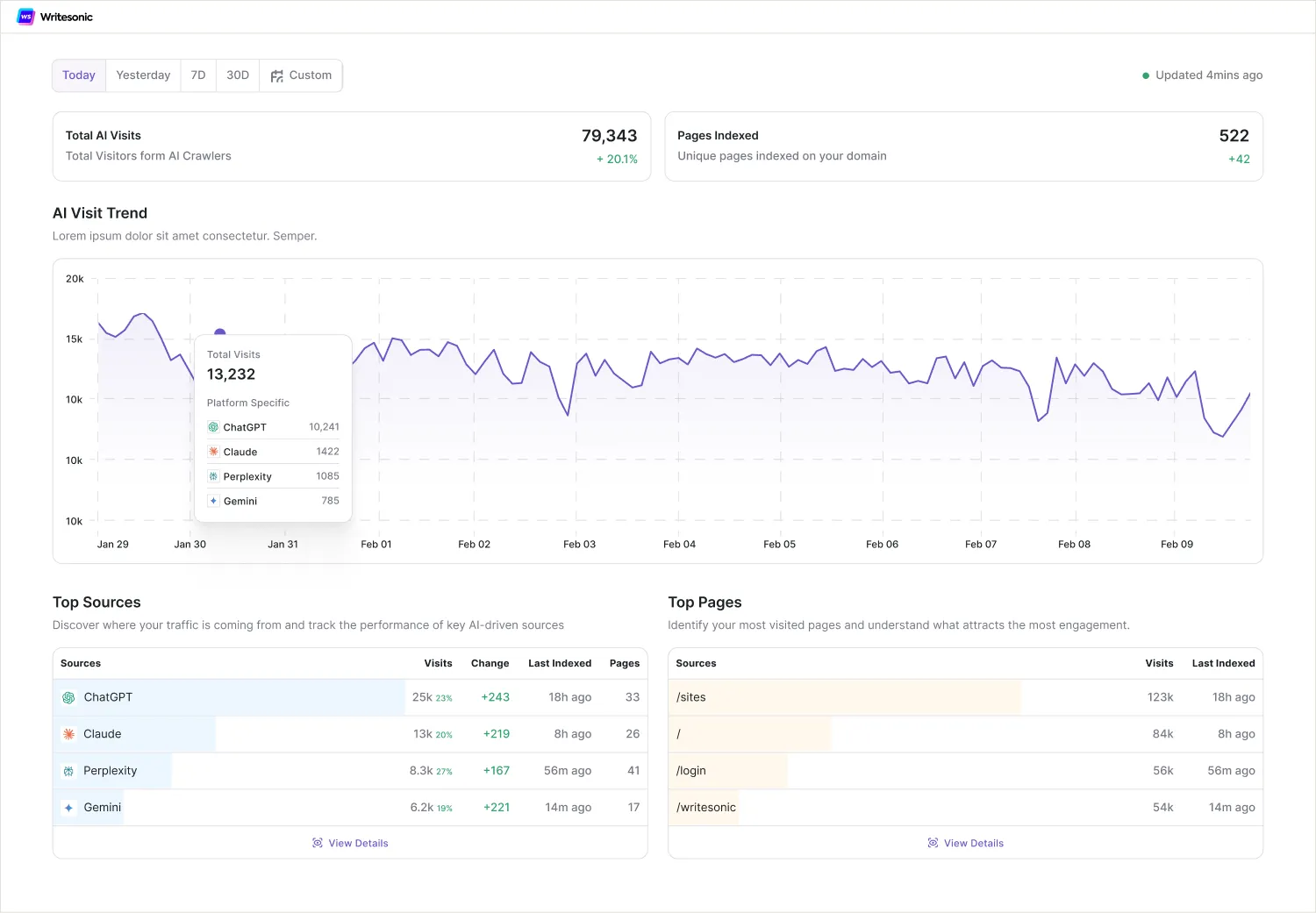
Writesonic is primarily known as an AI writing assistant, but the platform has quietly built some of the most practical AEO features I've tested. The "AI Citation Optimizer" analyzes your existing content and automatically rewrites sections to make them more citation-friendly for AI engines.
This is different from Omnia's approach. Instead of giving you recommendations to implement manually, Writesonic does the heavy lifting for you. It suggested converting dense explanatory paragraphs into clear Q&A format, adding explicit source attributions where we made claims, and restructuring our bullet points to be more scannable. The AI maintains your voice and tone while making the content significantly more optimized for AI engine citations.
Key features:
Best for: Teams wanting to quickly optimize existing content without manual rewriting.
AI rewriting maintained the original voice while making content more citation-friendly.
Batch optimization made it possible to improve 20 articles in a single afternoon.
Native ChatGPT integration allows immediate testing of optimized content.
Over-optimization can occasionally make content sound robotic.
Does not track actual AI citations, focusing only on content creation.
AEO features are somewhat buried within the broader platform.
Pricing: Starts at $249/month (This includes their SEO, content, and AEO tools).
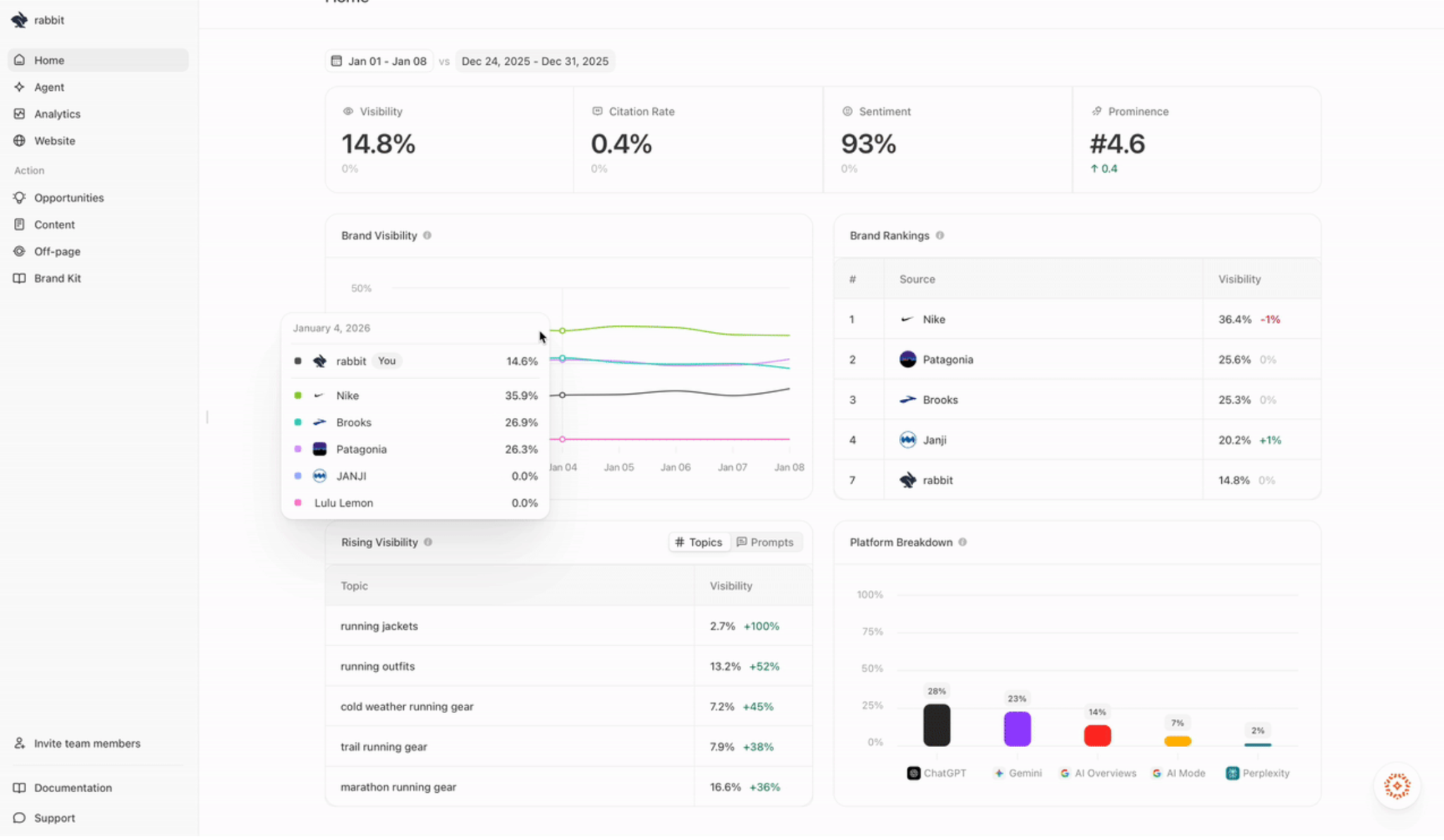
Meridian is a focused AEO tracking tool that prioritizes speed and real-time visibility. While most AEO tools have data lags of 24-48 hours, Meridian's standout feature is real-time citation alerts that notify you within minutes of your content being cited. This immediacy changes how you think about AEO. Instead of checking dashboards weekly, you get instant feedback when your optimization efforts pay off. For agencies and consultants who need to demonstrate ROI to clients, this real-time proof of citation wins is invaluable.
Key features:
Best for: Agencies reporting AEO performance to clients
Real-time alerts make it easy to spot visibility changes as they happen.
Competitive benchmarking compares performance against industry averages.
Simple client reporting makes it easy to share insights with stakeholders.
The interface is fairly bare-bones compared to more advanced platforms.
Does not provide optimization recommendations.
Pricing: Contact their sales team for more information.
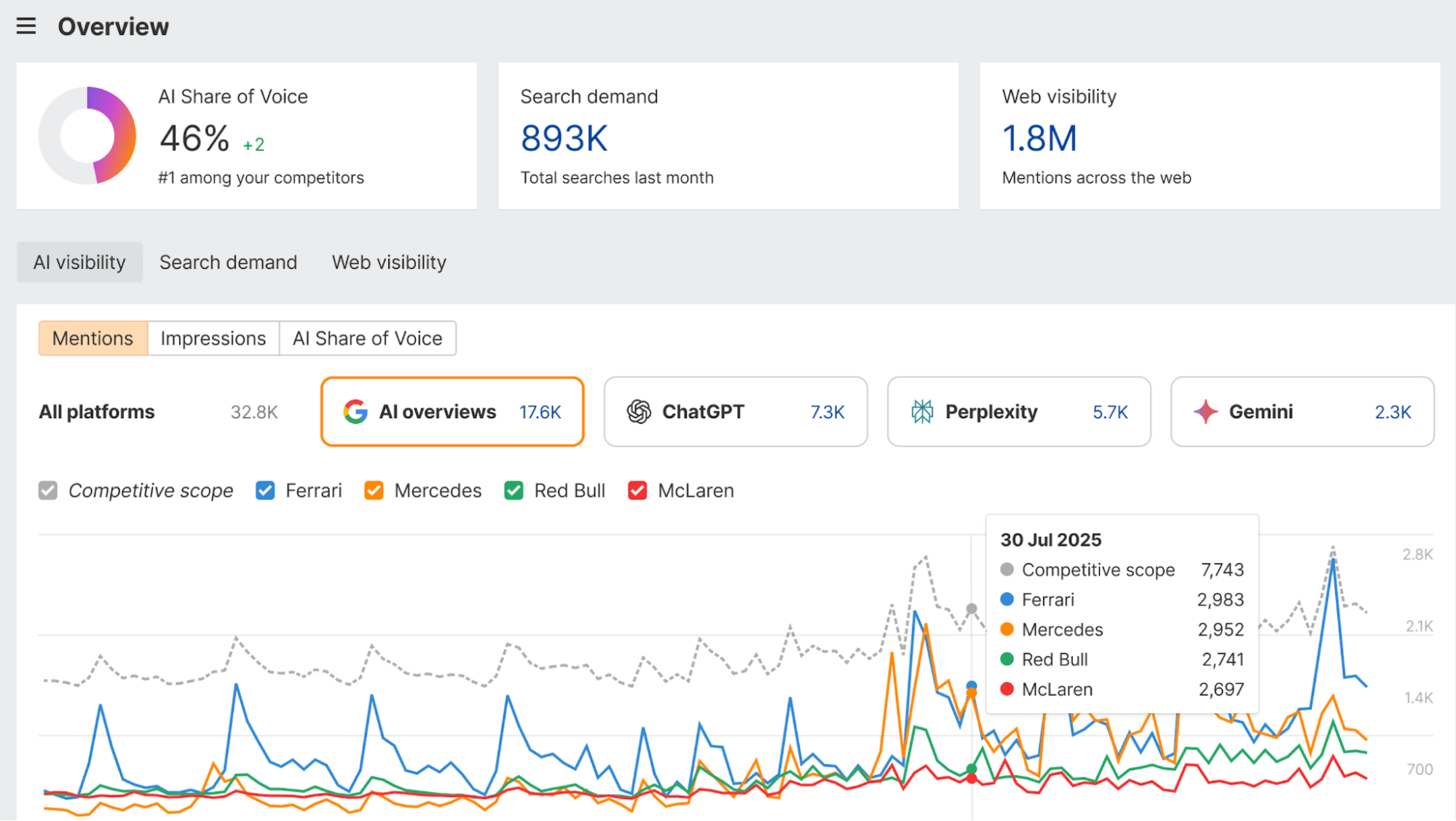
Ahrefs, one of the most established names in SEO tooling, offers Brand Radar, a standalone AEO tracking tool that monitors brand visibility across AI platforms. Brand Radar is separate from the main Ahrefs subscription and requires an additional fee even for existing Ahrefs users.
The tool tracks how your brand appears in AI Overviews, ChatGPT, Copilot, Gemini, and Perplexity, along with YouTube and Reddit mentions. What makes Brand Radar unique is its "AI Share of Voice" metric—showing what percentage of AI responses mention your brand compared to competitors. Brand Radar also clusters AI prompts into topics, helping you identify content gaps and find new opportunities to get cited.
Key features:
Best for: Brands wanting comprehensive AI visibility tracking across multiple platforms with competitive benchmarking capabilities.
AI Share of Voice provides clear competitive benchmarking across AI platforms.
Covers five major AI platforms, plus visibility across YouTube and Reddit.
Prompt clustering surfaces content gap opportunities at scale.
Custom prompts allow more precise monitoring for specific brands or products.
The standalone tool requires an additional fee, even for existing Ahrefs subscribers.
Pricing is steep at $199/month per platform or $699/month for full access.
Focuses on brand mentions rather than page-level citation tracking.
Pricing: Standalone tool. $199/month per individual AI platform (ChatGPT, Perplexity, etc.) or $699/month for all AI platforms.
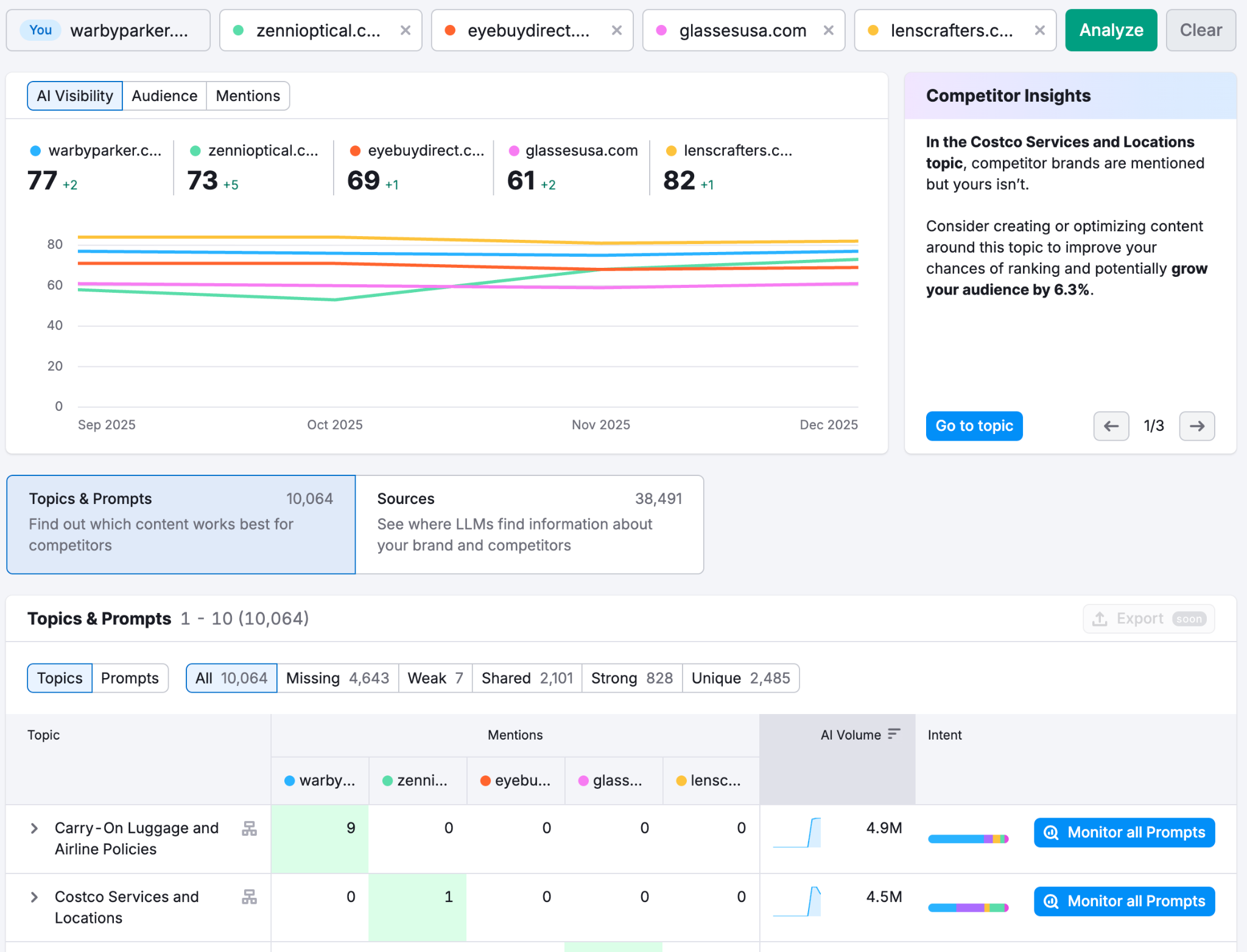
Semrush offers AI visibility tracking through multiple plan options, giving you flexibility in how you access AEO features. You can purchase the AI Visibility Toolkit as a standalone tool ($99/month per domain), subscribe to traditional SEO Classic plans (starting at $139.95/month), or get both with Semrush One, a bundled plan starting at $199/month that combines SEO and AI visibility tools.
The standout feature is the "AI Visibility Score", a domain-level metric (scored from 0-10) that quantifies how visible your entire website is across AI-generated responses from ChatGPT, Perplexity, Gemini, and Google AI Overviews. The toolkit also tracks up to 25 daily prompts (more with higher-tier plans), monitors brand sentiment in AI responses, and provides competitive benchmarking against up to 9 competitors.
Key features:
Best for: Marketers who want flexible pricing options - standalone AI tracking, traditional SEO, or both bundled together. Especially valuable for existing Semrush users who can add AI visibility to their current subscription.
Flexible pricing options include a standalone AI toolkit, SEO Classic, or the bundled Semrush One plan.
The AI Visibility Score gamifies improvement with clear benchmarking over time.
Competitive comparisons against up to nine competitors help clarify market positioning.
The Semrush One bundle saves around $40/month compared to purchasing tools separately.
The standalone AI Visibility Toolkit is limited to 25 daily prompts.
No free trial is available for the standalone AI Visibility Toolkit (a 7-day trial is included with Semrush One).
Higher-tier plans or add-ons are required to increase prompt tracking limits ($60/month for 50 additional prompts).
Pricing: Three options:
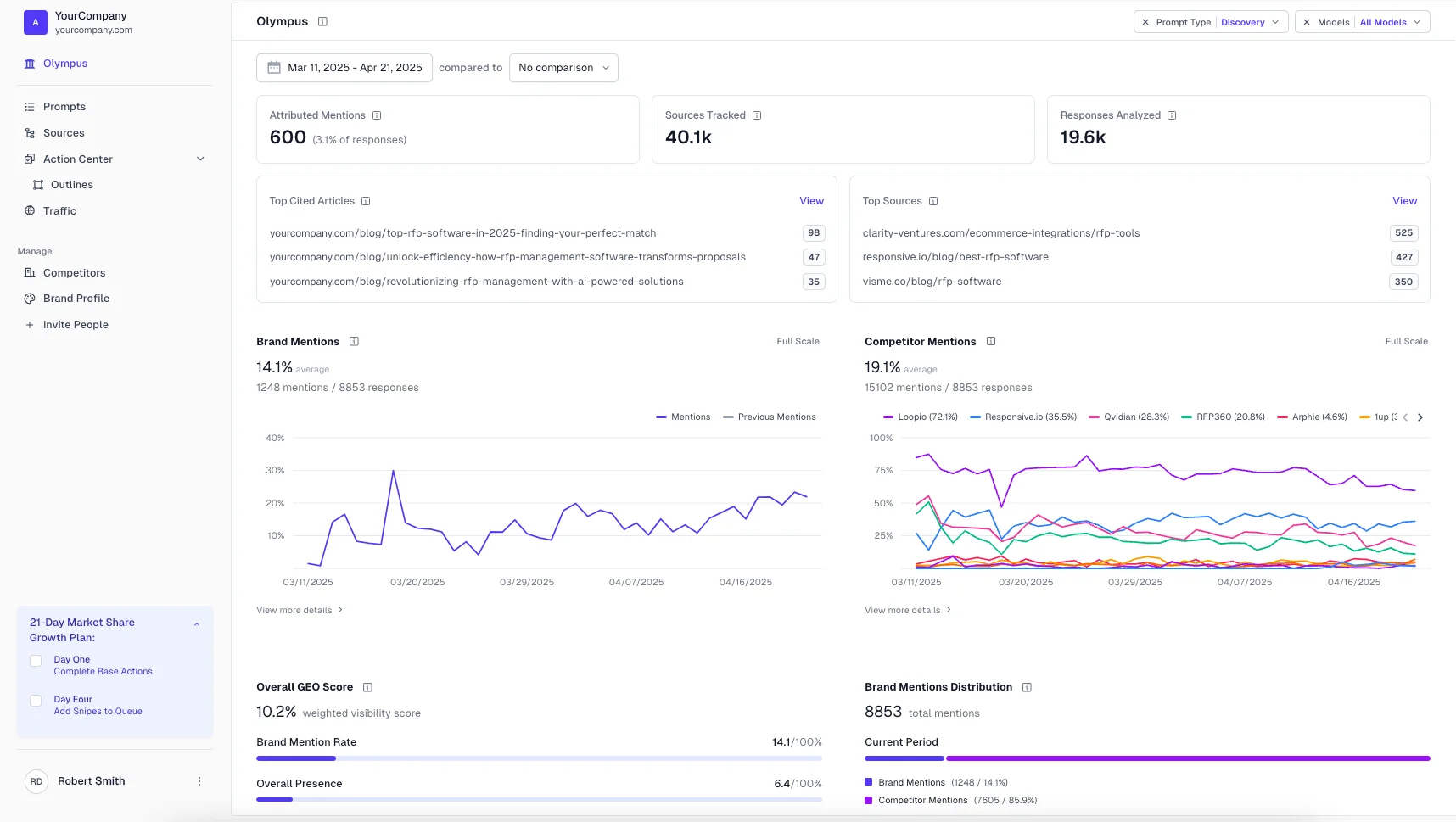
Athena is a lesser-known but strategically valuable tool that focuses on content planning and gap analysis for AI optimization. Unlike tools that track citations after the fact, Athena helps you plan what content to create or optimize in the first place. Its signature feature is the "Answer Graph", a visual network diagram that shows how your content connects to common questions in your niche and reveals where you have coverage gaps.
Athena also offers a Shopify integration for e-commerce brands, allowing you to publish GEO-optimized blog content directly to your Shopify store and track revenue attribution from AI search traffic.
Key features:
Best for: Content strategists planning roadmaps and e-commerce brands using Shopify who want to publish GEO-optimized content and track AI search revenue impact.
Visual Answer Graphs make it easy to spot content gaps at a glance.
Revealed over 40 previously unconsidered questions worth targeting.
Prioritizes optimization efforts based on potential impact.
Does not provide citation tracking and is intended for planning only.
More strategic than tactical, which may not suit teams looking for quick wins.
Steeper learning curve compared to simpler AI search tools.
Pricing: Starts from $295/month.
ChatGPT itself is an effective, and often underestimated, AEO tool when used for manual research. While it's not automated or scalable like the paid platforms above, manually querying ChatGPT (or Perplexity, or Gemini) remains one of the most direct and educational ways to understand how AI engines actually see and cite your content.
It's worth noting that while ChatGPT is currently the most popular LLM for this type of testing, you should also check Perplexity and Gemini since they're emerging as market leaders with different citation behaviors.
Best for: Solopreneurs and small teams with limited budgets needing basic AEO insights.
Free to use for unlimited queries with no usage caps.
Immediate results without data delays or indexing lag.
Makes it easy to test and compare prompt or query variations.
Useful for learning how different LLMs evaluate and generate answers.
Highly time-consuming, with around two hours needed to run 30 queries.
No built-in historical tracking unless results are logged manually.
Not scalable beyond roughly 10–20 queries per analysis.
Requires testing each LLM separately, increasing manual effort.
Pricing: Free for ChatGPT. ChatGPT Plus ($20/month), Perplexity Pro ($20/month), Gemini Advanced ($19.99/month).
My manual testing workflow:
After testing all nine tools, here's my recommendation:
If you're just starting → Start with manual ChatGPT/Perplexity testing. It's free and educational.
If you need comprehensive tracking → Go with Profound. It tracks the most AI engines and provides detailed optimization data.
If you already use Ahrefs or Semrush → Use their built-in AEO features first.
If you need optimization guidance → Try Omnia or Writesonic for actionable recommendations.
If you're tracking for clients → Meridian's real-time alerts simplify reporting.
Next step: Pick one tool and audit your top 10 pages. Ask: are these being cited? Most AEO wins come from fixing existing high-performing content, not creating new articles.

Irina is a Founder at ONSAAS, Growth Lead at Aura, and a SaaS marketing consultant. She helps companies to grow their revenue with SEO and inbound marketing. In her spare time, Irina entertains her cat Persie and collects airline miles.
.svg)
.svg)
.svg)

.svg)
%20(1).svg)
%20(3).svg)
.svg)
.svg)