As business owners, we’ve all been there. You step out of a meeting to missed calls. A lead comes in after hours. A customer needs help, but your team is stretched thin. You call back, but sometimes it’s just too late.
We’ve felt that frustration too. That is why we spent weeks researching hundreds of tools to find the best AI voice agents in 2026. Whether you need a simple, affordable start or a custom powerhouse, we looked for options that actually work. And after testing them all, here is what we found.
An AI voice agent is software that answers and makes phone calls using artificial intelligence. Think of it as a virtual receptionist that handles real conversations, not just button presses.
If you're wondering whether it's the same thing as the 2000s "Press 1 for billing... please hold," followed by elevator music, it's not. That's IVR (Interactive Voice Response), and while it worked, it was clunky. AI voice agents are different. They use natural language processing, speak with a human-like voice, and actually understand what callers are saying.
Here's how they compare:
Bottom line: AI voice agents understand context and intent. Traditional IVR systems just route calls based on button presses.
So, what can AI voice agents actually do? AI voice agents excel at automating business phone calls that used to require a full-time team. Here are the most practical use cases where voice automation makes an immediate impact:
The beauty of call automation is that these agents handle repetitive customer calls while your team focuses on complex issues that actually need human attention.
Now let’s take a look at all 8 tools in detail:
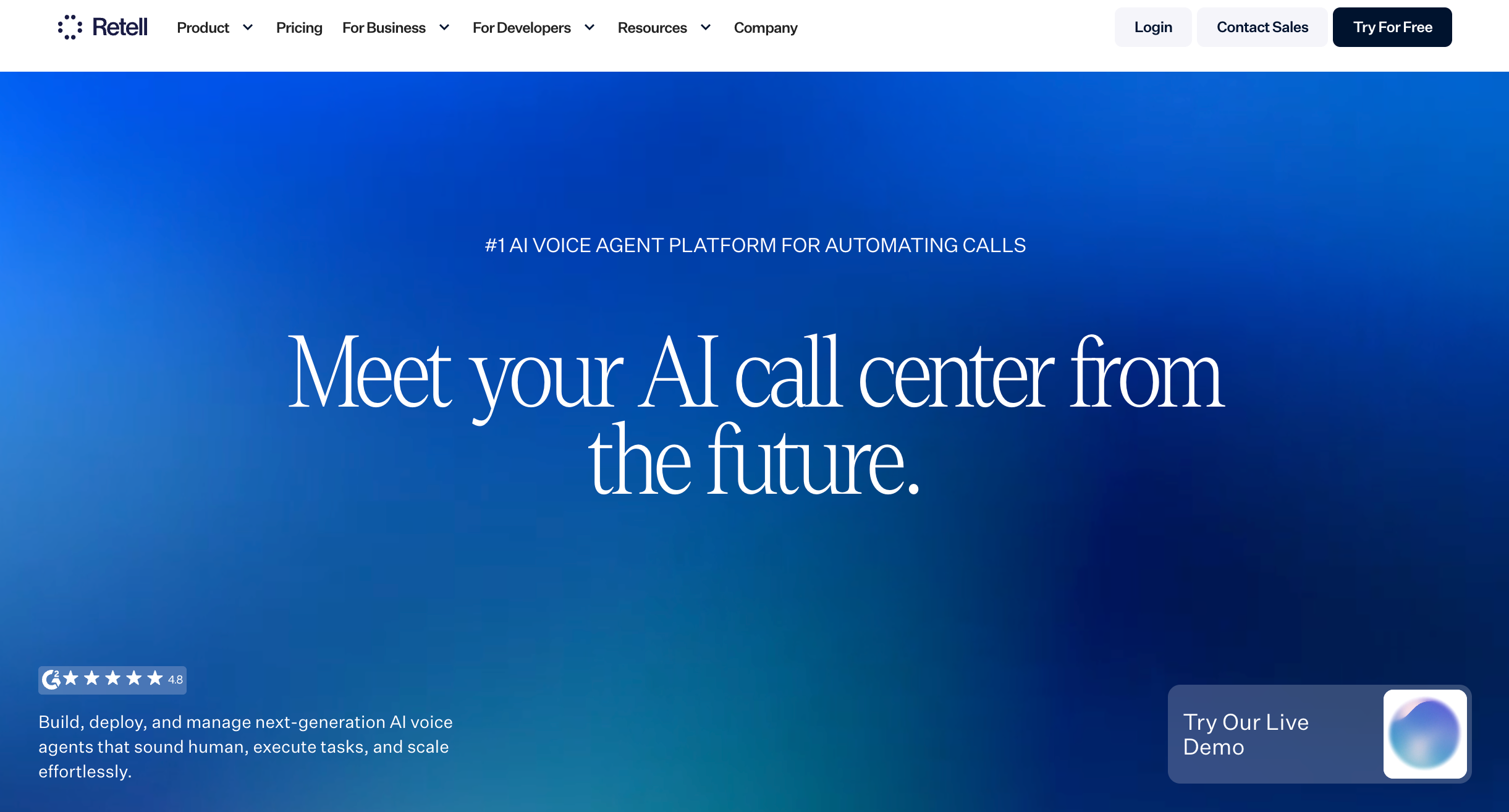
Retell AI is built for conversations that actually sound human, fast, natural, and real-time. If you want your AI agent to feel less robotic and more like a real person, this one is worth a serious look.
Reviewers frequently cite Retell AI’s speed as its greatest competitive advantage. Its emphasis on low latency—benchmarked at under half a second—ensures a natural, back-and-forth rhythm. This industry-leading responsiveness makes it one of the few solutions capable of maintaining true conversational smoothness without the typical 'AI lag.' What that means in practice is that callers rarely feel like they're talking to a bot. The pauses feel human, the replies come quickly, and the conversation flows the way a real phone call should. For those businesses where the first impression over the phone matters, that difference is hard to ignore.
Retell AI is ideal for startups building voice-first products, product teams that prioritize conversation quality over everything else, and engineering-savvy ops teams with the infrastructure expertise to maximize the platform's capabilities.
.svg)
Natural, human-like conversations
Ultra-low latency performance
Strong real-time transcription
Multilingual support (31+ languages)
.svg)
Costs can scale quickly without optimization
Requires technical knowledge for best results
Pay-as-you-go can get expensive at high volume
Pay-as-you-go model covering voice, LLM, and telephony. Costs vary based on usage, but can add up quickly at high call volumes without monitoring.
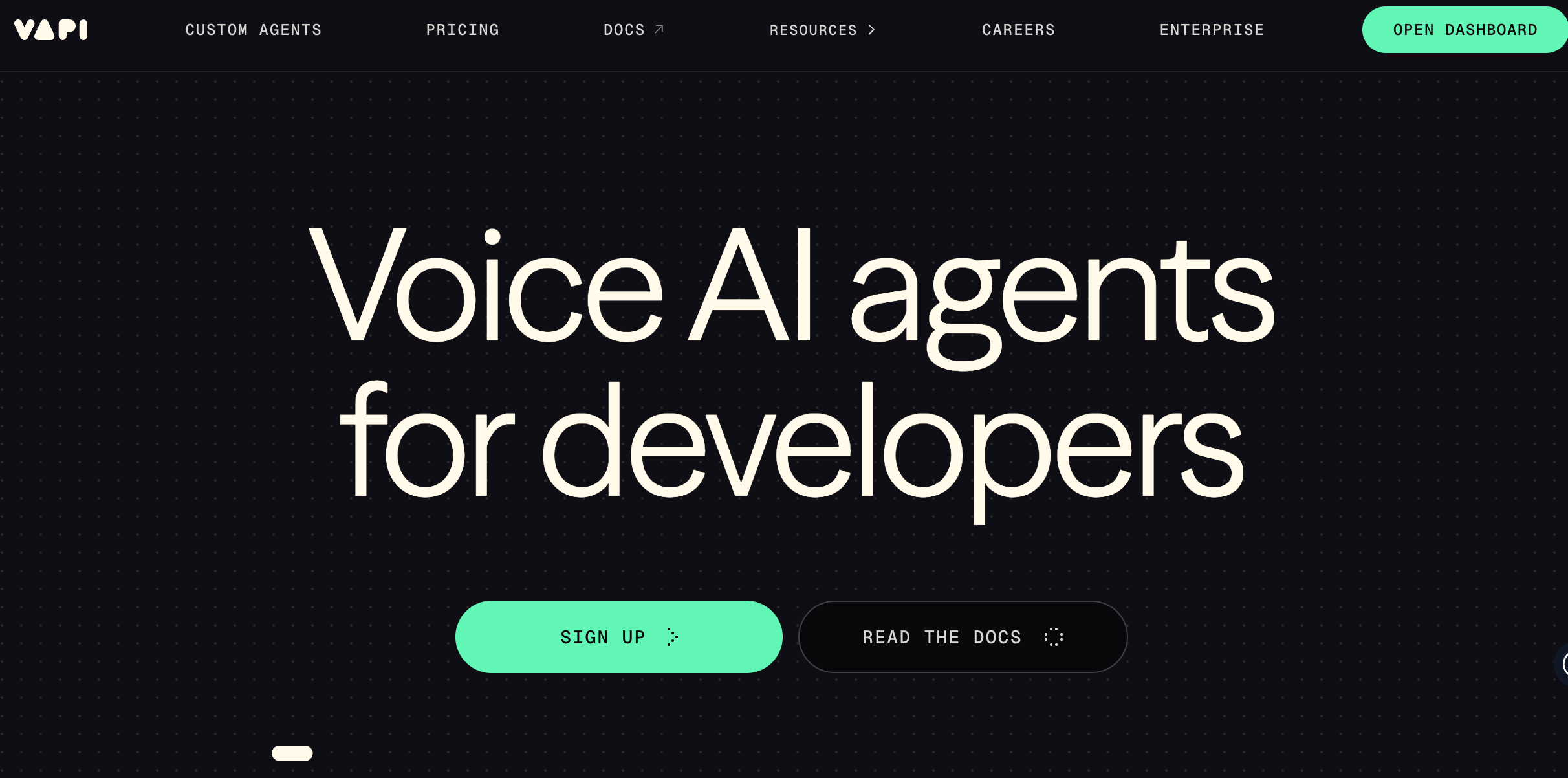
Vapi AI is a developer-first platform built for teams that need complete control over their voice agent architecture. If you want to customize every aspect of the conversation flow, this is your tool.
Based on public demos and comparisons, Vapi shines when you need precise control and strong integrations. It has even been ranked “S-tier” in some voice AI breakdowns.
Vapi AI is built for developers and engineering-led teams who want granular control over their voice agent implementation and have the technical resources to build custom solutions.
Deep customization capabilities
Flexible, modular architecture
Full API control
Strong developer documentation
Not beginner-friendly
Requires technical assembly, even with the visual builder
Steeper learning curve
Usage-based pricing at approximately $0.05/min platform fee plus infrastructure costs (LLM, telephony, etc.)
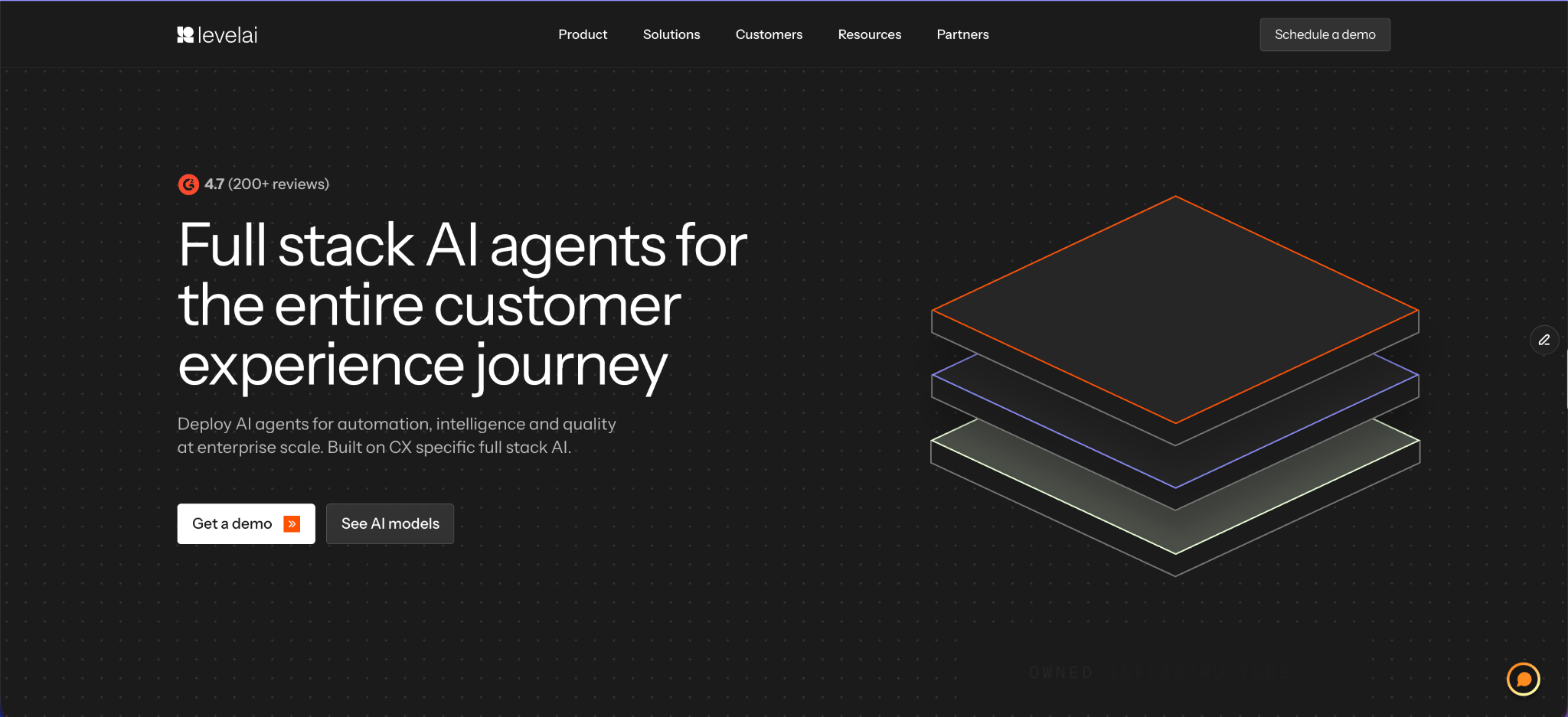
Level AI is an enterprise contact center platform that layers AI-powered quality assurance, agent assist, and voice automation on top of existing CCaaS systems. It uses proprietary, task-specific AI models, rather than a single general-purpose LLM, to score 100% of customer interactions and power AI voice agents that handle complex conversational workflows. The platform is built for high-volume, compliance-sensitive operations, with HIPAA, PCI, GDPR, and SOC2 compliance built in.
Level AI helps teams move from manual QA to automated coverage across customer interactions. It also supports accurate intent and sentiment detection, easy SSO-based setup, and responsive customer support.
Level AI is built for enterprises, not small teams or solo operators. It fits large, high-volume customer operations: financial services, healthcare, insurance, retail, and SaaS companies that need to audit and automate customer interactions at scale while meeting strict compliance requirements. Mid-market and enterprise contact centers with dedicated QA and CX teams are the primary users on G2.
Automated QA scoring across 100% of interactions
High accuracy on intent detection and sentiment analysis
Easy SSO-based setup and onboarding
Strong agent coaching tied to quality metrics
Responsive customer support (per G2 reviews)
Built for enterprises, not suited for small teams or solo users
No self-serve pricing, custom quotes only
Level AI offers custom pricing rather than fixed pricing plans.
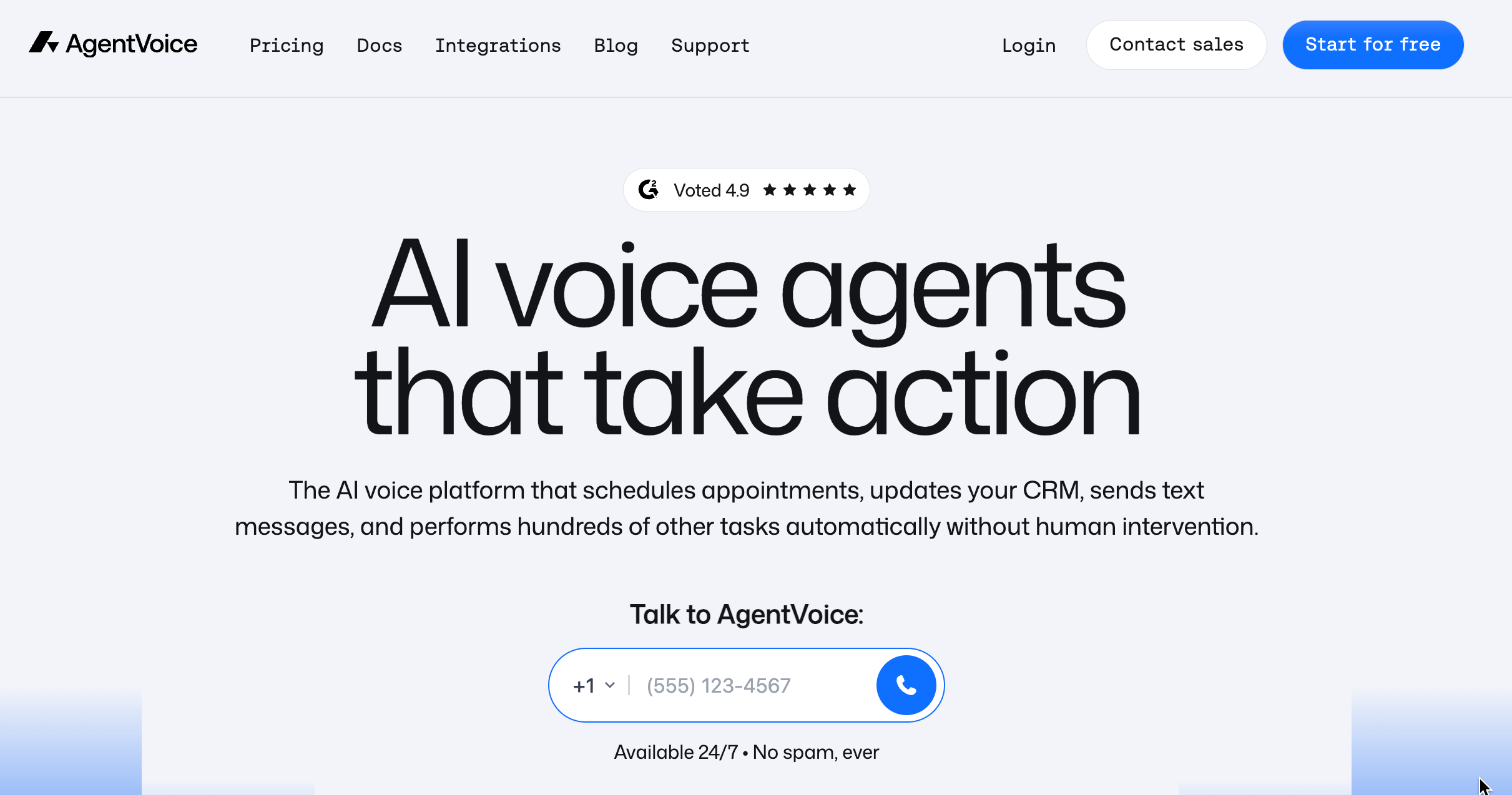
AgentVoice is a turnkey, business-ready platform designed for teams that want AI voice agents up and running quickly without technical hassle.
A common theme across user feedback is consistent performance during real client calls, with users frequently highlighting low latency, contextual continuity in extended conversations, and stability in lead follow-ups and scheduling workflows.
AgentVoice is perfect for agencies managing multiple clients, SMBs without dedicated tech teams, and non-technical teams looking for ready-to-use voice agents that work out of the box.
Quick, easy setup
Business-ready workflows included
Multilingual support
No technical expertise required
Higher fixed monthly cost vs. usage-based tools
Less flexibility for advanced customization
Free trial available. Paid plans start at approximately $300/month.
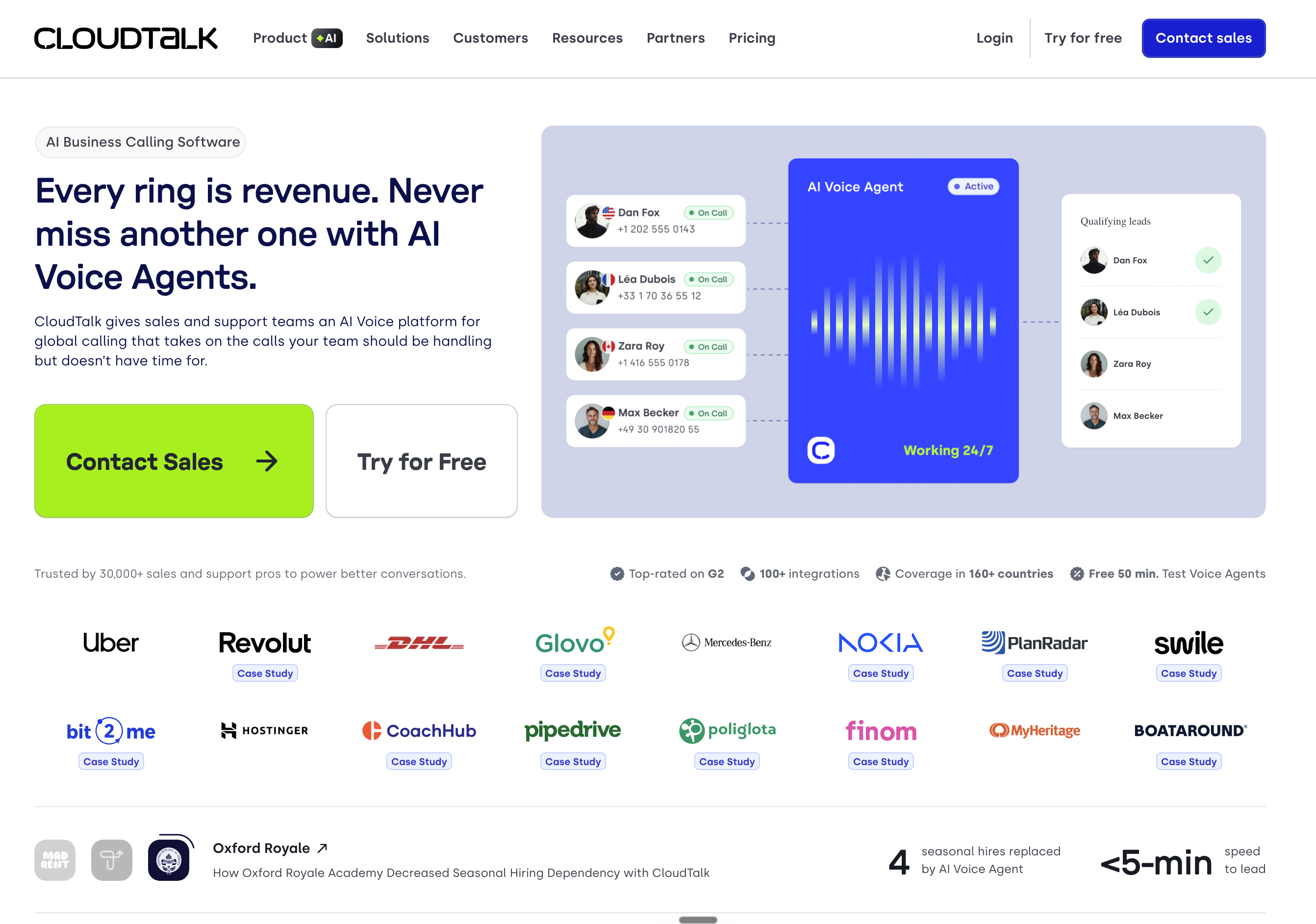
CloudTalk is a cloud-based business phone system with AI voice agents built directly into the calling stack, designed for growing SMBs that want voice automation without standing up a separate AI infrastructure layer.
Unlike voice-agent-first platforms that focus only on the conversation layer, CloudTalk bundles AI voice automation with the complete phone infrastructure underneath: numbers, routing, recording, CRM sync, and human agent fallback. For SMBs that don't have a developer team to stitch together a voice agent API with separate telephony and CRM tooling, this matters more than raw conversation realism.
CloudTalk is built for growing SMB sales and customer service teams that need AI voice agents alongside a full business phone system. It's the right pick for teams that want one platform handling inbound AI receptionist work, outbound AI qualification, human agent calling, CRM logging, and analytics, instead of integrating four separate vendors.
Combined AI voice agents and full business phone system in one platform
24/7 inbound and outbound coverage with native human agent fallback
Native CRM integrations and automatic call logging out of the box
International numbers in 160+ countries for global SMB teams
AI voice agent depth lighter than voice-agent-first platforms like Retell or Vapi
Less developer-flexible than API-first tools
Best fit for SMB to mid-market, not high-volume enterprise outbound campaigns
Plans start at $19/user/month (Lite, US/Canada only) or $25/user/month (Starter, billed annually). AI voice agent features are included on Expert tier ($49/user/month) and above.
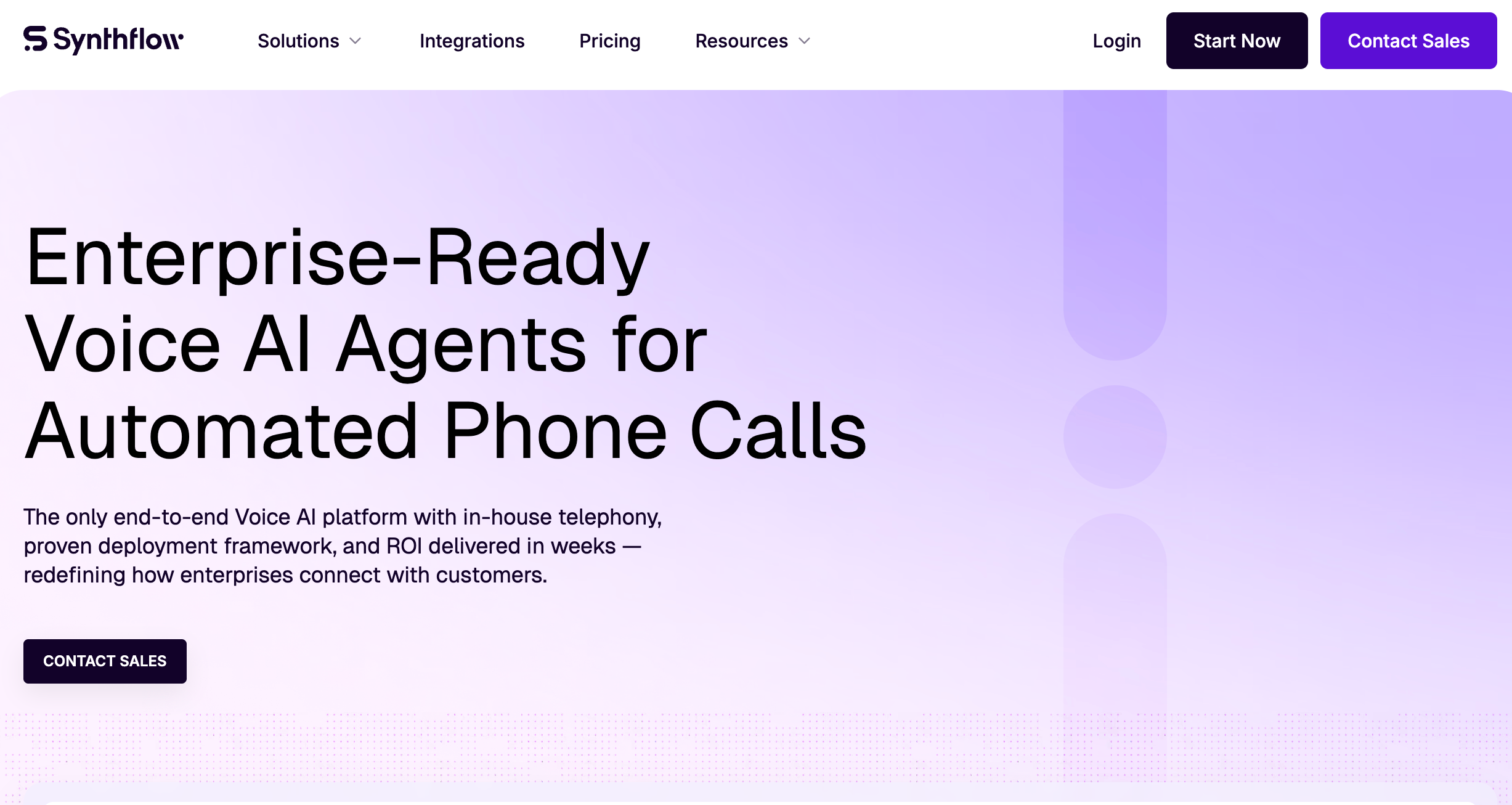
Synthflow AI is a no-code platform built for speed and simplicity. If you need a voice agent running today without touching a line of code, this is worth considering.
In reviews and AI agent comparison roundups, Synthflow is consistently highlighted for its user-friendly experience, positioning it as a solid option for teams prioritizing ease of use over complex customization.
Synthflow AI is ideal for small teams, founders wearing multiple hats, and operations teams without dedicated engineering resources who need voice automation up and running fast.
No-code builder, beginner-friendly
Fast deployment and setup
Visual flow designer
Accessible for non-technical users
Voice-only focus limits multi-channel use
Pricing scales quickly at higher tiers
Less control vs. developer platforms
Entry plans start at $29/month. Higher tiers range from $400 to $900+/month, depending on usage and feature access. Costs scale with call volume and advanced features.
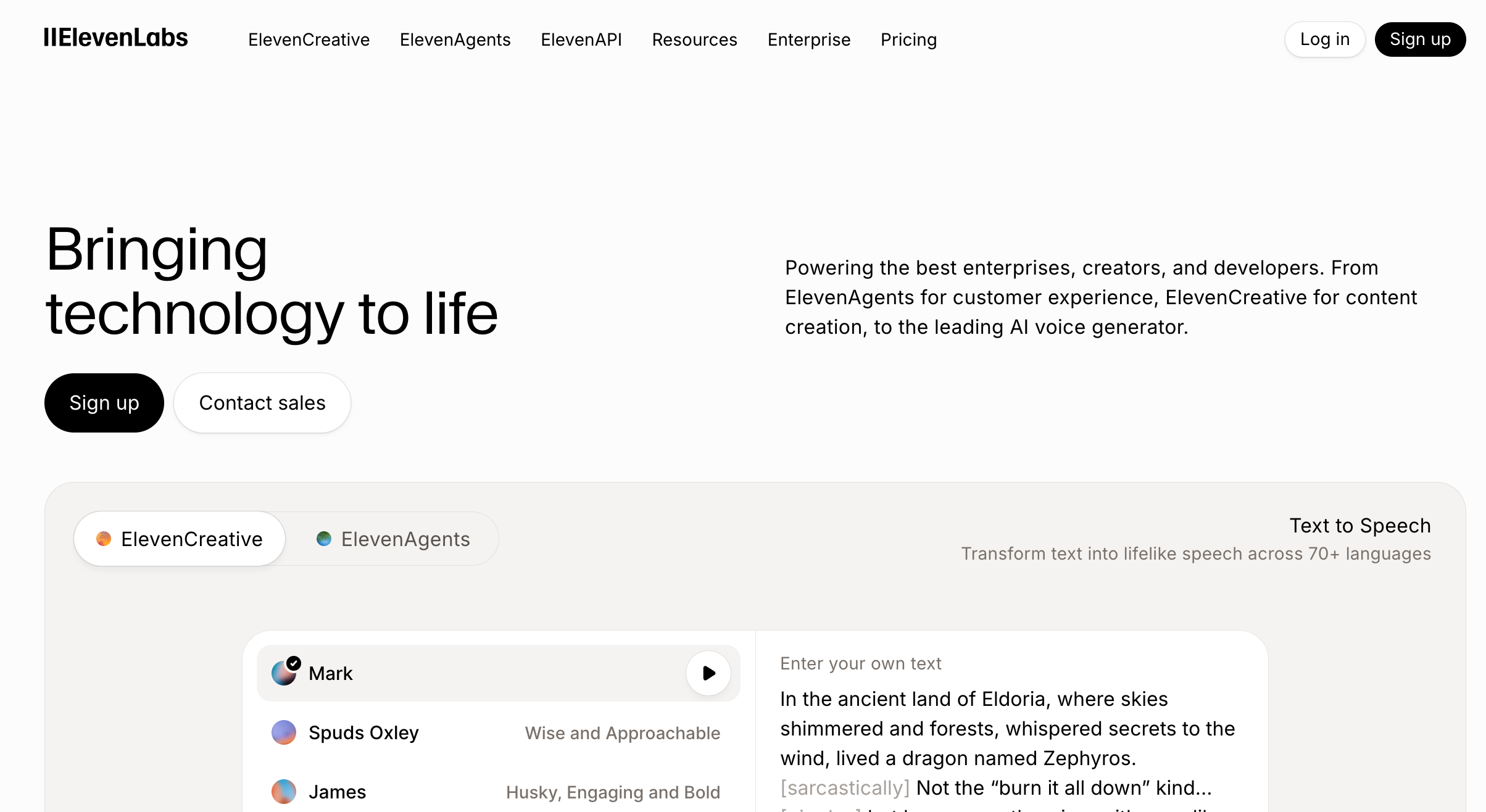
ElevenLabs is primarily known for industry-leading AI voice quality, and their agent platform brings that same realism to phone conversations. While it's often paired with other tools for complex logic, the voice quality alone sets it apart.
If voice realism is your top priority, ElevenLabs is the name that comes up over and over again in reviews. Its voices are widely regarded as some of the most natural-sounding on the market. For more advanced conversation logic, though, teams often combine it with other tools to power the backend workflows.
ElevenLabs Agents is perfect for small business owners, content creators, and teams that prioritize exceptional voice quality over complex agent workflows and don't need extensive automation logic.
Best-in-class voice quality
70+ language support
Low barrier to entry
Free tier available
Less advanced agent logic vs. full platforms
Often requires pairing with other tools
Limited workflow complexity
Free tier is available to get started. Paid plans start at approximately $5/month (credit-based system).
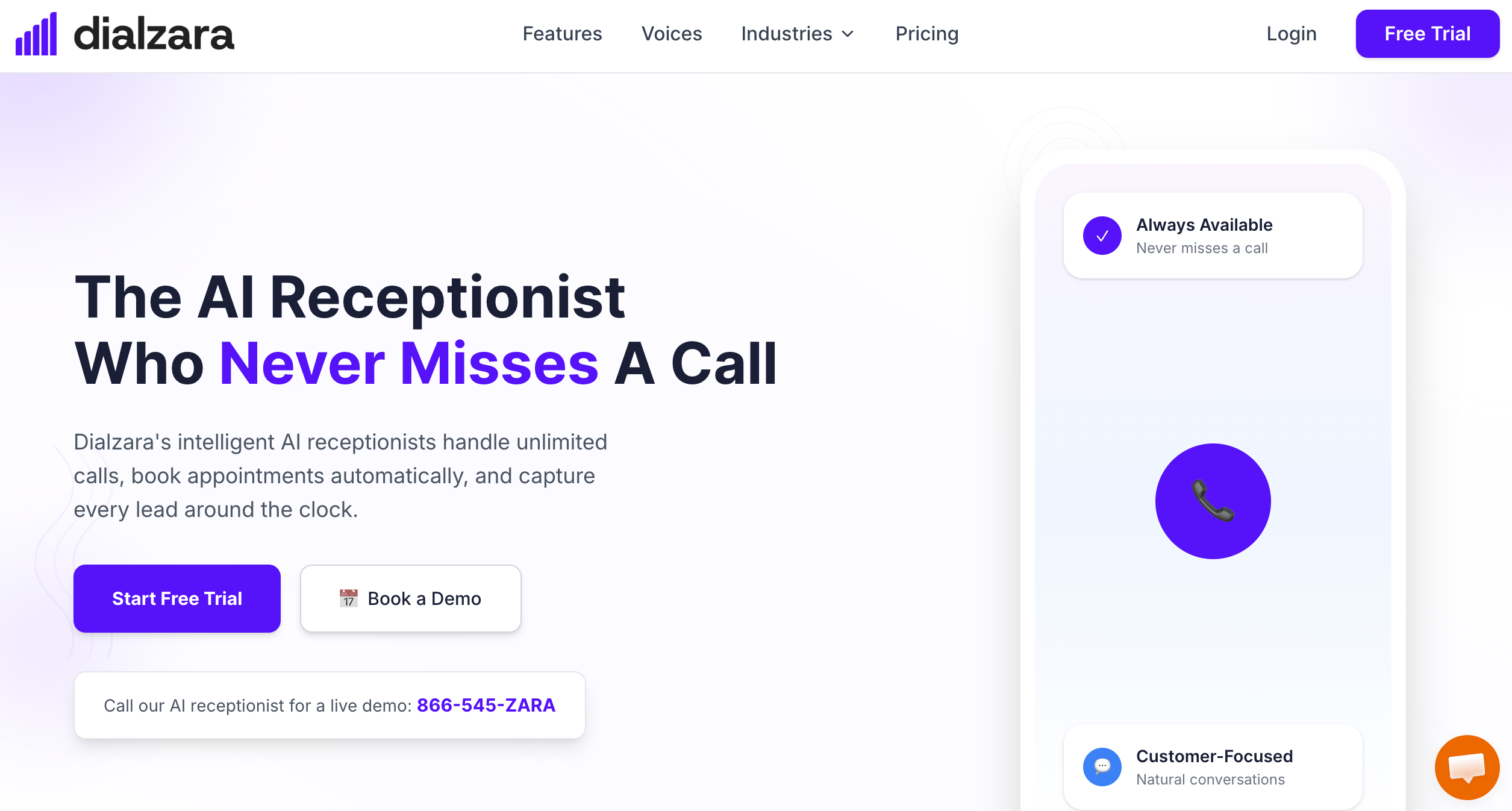
Dialzara is a straightforward AI receptionist built specifically for small and medium businesses that need reliable call handling without complexity.
For small and medium businesses that want a straightforward voice solution, Dialzara focuses on the essentials: answering inbound calls, taking messages, and directing callers appropriately. It’s also recognized for good value, offering unlimited simultaneous calls starting at roughly $99/month.
Dialzara is built for local businesses, service providers like salons or contractors, and SMBs that need straightforward AI call handling without advanced customization.
Easy setup and clear use case
Multilingual support (10+ languages)
Unlimited simultaneous calls
Good value for SMBs
Limited customization options
Less advanced logic than full platforms
Basic feature set
Monthly plans range from $29 to $199, depending on features and call volume. Higher tiers include unlimited simultaneous calls.
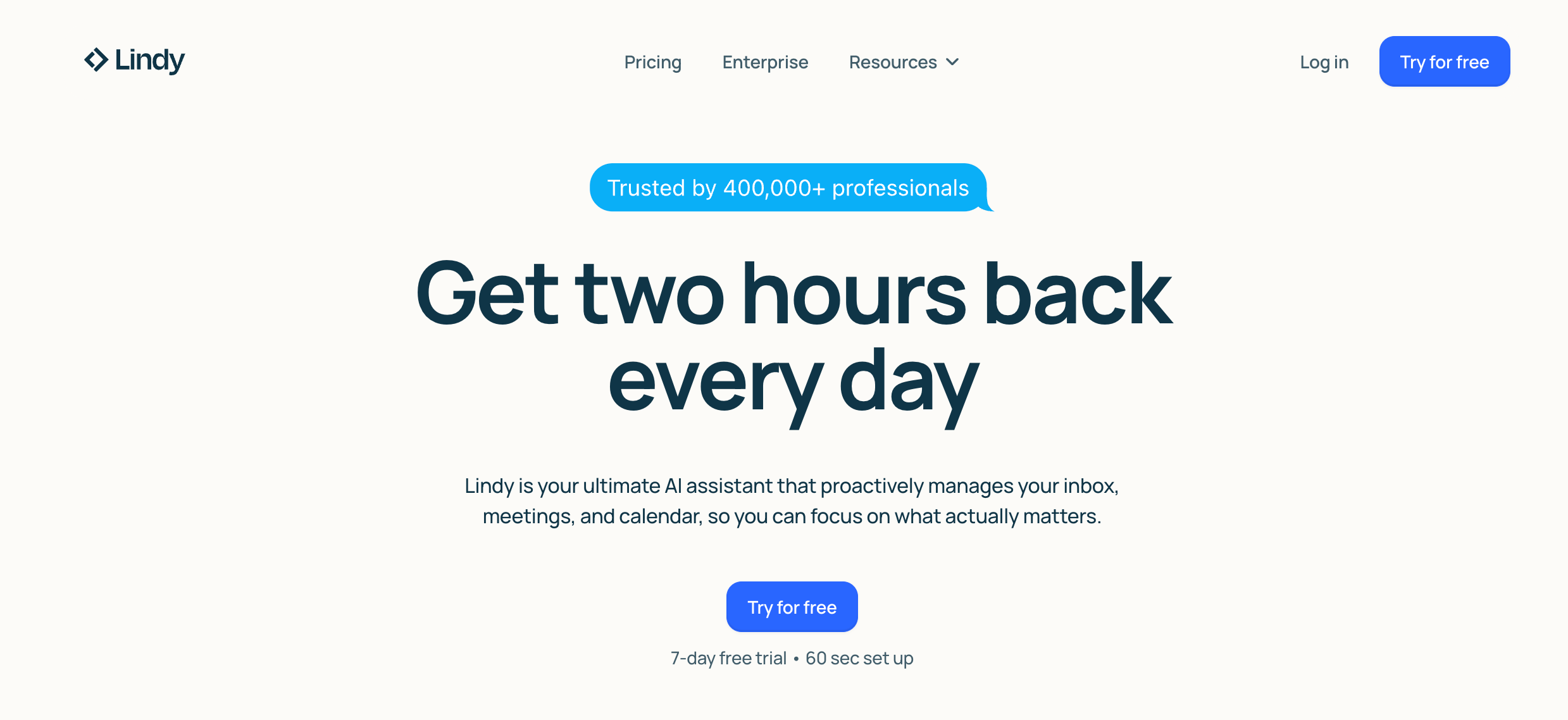
Lindy is a multi-channel automation platform that goes beyond just voice. If you need workflow automation across phone calls, emails, and other channels, Lindy connects the dots.
Across user reviews and discussions, many people point to Lindy’s strength in automating repetitive workflows, making it useful for routine task handling. At the same time, its voice capabilities aren’t typically described as on par with platforms built specifically for voice-first interactions.
Lindy works best for operations teams managing cross-functional workflows, sales teams needing automation beyond just calls, and businesses focused on internal automation and productivity improvements.
Strong automation features
Multi-channel workflows (voice, email, tasks)
Beginner-friendly, easy setup
Good for internal productivity
Voice functionality less specialized than voice-first tools
Can get pricey quickly with high usage
Credit-based system requires monitoring
Free tier available. Paid plans range from approximately $49 to $199/month (credit-based system). Costs increase with usage.
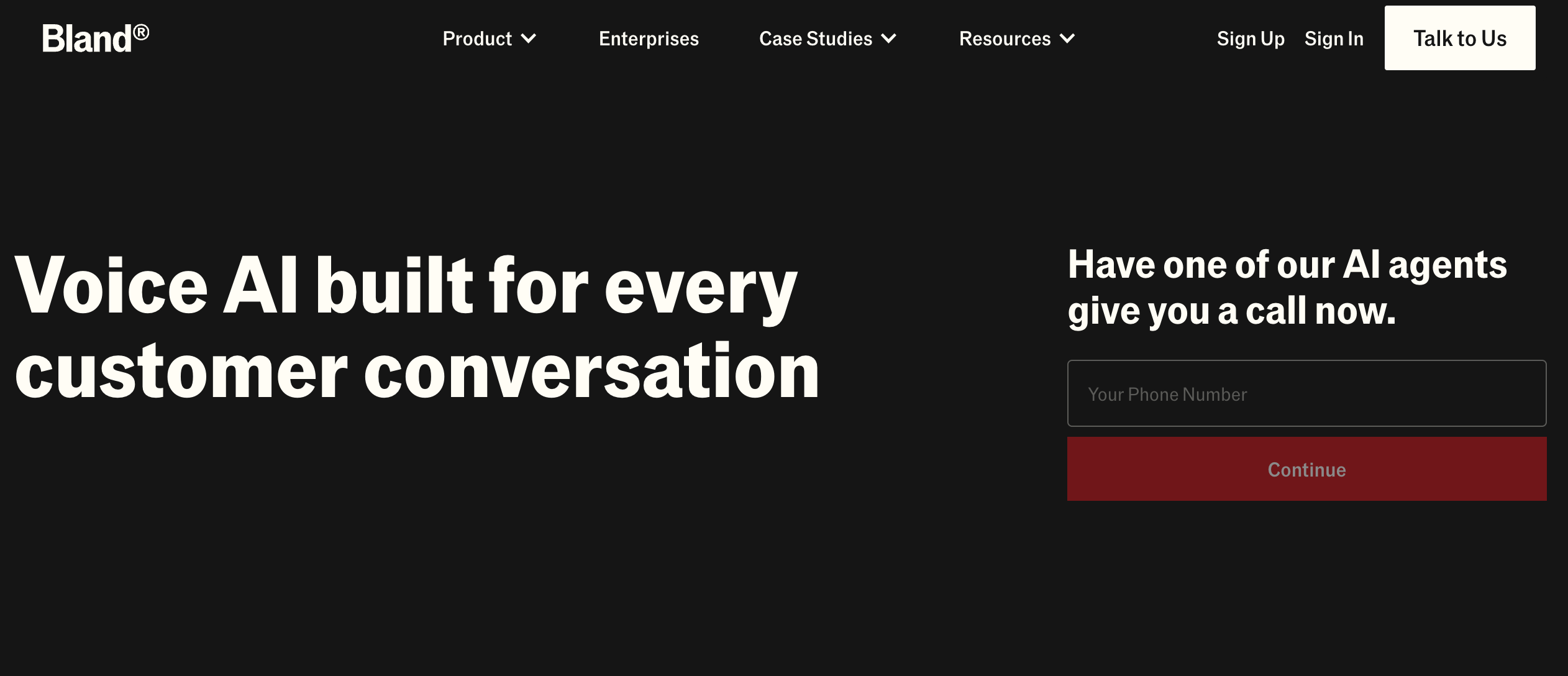
Bland AI is built for one thing: high-volume outbound calling at scale. If you need to make thousands of calls efficiently and affordably, this platform is designed specifically for that use case.
When it comes to outbound and high-volume calling, Bland AI is often highlighted for its enterprise scalability. In several comparisons and rankings, it’s positioned as a top choice for handling large call volumes, even if conversation nuance isn’t its main focus.
Bland AI is purpose-built for sales organizations running outbound campaigns, call centers managing high daily volumes, and teams that prioritize scale and cost efficiency over conversational perfection.
Highly scalable for large call volumes
Cost-effective at high volume
Built specifically for outbound calling
Strong multilingual and translation features
Less conversational nuance vs. realism-focused tools
Optimized for outbound, not inbound complexity
Usage-based pricing is approximately $0.09/minute. Becomes increasingly affordable at high call volumes, making it ideal for teams running hundreds or thousands of calls daily.
The right AI voice agent for your business success depends on three main factors: the conversation style you need, how much technical control you want, and the scale you're planning to operate at.
Here's how to match your goals to the right tool:
Before committing to a platform, get clear on your top priority. Are you optimizing for realism, fast setup, scale, affordability, or full control? Your answer will naturally point you in the right direction.
From there, take advantage of free trials and test a few options. You’ll know faster than you think which one feels right.
.webp)
With 10 years of writing experience and a deep interest in SEO, AI, and content management, Anna’s here to break down big ideas and translate them into plain English for readers of all levels. She's got a Master's Degree in International Information and is a lifelong learner of writing and storytelling. Outside of work, she’s on the yoga mat, in a good book, or planning her next adventure with family and friends.
.svg)
.svg)
.svg)

.svg)
%20(1).svg)
%20(3).svg)
.svg)
.svg)