
.svg)
%20(1).svg)
%20(3).svg)
Back to articles
8 Jasper Alternatives for Better Publishing Workflow
September 24, 2026
By
Cindy Graciella
Jasper is a popular choice for marketing teams that want help with copy, content, and keeping their brand voice consistent. But at $69 per user per month, or $59 with annual billing, the cost can add up quickly—especially if not everyone on your team uses it regularly.
If Jasper isn’t quite fitting your budget or your team’s workflow, there are plenty of alternatives to consider. Some are built specifically for marketing copy, others focus more on SEO content, and some are general-purpose AI assistants that can handle a much wider range of tasks.
So, which one makes sense for your team?
It really comes down to what you publish, how your team works, and how much control you need over your brand voice. Let’s take a look.
Two issues tend to push teams away from Jasper. The first is cost. At $69 per seat monthly, or $59 with annual billing, and no free plan to fall back on, a six-person marketing team pays full price for every seat. That means the cost can add up quickly, especially when some team members draft daily while others only log in a couple of times a month.
Workflow fit is the other issue. Teams buy a copywriting platform, then discover that their bottleneck lies elsewhere. They may need to produce SEO articles against SERP competitors, score ad variants before spending money, or maintain one voice across twelve contributors who have never opened the style guide.
That’s what we looked at when comparing the alternatives below: what each tool actually does well, who it makes sense for, and how it compares with Jasper.
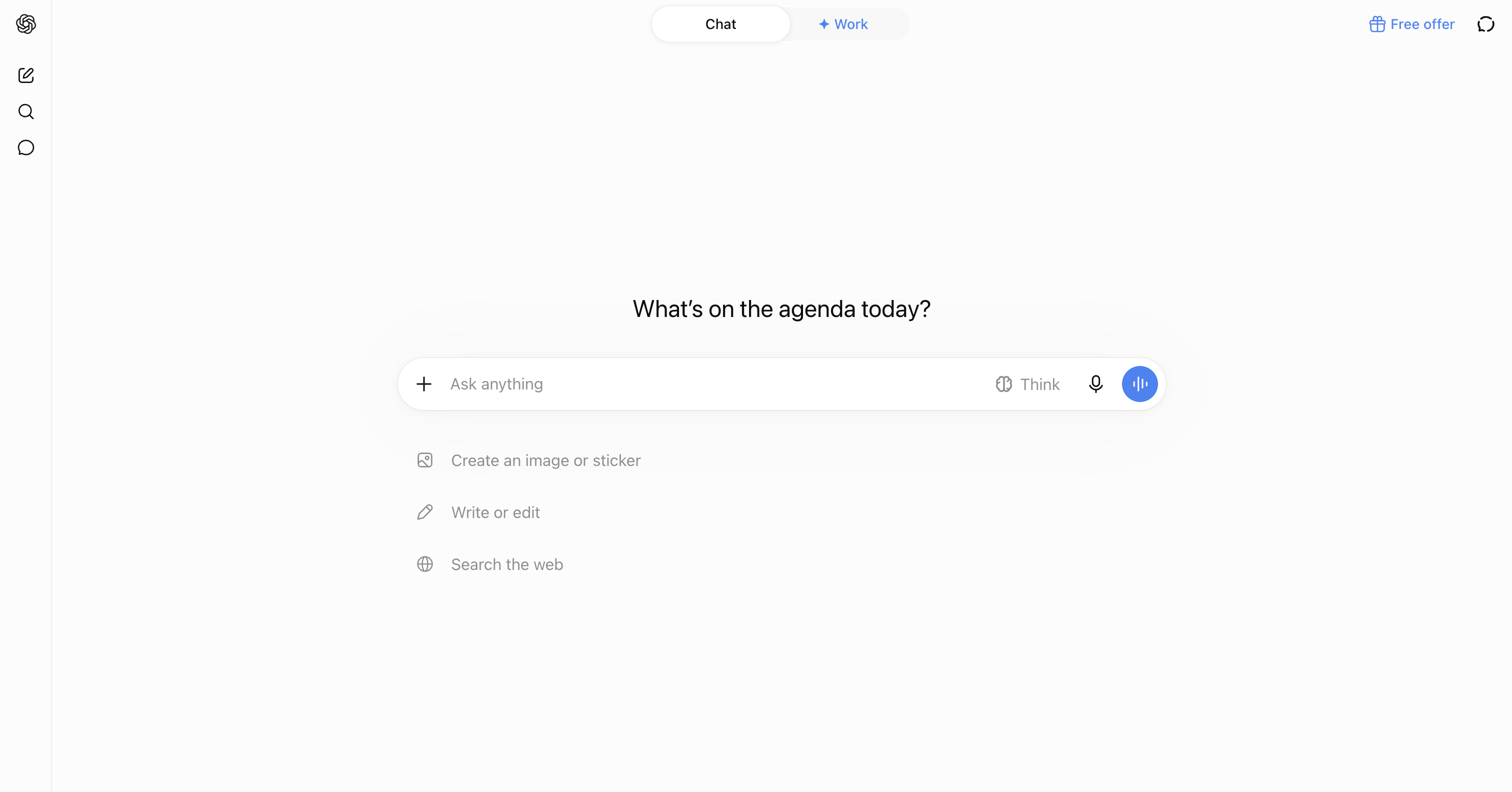
Many Jasper cancellations lead here because one assistant can handle drafting, research, competitor teardowns, spreadsheet analysis, and ad hoc work outside a copy platform’s scope. Its breadth is the main reason to switch.
The tradeoff is that ChatGPT knows nothing about your brand until someone supplies the relevant instructions. Custom GPTs narrow that gap, but only when people consistently use them.
ChatGPT's entry price vs Jasper: A free tier is available, along with paid individual and Business seats, compared with Jasper’s paid-only entry point.
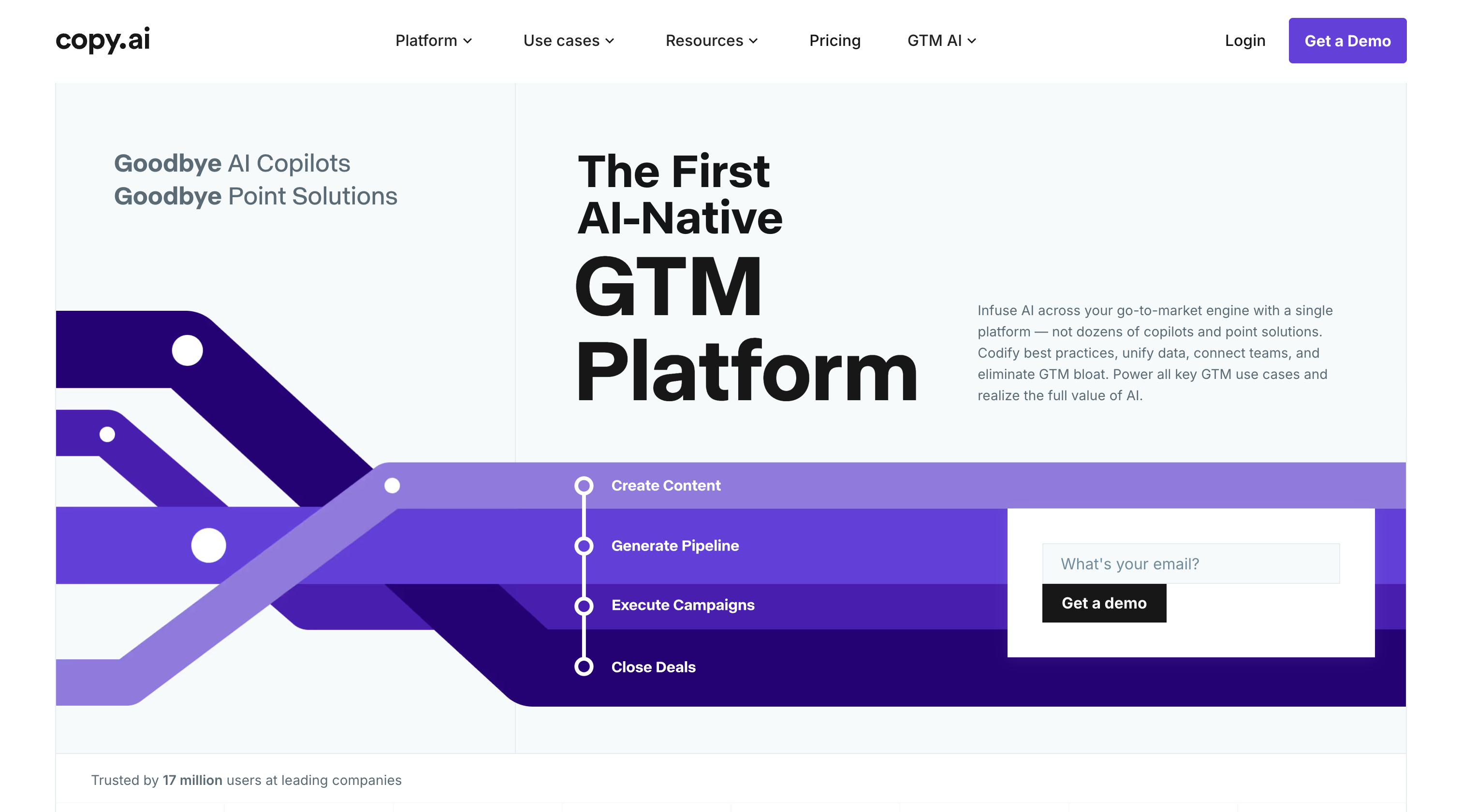
Copy.ai requires the least relearning for a team that bought Jasper to produce marketing and sales assets at volume. The underlying approach is similar, though Copy.ai emphasizes workflows over one-off template runs.
Its clearest distinction is outbound sales. Sequences, prospect-specific variants, and repeatable multi-step chains are primary use cases rather than additions to the copywriting product.
Copy.ai's entry price vs Jasper: Copy.ai offers a free tier and paid team plans, while Jasper starts with a paid seat.
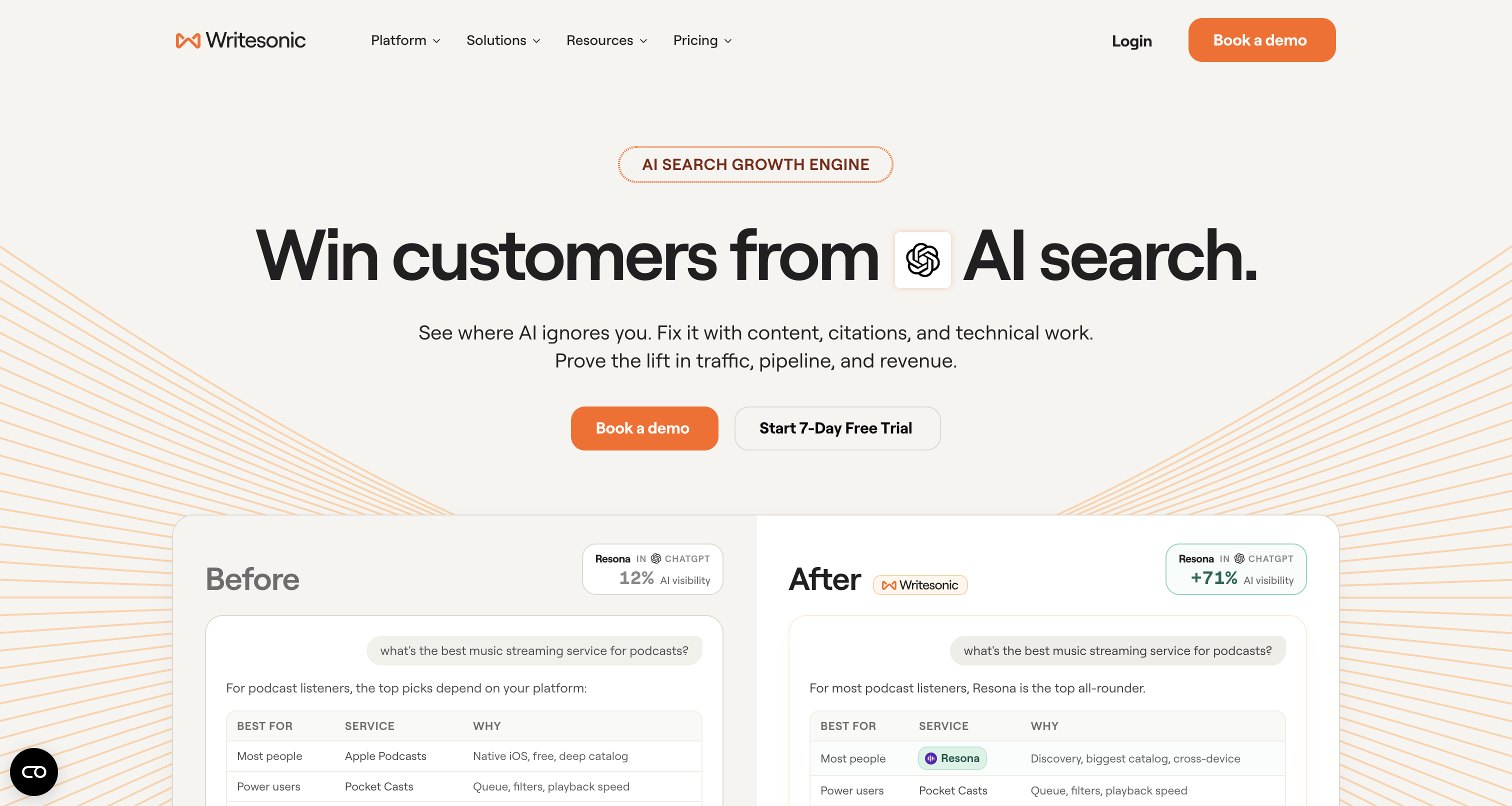
For teams whose Jasper budget was effectively a blog-traffic budget, Writesonic can consolidate several parts of the SEO process. Keyword research, SERP analysis, outlining, drafting, and optimization happen in one system rather than across three subscriptions.
It also tracks visibility in AI-generated search answers, a feature commonly described as GEO tracking. GEO tracking reports whether AI assistants cite your pages and brand for buyer prompts. It also shows which competitors appear instead. When pages rank but earn no citations, a marketing lead can examine structure, entity coverage, and answer formatting rather than adding more links.
Writesonic's entry price vs Jasper: Writesonic uses paid subscription plans, as does Jasper.
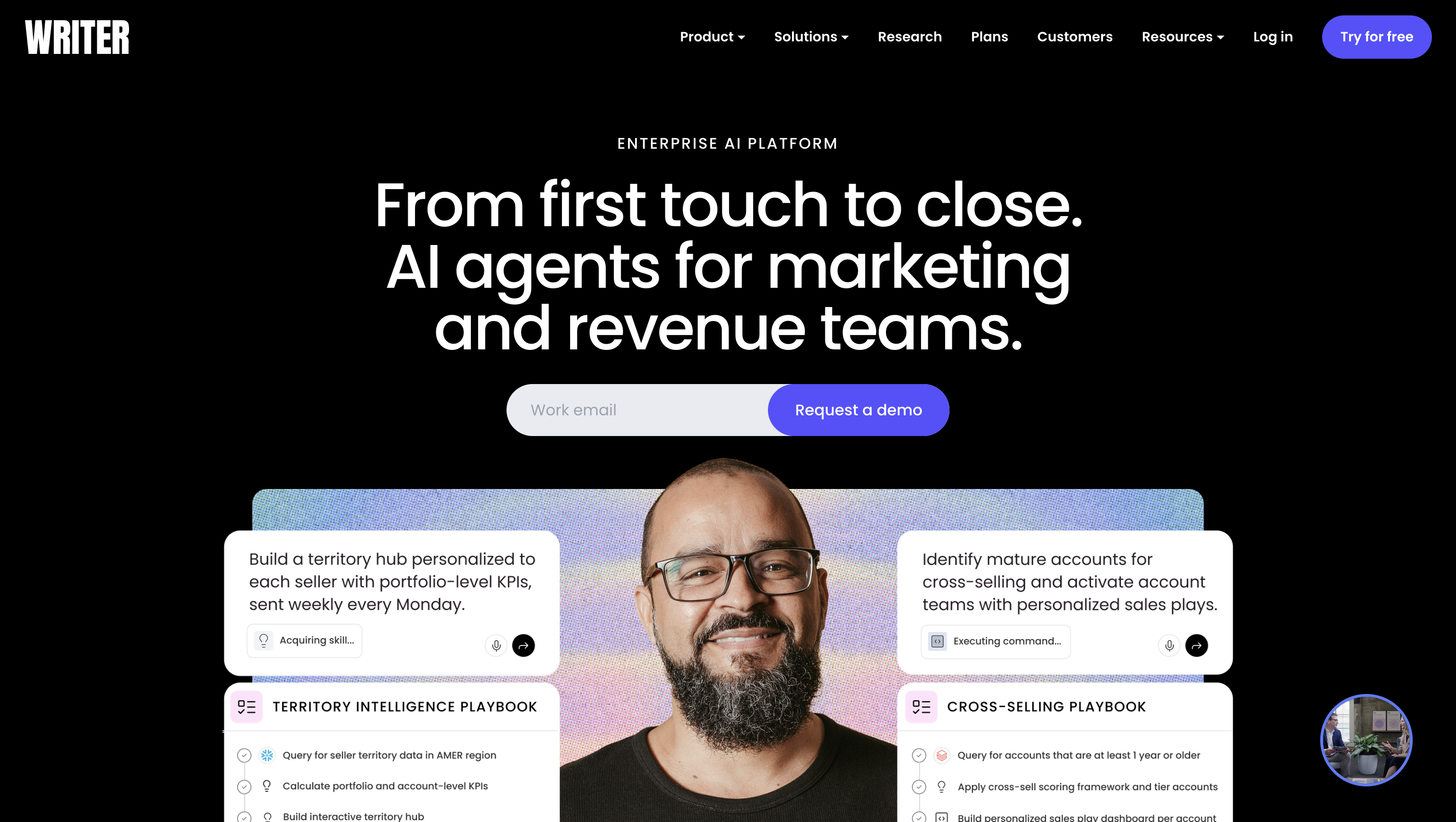
Writer’s case rests on governance. It suits organizations where thirty people write in the company’s name but only four have read the style guide.
The evaluation is less about the quality of a single prompt and more about whether the rules hold when the least careful contributor is writing.
Writer's entry price vs Jasper: Plans run from Starter to Enterprise. Non-profits and educational institutions receive 20% off Starter and Enterprise plans.
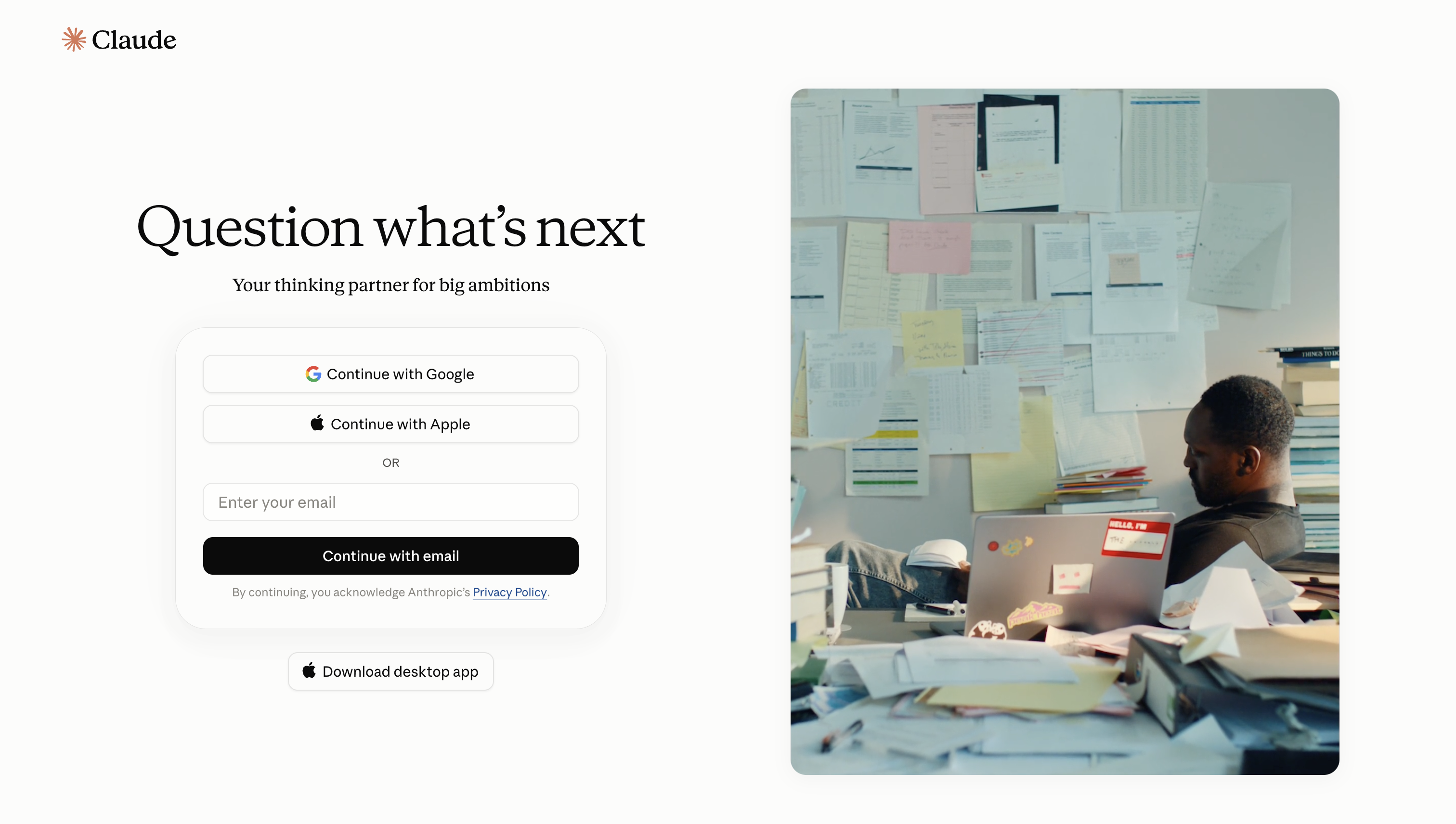
Claude directly addresses a common complaint about Jasper: drafts that are competent but lifeless. It works as well on an existing draft as it does on a blank page, so teams can use it for editing as well as generation.
There are no campaign dashboards, templates, or scoring tools. Claude operates as a writing and editing partner, with the assumption that a capable writer is directing it.
Claude's entry price vs Jasper: Claude has a free tier, plus paid individual and Team seats, while Jasper has no free plan.
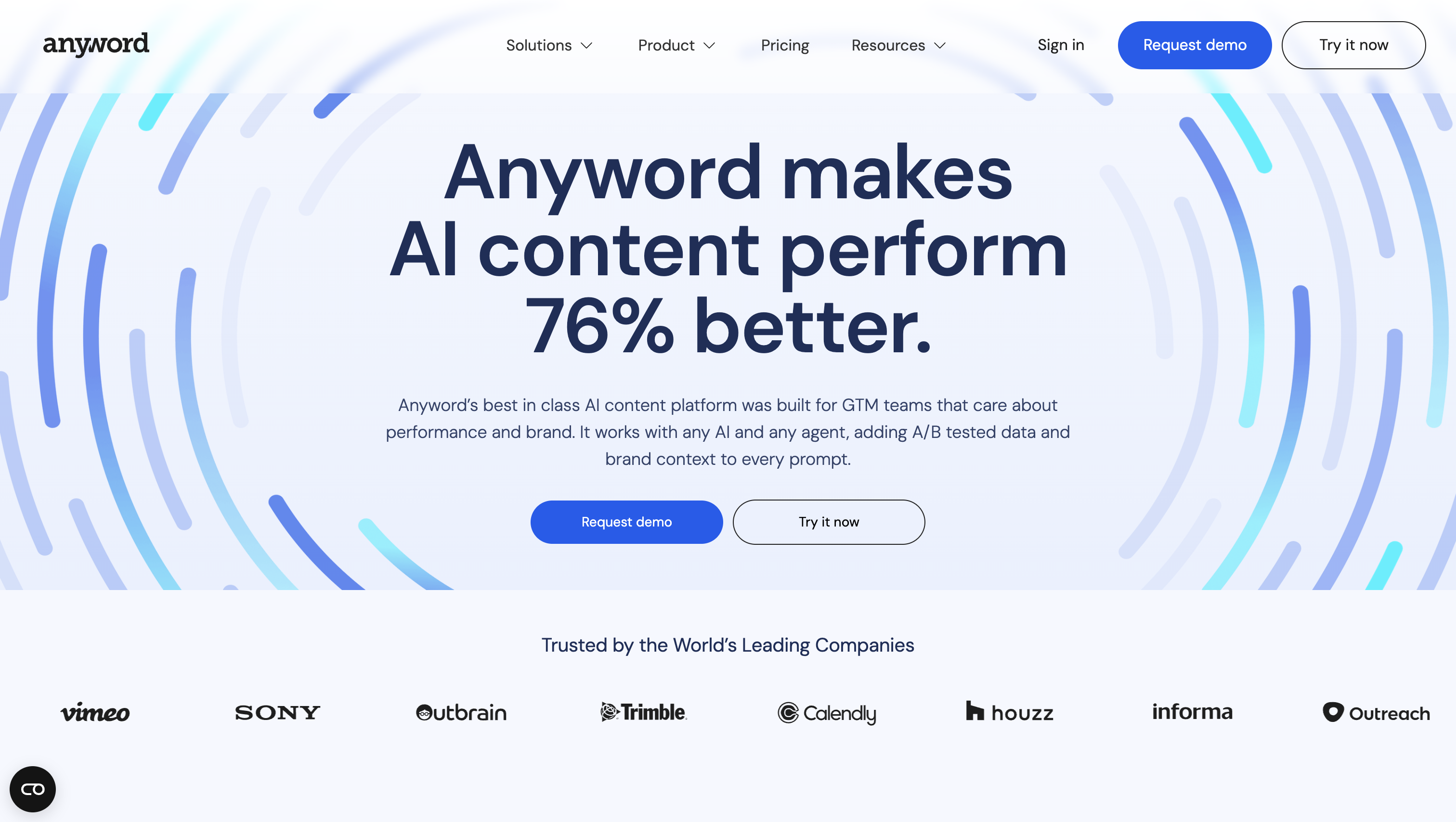
Anyword focuses on which copy variant is likely to convert, rather than treating writing quality as the only measure. That orientation makes it a distinct option for paid-media teams.
The product works more like a testing instrument than a general writing assistant, and it suits teams already running experiments at the variant level.
Anyword's entry price vs Jasper: Anyword and Jasper both begin with paid subscription plans.
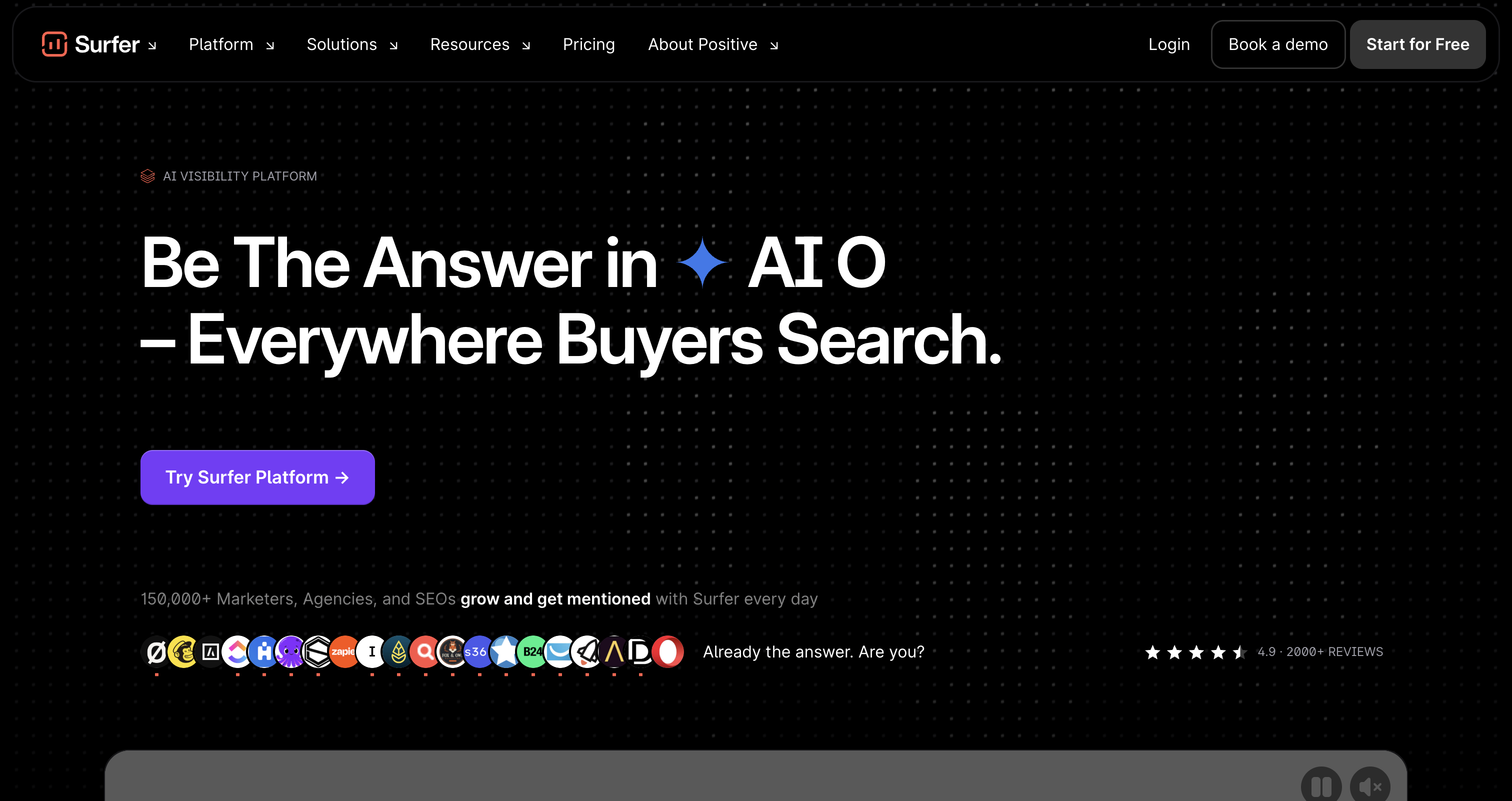
Surfer replaces the research, briefing, and optimization portion of Jasper’s role, but not the entire drafting workflow. Writers can use its guidance while drafting in a document or another assistant.
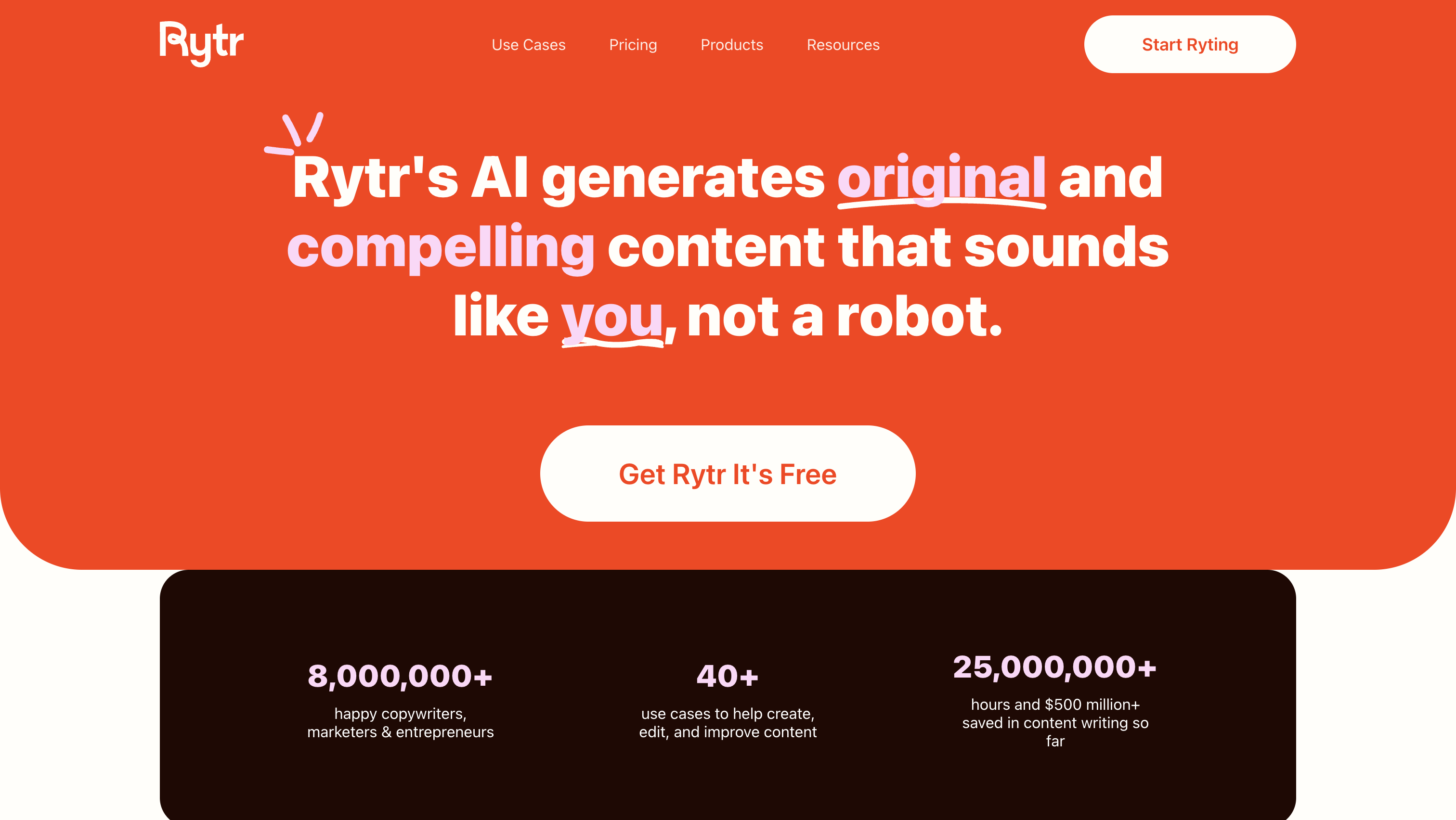
Rytr serves people who cannot justify paying $69 per seat for occasional use. Its lower price comes with a narrower role and a lighter feature set.
It handles short-form work competently and cheaply without trying to operate as a full content-operations platform.
Rytr's entry price vs Jasper: Rytr offers budget-priced single-seat plans, placing it well below Jasper’s $69 monthly or $59 annual per-seat price.
If you’re looking for a Jasper alternative without adding another subscription to the budget, ChatGPT and Claude both offer free tiers with usage limits. Copy.ai is more focused on paid marketing-copy workflows, while Rytr sits closer to the budget end of the market than the truly free end.
With ChatGPT and Claude, you get enough access to test the core models and see how they handle your actual work. Once you hit the limits, you may be switched to lighter models, have to wait for access to reset, or be asked to upgrade. That makes them useful for testing whether a general-purpose AI assistant can replace Jasper for your workflow.
Jasper, on the other hand, doesn’t offer a free plan. You’re looking at $69 per seat per month, or $59 with annual billing, so the cost adds up quickly if several people on your team need access.
The same goes for SEO content systems and governance platforms. Their value comes from things like data, workflows, collaboration, and enforcement, so they generally rely on paid plans rather than unlimited free access.
If you’re testing a free alternative, don’t just ask it to write a sample blog post. Put it through the same work your team actually does. Four things are worth checking:
Free plans also tend to hit their limits in a predictable way. Word or credit caps usually come first, sometimes right in the middle of a project. Then come seat limits when a second person needs their own account. Storage can become another issue once you start saving brand voices, templates, and content history.
For a solo founder or someone with a genuinely low content volume, a free plan may be all you need. It can also be useful for testing a tool before committing to a paid plan. But once you have multiple writers, client work that requires consistent output, or an ongoing SEO program with briefs and scoring, those limits become much harder to work around.
The best way to test a free Jasper alternative is simple: use it on your real publishing workflow for a few weeks and see where it starts getting in the way.
There’s no single Jasper alternative that works for every team. Start with what your team actually publishes, then consider how much workflow and brand control you need.
Then look at your team size. A solo writer may be better off with a free or low-cost general AI tool, while larger teams may benefit from a purpose-built platform with collaboration, automation, and governance built in.
Most importantly, compare the total cost across your team, not just the price of one seat. A tool that looks affordable at $20 per user can add up quickly when eight people need access.
Only for people who regularly use Jasper’s templates and brand assets. If three of eight users open Jasper weekly while five use it monthly, the company still pays full price for occasional access. A mixed stack, with Jasper for heavy users and a cheaper assistant for everyone else, usually costs less than standardizing on Jasper.
Choose ChatGPT or Claude if you can write and want a flexible assistant; their free tiers can cover a founder’s realistic volume. Choose Rytr if you prefer templates that remove the blank page and want the lowest possible commitment. Delay the SEO systems until you publish on a regular schedule.
Writer enforces terminology and style rules while people write instead of relying on review to catch violations. Budget for a scoped engagement rather than simple seat purchases. Non-profits and educational institutions receive 20% off Starter and Enterprise plans, so raise the discount early in procurement.
Yes. The hidden cost is coordination rather than subscription price. Brand assets may lack a clear owner. Voice can live in individual prompt libraries. New hires must learn two systems instead of one.
It can change sentence rhythm and structure, even though readers will not know which vendor produced the draft. Before drafting, provide three published pieces as reference samples. Then ask an editor to compare the new piece with an older one without knowing which is which.
The profile consists of inputs you already own, including tone descriptors, guideline text, example copy, and banned terms. Copy or export those materials into a plain document before the seat expires, along with the most-used templates. Rebuilding the profile in another tool takes an hour if the source material is complete.
Test it for two weeks on real briefs rather than demos. During week one, load the brand voice, rerun three published pieces, and compare editing time with the originals. During week two, give the tool to the teammate with the least prompting skill. Sign an annual contract only if editing time falls for both users.

Cindy is an Outreach Manager and SEO Specialist at ONSAAS who helps SaaS companies grow through strategic link building and SEO. Outside of work, she loves spending time in nature, especially hiking in the mountains.
.svg)
.svg)
.svg)
.svg)
.svg)