


Back to articles
7 Best SEO Platform for B2B Teams: Picks, Pricing, AI Search
October 30, 2026
By
Cindy Graciella
A B2B SEO platform helps you understand what your potential customers are searching for, where your website shows up, and what you can do to improve your visibility. These days, that means looking beyond Google rankings to see whether your brand also appears in AI-generated answers.
There isn't one platform that's best for everyone. Semrush is a strong all-round choice, but the right tool depends on what you're trying to achieve. Are you focused on improving Google rankings, getting mentioned in AI answers, or showing leadership how organic search contributes to revenue?
B2B SEO also comes with a few extra challenges. Buyers tend to search using specific, problem-focused queries, sales cycles are longer, and the research process often involves both Google and AI tools. This guide compares seven SEO platforms that can help with those challenges. We're looking at software, not agencies; we'll cover when an agency makes more sense later in the article.
A good B2B SEO platform shouldn't just make sense to your SEO manager. It should also give content marketers, sales teams and leadership the information they need.
We looked at five main criteria, in order of importance.
Visibility across Google and AI search comes first. Buyers are no longer relying on Google alone when researching software. They're also asking ChatGPT and other AI tools for recommendations, comparisons and answers to specific questions. Your SEO manager needs to track these changes, while leadership wants to know one thing: does our brand show up when a potential customer asks ChatGPT about our category?
Content optimization for long-tail searches is another big one. B2B buyers often search for specific problems rather than broad product categories. Think queries like "how to automate vendor risk assessments." Content teams need tools that help them find these opportunities and optimize individual pages around what buyers actually want to know.
Technical SEO and site audits become more important as your website grows. Documentation hubs, integration pages and regional versions can create crawl and indexing issues that are easy to miss but can hurt organic visibility. Your SEO and engineering teams need audits that point to problems they can actually fix.
CRM and revenue tracking matter when marketing needs to show how organic search contributes to the pipeline. With longer B2B sales cycles, rankings and traffic only tell part of the story. Marketing leaders need to understand how organic visitors eventually turn into leads, opportunities and customers.
Team and budget fit ties everything together. Look at the number of seats, project limits, pricing structure, onboarding requirements and collaboration features. IT may also need SSO, while operations teams might want reports that can be exported to Looker Studio or another BI platform.
The table compares the seven platforms on the capabilities B2B teams weigh most.
Each review covers positioning, standout capabilities, limitations, pricing and best fit. All prices are stated as of October 30, 2026, with their billing terms. Botify for technical crawling and Clearscope for content optimization can supplement a suite when a team needs a specialist tool.
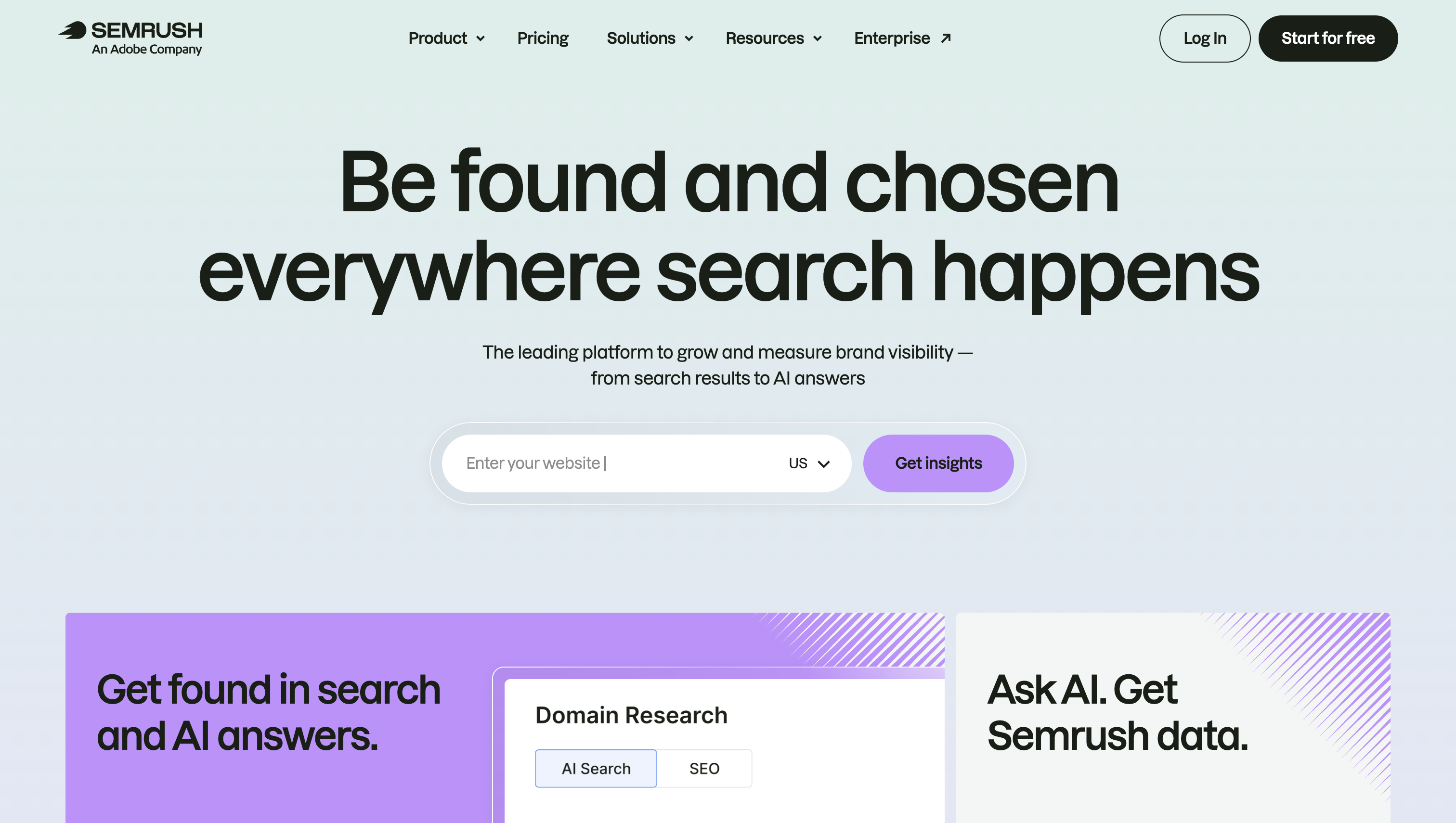
Semrush is the all-round suite most B2B teams can standardize on. According to Semrush’s product materials, it combines competitive keyword research with site audits, rank tracking and content tools under one login.
Standout capabilities:
Limitations: AI answer tracking sits outside the SEO-only toolkit, so teams that want both need the AI Visibility plan or a combined plan. Per-user charges rise with tier, and giving sales and leadership their own logins can cost more than the core subscription suggests.
Pricing: Semrush sells an SEO-only plan, a separate AI Visibility plan and combined SEO-plus-AI plans, each priced differently. The AI Visibility Base plan costs $99 a month per domain, billed annually, and tracks 25 custom prompts. Each additional SEO Toolkit user costs $45, $80 or $100 depending on the subscription tier.
Best for: B2B teams that want one suite covering most SEO workflows, with competitor keyword data at the center.
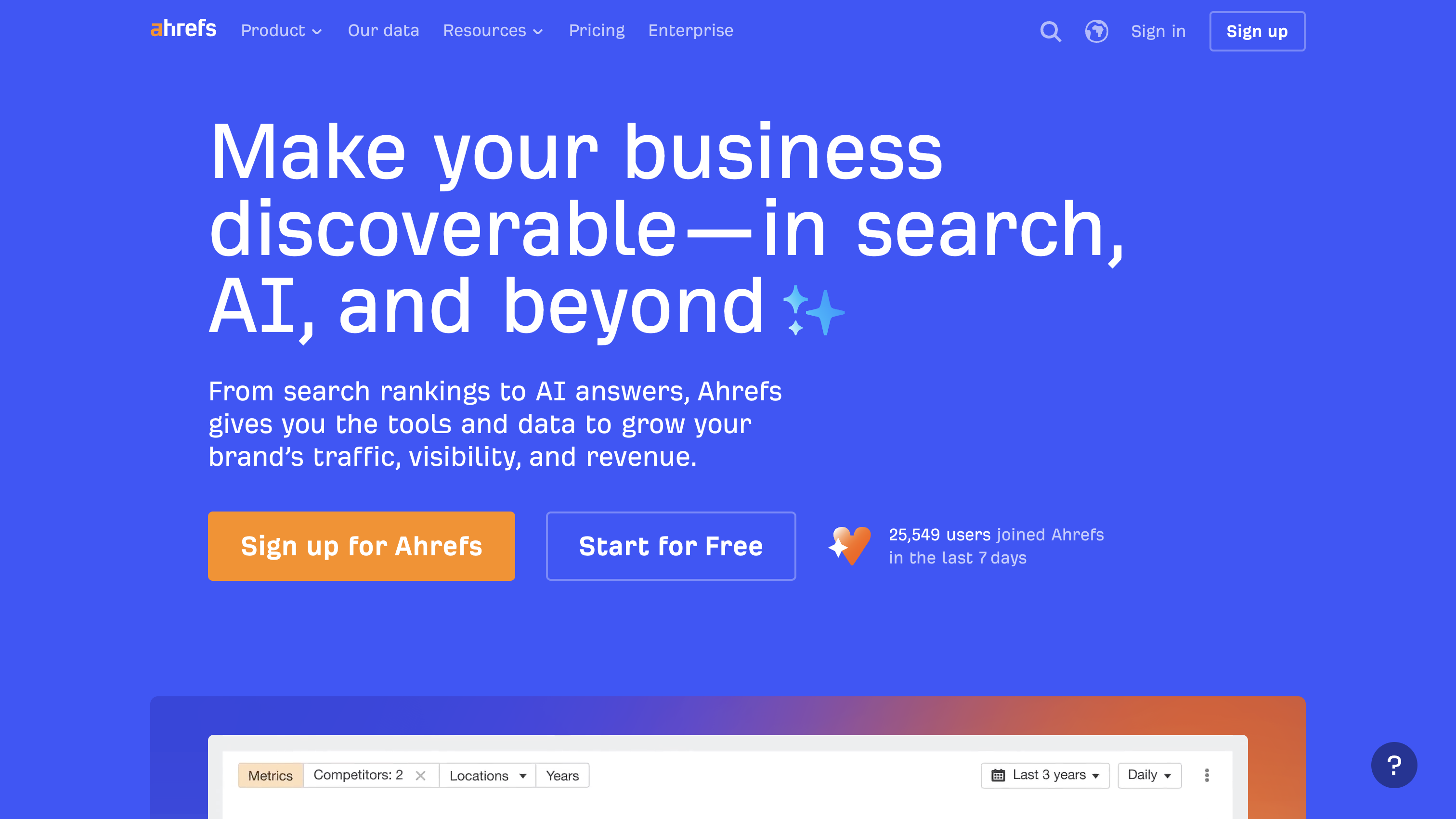
Pick Ahrefs when better-linked competitors are beating you. If category incumbents have years of press, partner and review-site links, content alone won’t close the gap. According to Ahrefs’ product materials, it is the tool you use to find which sites link to rivals but not to you, and to measure how far behind you are.
Where Semrush aims to be the whole toolbox, Ahrefs is bought for authority work, and its plans are built around small seat counts. That shapes who can realistically use it inside a B2B team.
Standout capabilities:
Limitations: Lite includes one user and permits only two additional users, so larger teams need another plan. SSO, enterprise security, access management and audit logs are reserved for Enterprise.
Pricing: Lite costs $129 a month and includes one user, five unverified projects, unlimited verified projects, 750 tracked keywords and 100,000 monthly crawl credits. It permits up to two additional users at $40 a month each. The limited $29 monthly Starter plan includes 200 credits, one unverified project and no purchasable extra users, so it is a solo research plan rather than a team rollout.
Best for: B2B teams losing rankings to better-linked competitors or entering a category with entrenched incumbents.
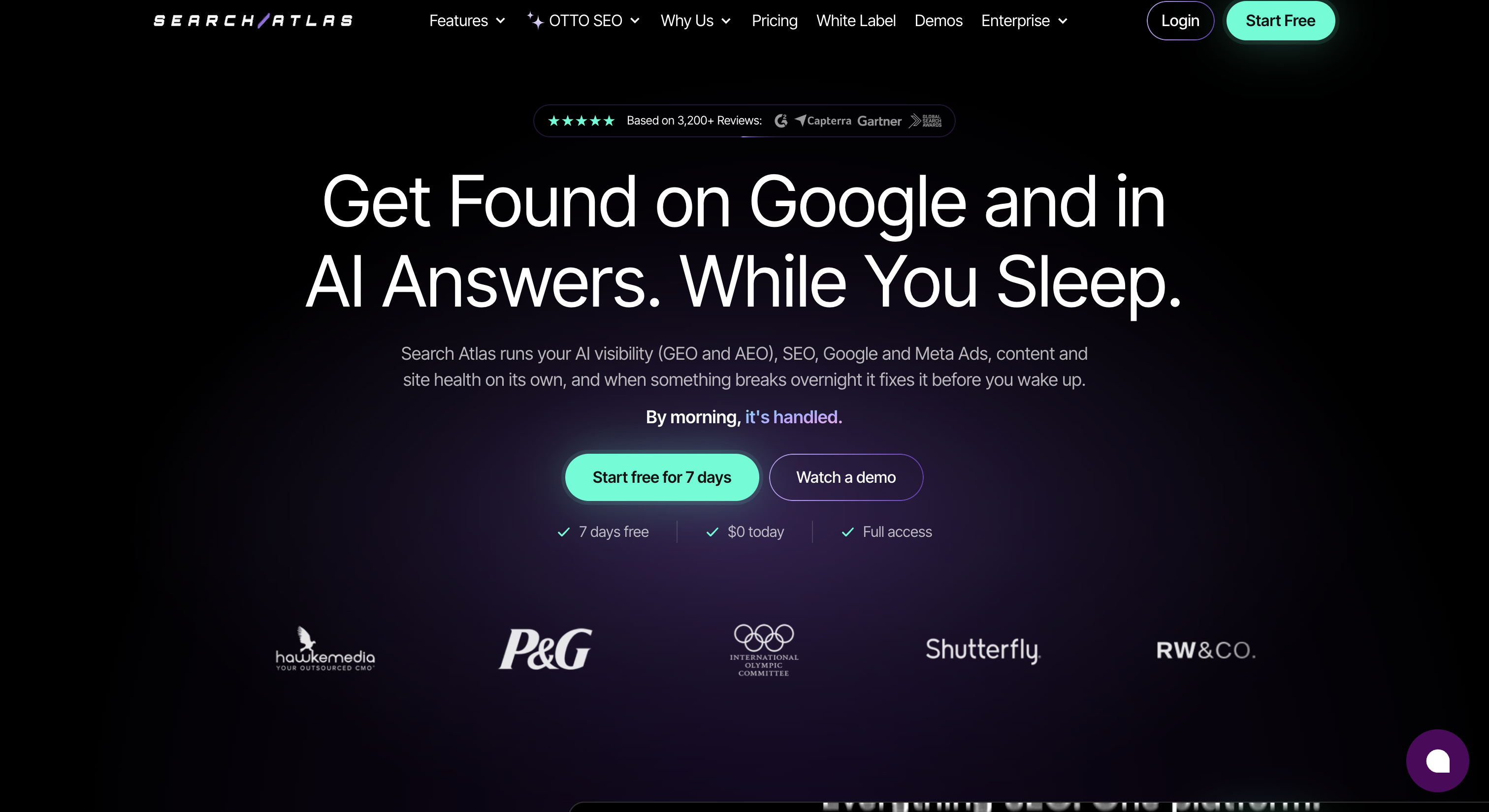
Search Atlas is the automation-heavy option for a smaller B2B marketing team. OTTO crawls a connected site, identifies SEO issues and can deploy approved optimizations, while its AI Visibility interface covers ChatGPT, Gemini, Perplexity, Copilot and Google AI Mode.
Standout capabilities:
Limitations: Search Atlas’s documentation warns that OTTO’s JavaScript-pixel changes may render in browsers and to Googlebot but remain invisible to AI systems that read raw HTML. A fix intended to support AI citations may therefore need to go into the source code. Use an approval workflow before an automated change reaches a production site.
Pricing: Search Atlas lists Starter at $99 a month with one seat, one OTTO project, 120 target keywords and 30 AI article credits. Growth is $199 a month with three seats, two OTTO projects, 300 target keywords, Google Instant Indexing and LLM visibility tracking. Its official documentation conflicts over OTTO inclusion. Dated October 2026 plan pages list OTTO projects in Starter and Growth, while another help page says OTTO is excluded from every base plan and sold as an upgrade.
Best for: Small-to-midsize B2B teams without a dedicated technical SEO who want fixes applied for them.
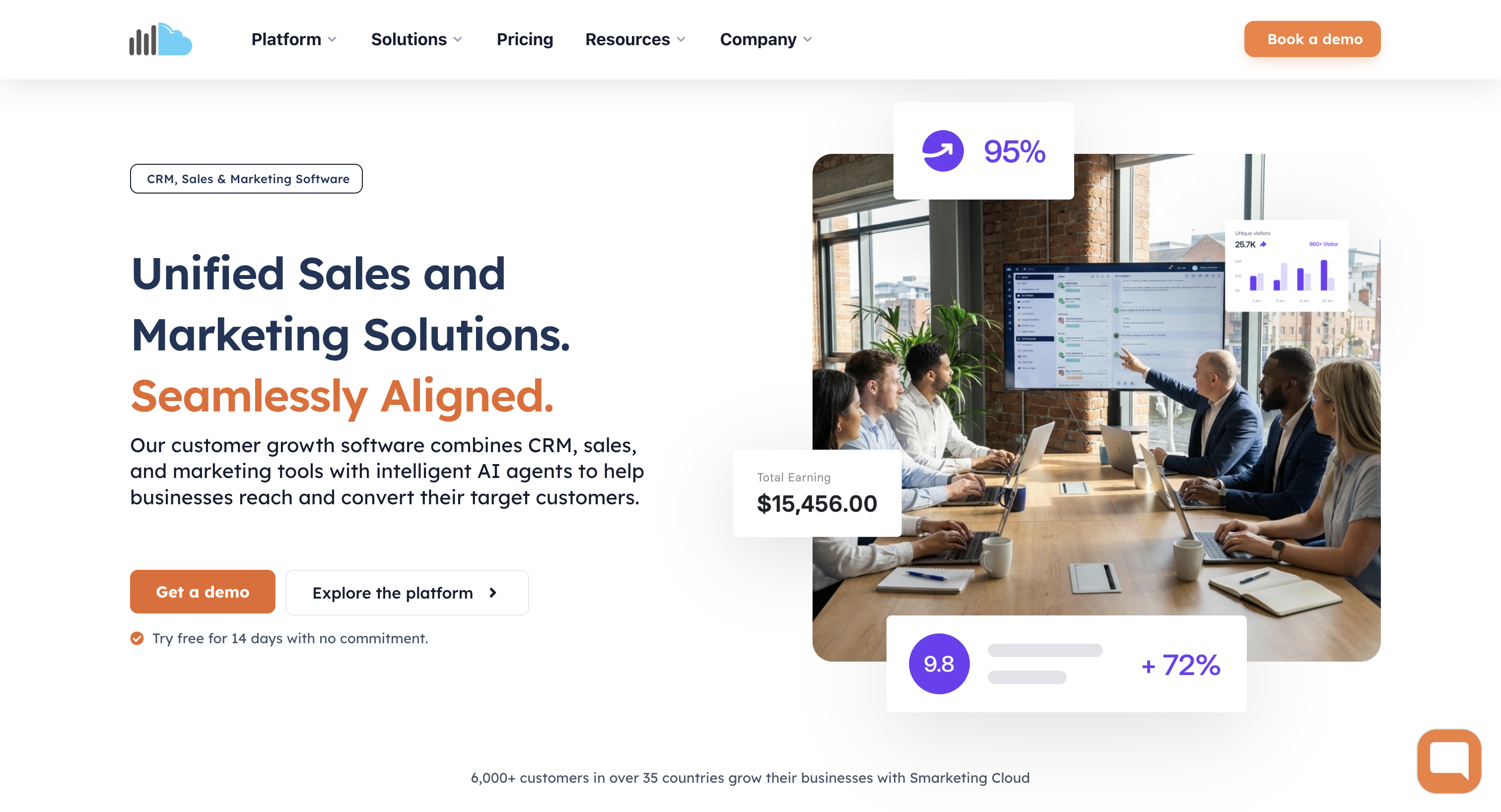
Smarketing Cloud is the revenue-attribution pick. Its SEO and AEO (answer engine optimization) tools sit inside a broader marketing and CRM platform, so marketing and sales can work from one dashboard.
The company says its attribution system connects anonymous clicks, ad impressions and email opens to closed-won deals. Choosing it means adopting the wider marketing platform rather than adding a stand-alone SEO tool.
Standout capabilities:
Limitations: The revenue tie-in that justifies choosing Smarketing Cloud starts in Enterprise, not Professional. Much of its value depends on adopting the wider marketing and CRM platform.
Pricing: SEO and AEO tools start with Professional at €899 a month billed monthly, or €749 a month billed annually, excluding VAT. Marketing attribution is included in Enterprise at €1,499 a month billed monthly, or €1,249 a month billed annually, excluding VAT.
Best for: B2B teams that must prove SEO’s revenue contribution and want marketing and sales on one dashboard.
SE Ranking is the value all-in-one for lean teams. According to SE Ranking’s product materials, the platform includes rank tracking, research, audits, content tools and AI visibility in one plan.
Standout capabilities:
Limitations: Twenty-five prompts covers a focused set of buyer questions, and Core includes only one manager seat. Teams with broader tracking or collaboration needs may outgrow its entry capacity.
Pricing: SE Ranking’s current plans are Core, Growth and Enterprise. Core costs $129 a month, or $103.20 a month billed annually, with 10 projects, one manager seat and 2,000 daily tracked keywords. Growth costs $279 a month, or $223.20 a month billed annually, with 30 projects, three manager seats and 5,000 daily keywords.
Best for: Startups and lean B2B teams that want an all-in-one suite without enterprise spend.
BrightEdge is built for organizations whose SEO problem is coordination. A global B2B company might run a corporate site, regional domains, product microsites and acquired brands, each with its own team. BrightEdge’s enterprise documentation says it centralizes tracking and reporting across that portfolio, with unified views for leadership and segmented views for each property.
Its leadership reporting puts Google rankings, organic traffic and AI citations side by side, paired with technical audits sized for large sites. Where Conductor is organized around the people writing content, BrightEdge is organized around the portfolio and the executives reviewing it.
Standout capabilities:
Limitations: Pricing is sales-led, so buyers cannot compare a published list price with the self-serve suites. Portfolio management is a poor fit for a small team running one site.
Pricing: Contact BrightEdge for pricing.
Best for: Large B2B enterprises with dedicated SEO teams and executive reporting requirements.
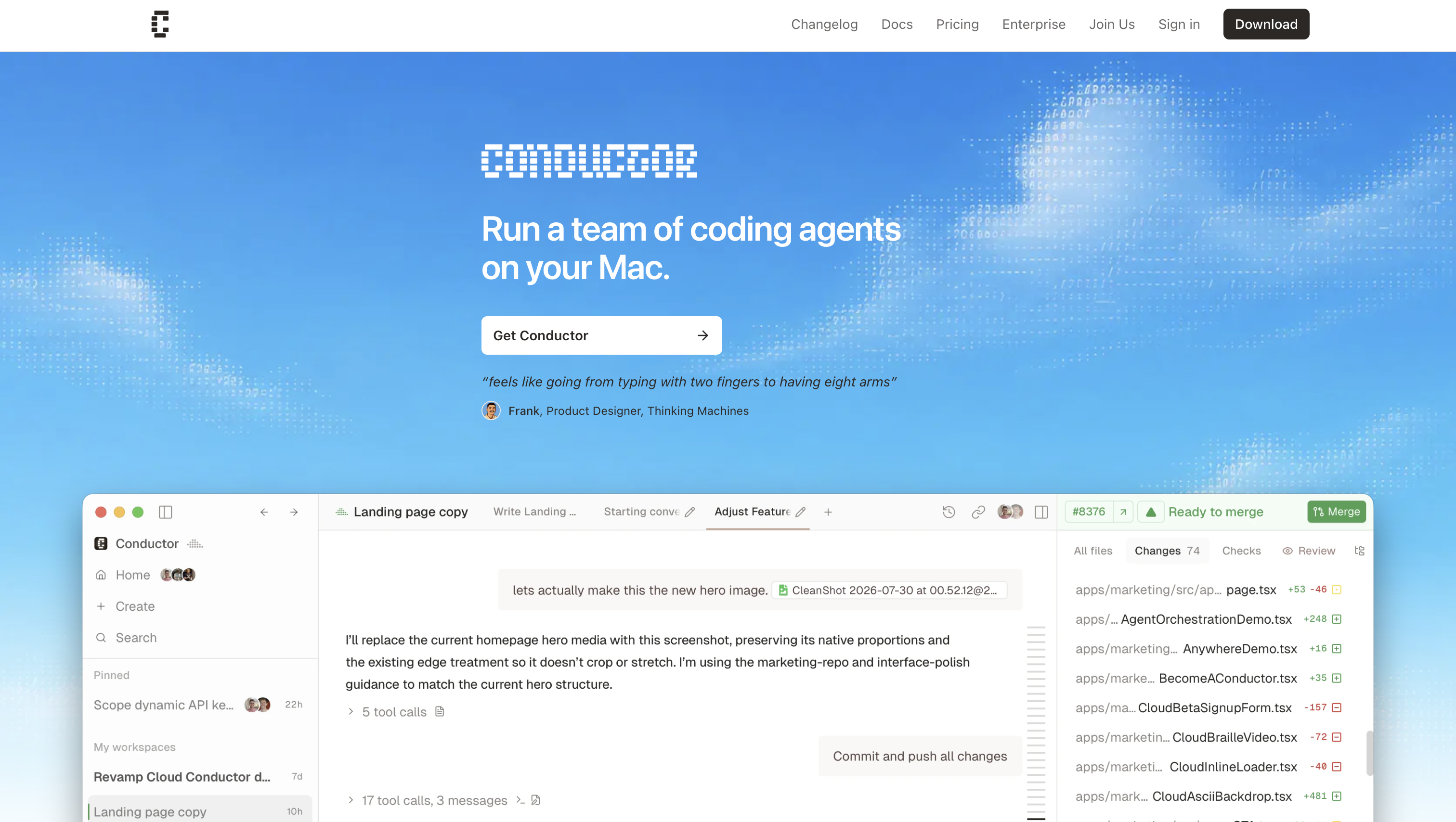
Conductor is the enterprise pick for organizations where SEO depends on many writers. According to Conductor’s product materials, its Content Guidance compares a page with top-ranking results and recommends changes to intent, metadata, headings, questions, copy and page health. Product marketers, documentation writers and regional teams get specific direction without an SEO reviewing every draft.
Standout capabilities:
Limitations: The sales-led buying process is less transparent than self-serve checkout, and the platform is a poor fit for a lean team that does not need enterprise-scale content coordination.
Pricing: Pricing is usage-based and sales-led. Essentials covers 1,000 analyzed pages, 500 tracked keywords, five competitors, 100,000 monitored pages and three websites. Enterprise starts at 125,000 analyzed pages, 60,000 tracked keywords, 75 competitors and 10 websites, and cost scales with those volumes.
Best for: Enterprise B2B organizations where many content contributors need shared SEO guidance and reporting.
For a lean B2B team, you probably don't need several paid SEO tools right away. Starting with Google's free tools and adding one paid platform is often enough.
Google Search Console, GA4, PageSpeed Insights and Looker Studio cover the basics, from search performance and website traffic to page speed. However, they have limitations. Search Console doesn't show every query or URL, its numbers may differ from GA4, and it only covers Google Search, not AI visibility.
That's where a paid platform helps. You get features like competitor research, keyword tracking and AI visibility monitoring. You can also add specialist tools when you need more depth in a specific area. Botify, for example, focuses on technical crawling and server-log analysis, while Clearscope offers more detailed content optimization.
Just be careful not to overcomplicate your toolkit. If your SEO platform, content tool and CRM all report different numbers, your team might spend more time comparing reports than using the data.
An agency may be a better option if you don't have the in-house expertise to manage SEO or need help with strategy, content production and link building. After all, a platform can identify problems, but it won't write your integration guides or earn quality backlinks for you.
Most platforms fall into two pricing categories.
Semrush, Ahrefs, SE Ranking, Search Atlas and Smarketing Cloud offer published plans you can compare before buying. BrightEdge and Conductor use sales-led pricing, where the final quote depends on your company's requirements.
According to Conductor's guide to enterprise platforms, pricing can depend on factors such as website and domain size, number of users, tracked data volume, integrations, AEO tracking, API access and custom integrations.
Even with self-serve platforms, the advertised starting price doesn't always tell you what you'll actually pay. Here are four things to keep in mind:
To get a more realistic estimate, calculate your annual cost like this:
Annual cost = (monthly plan price × 12) + (extra seats × monthly seat price × 12) + AI tracking add-ons + content tools
Google's free tools add $0 to the calculation.
Let's use a five-person B2B marketing team as an example: one SEO manager, two content marketers, one demand generation lead and one marketing director.
Here's what that team would pay for SE Ranking's Core and Growth plans with annual billing:
The difference is $960 per year. But you're not paying that extra amount for more seats. You're mainly getting additional keyword and project capacity: 5,000 daily tracked keywords and 30 projects on Growth, compared with 2,000 keywords and 10 projects on Core.
If your team also wants to track a second brand domain using a separate tool, such as Semrush's AI Visibility Base plan, add another $1,188 per year for that domain. Any optional content optimization tool should be calculated separately.
The best B2B SEO platform depends on what your team needs most. If you want one tool to cover most SEO activities, Semrush is a strong starting point. Ahrefs makes more sense if backlinks and competitor authority are your biggest challenges, while SE Ranking offers good value for smaller teams.
If AI visibility is a priority, consider Search Atlas or Semrush's AI Visibility tools. For teams that need to connect organic search to pipeline and revenue, Smarketing Cloud is worth a closer look. Larger organizations managing multiple websites may get more value from BrightEdge or Conductor.
My advice is don't pay for features your team won't use. Start with your biggest SEO bottleneck, choose a platform that addresses it, and expand your toolkit as your needs grow. The goal isn't to have the most SEO tools. It's to turn better search visibility into more qualified leads and revenue.
No. Google rankings and AI citations remain separate visibility signals, so teams should track both rather than abandon classic rank tracking. What changes is measurement, which now needs citation tracking alongside rankings.
SEO aims for rankings in Google results, while GEO (generative engine optimization, often called AEO) aims for citations inside AI-generated answers. The two can diverge technically. A change Googlebot renders through JavaScript may never reach an AI system that reads raw HTML.
Yes. Rankings provide an early signal that content is gaining search visibility, before opportunities and revenue appear in the CRM. Track them alongside AI citations rather than replacing them with prompt tracking.
There’s no universal timeline. It depends on how competitive the category is, your site’s existing authority, its technical condition and how often you publish. A new domain competing with entrenched incumbents waits far longer than an established site fixing indexing problems.
Yes, at the start. Search Console, GA4 and PageSpeed Insights provide a basic measurement and page-performance layer. Add a paid suite when you need competitor research, tracked keyword sets or AI answer visibility.
Smarketing Cloud is the best fit. The vendor says its platform links marketing activity to closed-won deals, and marketing attribution begins with the Enterprise package.

Cindy is an Outreach Manager and SEO Specialist at ONSAAS who helps SaaS companies grow through strategic link building and SEO. Outside of work, she loves spending time in nature, especially hiking in the mountains.


