
.svg)
%20(1).svg)
%20(3).svg)
Back to articles
5 Best B2B Marketing Automation Platforms Compared
September 22, 2026
By
Cindy Graciella
B2B marketing automation platforms help you capture and score leads, nurture them through longer sales cycles, and pass qualified leads over to sales. That's a pretty different job from the ecommerce-focused email tools you often see in marketing automation roundups.
We compared five platforms to see how they actually fit into a B2B sales and marketing process. HubSpot Marketing Hub is a strong all-around option for B2B teams, while Salesforce Marketing Cloud Account Engagement+ makes more sense for companies already deep in the Salesforce ecosystem. ActiveCampaign and Brevo are more accessible for smaller teams, while Klaviyo is primarily built around ecommerce.
The right choice ultimately comes down to your CRM, database size, sales process, and how much automation you actually need. A platform can have plenty of automation features and still be a poor fit if it's built mainly around ecommerce rather than sales-led B2B.
We started with one basic question: Is this actually a good fit for B2B?
That means looking beyond email automation and checking whether the platform can support lead generation, nurturing, qualification, CRM handoff, and longer sales cycles.
We also looked at:
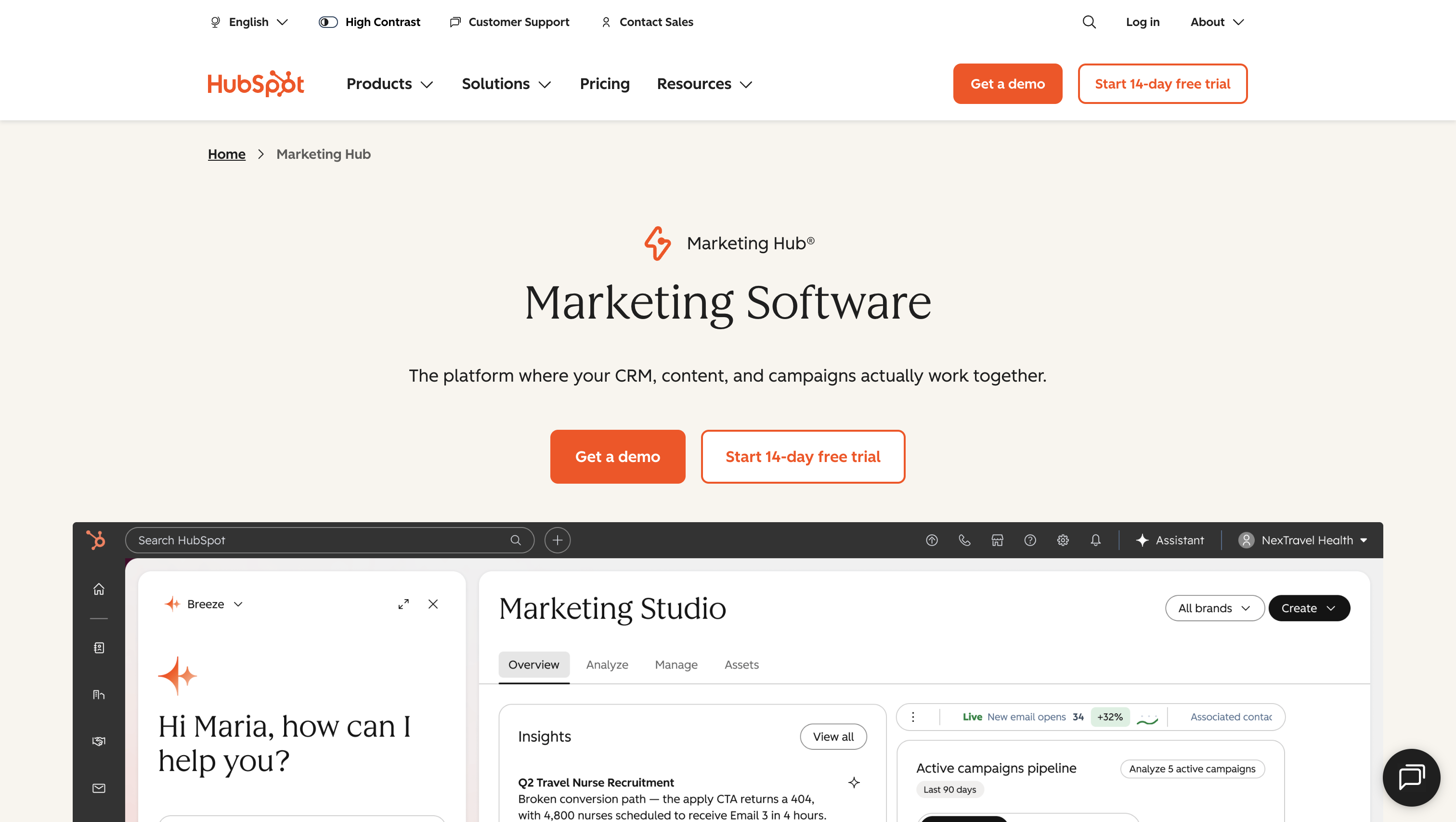
HubSpot puts marketing, sales, and service data on the same Smart CRM platform. For a B2B team, that means you can manage your marketing automation and CRM records in one place instead of setting up a separate connector between the two.
HubSpot also reports that Gartner named Marketing Hub a Leader in its 2025 B2B Marketing Automation Platforms Magic Quadrant for the fifth consecutive year.
B2B fit and best-fit size: B2B-native and a strong fit for small and mid-sized teams that want their marketing and sales data in one place.
Standout capabilities: Shared customer data across marketing, sales, and service; CRM handoff on the same platform; and one system for the records marketers and sales reps work with.
Limitations: Watch the contact tiers. Your bill can jump when you cross into the next tier. HubSpot's documentation gives an example with 998 marketing contacts: adding five more contacts takes the account to 1,003 and automatically moves it into the 2,000-contact tier. The account stays on that higher tier until the next renewal date.
Pricing: Marketing Hub Starter is $9 per seat per month with annual billing or $15 with monthly billing. Seats and marketing-contact tiers are billed separately. Your total cost can also depend on the payment schedule, discounts, and onboarding fees.
Best for: B2B teams without an established CRM, or existing HubSpot users who want marketing and sales data in the same system.
Who should skip this: Teams that are already committed to another CRM and don't want to move their marketing and sales data into HubSpot.
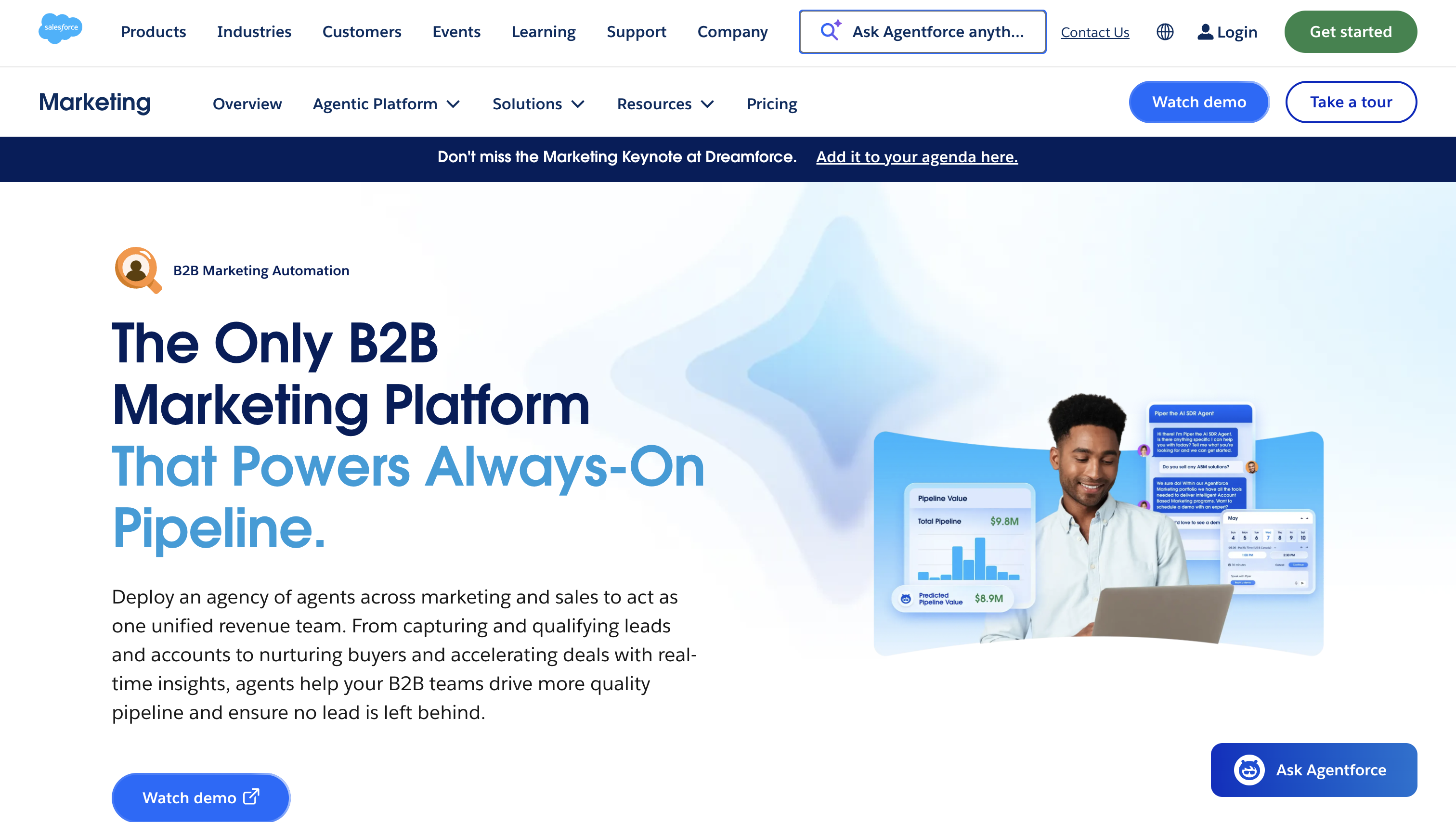
Salesforce Account Engagement is built for B2B teams that already use Salesforce. It supports direct campaign synchronization, so campaign members and statuses can move between Account Engagement and Salesforce.
B2B fit and best-fit size: B2B-native and a good fit for mid-market and enterprise teams with large databases and dedicated marketing operations support.
Standout capabilities: Lead scoring and grading, multiple scoring categories, and rule-based account scoring. The account score gives you a company-level signal alongside individual prospect activity. Campaign synchronization also keeps marketing activity connected to your CRM records.
Limitations: Setup takes some work. This isn't the kind of platform where you turn it on and immediately start building campaigns. Salesforce's Account Engagement+ documentation lays out several configuration steps that need to be completed in sequence.
Pricing: Growth+ starts at $1,250 per organization per month, billed annually, with 10,000 contacts included. Salesforce also includes 10,000 contacts in the Plus+ and Advanced+ editions.
Best for: Organizations already standardized on Salesforce where deep CRM alignment matters more than getting up and running quickly.
Who should skip this: Small teams that don't use Salesforce and don't need enterprise-level marketing operations.
Further read: Salesforce vs HubSpot: Our Honest Take on Which One’s Worth It
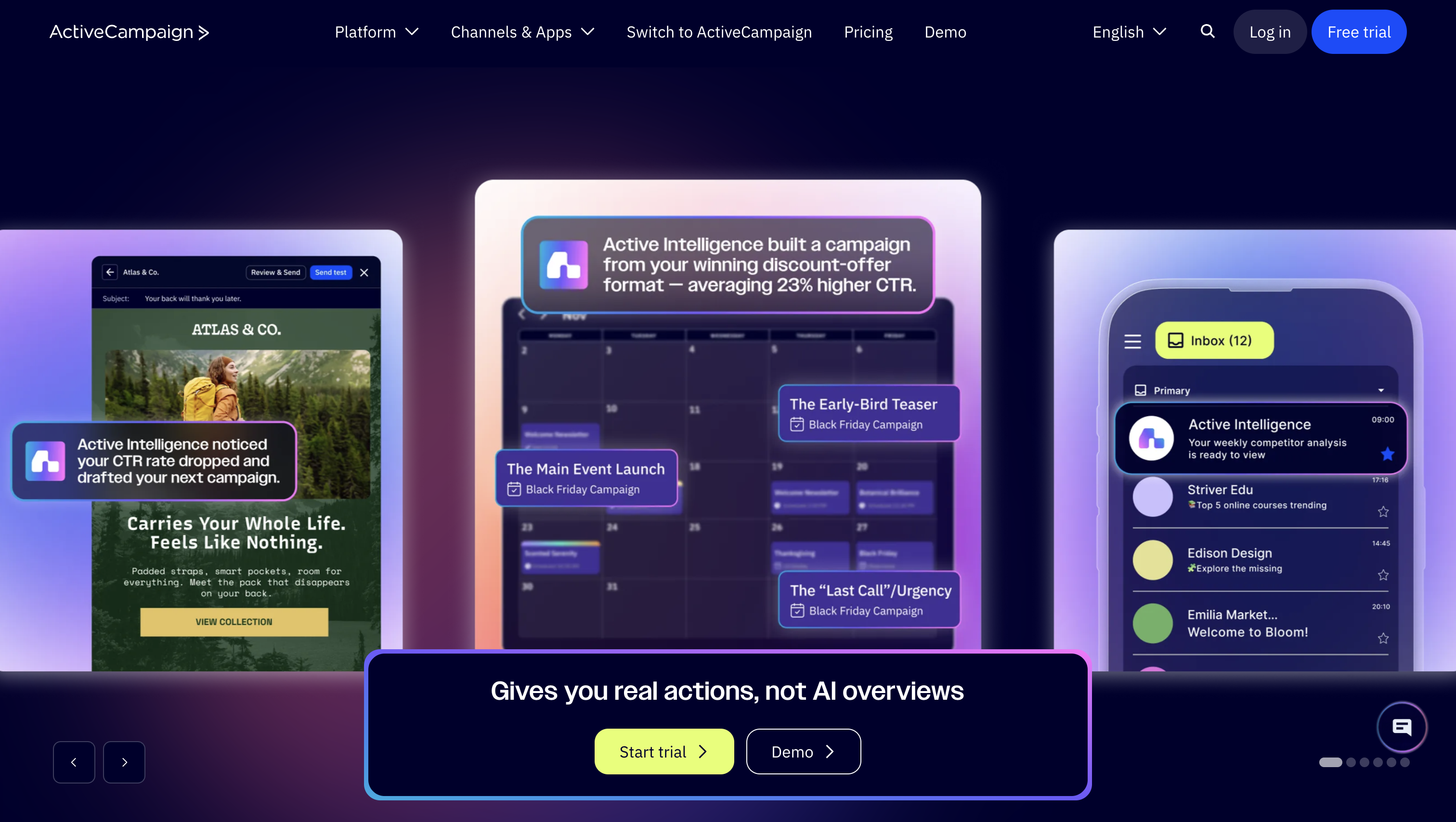
ActiveCampaign gives smaller B2B teams a way to build contact-based automations without jumping straight into a large enterprise marketing suite.
Pricing is mainly based on contact count and feature tier, so don't look only at the starting price. The plan you need for lead scoring or more advanced automation can change the calculation quite a bit.
B2B fit and best-fit size: Hybrid but useful for B2B, particularly for solo marketers, small teams, and lower mid-market companies.
Standout capabilities: Contact-based automations and premium CRM connectors, including Salesforce and Microsoft Dynamics. You can keep your existing CRM rather than replacing it as part of your marketing automation setup.
Limitations: Starter limits each automation to five actions, which can get restrictive if you're building longer nurture sequences. Lead scoring is also available through the optional Pipelines add-on rather than the base email plans. If lead qualification is important to you, make sure you include that add-on when comparing prices.
Pricing: ActiveCampaign starts at $15 for accounts with fewer than 1,000 contacts. Starter supports up to 25,000 contacts, while the total price changes based on contact count and feature tier.
Best for: Small B2B teams that want contact-based automation, optional lead scoring, and a connection to an existing CRM.
Who should skip this: Enterprise teams that need Salesforce-native campaign synchronization and account-level scoring.
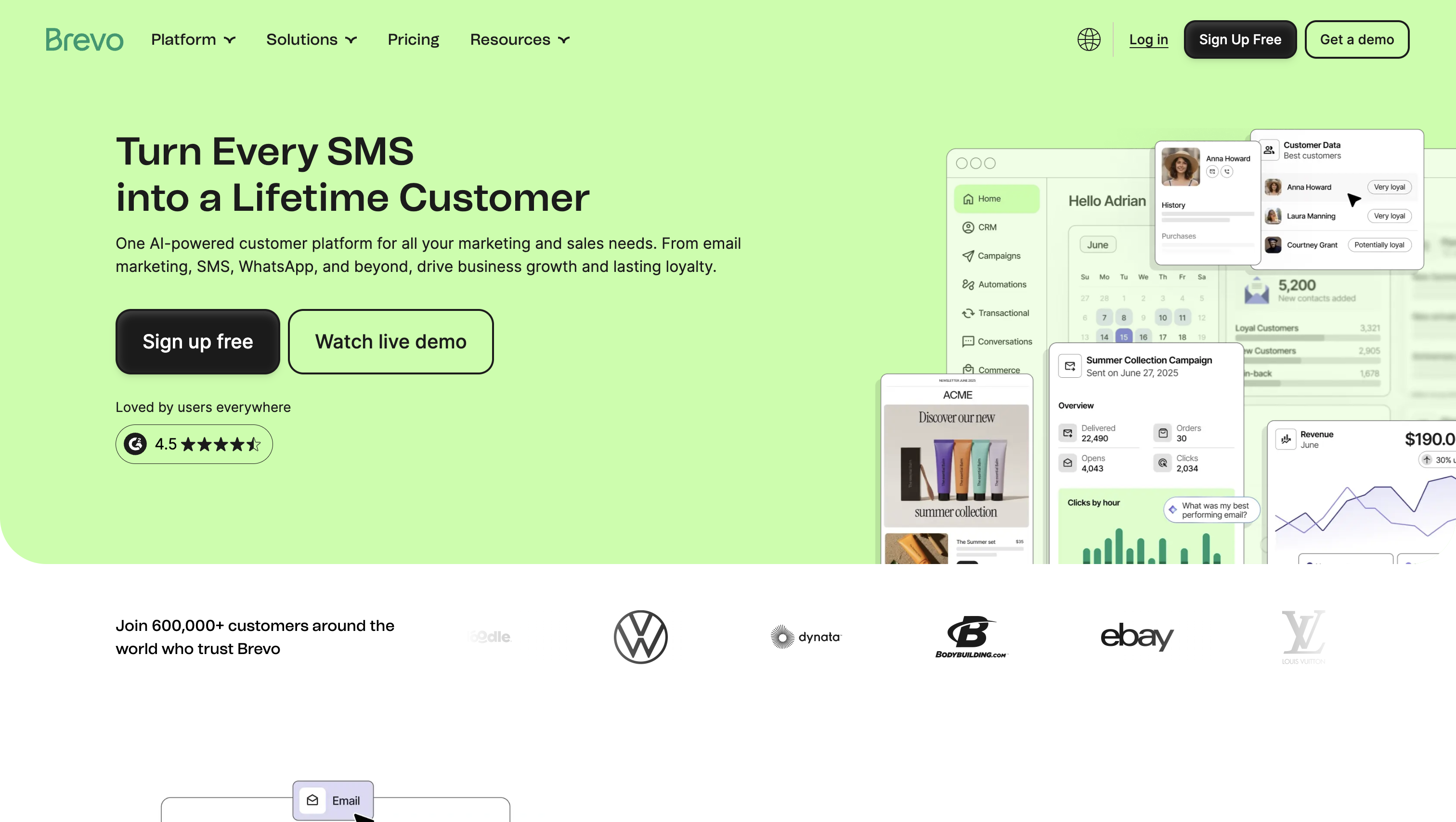
Brevo positions itself as an all-in-one platform for email, SMS, WhatsApp, chat, and CRM. Every plan includes sales tools with one pipeline and up to 50 open deals, so smaller teams can keep track of opportunities without adding another sales tool.
B2B fit and best-fit size: Hybrid and best suited to small businesses and early-stage B2B teams with modest databases and tight budgets.
Standout capabilities: Email and messaging campaigns plus sales-pipeline tracking in one platform. Its sending-based pricing can also work well if you have a reasonably large contact list but don't email everyone constantly.
Limitations: The entry tier is mainly a sending plan. Starter includes 5,000 monthly email sends and storage for up to 500 contacts. Standard adds marketing automation for unlimited contacts. Contact scoring is available on Professional, which starts at $499 per month.
Pricing: Starter begins at $9 per month, while Standard starts at $18 per month. If you need contact scoring, you'll need Professional at $499 per month.
Best for: Cost-conscious small B2B teams that want email, messaging, and basic deal tracking in one place.
Who should skip this: Teams that need account-level scoring tied directly to Salesforce campaigns rather than a lightweight built-in sales pipeline.
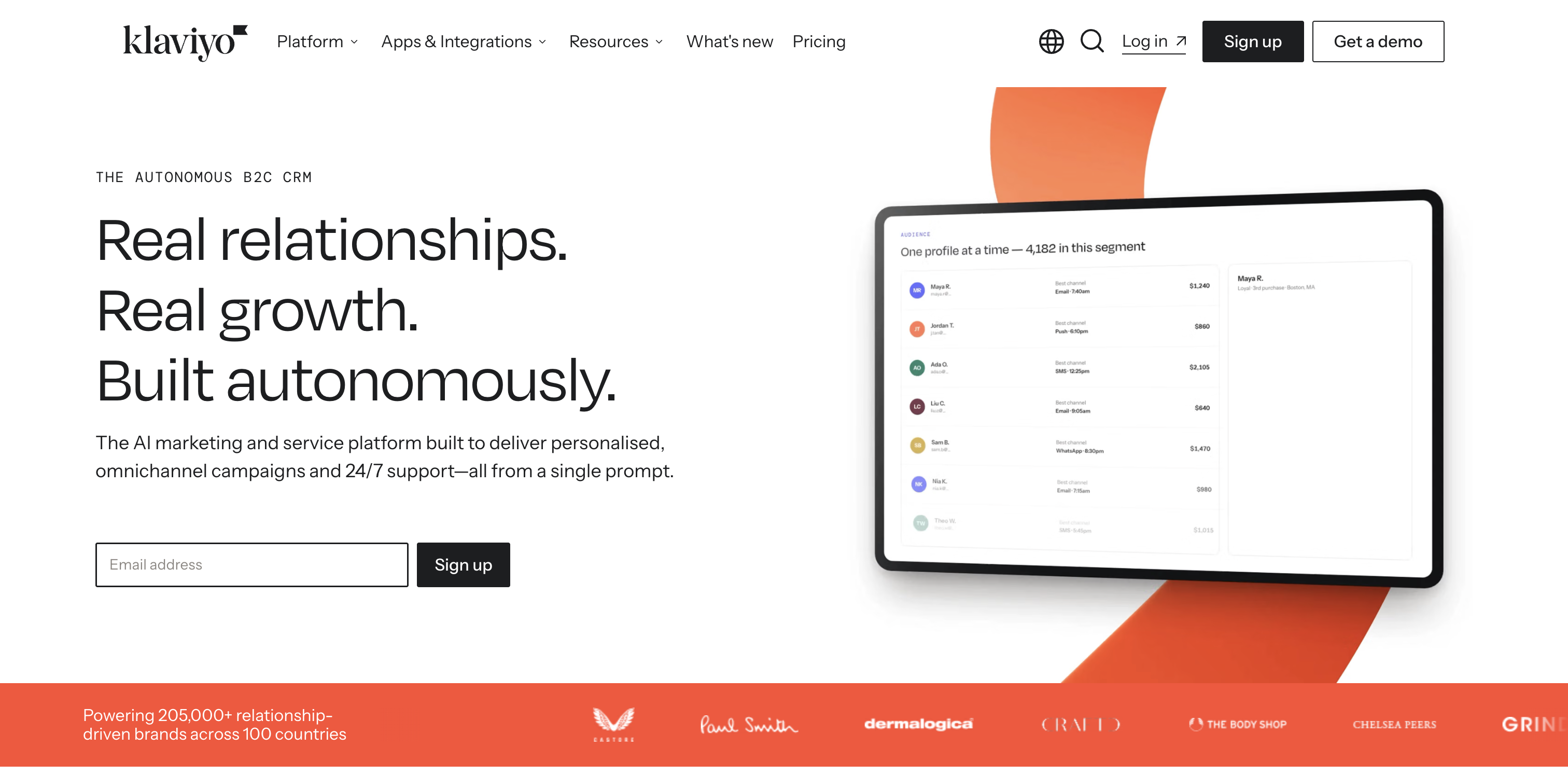
Klaviyo describes itself as a B2C CRM and AI marketing platform. That makes it a natural fit for ecommerce, including B2B companies that sell directly through an online store.
For most sales-led B2B teams, though, it's solving a different problem.
B2B fit and best-fit size: Ecommerce-first and built around online retail rather than long, multi-stakeholder sales cycles.
Standout capabilities: Ecommerce-focused predictive analytics that can estimate when a customer is likely to buy again. Klaviyo calculates predicted customer lifetime value and expected next-order date using purchase history, order frequency, and spending patterns. It also supports email and SMS on a usage-based model.
Limitations: Purchase history, order frequency, and spending are useful signals for retail, but they don't tell a B2B sales team whether a buying committee is ready to talk to sales. For a traditional B2B process, those signals don't replace lead qualification and CRM handoff built around a longer sales cycle.
Pricing: Paid plans are billed monthly and scale with contact count and channel usage. Klaviyo's 2026 buying guide lists paid email plans from $20 per month for up to 500 profiles and email-plus-SMS plans from $35. Its free Shopify plan supports 250 profiles and 500 emails per month.
Best for: Ecommerce brands, including B2B companies whose revenue comes through an online store.
Who should skip this: Traditional B2B teams with sales-led, multi-stakeholder buying cycles.
Most marketing automation roundups assume you're ready to buy. We're not so sure.
If you buy too early, you can end up with an expensive email tool full of workflows that nobody actually uses. Before you invest in B2B marketing automation software, make sure you have the basics in place.
We'd look at four things:
If you can check three or four of these boxes, you're probably ready to consider marketing automation. If two or more are missing, we'd stick with the CRM and a basic email tool for now, fix the gaps, and revisit automation later.
Waiting too long has a cost, too. As lead volume grows, buying signals stay disconnected from CRM records and manual handoffs become harder to manage.
Features look great on a comparison page. What matters more is whether your team can actually use them.
A platform that your team can configure, populate, and launch within a quarter can be more useful than one with a much longer feature list that nobody has time to implement.
We've seen how easy it is to focus on the software and forget about the process around it. Marketing automation can fail because the team doesn't have enough content, the database isn't clean, or marketing and sales haven't agreed on what should happen when a lead qualifies.
Start with two workflows for month one.
For example, build a demo-request follow-up and a webinar-attendee nurture that sends sales-ready contacts to a rep. Then ask which platforms can run those two workflows without custom development.
Once you've narrowed down the options, let price and implementation effort break the tie.
If none of those workflows would change what your team does next week, you may not need a B2B marketing automation platform yet. No software can fix a process that hasn't been defined.
Marketing automation software runs lead capture, segmentation, scoring, and multi-step nurture workflows, then passes qualified records to sales. For B2B teams, it connects activity across a sales cycle that may involve several people from the same account.
Email software primarily sends campaigns to lists. A marketing automation platform can react to individual behavior, change a contact’s score, branch a nurture workflow, and pass the resulting record into a sales process. The distinction lies in qualification and handoff, not the email editor.
Published entry points are not equivalent. HubSpot Marketing Hub Starter is $9 per seat per month with annual billing. ActiveCampaign starts at $15 for fewer than 1,000 contacts. Brevo’s Starter sending plan begins at $9 per month, while Standard adds unlimited-contact marketing automation from $18. Klaviyo’s 2026 guide lists email plans from $20 per month for up to 500 profiles. Salesforce Account Engagement Growth+ starts at $1,250 per organization per month with annual billing and 10,000 contacts included.
It depends on the platform and your sales process. HubSpot runs its marketing, sales, and service Starter products on Smart CRM, while Brevo includes a lightweight sales pipeline. If sales already works in Salesforce or Microsoft Dynamics, keep that system and judge marketing platforms by the depth of the connection.
An MQL is a lead whose score crosses a threshold agreed by marketing and sales. Salesforce describes lead scoring as a way to measure interest so both teams can prioritize prospects. The teams still need to define which signals matter and what sales will do when a lead reaches the threshold.
A longer list would add products without creating another useful B2B buying path. These five represent the main decisions: a same-platform CRM, Salesforce-aligned enterprise automation, a lower-cost contact automation tool, a multichannel platform with a light sales pipeline, and an ecommerce-first option that sales-led teams can rule out.

Cindy is an Outreach Manager and SEO Specialist at ONSAAS who helps SaaS companies grow through strategic link building and SEO. Outside of work, she loves spending time in nature, especially hiking in the mountains.
.svg)
.svg)
.svg)
.svg)
.svg)