
.svg)
%20(1).svg)
%20(3).svg)
Back to articles
The 6 AI SEO Tools Worth Paying For as a Small Business
October 16, 2026
By
Cindy Graciella
AI SEO tools automate site audits, keyword research, content improvement and local search Running a small business means you probably don't have hours to spend figuring out SEO. You want to know which pages to fix, which keywords to target, and how to get more customers from Google, without becoming an SEO expert.
That's where AI SEO tools can help. They make it easier to find website issues, research keywords, improve content, and track your search performance.
SE Ranking is my top pick for most small businesses because it combines several useful SEO features at a reasonable price. Hike SEO is better if you want step-by-step guidance, Surfer SEO suits businesses that rely on content, and Search Atlas is worth considering if you want more automation. Semrush and Ahrefs offer deeper data, but they're easier to justify once you have someone who knows how to use them.
If your budget is tight, though, start with free tools first. You can get quite a lot done before paying for an SEO platform.
The best tool depends on how much SEO work you want to handle yourself. Here's a quick comparison.
If your budget is zero, start with the free stack instead: Google Search Console, ChatGPT and Rank Math or Yoast.
AI SEO tools are software that uses AI to find problems on your site, choose the keywords worth targeting, improve your content and report results, built for people who aren’t SEO specialists. Classic SEO tools present keyword lists and crawl warnings. The AI layer adds language models that read the intent behind a search and turn that data into a recommended action, for example “add a section on emergency call-out fees to this page.”
That takes five recurring jobs off an owner’s plate: site audits, keyword discovery, content improvement, competitor tracking and reporting.
Three things stay with you:
Google’s Search Central guidance warns that generative AI output can contain inaccuracies and asks for manual fact-checking before publication, including metadata and structured data. In practice, every AI draft should pass three checks before it goes live:
Most roundups lead with Semrush or Ahrefs. For a small business that’s usually the wrong starting point: you pay for depth you won’t use and face a learning curve you don’t have time for. Start guided or free, then move up when you have a clear reason.
1. What business do you run?
2. What’s the primary goal?
3. How much SEO work and oversight can you handle?
The buying rule is to pick one primary tool for your main goal. Add a second only when it does a distinct job that neither the primary tool nor the free stack covers.
The prices below are the vendors’ published figures as of October 2026.
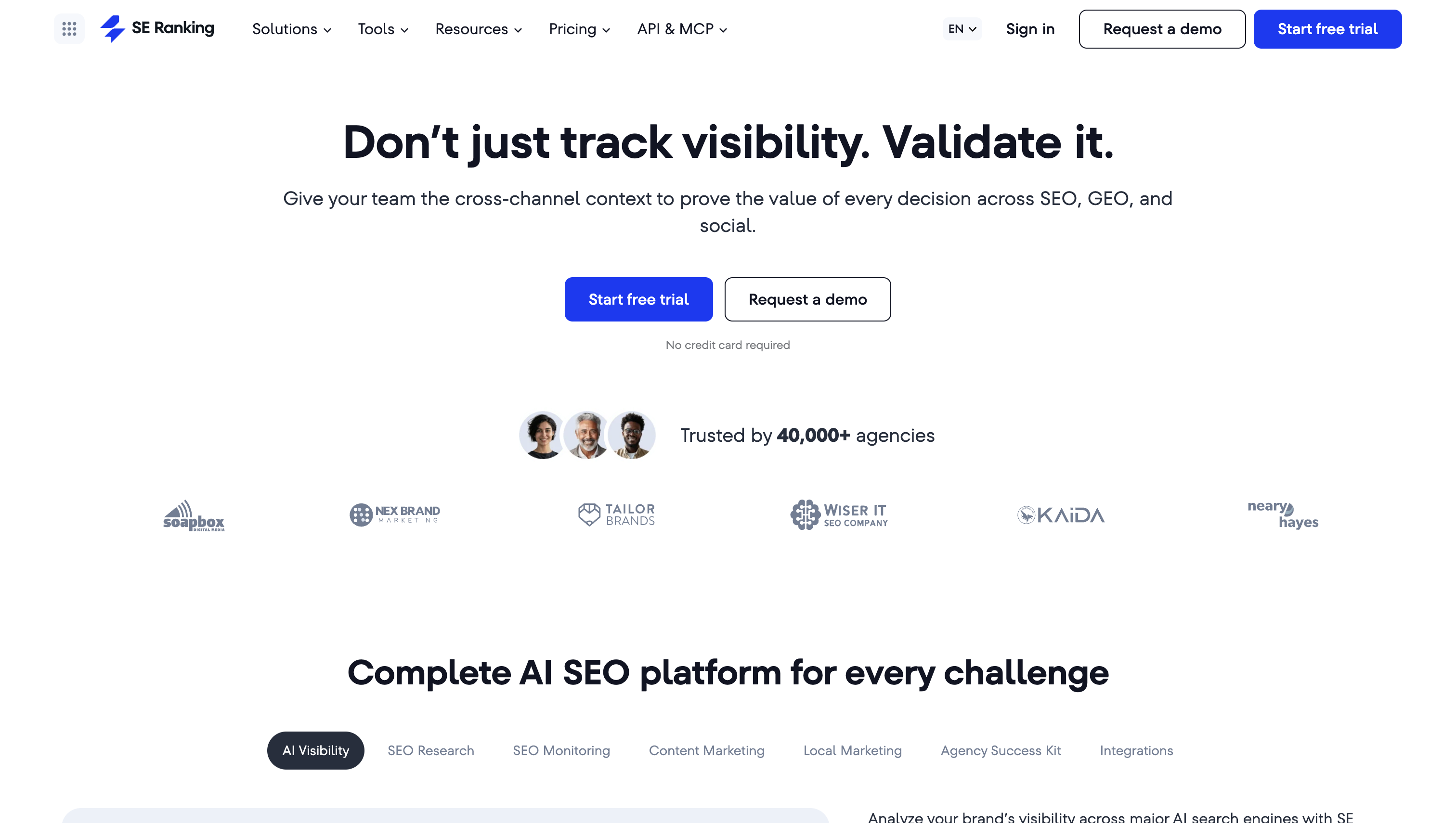
SE Ranking is the best-value all-rounder for local service and storefront businesses, combining general rank tracking, local map tracking and AI-answer tracking in one platform.
Standout capabilities:
Limitations: A single manager seat pinches when SEO work is shared. Multi-site operators can also outgrow the project and location allowances, while larger catalogs can exhaust the tracked-keyword cap.
Pricing: The Core plan includes 10 projects, one manager seat, 2,000 daily tracked keywords and 100 daily AI prompts. SE Ranking’s current pricing page separately lists three local-marketing locations and 1,500 Local & Map Rank Tracker keywords. A 14-day trial is available without a credit card.
Best for: Brick-and-mortar and local service businesses that want one affordable platform.
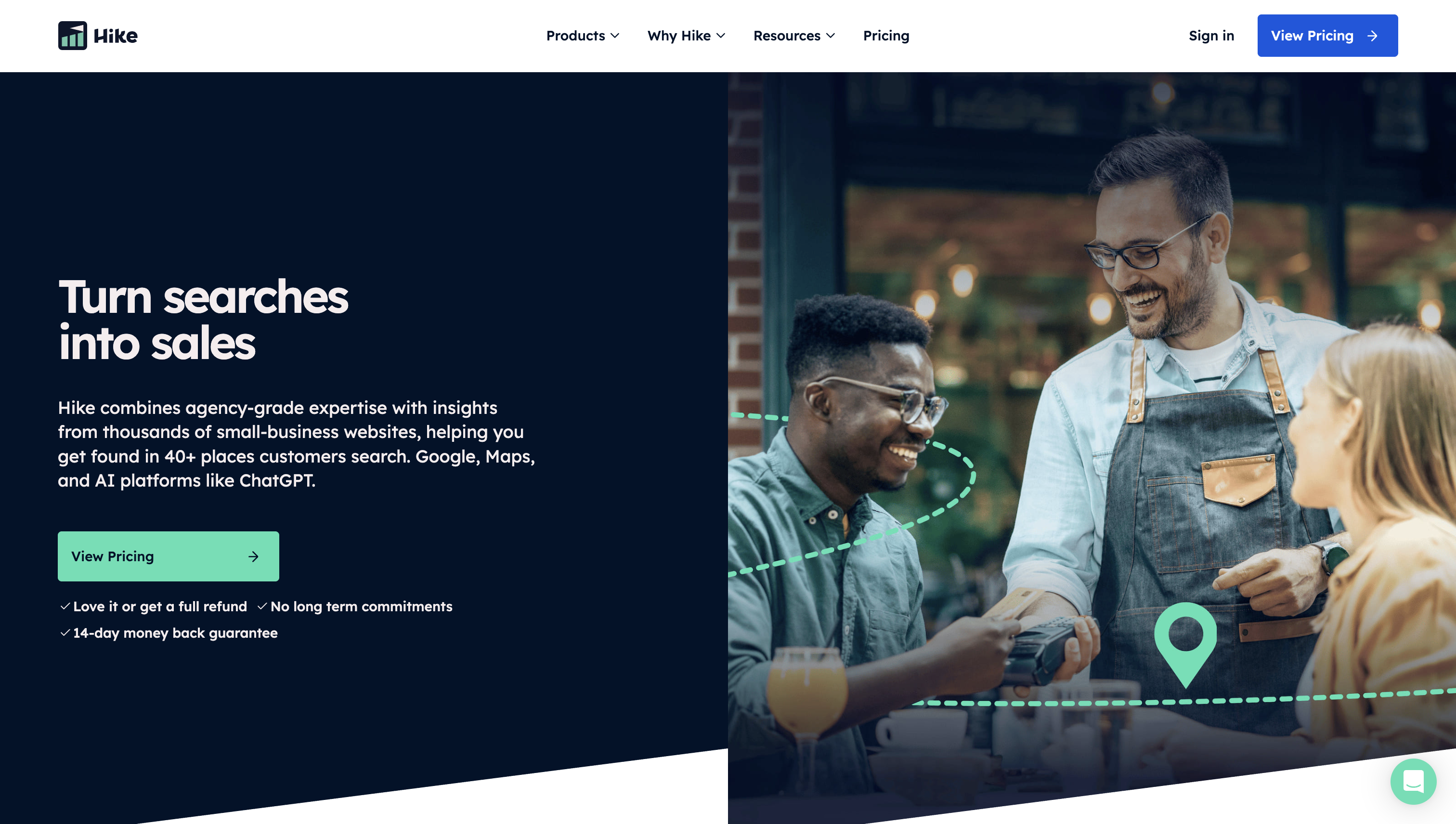
Hike is built around telling a non-marketer exactly what to do next, where the other tools here hand over data to interpret.
Standout capabilities:
Limitations: A guided tool trades depth for simplicity. If you want to dig through a competitor’s full keyword set or backlink profile, a suite goes further. Once an in-house marketer joins, Hike’s hand-holding can start to feel restrictive.
Pricing: On its dental-practice page, Hike lists the single-practice plan at $149 a month for one site and 300+ tracked local keywords, with a 14-day money-back guarantee.
Best for: Time-poor owners who want to be told what to do next and approve the work.
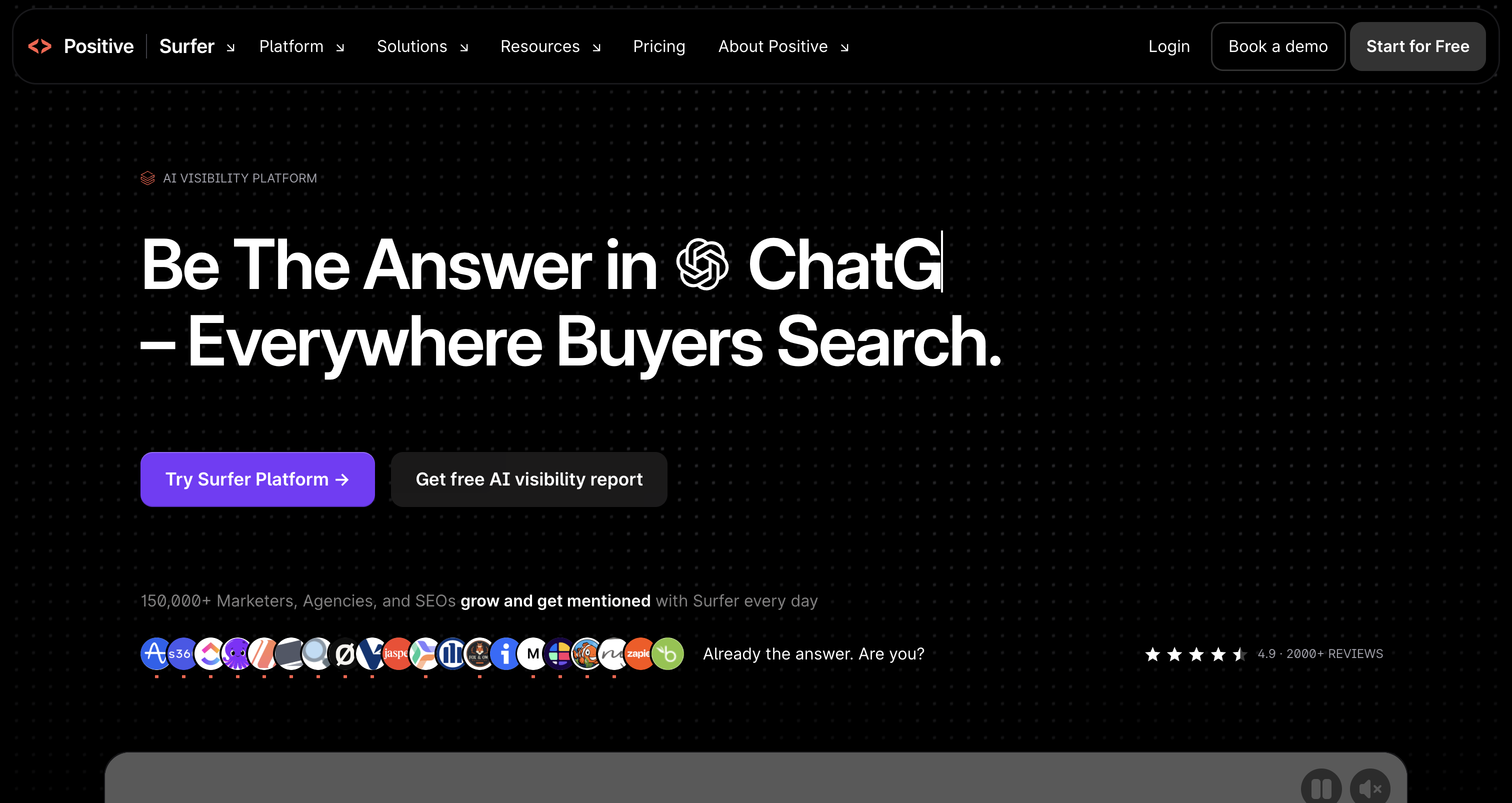
Surfer is a content optimizer rather than an all-rounder. It earns its place when blog posts and landing pages bring in the leads.
Standout capabilities:
Limitations: Surfer doesn’t replace a technical audit, backlink research or local tracking, so a local business will need another tool or the free stack alongside it. A content score also tempts writers to chase the number. Padding a page with suggested terms can raise the score while making the page worse for a customer deciding whether to call.
Pricing: Discovery costs $49 a month for 120 documents and tracking on 10 pages. The WordPress and Google Docs integrations and AI prompt tracking start on Standard, at $99 a month for 360 documents and 25 AI prompts refreshed weekly. Pro and Peace of Mind sit above those plans, and new accounts get a seven-day Pro trial.
Best for: Service businesses and startups that win leads through blogging.
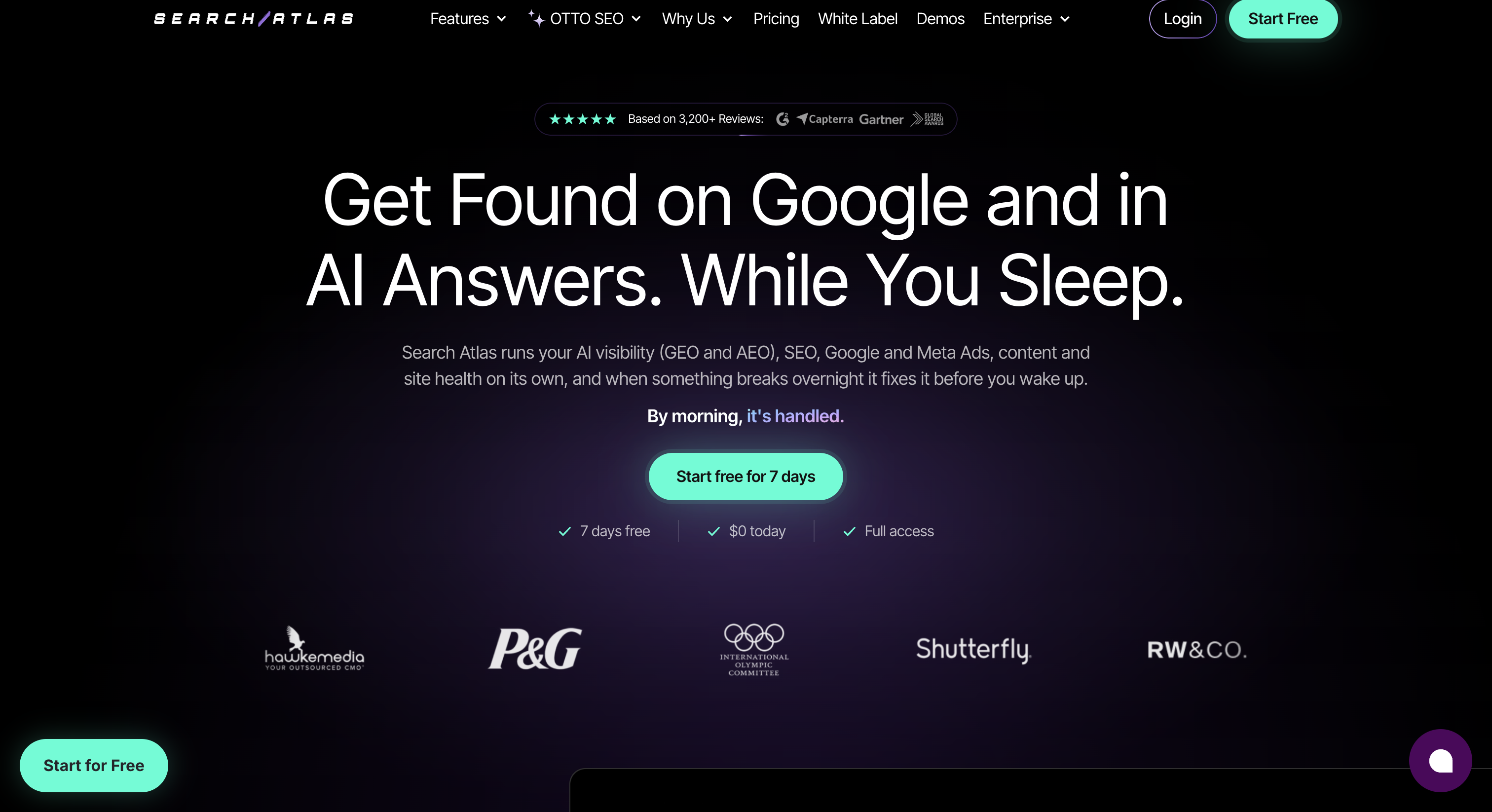
Search Atlas is the closest thing here to hiring someone to do the work, because its OTTO agent connects to your site and automates SEO tasks instead of only recommending them.
Standout capabilities:
Limitations: Search Atlas’s approval guide covers those MCP actions specifically and says other product workflows can have separate controls. Its MCP rules should not be treated as OTTO-wide approval rules. Back up the site before connecting it. The wider platform has a steep learning curve for a non-marketer.
Pricing: Search Atlas’s own help pages disagree. One lists Starter at $99 a month with one OTTO seat, Growth at $199 with three and Pro at $399 with five. Another, published the same month, says OTTO isn’t included in any base plan and is sold only as a paid upgrade. Confirm what your plan includes at checkout before you budget for it.
Best for: Owners who want optimization done for them without paying an agency retainer.

Semrush offers the deepest data in this lineup and the most modular pricing, so the bill grows with every capability you add.
Standout capabilities:
Limitations: Cost is the main issue, because the toolkits are priced separately. The interface assumes marketing vocabulary, which means a steep learning curve for non-marketers. A single-location business is also unlikely to use most of the depth it pays for.
Pricing: SEO Toolkit Pro costs $139.95 a month. The Content Toolkit is a separate $60 a month and comes with a seven-day trial. AI Visibility costs $99 a month per domain on annual billing. Each extra SEO Toolkit user adds $45 on Pro, and AI Visibility access costs another $99 for each additional user.
Best for: Growing businesses with an in-house marketer or several sites to manage.

Ahrefs is a research tool first, the place to see who links to a competitor and why they outrank you. Its free tier is the best reason for a small business to open an account.
Standout capabilities:
Limitations: Ahrefs is a premium cost for a small budget, and the entry tier rations usage through monthly credits. It shows you the data but doesn’t turn it into guided next steps, so beginners have to work out the actions themselves.
Pricing: Ahrefs’ pricing page listed Lite at $129 a month for US buyers in October 2026. That covers five projects, 750 tracked keywords and 1,000 credits per user each month.
Best for: Businesses competing on links or watching specific local or niche rivals.
You can do useful SEO work this afternoon without a subscription by following four steps.
Open the Performance report, which shows clicks, impressions, click-through rate (CTR) and average position, grouped by query or by page.
Compare two equivalent date ranges, such as the last three months against the three before. Note three things: the queries bringing visitors, the pages losing traffic and the pages that get impressions but few clicks.
Download the report as a CSV and upload it, or paste the relevant rows if file upload isn’t available. Upload availability and limits vary by model, plan, workspace and account settings. Keep the original clicks, impressions, CTR and position values so every suggestion traces back to real numbers. Then run these prompts:
Analyze this Google Search Console data without inferring missing values. Group queries by page and return: queries ranking in positions 8 to 20, pages with high impressions relative to their clicks, and, if comparison columns are present, pages losing clicks or average position. Include the source values and one suggested on-page action for each opportunity.
For this page and its Search Console queries, draft three accurate title tags and meta descriptions. Match the dominant query intent, preserve the business name and location where relevant, and use only facts found in the page copy or data I provide.
Compare this page's existing headings with the attached queries. Identify recurring search intents the page only partly answers, then suggest missing sections or questions. Do not invent services, locations, credentials or claims.
On WordPress, these plugins implement your changes; installing one doesn’t improve rankings by itself.
Rank Math’s WordPress.org listing says the free version includes XML sitemaps, Search Console integration, content analysis and several schema types, while Pro adds advanced schema building, schema templates, position history and rank tracking. Yoast’s listing says its free version includes XML sitemaps and baseline Schema.org markup, while Premium adds AI-generated metadata and more schema types. Manually fact-check every AI-generated title, description, heading and schema change against the page, services, locations and credentials before publishing.
Record which pages you changed and when. After an equivalent later period, compare the same Search Console metrics. It’s time to pay for a tool when manual exports become a weekly chore, or when you need ongoing local rank tracking, competitor monitoring, multiple projects or more content than you can review by hand.
Start with the past week’s reviews and ranking changes rather than asking AI to produce posts at random. Run the work in this order:
The SE Ranking and Hike reviews above cover broader platforms with local features. Businesses whose growth is almost entirely local may prefer a specialist. BrightLocal lists its one-location Track plan at $41 a month or $369 a year. It monitors up to 100 keywords and four competitors and includes a local AI visibility tracker. Localo is another local-first option.
AI visibility trackers run a fixed set of prompts, such as “best emergency plumber in Leeds,” through engines like ChatGPT and Google’s AI Overviews. They then record whether your business appears, whether your site is cited as a source, where you appear in the answer, how you’re described and how often you appear compared with competitors.
These are observations of sampled prompts, not traffic or revenue figures. A mention in an answer that nobody acted on won’t show up in your bookings.
When customers ask assistants for recommendations, sampled answers show whether the business appears. Provider pricing pages put prompt tracking in several reviewed tools: SE Ranking’s Core plan tracks 100 prompts daily, Surfer’s Standard plan tracks 25 prompts refreshed weekly, and Semrush sells AI Visibility as a separate toolkit. BrightLocal includes a local version.
A single-location business can wait on a dedicated tracker until its basic local SEO is in order. If prompt tracking already comes with your current tool, set up prompts that mirror how customers ask about you.
Each result calls for a different response:
These actions align with Google’s Search Central guidance that established SEO practices still apply to AI Overviews and AI Mode because those features rely on its core ranking and quality systems.
Small-business SEO spend falls into three tiers, and plan limits decide which one you need more than headline price does.
Before you upgrade, check four limits: sites or projects, tracked keywords, content documents or credits, and seats. A single-location business tracking a short list of valuable queries may not need a large keyword allowance. A content-led startup publishing frequently can run through a small document allowance quickly.
Local tools and AI visibility tracking are the features most often split into add-ons or higher tiers. Buying Semrush’s SEO Toolkit Pro, Content Toolkit and AI Visibility stacks three separate charges for one domain and one user.
Surfer and Ahrefs advertise annual discounts of up to 17%. BrightLocal lists its annual plan at $369, equivalent to $31 a month instead of the $41 monthly rate. Use a trial or money-back period before committing for a year.
For most businesses, one paid tool plus the free stack beats a bigger plan:
Search Atlas’s OTTO is the most hands-off option here. Hike’s Kit is better if you want proposed changes held for approval before publication.
For drafting and analyzing data you paste in, ChatGPT is enough. Dedicated tools are better when the task depends on live rankings, crawl data or competitor backlinks supplied inside the platform.
Yes, if the tool tells you what to do next and lets you approve changes. Beginners struggle most with suites that show data without saying which action matters.
Yes. Google says established SEO practices still apply to its AI features because they rely on core ranking and quality systems. A small business still needs accurate, useful pages wherever the answer appears.
Not inherently. AI-written articles, title tags, meta descriptions and schema all need manual fact-checking before publication. Add first-hand business detail and remove anything that does not match the services, locations or credentials on the page.
They replace much of the routine diagnosis and drafting. They don’t replace strategy, so a specialist still earns their fee when you face tough competition or have a technical problem the tool flags but can’t fix.
There’s no standard timeline. Tools speed up diagnosis and implementation, but results depend on your competition, your site’s condition and how quickly search engines recrawl your pages. Measure changes against an equivalent earlier period rather than expecting a fixed date.

Cindy is an Outreach Manager and SEO Specialist at ONSAAS who helps SaaS companies grow through strategic link building and SEO. Outside of work, she loves spending time in nature, especially hiking in the mountains.
.svg)
.svg)
.svg)
.svg)
.svg)