
.svg)
%20(1).svg)
%20(3).svg)
Back to articles
AI Marketing Agents: What They Are, Use Cases, and How to Get Started
October 12, 2026
By
Cindy Graciella
Artificial intelligence is no longer just a fancy way for modern growth-stage companies to help with writing. Some prompt tools work on their own to speed up writing, but marketing teams still have to do a lot of tedious copy-and-paste, data checking, and process orchestration. Operational speed, not faster drafts, is what you need to power a high-growth revenue engine.
This is where an AI marketing agent comes in. An agent can process data, make choices based on rules, and work directly with tech stack tools. It doesn't just send back a block of text; it also checks your systems, takes action, and helps maintain the health of your pipelines across complex platforms.
However, using autonomous tools in marketing production demands intentional operational design. In this guide, we’ll look at how SaaS marketing teams can find practical use cases, create solid execution guardrails, establish governance, and build automated workflows with AI marketing agents that consistently support the pipeline.
There are dozens of checks to run when launching a marketing campaign, and humans often rush under tight schedules. Using a schedule maker can help keep everything organized and ensure no important steps are missed. An automated marketing agent can validate naming conventions, URL parameters, conversion-tracking scripts, design responsiveness, and audience suppression lists prior to campaign launch.
AI marketing agents can perform pre-flight checks across your marketing automation platform, ad accounts, and landing sites, reducing monitoring failures and helping you avoid costly ad spend waste.
Lead velocity often influences conversion rates, but manual lead triage adds friction. AI marketing agent monitors incoming form fills, updates company records via background APIs, and flags routing anomalies or account-level disputes.
When an inbound prospect matches the profile of a target account but lacks firmographic data, the agent can enrich the data in real time and route the record to the relevant account owner, triggering an instant sales notification or task.
Traditional performance tracking often relies on static dashboards that need to be downloaded and looked at by hand. Using a variety of platforms, the agent constantly checks campaign data to find meaningful changes in performance indicators like cost per acquisition or email click-through rates.
When something strange happens, it gathers relevant performance data, points out likely root causes like ad fatigue or broken landing page forms, and provides the performance team with specific steps for fixing the problem.
This is where AI marketing agents are commonly used by marketing teams, as continuous content iteration and technical audits are vital to sustaining your search visibility. AI marketing agents can systematically monitor search engine results pages where permitted, or use approved data sources such as Search Console and rank-tracking tools, to build a search-intent map, identify gaps in topical coverage, and assess ranking decay across published assets.
For legacy collateral updates, the agent can cross-reference internal performance indicators with real-time search data to develop optimization briefs, update internal links, and suggest structural modifications that better reflect evolving search trends.
Alongside core advertising, agents also streamline other processes that use up bandwidth:
Not every operational bottleneck requires an autonomous system. Choosing the right place to start helps you avoid wasting engineering resources and unnecessarily putting revenue systems at risk.
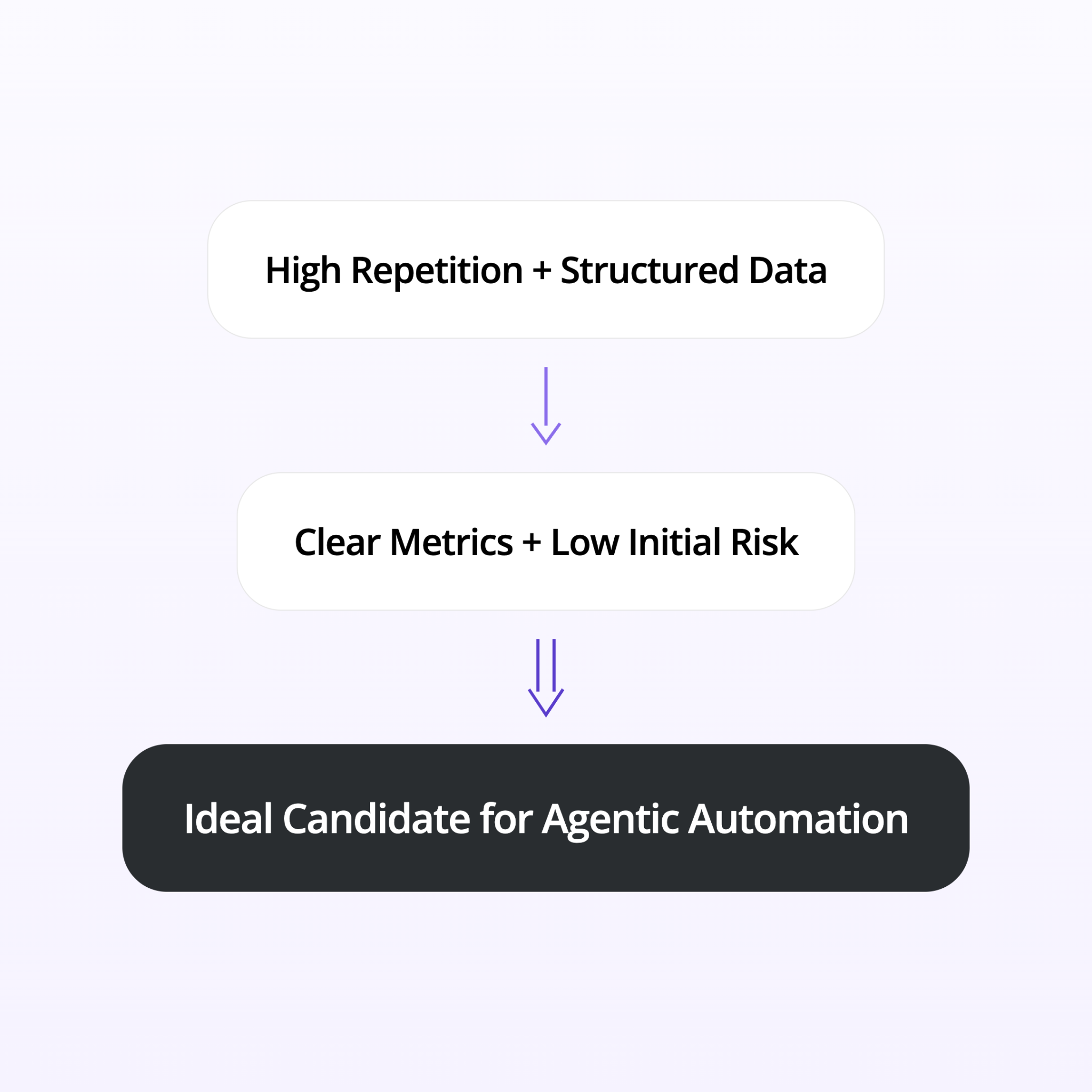
Work on auditing operations for those workflows where there is a high degree of predictability and clear data structures. Potential applicants are considered against four operational criteria:
Once you have chosen a workflow, determine the scope of its function before you start coding or creating prompts:
Deploying a reliable AI marketing agent goes beyond simple prompt engineering and involves system architecture. Production-ready means developing around six basic execution components that make your tech stack behave predictably.
Evaluate contemporary data models to create operational architectures for real-time signal evaluation. According to academics examining credit access models in data science, real-time transactional behavior is a far more powerful predictor than static historical measures.
As a global digital finance panel study published in the journal Digital Finance shows, active involvement and the integration of structured frameworks are major drivers of system efficiency. The study confirms that real-time behavioral data enhances the accuracy of automated outcomes across digital platforms.
This is the same idea that modern marketing agents use: incorporating real-time system context rather than static snapshots of prompts.
Design your workflow architecture for a reliable system with these 6 building blocks:
The whole build process above assumes you have engineering time to assemble six components and wire them into your stack. Plenty of teams don't, and don't need to. If your workflows are standard (lead routing, campaign QA, content drafting) and you're already living inside a CRM, an off-the-shelf AI marketing agent platform gets you to production faster, at the cost of some flexibility.
Building your own makes sense when your workflow is genuinely specific, you have strict data-residency rules, or the agent logic is a competitive edge worth owning. Buying one is better when you want to prove value before investing engineering hours, your workflows are common enough that a vendor already solves them, and you'd rather inherit a governance and permissions layer than build one. Most teams should start by buying, validate the workflow, and only build a custom version once they know it delivers. When that point comes and there’s no engineering capacity in-house, many teams hire AI agent developers to build the custom version on top of their existing stack.
A few platforms worth knowing, grouped by who they fit:
Whichever you evaluate, judge it against the same criteria the rest of this guide lays out: does it support least-privilege permissions, does it give you the progressive-autonomy control (recommend → draft → act with approval → act with guardrails) from the governance section, and does it keep an audit trail?
SaaS marketing teams may confidently scale autonomous systems when governance is effective, without putting revenue operations or customer data at unacceptable business risk.
Every system must have a human owner on the marketing ops side who is responsible for its performance and upkeep. Use least-privilege API scopes to provide the agent with limited system access. Log all permissible system actions and maintain an audit trail of agent activities for full transparency.
Use a four-stage progressive autonomy model to calibrate system independence:
Maintain strong data boundaries in all automated workflows. Scrub or anonymize consumer personal data before forwarding it into model context windows. Set firm organizational standards for model retention policies, compliance limits, and public disclosure of automated communication.
Governance only works if someone on the team actually understands it. For teams looking to build that expertise in-house, Research.com's AI governance degrees is a useful starting point for finding and developing the right people.
Evaluating an agent means looking at the full working flow, not at raw LLM text outputs in isolation.
Automated systems can monitor performance and organic visibility measures over time to improve prompt logic. Modern search experiences may benefit specific AI SEO software to ensure that agents’ content processing capabilities deliver structurally relevant outputs.
An iterative operational roadmap is necessary for the successful deployment of autonomous technology. This document addresses six important implementation phases:
By adding continual optimization to your growth engine, you can improve performance over time, but improvement is not guaranteed without accurate data, human review, and controlled experimentation. Ensure your automated workflows stay agile by using generative search patterns and targeted AI visibility-tracking tools to monitor search presence.
Today’s revenue architectures often use automated pipelines to scale personalized engagement. The combination of automated lead management and a modern inbound marketing stack can support a seamless flow of high-value prospects from automated touchpoints to qualified sales engagements.
An automated system for performing marketing operations through data processing, rule-based decision-making, and direct interaction with software platforms via APIs.
Traditional marketing automation usually relies on predefined rules and workflows. AI agents may add more flexible context processing, tool use, and decision support, but they still need clear permissions, guardrails, and human oversight.
The best first use cases are campaign QA verification, inbound lead routing and enrichment, performance analytics anomaly detection, and structured content updates.
Implement role-based permissions for API access. Assign the human system owners. Limit the extent of data access. Scale autonomy through structured approval gates.
Review task completion, human correction rates, processing-speed improvements, infrastructure costs, and contribution to the downstream revenue pipeline.

Cindy is an Outreach Manager and SEO Specialist at ONSAAS who helps SaaS companies grow through strategic link building and SEO. Outside of work, she loves spending time in nature, especially hiking in the mountains.
.svg)
.svg)
.svg)
.svg)
.svg)