ZoomInfo is one of the largest sales intelligence tools on the market, with an extensive contact database, company insights, and real-time intent data.
But is it right for you?
Unless you’re a large company with complex data needs and a big budget, the answer is probably no.
Read on to learn if ZoomInfo is a fit for your sales team. We cover major features, use cases, pricing, and pros and cons.
ZoomInfo is a go-to-market intelligence platform.
It helps B2B marketers and salespeople generate leads by providing them with intel on companies and decision-makers, such as phone numbers, firmographic data, and buyer intent.
Businesses primarily use ZoomInfo to do the following:
Some B2B teams also use ZoomInfo for automating outreach. But to do so, you’d have to purchase that functionality as an add-on (ZoomInfo Engage).
Because this is a big added expense, it’s common for sales teams to use ZoomInfo for its B2B data and another tool to take action on that data—typically a dedicated email marketing or sales engagement platform.
At its core, ZoomInfo is a B2B database and sales intelligence tool.
It stores and updates company and contact data that sales and marketing professionals use to create more personalized, targeted, and timely outreach to their accounts and leads.
Here are the platform’s key features:
Companies primarily use ZoomInfo for three purposes:
While smaller teams might find ZoomInfo helpful, the platform’s price, size, and complexity make it better suited to larger teams at mid-size or enterprise companies.
ZoomInfo’s core features include a searchable contact database, CRM integrations and enrichment, buyer intent, and automation capabilities, including an AI-powered sales assistant.
Below, we’ll dive deeper into each feature’s functionality, while also calling out any key limitations.
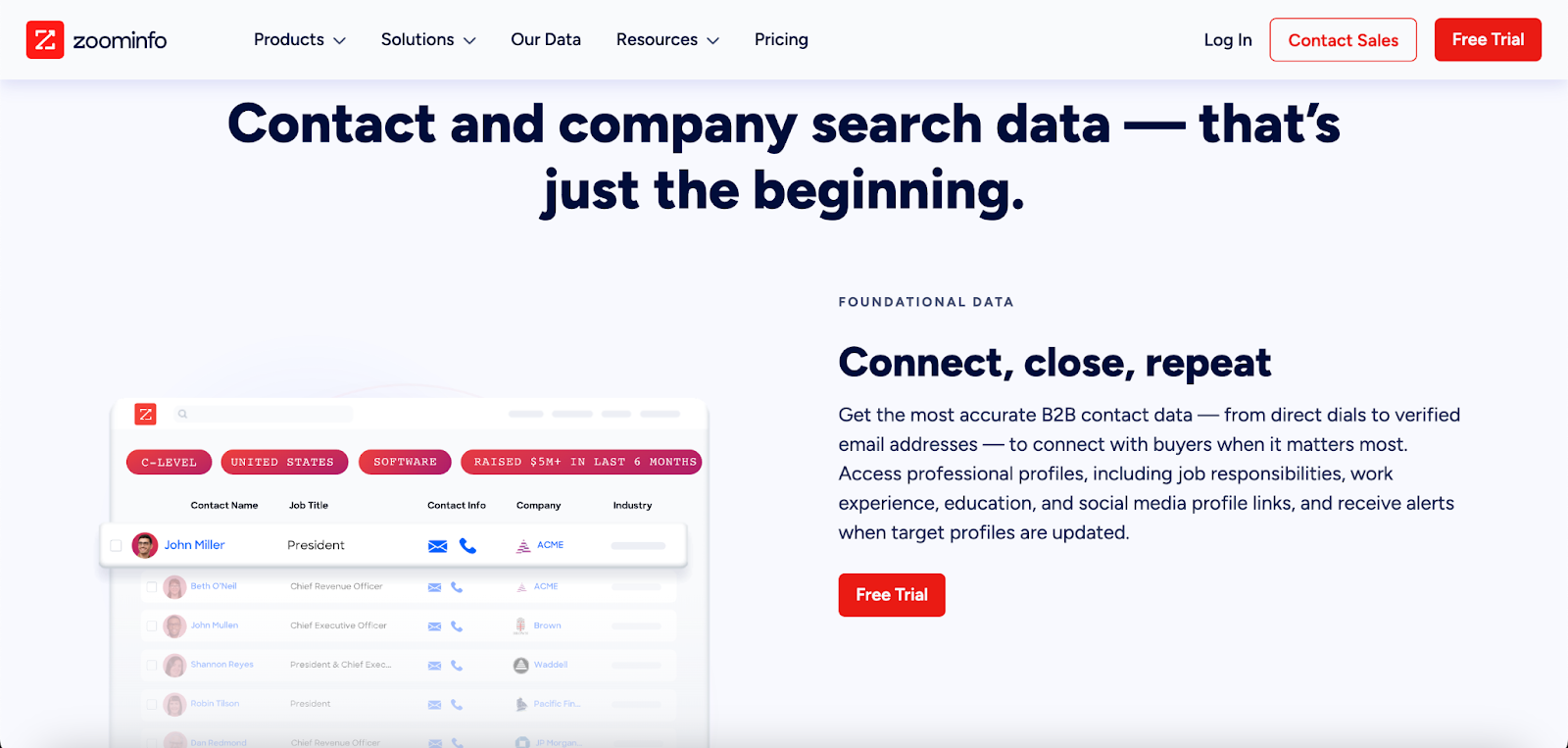
ZoomInfo’s searchable B2B contact database is a solid prospecting tool. Businesses can use it to build targeted lead lists, research decision-makers and accounts, and create segmented marketing campaigns.
Here are its key features:
A major strength of ZoomInfo’s B2B database is its sheer scale and search flexibility. It’s one of the largest B2B data providers in the market. Its numerous search filters enable businesses to build hyper-targeted lists for personalized cold outreach and marketing campaigns.
One weakness, however, is its inconsistent international data accuracy. This issue comes up a lot in G2 reviews of the platform:
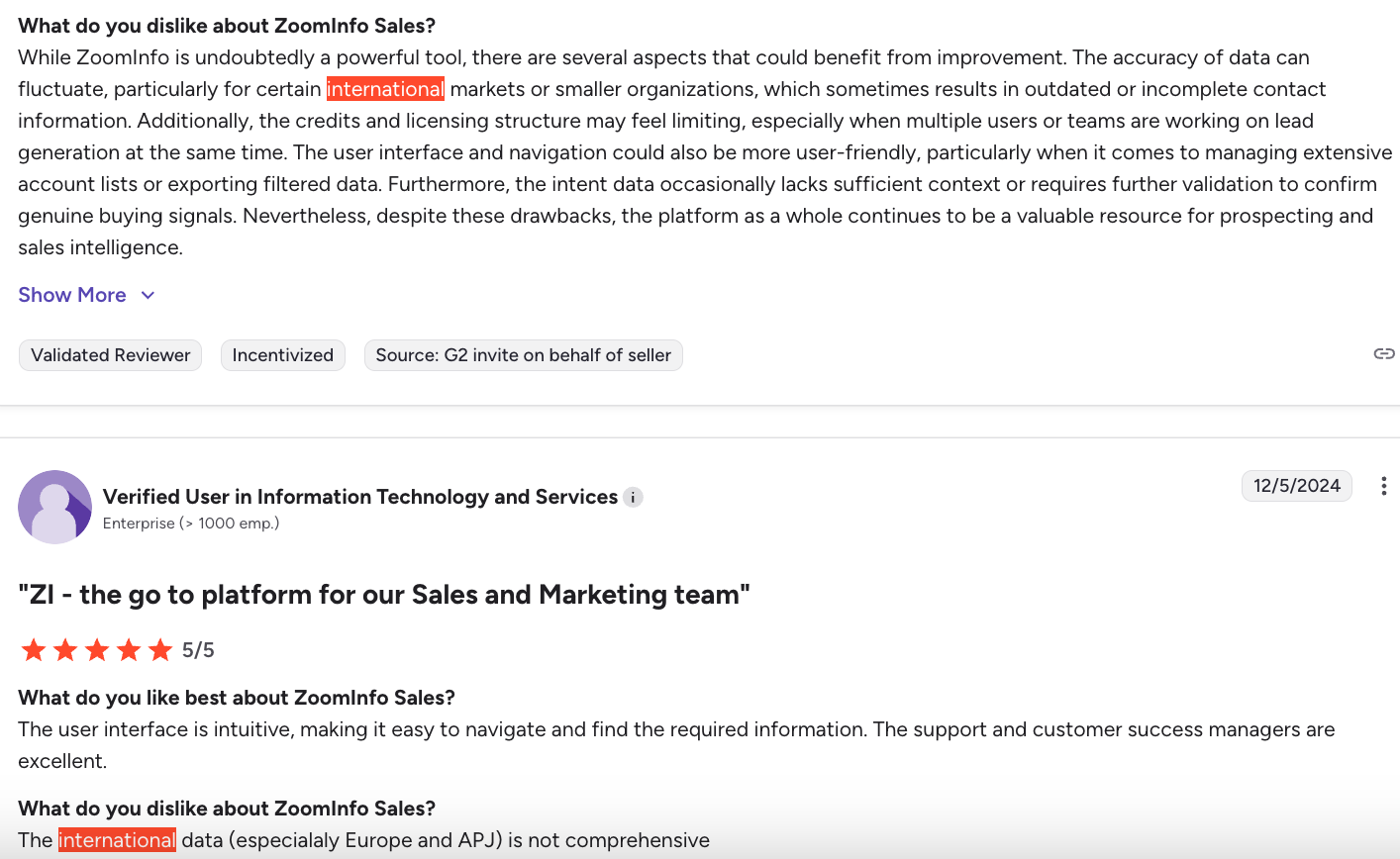
If you’re targeting companies outside of the United States, you may want to explore other options.
ZoomInfo’s integrations and enrichment tools help businesses maintain clean and accurate B2B data across their tech stack.
Here are the key capabilities of ZoomInfo’s data enrichment and integrations:
The basic features, like linking your CRM to ZoomInfo, are fairly easy to use. However, the more complex enrichment configurations, like field mapping, require some technical know-how.
Also, if any issues arise, it will be helpful to have a technical expert on hand to fix them—and ZoomInfo’s customer support is not really known for its responsiveness.
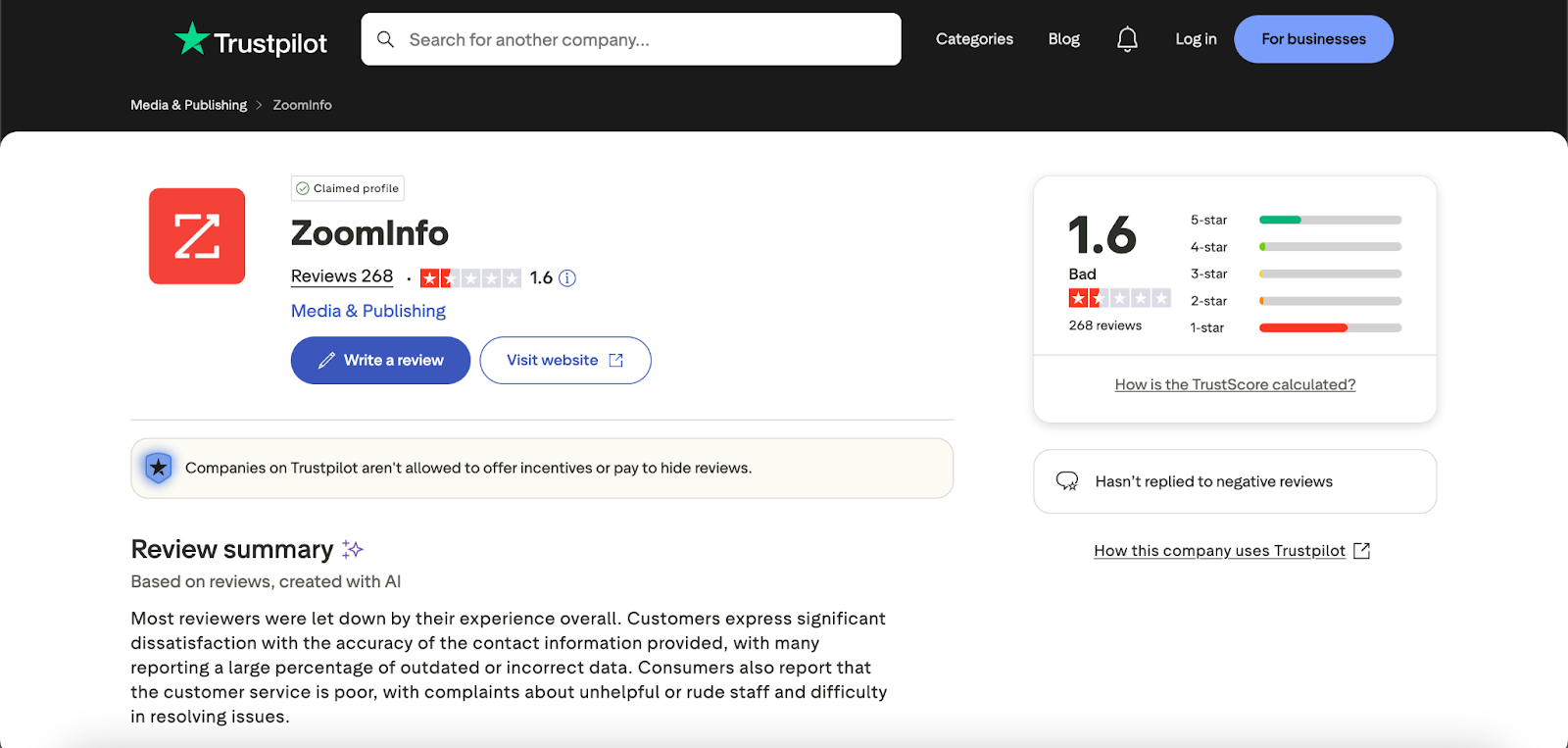
On TrustPilot, poor customer service is the second biggest complaint about ZoomInfo after inaccurate data:
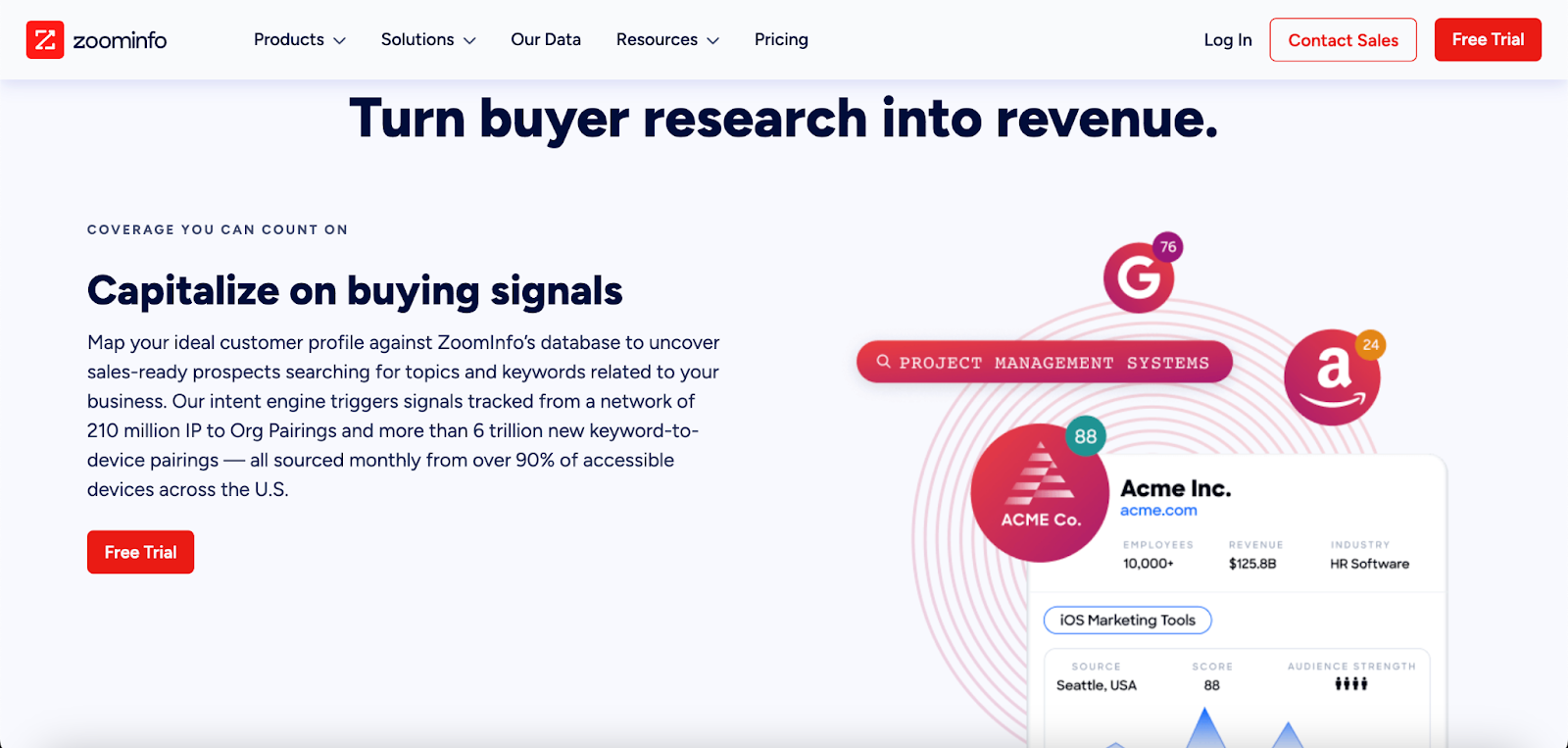
ZoomInfo offers several features that help sales reps and marketers to prioritize leads and find the ones most ready for a sales conversation.
Here’s an overview of ZoomInfo’s lead research features:
One of ZoomInfo’s most helpful buyer intent features is Scoops, which reveals what’s going on inside a target company. This makes account research a lot easier for sales reps.
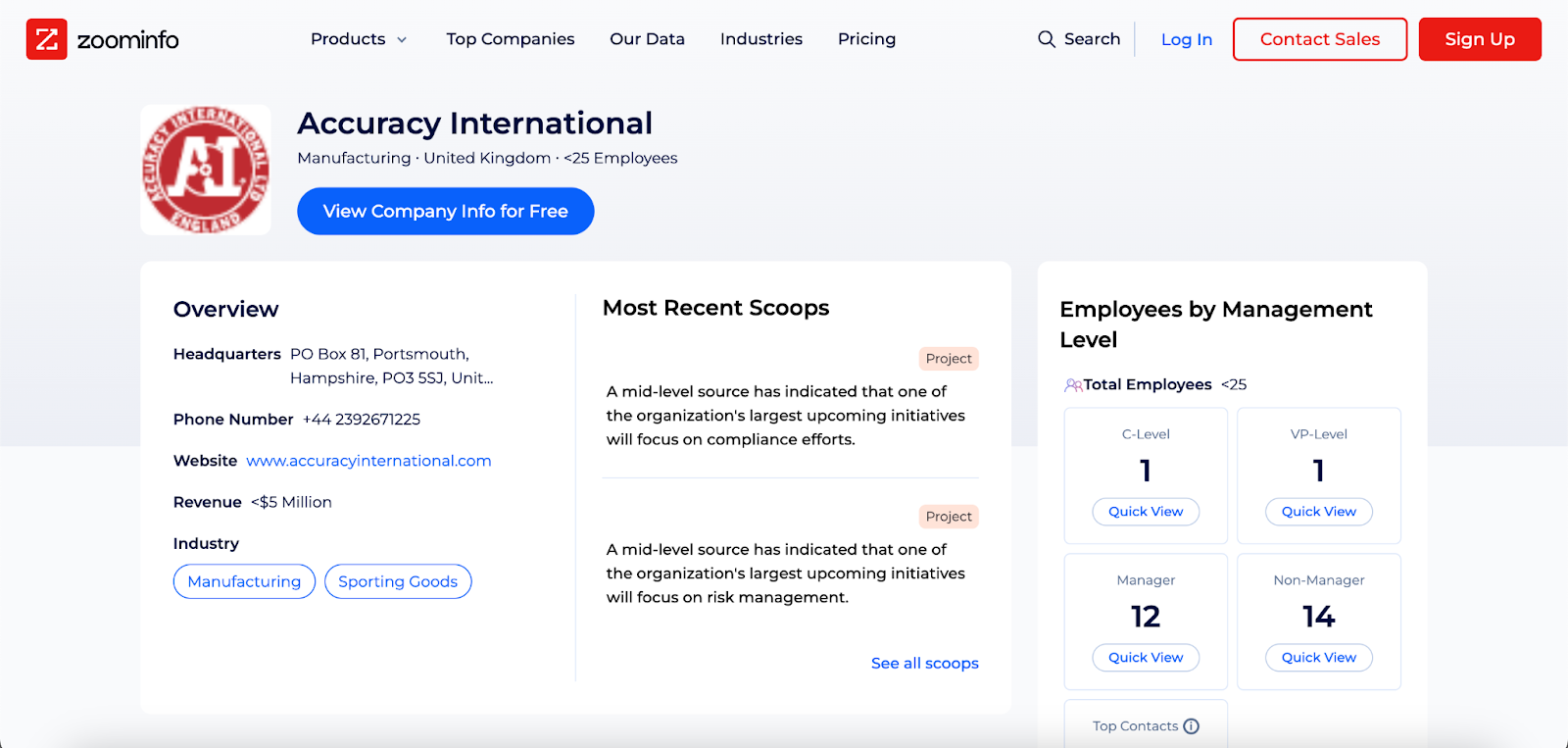
Outbound sales reps can use these “scoops,” as well as other buyer intent data features, to craft personalized, timely messages while prioritizing the leads most likely to buy.
However, one issue is that most of the buyer intent features are locked behind advanced tiers, meaning you’ll have to pay a premium to get access to this insider information. Some competitors offer similar features at a lower cost.
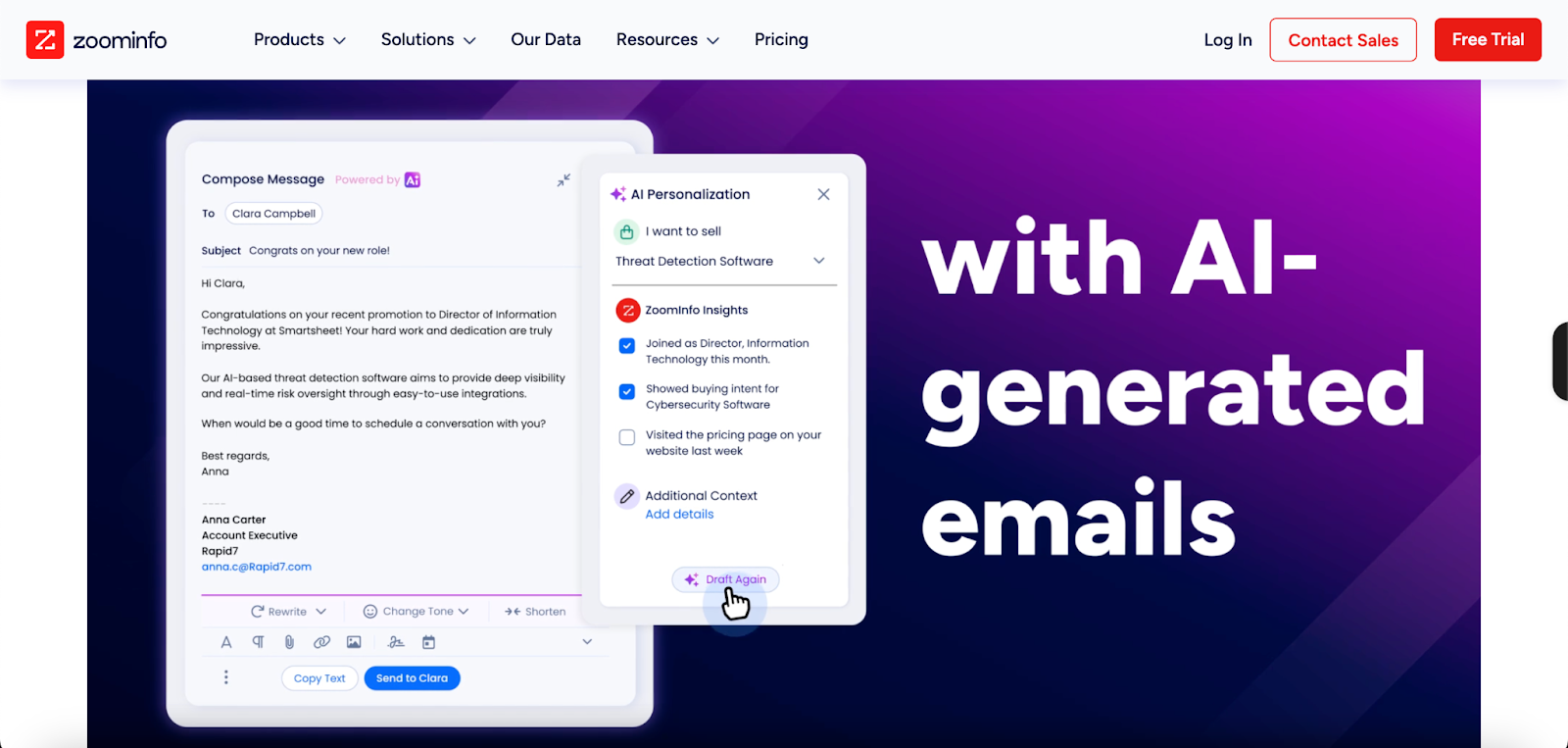
ZoomInfo comes with automations—including an AI sales assistant—that streamline routine tasks, share key intel with the right reps, and optimize how your team uses the platform.
ZoomInfo’s major automation capabilities include the following:
Here are the most notable features of ZoomInfo’s AI assistant, AI Copilot:
While these automations can certainly save your sales team a lot of time, ZoomInfo isn’t fully autonomous, especially when compared to other modern AI sales tools for lead generation.
Some of these newer AI platforms even provide AI BDRs that automate the entire cold outreach process, from lead discovery to booked meeting—without human intervention.
Moreover, ZoomInfo’s automations require a fair amount of setup to work properly, and the learning curve to do so can be steep if you’re unfamiliar with this type of technology.
ZoomInfo’s pricing is expensive and quote-based, rising and falling based on factors like features and data credits.
Let’s break down all you need to know about their pricing model, including the main issues reported by users.
Here’s a rundown of ZoomInfo’s pricing:
High costs aren’t ZoomInfo’s only downside when it comes to their pricing.
There are three other big user complaints about ZoomInfo’s plans:
Because of the complexity of ZoomInfo’s pricing plans, it’s not unusual for buyers to learn the real cost after signing the contract. Some clients, like Paloma, also share horror stories about being locked into expensive, long-term contracts they are unable to get out of, even when they’ve gone out of business.
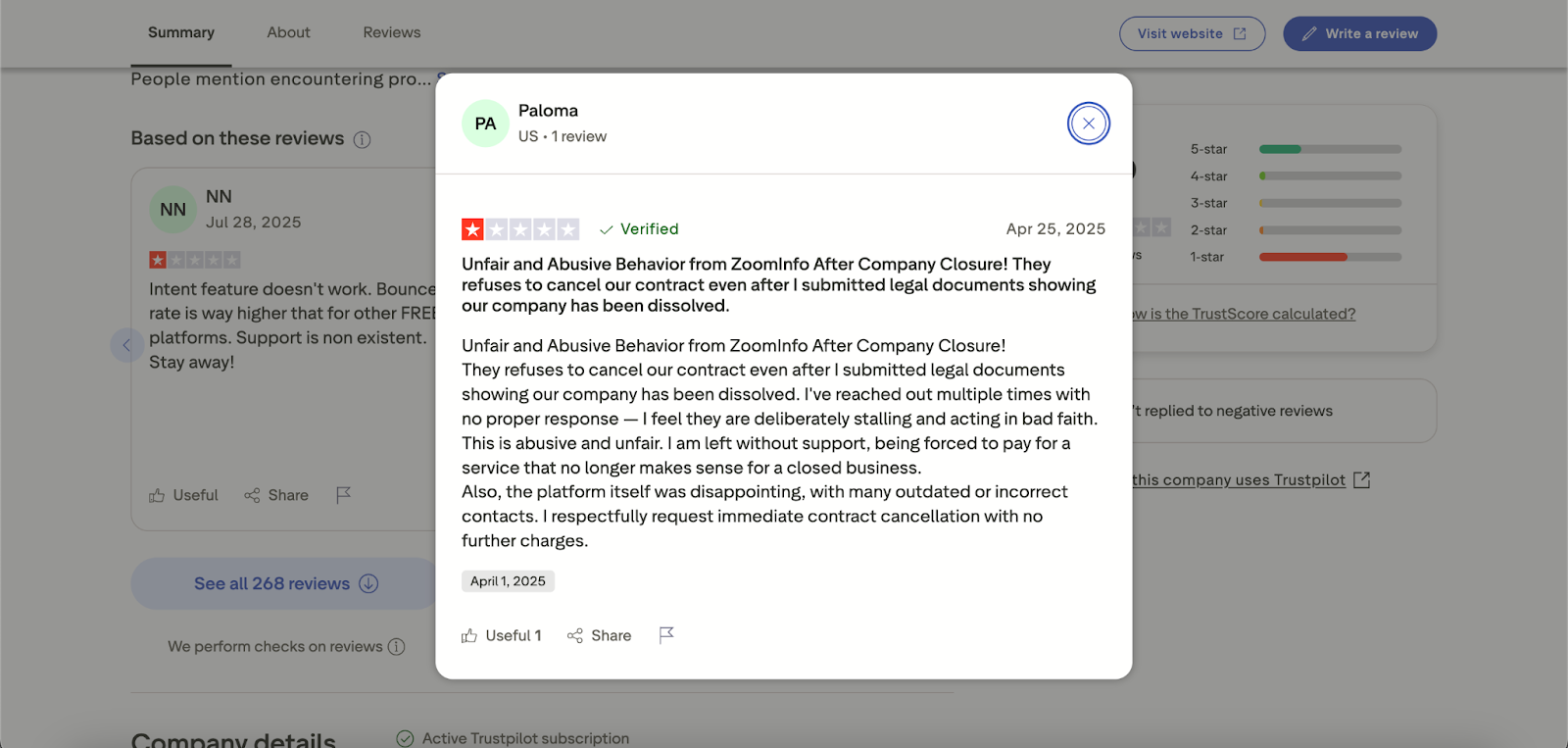
Another potential issue is paying a lot of money but not having the sales ops expertise and infrastructure to implement all the features.
In conclusion, due to its high price point and long-term contracts, ZoomInfo is a better fit for larger companies with a suitable budget, complex data needs, and a dedicated sales operations function.
Like any platform, ZoomInfo has its upsides and its downsides. Its main pros are its large B2B database and large library of integrations. Cons tend to center around cost and technical complexity.
.svg)
One of the largest B2B databases available
Strong search capabilities and filtering
Advanced buyer intent data and sales signals
Integrates with most major sales tools and marketing platforms
Helpful enrichment automations
.svg)
High upfront cost and unclear pricing
Contracts are long and hard to exit
Steep learning curve for new users for advanced features
Contact accuracy can vary by region and industry
Key tools like outreach automation and intent data only available as add-ons
ZoomInfo’s high costs and insufficient AI-driven sales outreach can be a real no-go for modern sales teams who want a more affordable, hands-off, all-in-one lead generation platform.
One popular alternative is Artisan. It is an AI outbound sales platform that automates nearly all prospecting and cold outreach tasks. Artisan comes with an AI BDR named Ava who can run the entire cold outreach workflow, from finding and researching leads to sending them personalized cold emails, LinkedIn messages, and follow-ups.
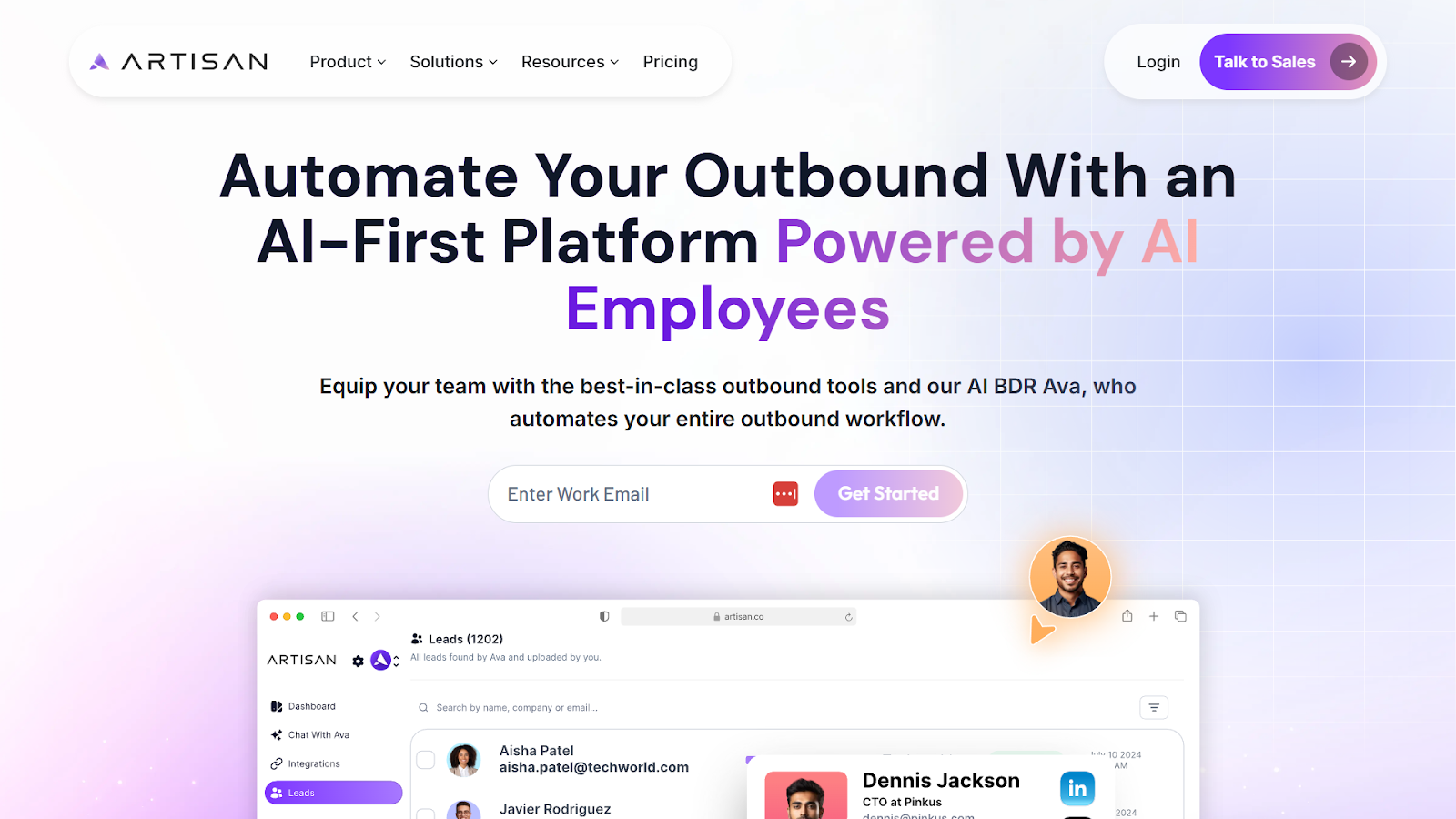
Compared to ZoomInfo’s AI sales Copilot, which primarily makes suggestions about what to do, Ava executes full sales workflows—without requiring constant human intervention.
Artisan’s autonomous nature enables sales reps to focus on taking meetings with qualified prospects instead of spending their time finding, researching, and reaching out to cold leads who may or may not respond.
If you’re a mid-sized to enterprise company with a big budget, complex data needs, and the expertise and resources to make it work, ZoomInfo might be a good choice for you.
The platform offers a large B2B database, useful intent data, and advanced integration and enrichment capabilities—all of which can help your business identify, engage, and close high-quality leads.
However, for startups and lean sales orgs, it might be overkill in terms of pricing and feature complexity—especially given more flexible, affordable AI-powered alternatives.
Remember that choosing the right tool depends on your scale, outreach needs, and how much manual work your team can handle. It’s common advice, but it bears repeating: before investing in ZoomInfo or any platform, always arrange multiple demos to compare options.

Irina is a Founder at ONSAAS, Growth Lead at Aura, and a SaaS marketing consultant. She helps companies to grow their revenue with SEO and inbound marketing. In her spare time, Irina entertains her cat Persie and collects airline miles.
.svg)
.svg)
.svg)

.svg)
%20(1).svg)
%20(3).svg)
.svg)
.svg)