SendGrid's permanent free tier is gone. Twilio retired it on May 27, 2025 — new accounts now get a 60-day trial at 100 emails per day, then paid plans start at $19.95/month. For teams that were coasting on the free plan or evaluating options before committing, that's a hard stop that forces a decision. Add shared-IP deliverability issues, a ~10% price increase across paid tiers in 2024, and support that scales poorly for smaller senders, and the case for shopping around is clear.
This guide ranks 9 alternatives by use case, compares real costs at three volume tiers, and tells you which pick fits developers, transactional speed, lowest cost, and all-in-one marketing — so you can make the switch without regret.
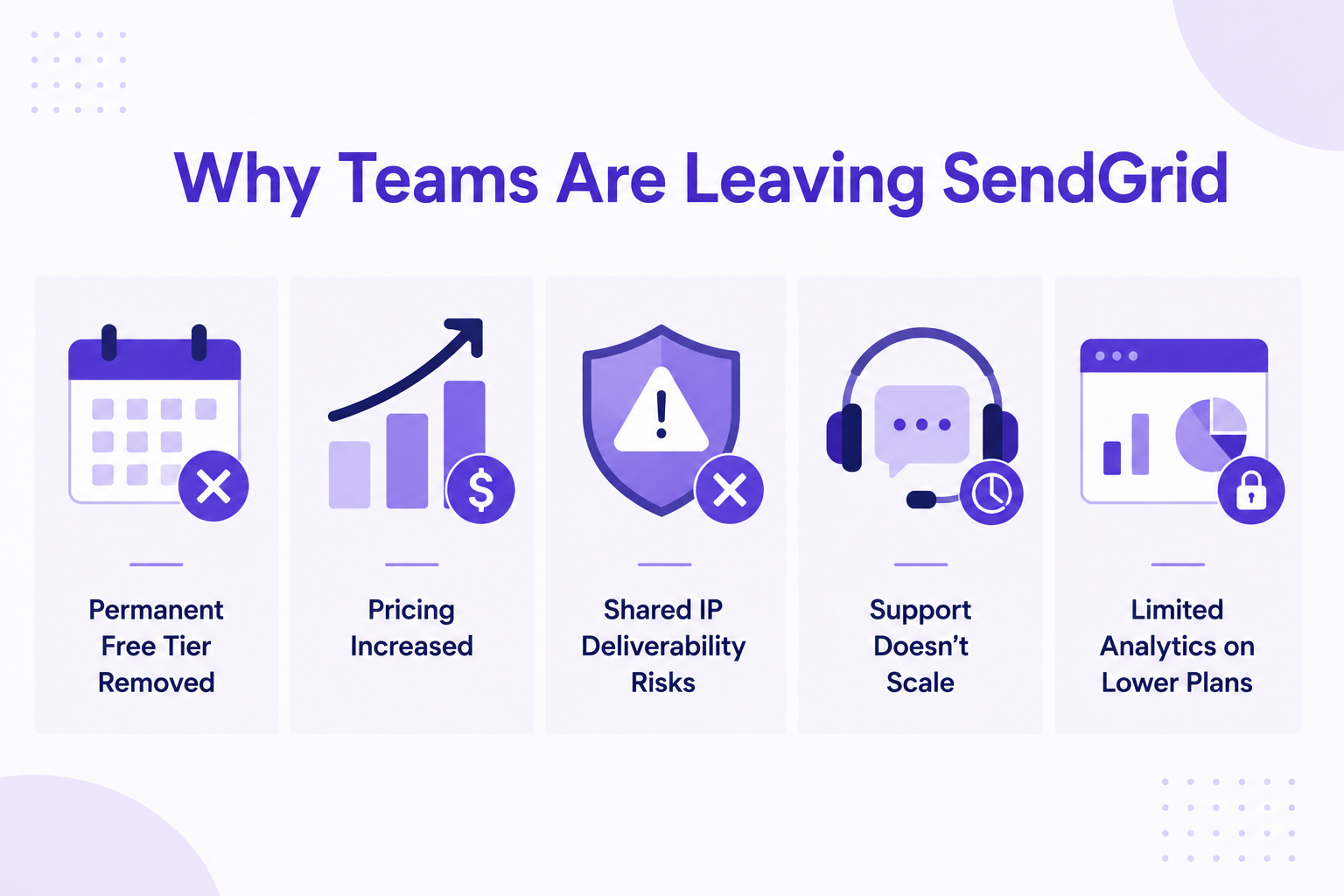
Before March 2025, SendGrid offered a permanent free plan: 100 emails per day, no expiration. That plan no longer exists for new signups. Existing free users were cut off by July 26, 2025. Teams now start on a 60-day trial before hitting a $19.95/month minimum — a real cost increase for low-volume senders who previously paid nothing.
On SendGrid's lower tiers, you're on a shared IP pool. One bad actor on the same pool can drag down your sender reputation with no recourse on your end. With 376.4 billion emails sent daily in 2025 — nearly half classified as spam — the shared IP environment is more crowded and more contested than at any point in email's history. Diagnosing shared-IP contamination is slow, and SendGrid's tooling for isolating and resolving it is limited without upgrading to dedicated IP plans.
Meaningful support requires a paid plan — and even then, response times and quality at the Essentials tier leave a lot to be desired. Teams hitting deliverability issues mid-campaign report waiting days for useful guidance.
Per-domain inbox placement data, the thing you actually need to diagnose delivery problems, isn't available at the entry level. You're essentially flying blind unless you upgrade.
If you're already on a Pro plan ($89.95/month), you have a dedicated IP, clean sender reputation, and established integrations — migration friction is real. Quantify the cost of switching before committing.
Evaluated on deliverability, developer experience, pricing at scale, transactional vs. marketing fit, and support. This is a use-case-driven list — not a ranked popularity contest.
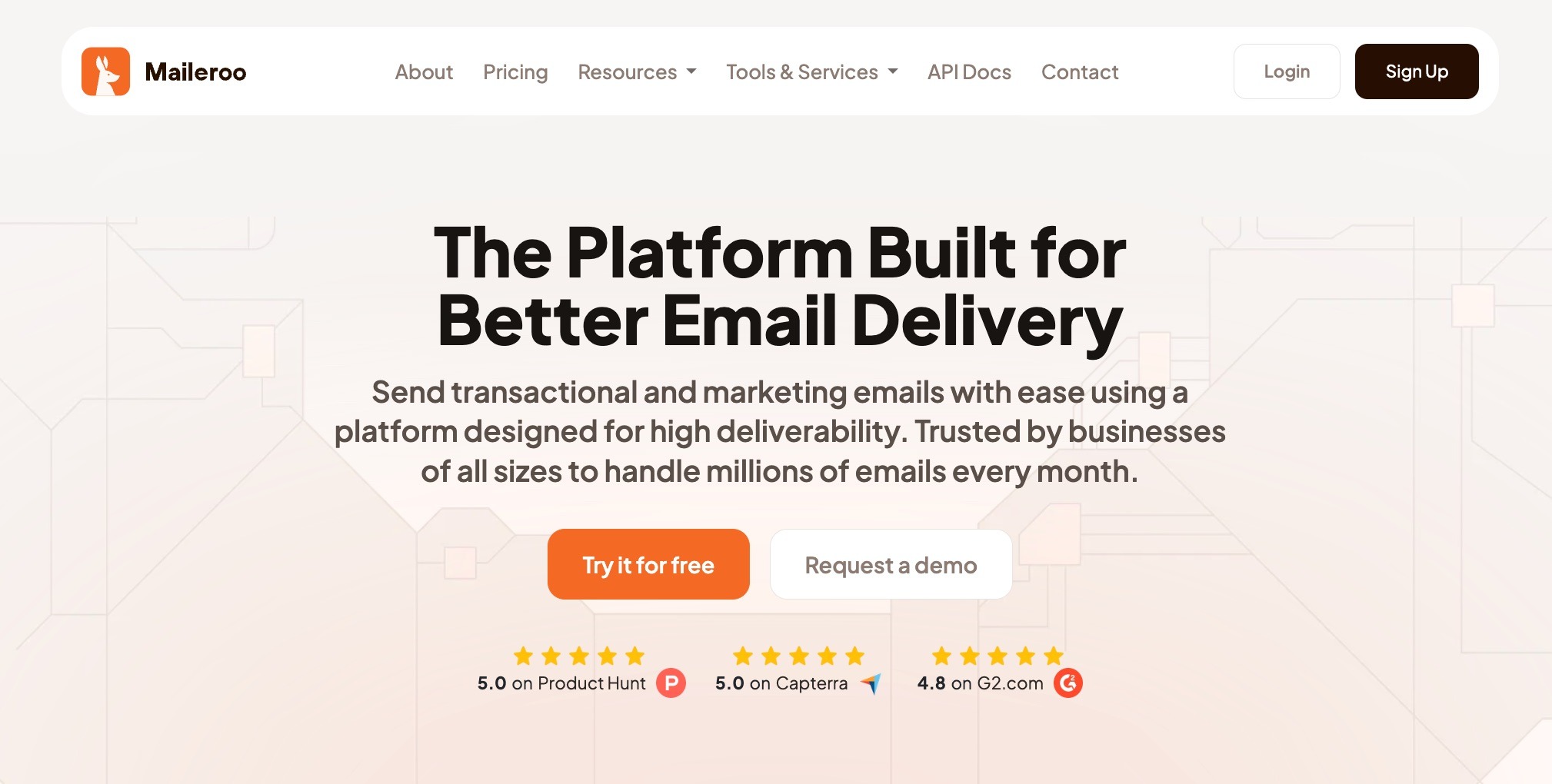
Maileroo is the most direct replacement for teams that want both transactional reliability and marketing capability in one platform — which is exactly what SendGrid offered, and what most alternatives force you to piece together from two tools.
Covers both use cases SendGrid split across Email API and Marketing Campaigns plans — without the separate billing tracks, free Email Verification API included on all plans, dedicated IPs available from 250,000 emails/month, real-time tracking of delivery rates, opens, clicks, and bounces, drag-and-drop template builder plus a Contacts API for custom workflows, inbound email routing, SDKs for 7+ languages, blacklist monitoring dashboard, consistently highly rated for support responsiveness on G2 and Capterra.
Free plan at 5,000 emails/month. Paid plans scale by volume on a pay-as-you-go basis — competitive per-1,000 cost versus SendGrid at equivalent tiers, with no surprise price increases mid-year.
Teams migrating off SendGrid that need both transactional reliability and marketing functionality without managing two separate platforms.
Smaller community and ecosystem than Mailgun or SendGrid; fewer third-party integration tutorials available.
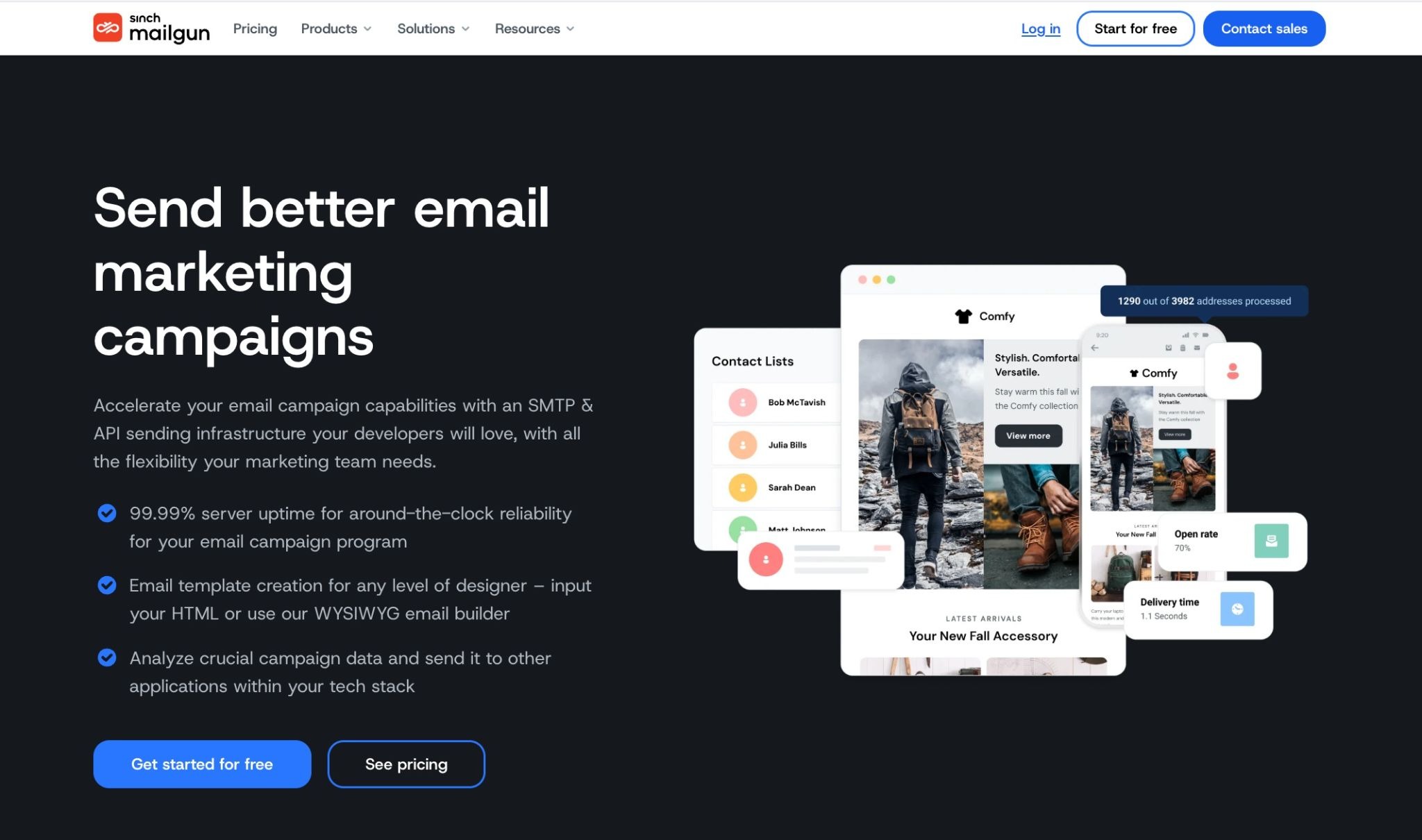
Mailgun is the developer-first alternative with the deepest routing capabilities. If your use case involves complex routing logic, granular suppression management, or data-rich delivery analytics, Mailgun has more configuration surface area than anything else on this list.
Advanced email routing, robust suppression management, detailed analytics, strong SDKs across major languages, inbound email parsing, reliable API with extensive documentation.
Flex plan at $1.00/1,000 emails; Foundation at $35/month for 50,000. Dedicated IP is an add-on.
Dev teams building complex email infrastructure that requires routing logic and deep delivery diagnostics.
Cost creep at higher volumes once you add dedicated IPs; complexity overkill for teams with simple transactional needs.
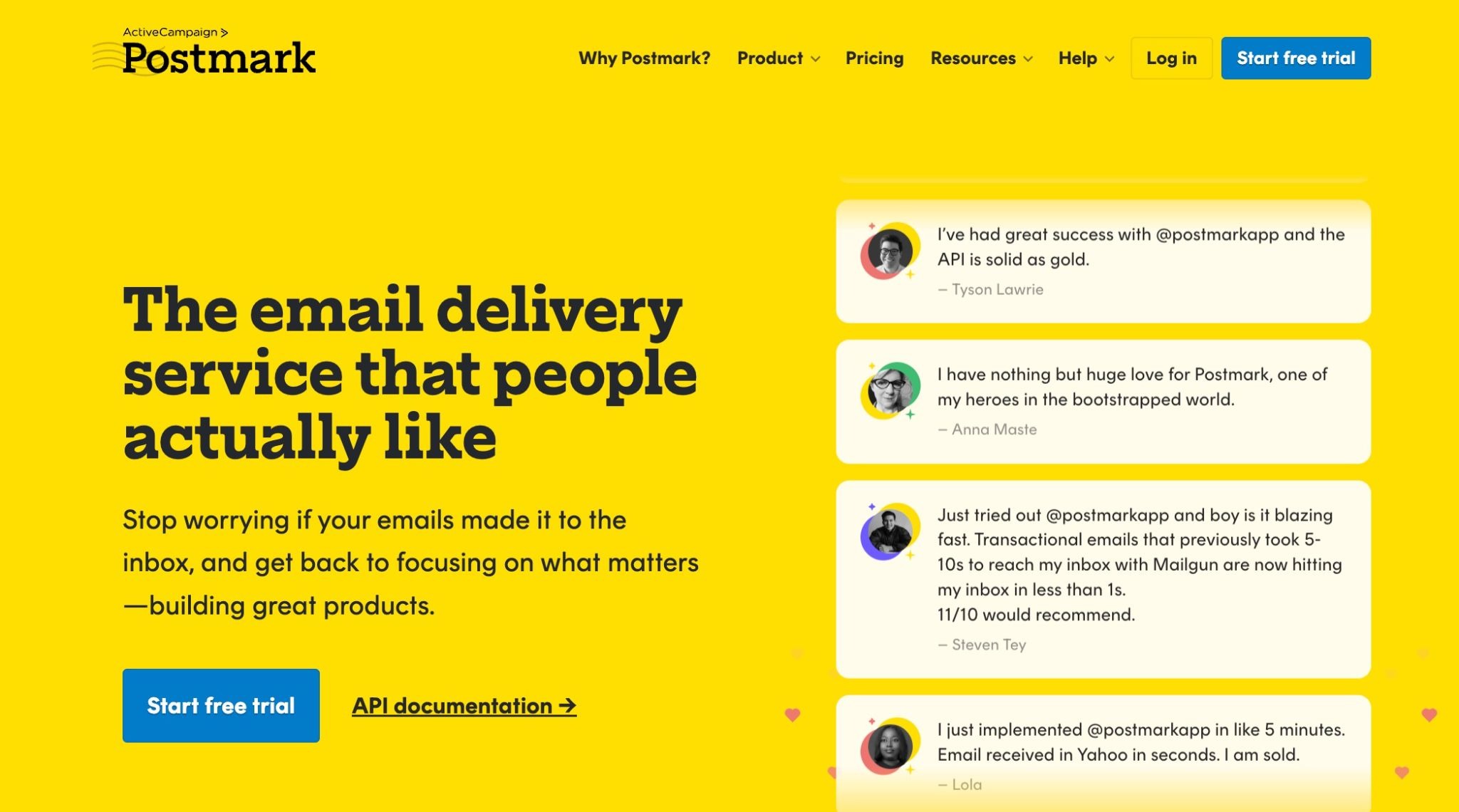
Postmark is purpose-built for transactional email and doesn't try to be anything else. If inbox placement speed is non-negotiable — password resets, authentication emails, order confirmations — it's the specialist answer to SendGrid's generalist approach.
Industry-leading inbox placement speed, specialized transactional analytics, message streams that separate transactional and broadcast traffic, inbound email parsing, clean UI.
Volume-based from $15/month for 10,000 emails.
SaaS apps where a delayed password reset or receipt means a lost user. Transactional emails generate 8x higher open rates than promotional emails — which is why the infrastructure delivering them can't be an afterthought.
Transactional-only by design — no marketing campaigns, no automation sequences.
At $0.10 per 1,000 emails, Amazon SES is the cheapest sending infrastructure available. For high-volume technical teams inside the AWS ecosystem, the unit economics are hard to argue with.
~$0.10/1,000 emails, effectively unlimited scale, pay only for what you send, deep AWS integration, full SMTP and API access.
Pay-as-you-go. Free within EC2. True cost rises once you account for the engineering work to build templating, analytics, and observability layers that every other provider includes.
High-volume senders with engineering resources to build and maintain surrounding infrastructure.
No UI, minimal built-in analytics, no support without an AWS support plan. The headline price hides real operational overhead.

Resend is built around React Email — if you're on a Next.js or modern web stack and want to build email templates the same way you build UI components, Resend's developer experience is genuinely excellent.
React-based email templating, clean minimalist API documentation, fast developer onboarding.
Free (3,000/month, 100/day). Pro from $20/month.
Modern web developers who want to build email templates in React and value a clean API over feature breadth.
Younger platform with limited feature set, no marketing campaign functionality, dedicated IPs only on the $90/month Scale tier.
Mailtrap is the only option on this list that natively handles both the staging and production stages of your email workflow. Test in the sandbox, send in production — same platform.
Safe email sandbox for testing before production, HTML rendering checks, spam score testing, full sending API and SMTP for production. With DMARC still absent on over a third of email-sending domains, catching authentication gaps in staging — before they damage sender reputation in production — is exactly the problem Mailtrap solves.
Free testing tier. Production sending from $15/month.
Dev teams that need to validate email rendering and deliverability before going live.
Testing is the primary value — not the right choice for high-volume production workloads.
ZeptoMail is for teams that need transactional email and nothing else — and want the lowest possible per-email cost without the engineering overhead of Amazon SES.
Transactional-focused delivery, low per-email cost (~$2.50/10,000 emails), simple API, clean analytics for basic monitoring.
Credit-based. No monthly subscription required.
Tight-budget teams sending only transactional email (receipts, notifications, alerts) with straightforward needs.
No marketing campaigns, no complex routing, no automation.
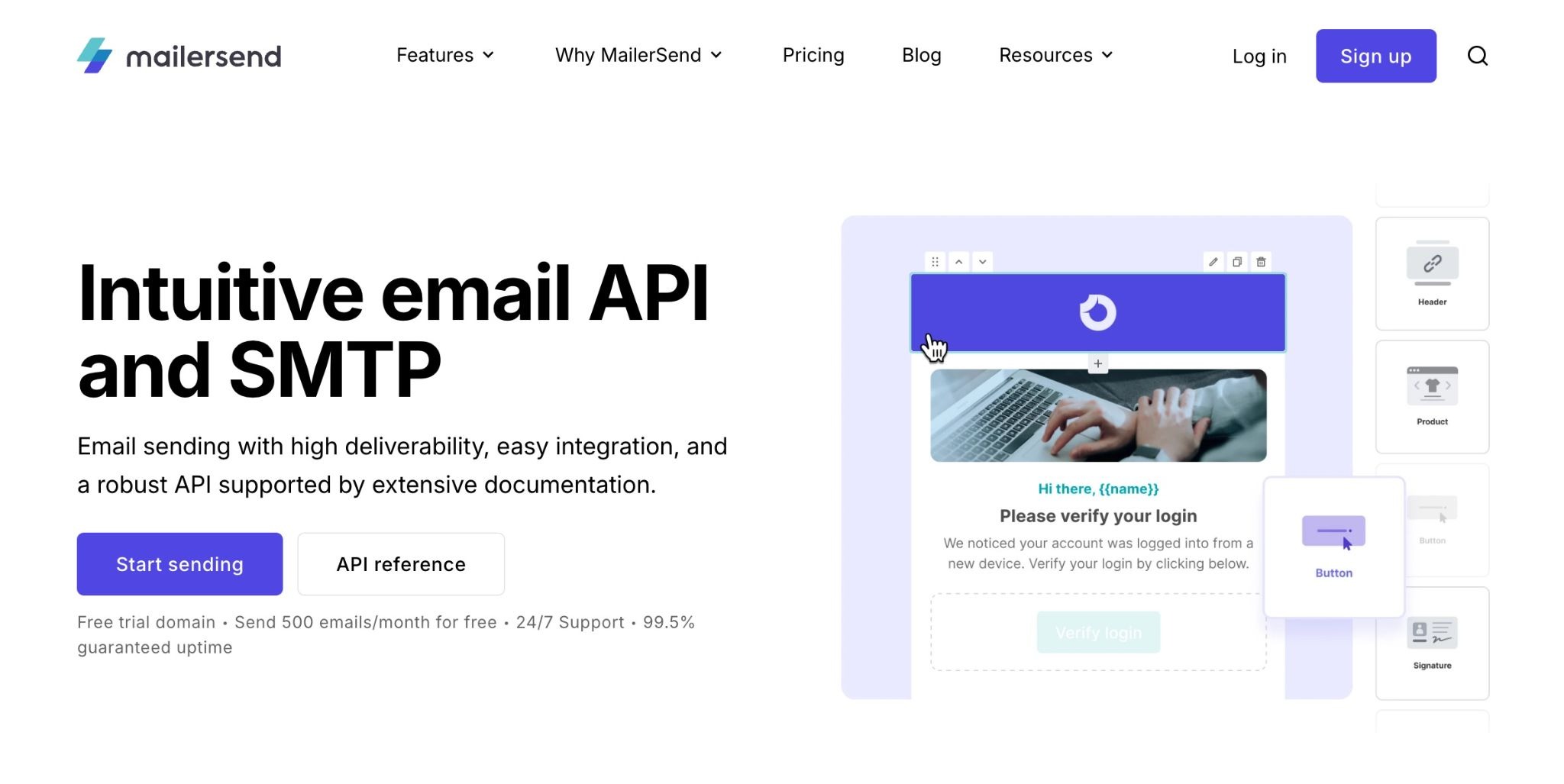
MailerSend covers transactional email with an interface accessible enough for non-developers to manage templates without touching code.
Drag-and-drop template builder, transactional API and SMTP, inbound email routing, real-time analytics, generous free tier.
Free (3,000/month). Paid from $30/month for higher volumes.
Teams where designers or marketers manage email templates independently of engineering.
Less feature depth than Mailgun for complex routing; smaller ecosystem.
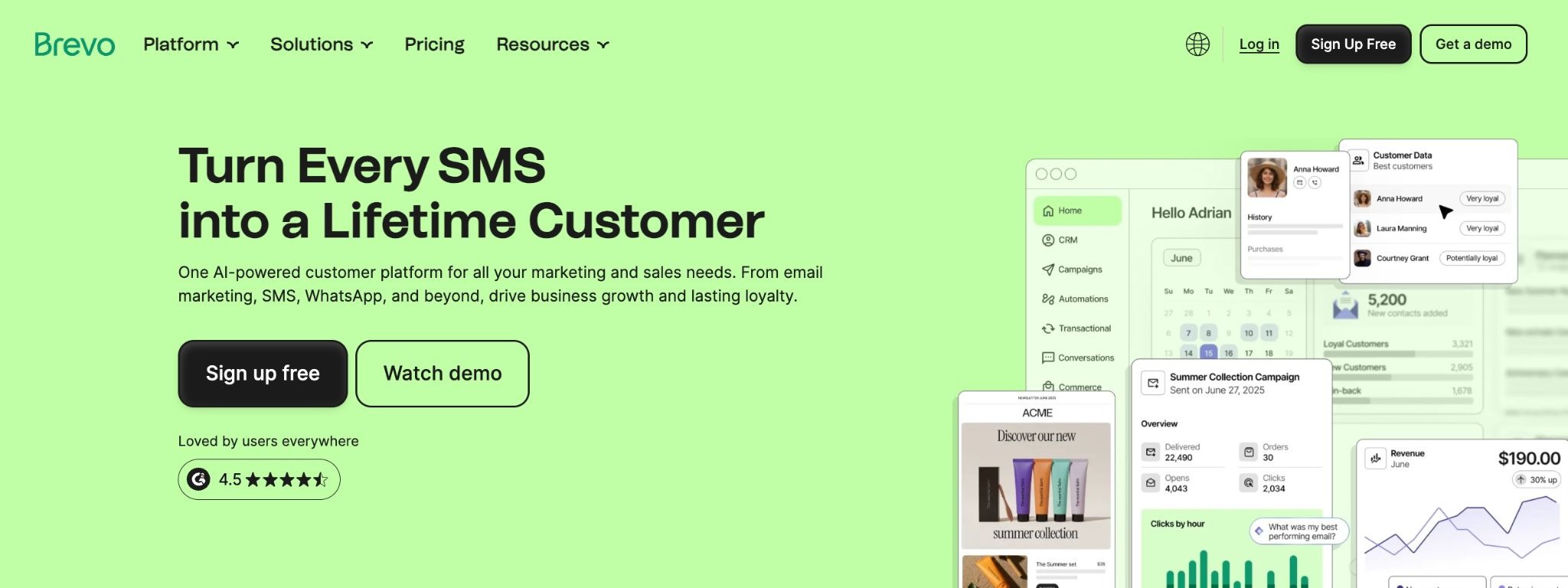
Brevo is the closest all-in-one alternative to SendGrid's combined transactional + marketing offering — and at a lower starting price.
Marketing automation and transactional email in one platform, SMS, CRM, landing pages, free tier with 300 emails per day.
Free (300 emails/day). Starter from $9/month.
Marketing-led teams that want campaigns and transactional email without paying for two tools.
Transactional deliverability and developer experience don't match specialized tools like Postmark or Maileroo.
Solo developer or small app (under 10k emails/month): Maileroo's free tier covers 5,000 emails with no daily cap — more generous than Resend and ZeptoMail. If you need marketing campaigns too, Brevo's free 300/day plan works until you hit the limit.
Marketing-led SMB needing campaigns + transactional: Maileroo for the strongest combination of transactional reliability and marketing functionality in one platform. Brevo if marketing automation depth matters more than deliverability precision.
High-volume technical team (100k+ emails/month): Amazon SES for raw cost efficiency if you have engineering resources. Maileroo for a managed alternative with better analytics, support, and included Email Verification API. Whichever tool you choose, the infrastructure decision compounds over time. Senders who maintain bounce rates under 1.5% see 10–12% higher inbox placement — that gap widens with scale.
Use case first, then volume, then engineering capacity. No single tool wins across all scenarios — but most teams switching off SendGrid will find what they need in one of the first three picks on this list.
Maileroo is the pragmatic first choice for the widest range of teams: it replicates SendGrid's combined transactional + marketing offering, starts free at 5,000 emails per month, includes Email Verification API on all plans, and doesn't impose the shared-IP risk that drove many teams off SendGrid in the first place. If you're evaluating one tool before committing to a migration, start here.
If deliverability speed is the only thing that matters, Postmark. If you're scaling past 500,000 emails per month with engineering resources, Amazon SES. If you need marketing automation with a low entry cost, Brevo.
Most tools here offer free tiers or trials — migrate a low-stakes sending stream first, verify deliverability holds, then cut over fully. And one practical note on migration risk: before you cut over, export your suppression lists, configure SPF, DKIM, and DMARC on the new provider, and if you're moving significant volume, warm up IPs over 2–4 weeks before sending at full scale.
For most teams, Maileroo — it covers both transactional and marketing in one platform, starts free at 5,000 emails/month, and includes Email Verification API at no extra cost. For pure transactional speed, Postmark. For lowest cost at scale, Amazon SES.
Correct. Twilio retired SendGrid's permanent free plan on May 27, 2025. New accounts get a 60-day trial at 100 emails per day, after which paid plans start at $19.95/month for 50,000 emails.
SendGrid was acquired by Twilio in 2019 and is now officially called Twilio SendGrid. It operates as a product within the Twilio platform, which is why you'll see Twilio branding on pricing pages and account management, while the SendGrid product name remains in use for the email-specific tools.
Maileroo for a full replacement covering both transactional and marketing. Postmark if maximum inbox placement speed and specialized transactional analytics are the only priorities.
1–2 weeks for a basic migration. 3–4 weeks for a safe migration with parallel sending and IP warm-up for senders above 100,000 emails per month.
Senders above 100,000 emails per month benefit significantly from a dedicated IP. Maileroo offers dedicated IPs from 250,000 emails/month; Mailgun and Postmark offer them as add-ons. Below 100,000 monthly emails, a reputable shared IP pool from a provider like Maileroo is typically sufficient.
Maileroo leads on the combined use case — transactional reliability plus email marketing in one platform, with pricing that scales more predictably than SendGrid's. Brevo is the second choice if marketing automation depth matters more than deliverability precision.

Irina is a Founder at ONSAAS, Growth Lead at Aura, and a SaaS marketing consultant. She helps companies to grow their revenue with SEO and inbound marketing. In her spare time, Irina entertains her cat Persie and collects airline miles.
.svg)
.svg)
.svg)

.svg)
%20(1).svg)
%20(3).svg)
.svg)
.svg)