
.svg)
%20(1).svg)
%20(3).svg)
Back to articles
6 Best Transactional Email Services: Features & Pricing Compared
September 7, 2026
By
Cindy Graciella
A transactional email is an automated, one-to-one message triggered by a user action - a password reset, order confirmation, OTP, or shipping update. Unlike marketing emails, these messages are expected. Users wait for them, and when they don't arrive, trust breaks down fast.
Choosing the wrong provider costs you more than money. A 2% drop in inbox placement on 100,000 monthly emails means 2,000 users never receive your messages - including account verifications and payment receipts. Dedicated transactional email services solve this with purpose-built infrastructure: proper authentication enforcement, IP reputation management, and delivery speeds measured in seconds, not minutes.
The best transactional email services in 2026 are Mailtrap, Mailgun, Amazon SES, SendGrid, Brevo, and SMTP2GO - read on to see how they stack up in terms of features, pricing, and deliverability.
Before comparing providers, here's what actually moves the needle:
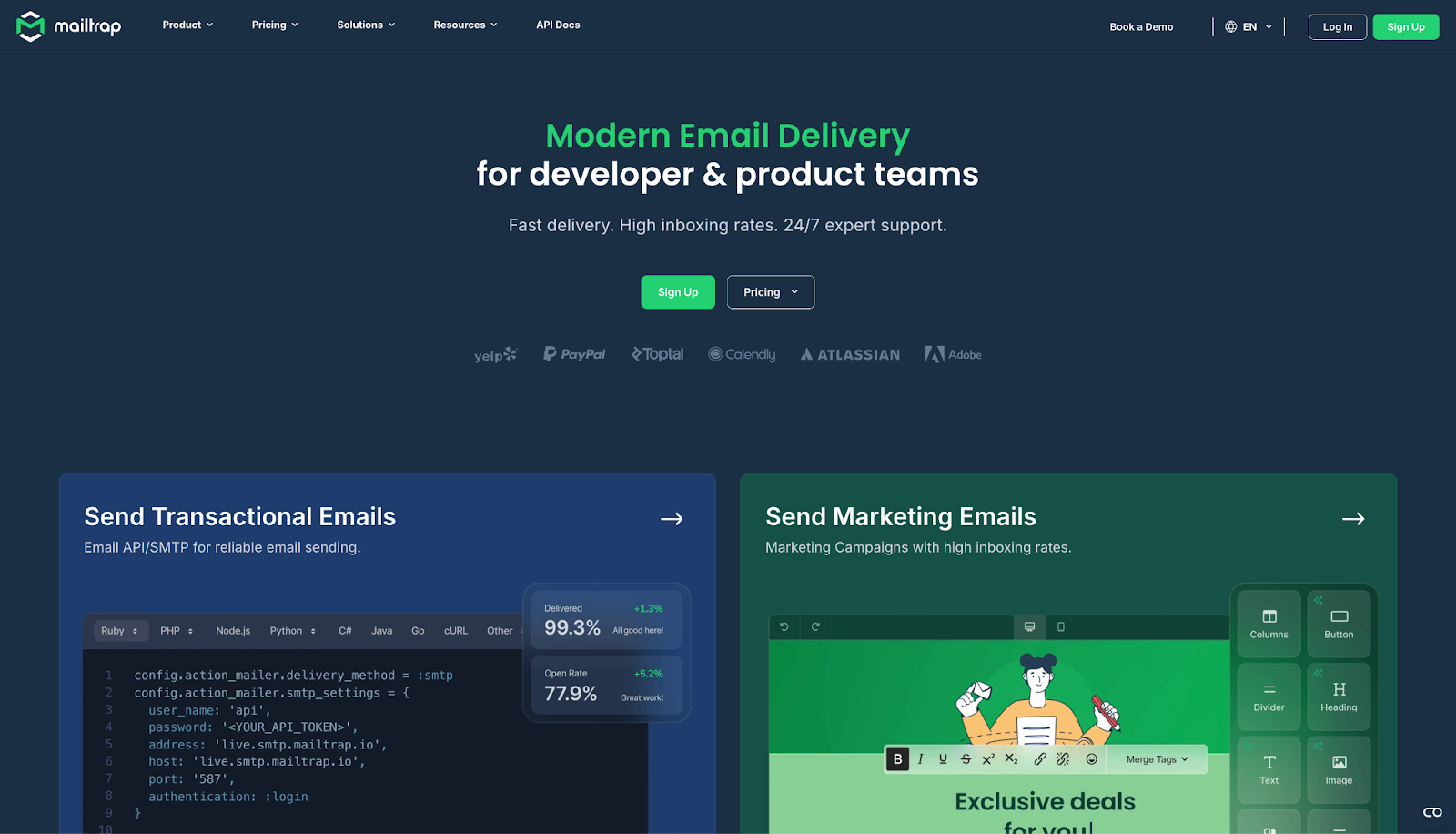
Mailtrap is a modern email delivery platform built for product and developer teams that need high deliverability, fast sends, and industry-best analytics they can actually act on.
The platform's core strength is its delivery infrastructure and analytics - separate transactional and bulk streams, dedicated IPs with automated warm-up, and helicopter-view dashboards that break performance down by mailbox provider.
With SDKs for Node.js, Ruby, PHP, Python, and Elixir, ready-made code snippets, and an MCP server integration for Claude and Cursor, it's built to fit into modern dev workflows from day one.
Standout features:
Pricing:
Deliverability: Independent seed tests showed 78.8% inbox placement on a shared IP free-tier environment. Authentication enforcement (SPF, DKIM, DMARC) is required before sending, and dedicated transactional streams prevent bulk email activity from affecting time-sensitive messages.
.svg)
Strong deliverability on shared IPs
Best-in-class analytics
Separate sending streams
24/7 expert support on all plans
ISO 27001 and SOC 2 Type II certified; GDPR compliant
.svg)
Marketing automation is API-only for now (workflow builder in beta)
Narrower native integration ecosystem compared to SendGrid
Best for: SaaS products, developer and product teams that need reliable transactional delivery, actionable analytics, and a platform that offers competitive pricing, with 24/7 expert support.
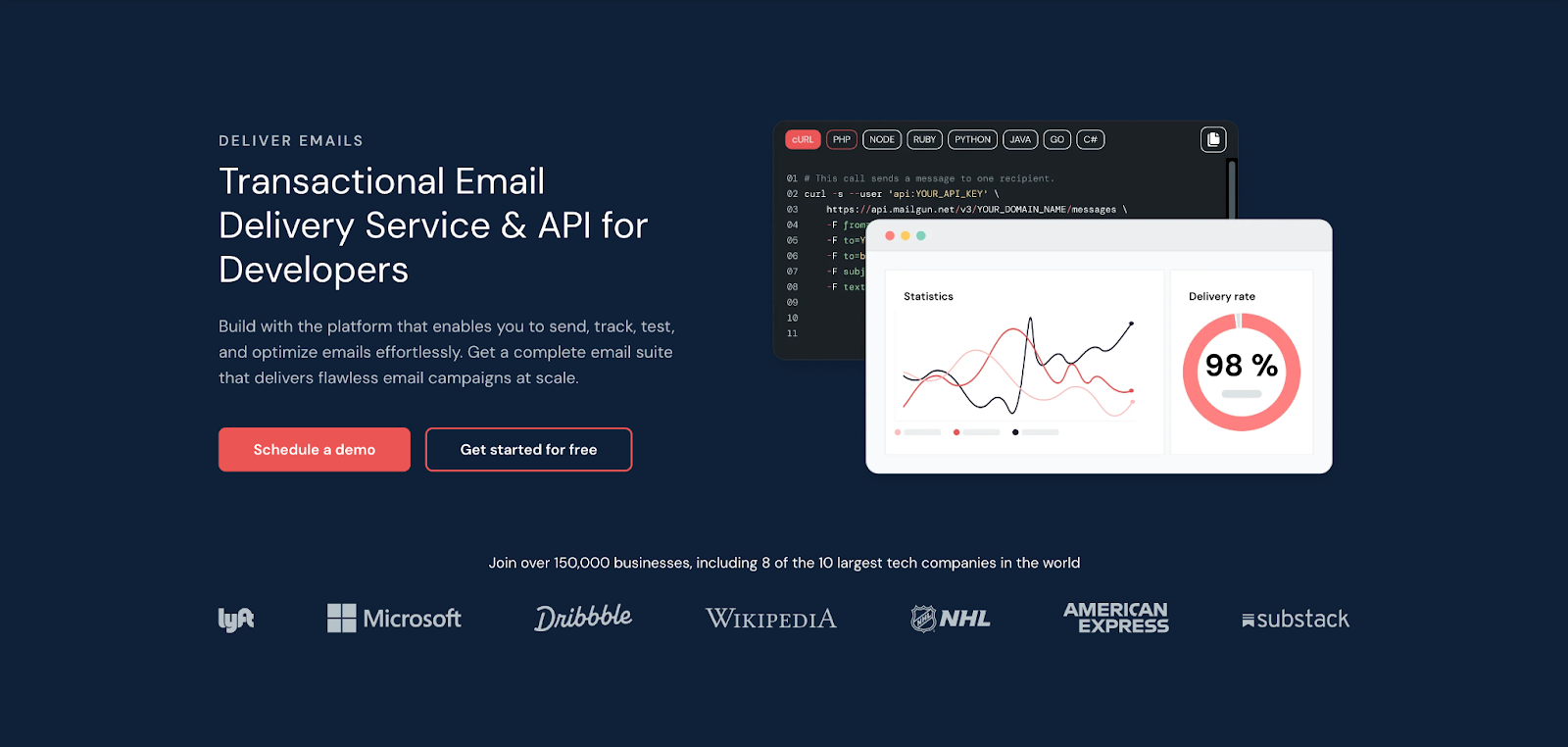
Mailgun is an API-first email platform owned by Sinch, built around programmatic sending with a robust RESTful API, strong email validation, and inbound parsing tools - designed to fit cleanly into any stack without dictating how you build.
It recently reorganized its offering into Mailgun Send, Mailgun Optimize, and Mailgun Validate, giving teams modular control over sending, deliverability monitoring, and list hygiene.
Standout features:
Pricing:
Deliverability: Independent testing placed Mailgun at 71.4% inbox placement on shared IPs - lower than Mailtrap and Amazon SES in the same test conditions. Dedicated IPs and the Optimize suite can significantly improve this, but they require additional cost and configuration.
Strong API documentation
Email validation without switching platforms
EU hosting available
Wide third-party integration selection
High server uptime (99.99% advertised)
Inbox placement testing and optimization tools sold separately
Logs not searchable by email content
Setup requires developer expertise
Support response times can be slow
Best for: Teams that want API-first control, need email validation as part of their workflow, or are building applications that require inbound email parsing alongside outbound sending.
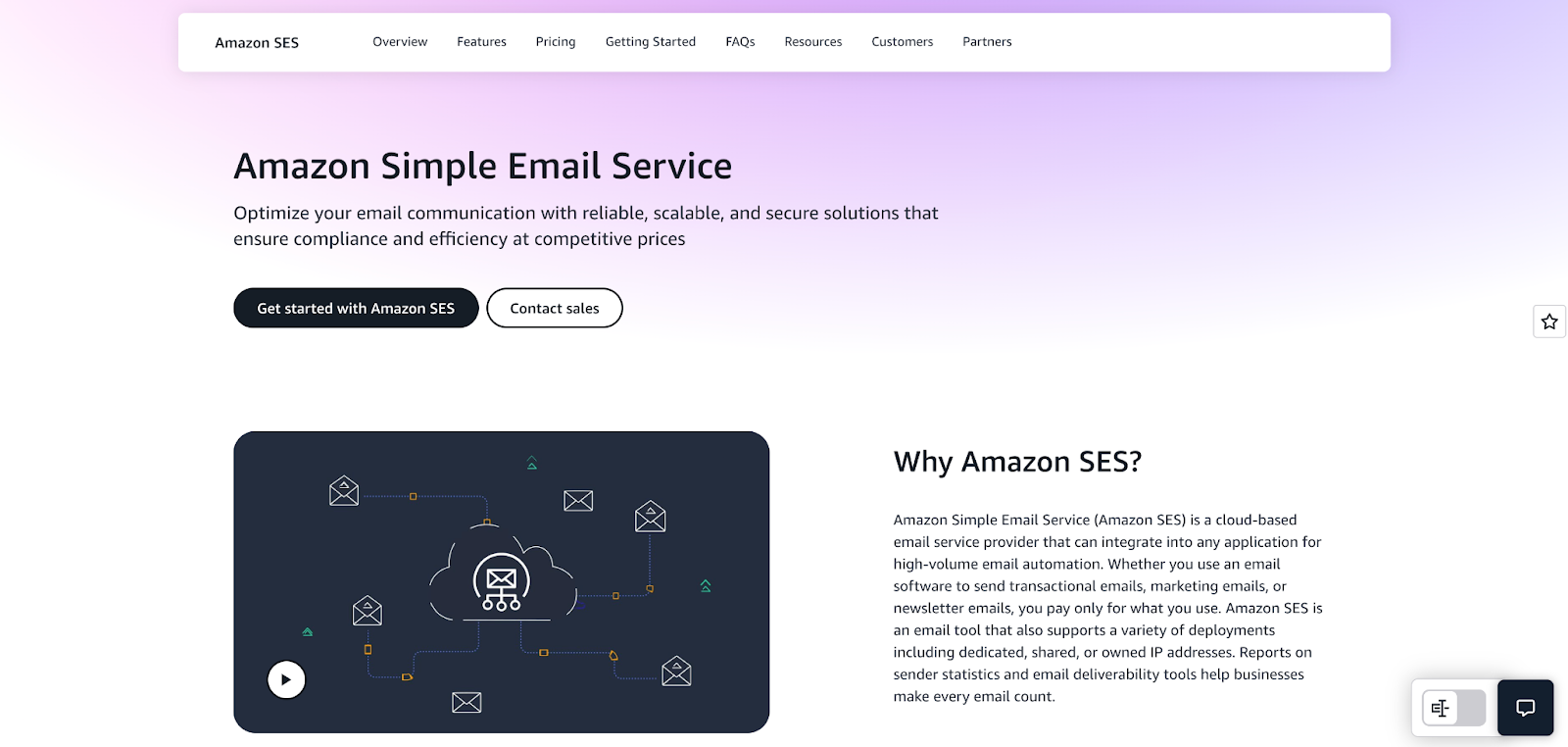
Amazon SES is a bare-bones email infrastructure from AWS - unmatched on price, but a fully DIY experience. There is no managed deliverability tooling by default. IP warm-up, bounce handling, complaint processing, and reputation monitoring all fall on your team. What you get in return is a pay-as-you-go model with no contracts and native integration across the AWS ecosystem.
Standout features:
Pricing:
Deliverability: Independent tests showed 77.1% inbox placement on shared IPs - strong raw numbers, but results vary significantly depending on how well your team manages sender reputation. Without proper configuration, deliverability can degrade quickly.
Lowest per-email cost available
Highly scalable
SOC 2, ISO 27001, and HIPAA certified; GDPR compliant
AWS IAM integration for granular access control
No managed deliverability by default
Analytics require third-party setup or the paid Virtual Deliverability Manager
Steep learning curve without AWS experience
Slow customer support
Best for: High-volume teams already operating within AWS infrastructure who have the engineering capacity to manage their own email operations end-to-end.

SendGrid is one of the oldest email API platforms available, founded in 2009 and now part of Twilio. It handles transactional and marketing email under one roof with a mature, full-featured product that suits large organizations running both developer-driven sending and marketing campaigns from the same account.
Standout features:
Pricing:
Deliverability: Independent testing showed 61.0% inbox placement on shared IPs - the lowest in the test group, with a notably high 20.9% missing rate. Dedicated IPs on Pro significantly improve this, but some users have reported inconsistent delivery to Outlook addresses on lower plans.
Broad integration ecosystem
Proven at enterprise scale
Comprehensive analytics and event tracking
Extensive API documentation
Marketing automation included
Key features locked behind higher-tier plans
Support quality varies by plan
Shared-IP deliverability underperforms competitors
Twilio acquisition added pricing complexity
Best for: Large enterprises or teams that need a single vendor for both transactional API sending and full marketing automation, with the budget for Pro or Premier plans.
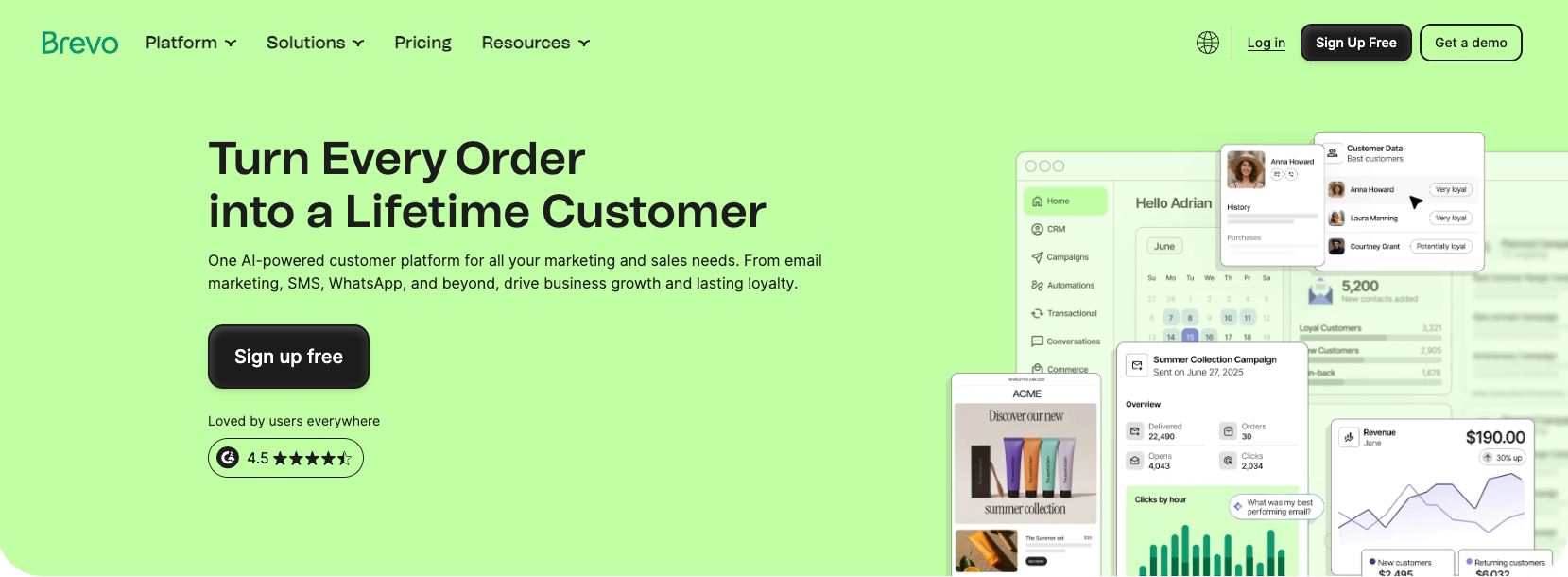
Brevo (formerly Sendinblue) is a CRM-suite platform that combines transactional email with marketing, SMS, WhatsApp, and automation tools. It's a strong fit for teams that want multi-channel messaging under one roof without a heavy technical setup.
Volume-based pricing with all features available across tiers makes it accessible to smaller businesses without forcing plan upgrades for core functionality.
Standout features:
Pricing:
Deliverability: Supports SPF, DKIM, and DMARC. Domain authentication is strongly recommended - Brevo allows sending without it, but inbox placement suffers. Users migrating from standalone transactional providers may find deliverability tooling less granular than developer-first platforms.
All features available across tiers
Easy setup
Generous free tier
Multi-channel messaging in one platform
Solid documentation
Limited design options for email templates
Some features buried in menus
Transactional tooling less granular than developer-first providers
No 24/7 support
Best for: Individuals, small to medium businesses, and teams already using Brevo for marketing who want to consolidate transactional sending without switching platforms.
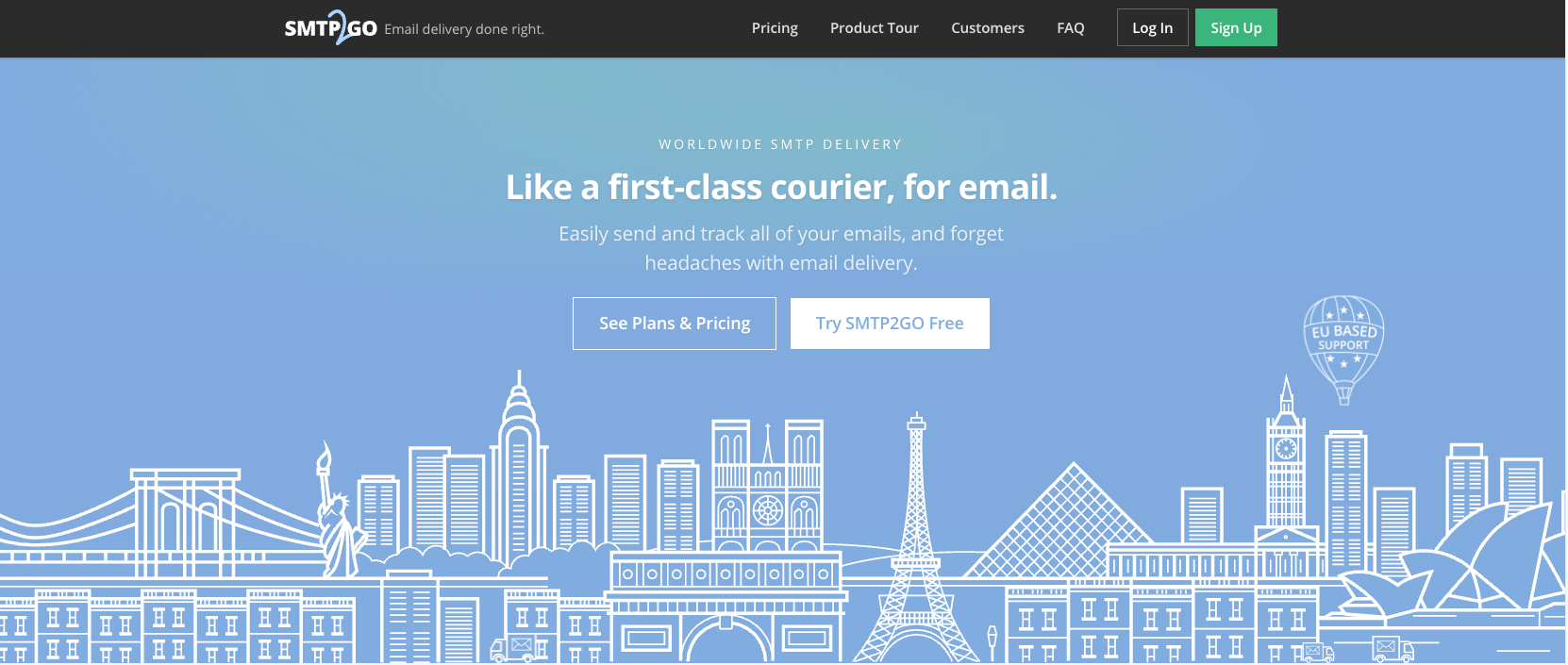
SMTP2GO is a dedicated SMTP relay and email API service. It's a straightforward option for teams that want transactional sending without the operational overhead of a DIY setup or the complexity of a full-suite platform.
Global server infrastructure and real-time reporting make it a practical choice for teams prioritizing delivery speed and simplicity.
Standout features:
Pricing:
Deliverability: Supports standard authentication protocols (SPF, DKIM, DMARC), managed IP reputation, and real-time spam monitoring. Performance on shared IPs is competitive for the price point.
Simple setup
24/7 support on all plans
Clean reporting interface
Global infrastructure for low-latency delivery
No feature gating on support
Smaller ecosystem than established platforms
Marketing email capabilities are limited
Less granular analytics than Mailtrap or SendGrid
Fewer SDK options
Best for: Startups and small teams that need straightforward, reliable SMTP relay without the complexity of managing their own infrastructure or navigating enterprise-grade tooling.
The right provider depends on what you're actually optimizing for:
Before committing, test free tiers with your actual email patterns. Monitor inbox placement across Gmail, Outlook, and Yahoo for at least a week. Pricing tables only tell part of the story - effective cost per delivered email is what matters.
Every provider on this list solves a real problem for a specific type of team. Mailtrap delivers the best balance of deliverability, analytics, and developer experience for product companies. Mailgun gives API-first teams granular control and built-in validation. Amazon SES is unbeatable on cost for AWS-native operations. SendGrid covers the full enterprise stack. Brevo fits teams that want multi-channel messaging without platform sprawl. SMTP2GO keeps things simple for teams that just need reliable relay without overhead.
The best choice depends on your priorities - cost, features, developer experience, or support. Start with a free tier, run your own inbox placement tests, and let real-world data drive the decision. If you want to test before committing, Mailtrap offers a free tier with up to 4,000 emails per month and no credit card required.

Cindy is an Outreach Manager and SEO Specialist at ONSAAS who helps SaaS companies grow through strategic link building and SEO. Outside of work, she loves spending time in nature, especially hiking in the mountains.
.svg)
.svg)
.svg)
.svg)
.svg)