
.svg)
%20(1).svg)
%20(3).svg)
Back to articles
Profound Feels Overrated? Here Are 8 Profound Alternatives
September 29, 2026
By
Anna Dovbysh
As AI search reshapes how users discover brands, tools like Profound AI emerged to help companies track visibility across AI search engines such as ChatGPT, Perplexity, Claude.ai, Copilot, Gemini, and Google AI.
For many teams, that shift created urgency around brand visibility, brand mentions, and performance inside LLM-driven environments.
However, Profound’s pricing and complexity mean it is not the right fit for every organization.
In this guide, we break down the best Profound alternatives, focusing on simpler, more affordable, and more actionable insights–driven AI visibility tools.
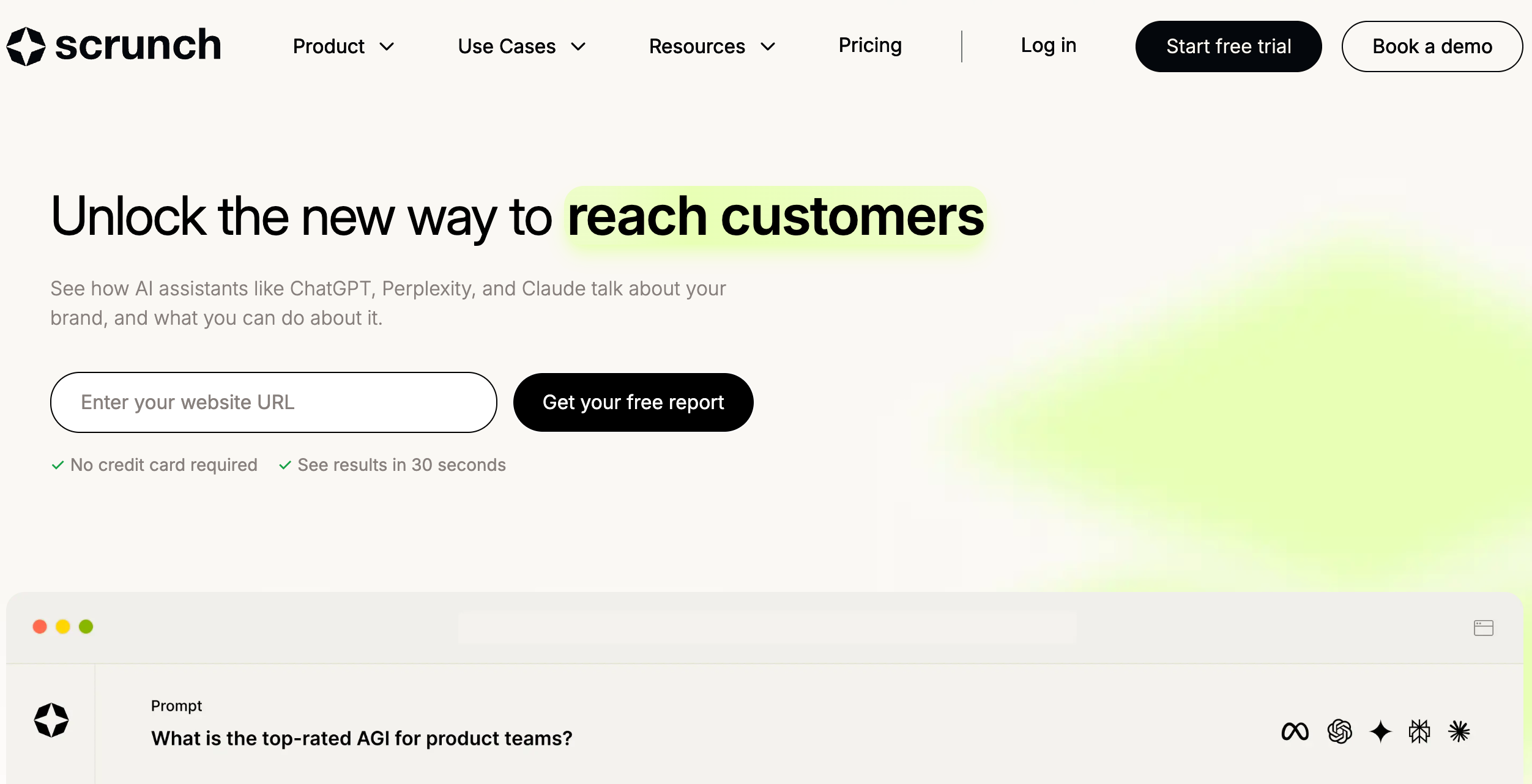
Scrunch AI is a lightweight platform that tracks how brands appear in AI-generated responses across major AI platforms. Rather than acting as a full SEO platform, it focuses on brand mentions, sentiment analysis, and visibility within AI search answers. Scrunch AI is a practical starting point for teams entering AI-driven discovery, and the tool is widely used by 500+ brands, including Lenovo and Penn State University.
Some of the prominent features include the AXP product that identifies AI traffic at the edge and delivers a version of your content that is optimized for AI, using dramatically fewer tokens and stripping out human‑only media and JavaScript.
Also, the Misinformation detection tool is aimed at identifying brand misrepresentation.
Compared to Profound’s enterprise analytics, Scrunch emphasizes speed and usability. Profound delivers deep competitive intelligence and modeling, while Scrunch focuses on visibility signals and actionable insights. Also, the AXP capability is Scrunch’s key differentiator, setting it apart from Profound by detecting AI traffic at the edge and delivering the AI‑optimized version of the content. For teams prioritizing clarity over complexity, Scrunch removes much of the learning curve.
Scrunch works well for startups or SaaS companies, small businesses, and smaller teams that want to understand how AI systems reference their brand.
Scrunch is not an all-in-one SEO platform. It does not replace keyword research, advanced attribution, or full search optimization workflows. Some advanced features are currently in development.
Scrunch offers transparent pricing, with plans designed below enterprise software thresholds.
There's a 7-day free trial available.
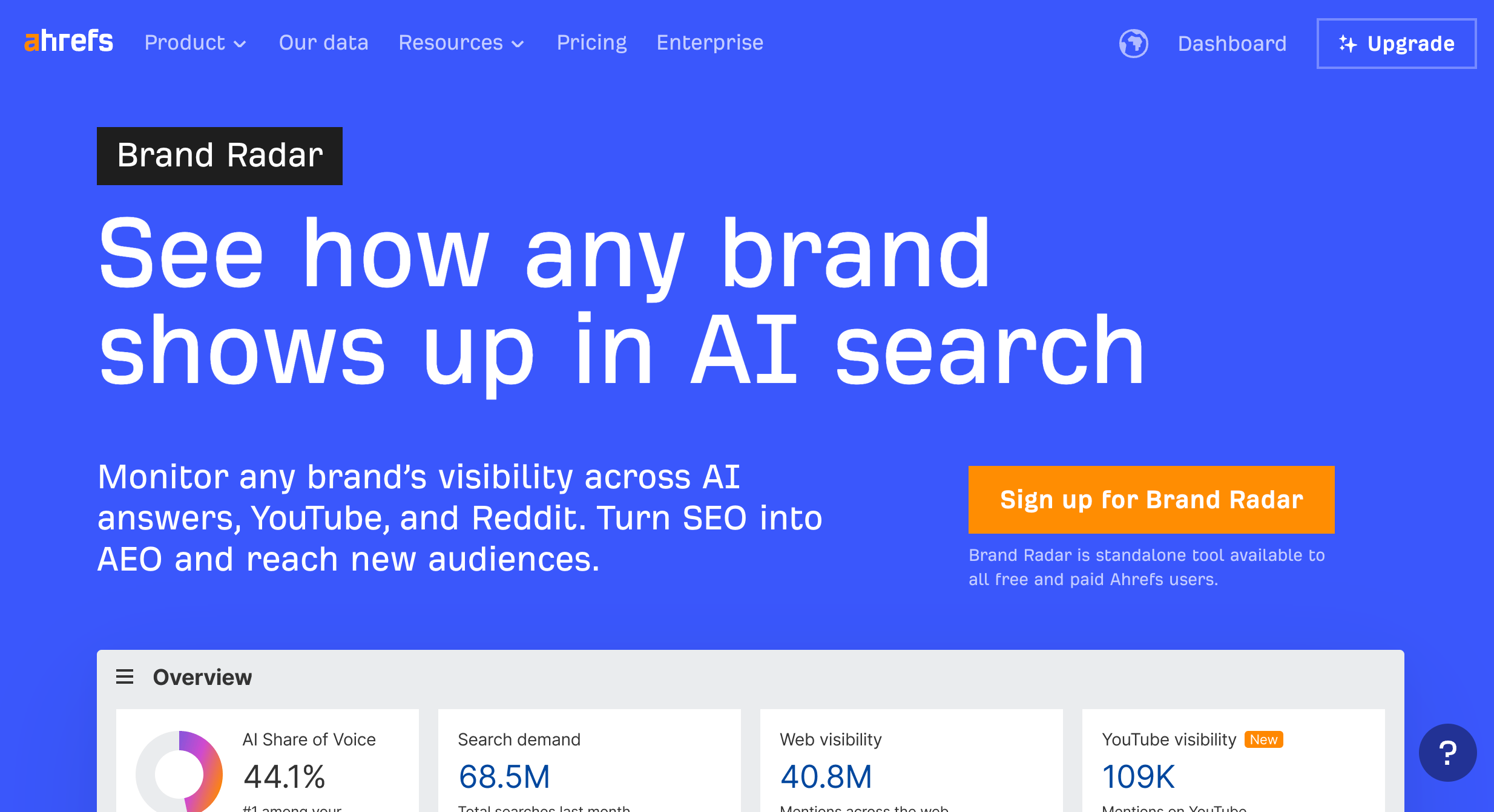
Ahrefs Brand Radar is not automatically included in standard Ahrefs plans, but it's an add-on product available to all Ahrefs users (free and paid).
While not built exclusively for AI search, it tracks online signals that influence how AI models get information about brands, including authority and content prevalence.
Unlike Profound, Ahrefs does not monitor real-time AI-generated answers. Instead, it provides indirect signals that shape brand presence in LLMs. Profound is AI-native; Ahrefs is SEO-native. In other words, it functions as a "research database," not a real-time tracker.
Brand Radar is best for teams already embedded in the Ahrefs ecosystem who want AI-related insights without adopting new workflows. It suits content-led content strategy teams. The tool claims to have 300+ million prompts tracked, and it covers 24 countries with 20+ languages.
Ahrefs Brand Radar has a noticeable learning curve, as its interface is designed for research and analysis rather than acting as a simple rank-tracking tool.
Brand Radar was in free beta for all paid users through mid-2025, but now it’s a paid add-on. Here’s the pricing breakdown:
On top of that, Ahrefs Brand Radar lets you track custom search prompts, starting at $50/month for 80 prompts, so you can monitor the exact queries driving sales to your business.
Also, Ahrefs offers a suite of free Webmaster Tools (with limited access), including Web Analytics, Site Audit, Site Explorer, Social Media Manager, and the AI Content Helper, giving you powerful insights without any cost.
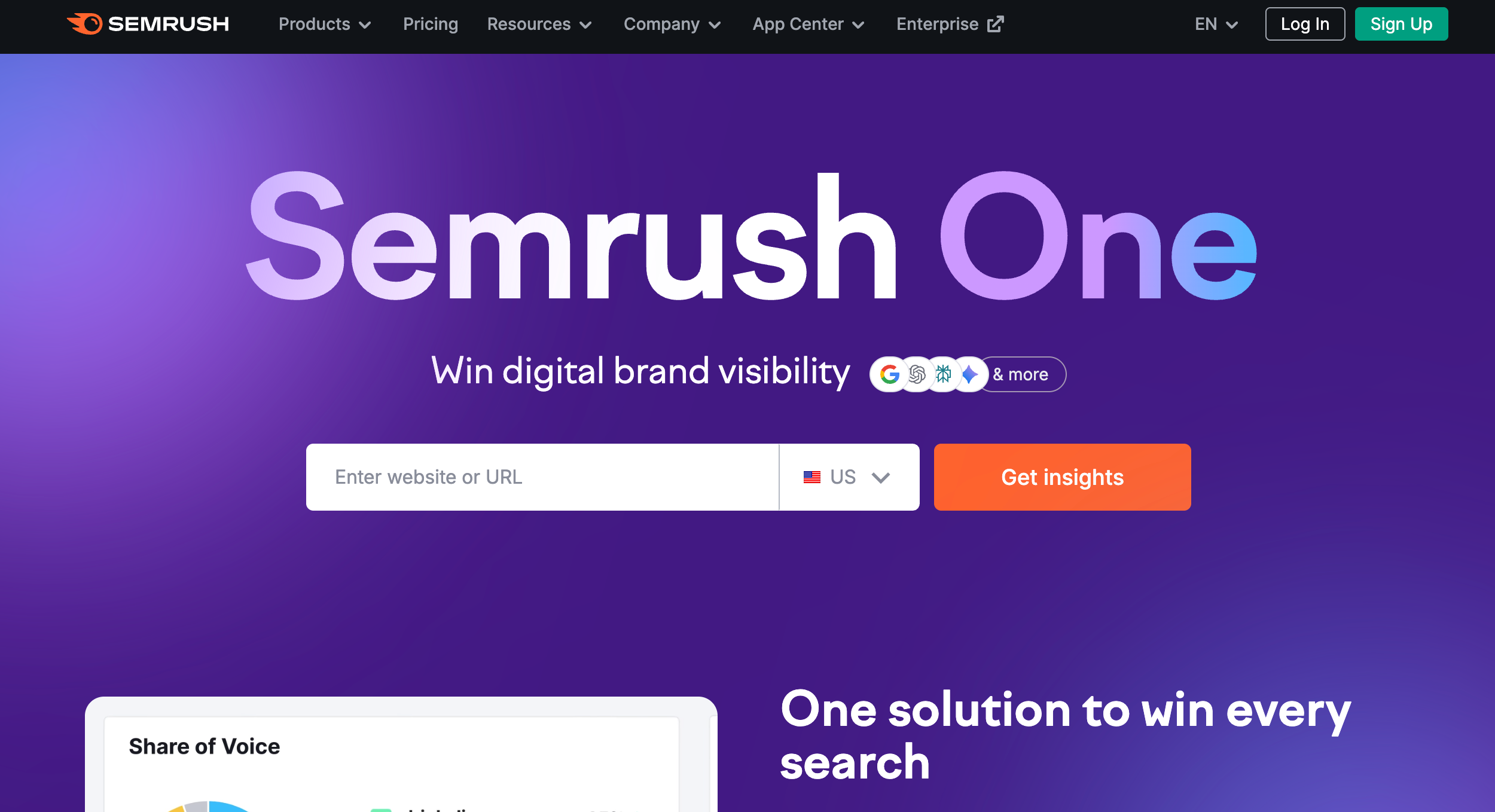
Semrush is a widely used SEO platform covering keyword research, analytics, and content creation. As AI reshapes search behavior, Semrush has begun introducing special AI-related features tied to LLM-optimization trends. For example, you can track a Google AI Overview's performance and find out which keywords trigger AI Overviews.
However, Semrush's primary focus remains traditional SEO optimization features with AI functionality as an add-on.
Semrush offers breadth, where Profound offers depth. Profound focuses on answer engine visibility, while Semrush supports traditional SEO with early AI adaptations. Simply put, Semrush is primarily a traditional SEO tool with emerging AI capabilities, not an AI-native platform like Profound.
Semrush is best for marketing teams managing both classic SEO and emerging AI search strategies in one place.
AI-specific metrics remain high-level. Semrush does not yet provide deep LLM prompt or response tracking.
Semrush pricing is public and tiered. It is generally more accessible than enterprise AI tools. The monthly billing pricing plans are as follows:
You can also sign up for a seven-day free trial and use all that Semrush has to offer before deciding on a plan.
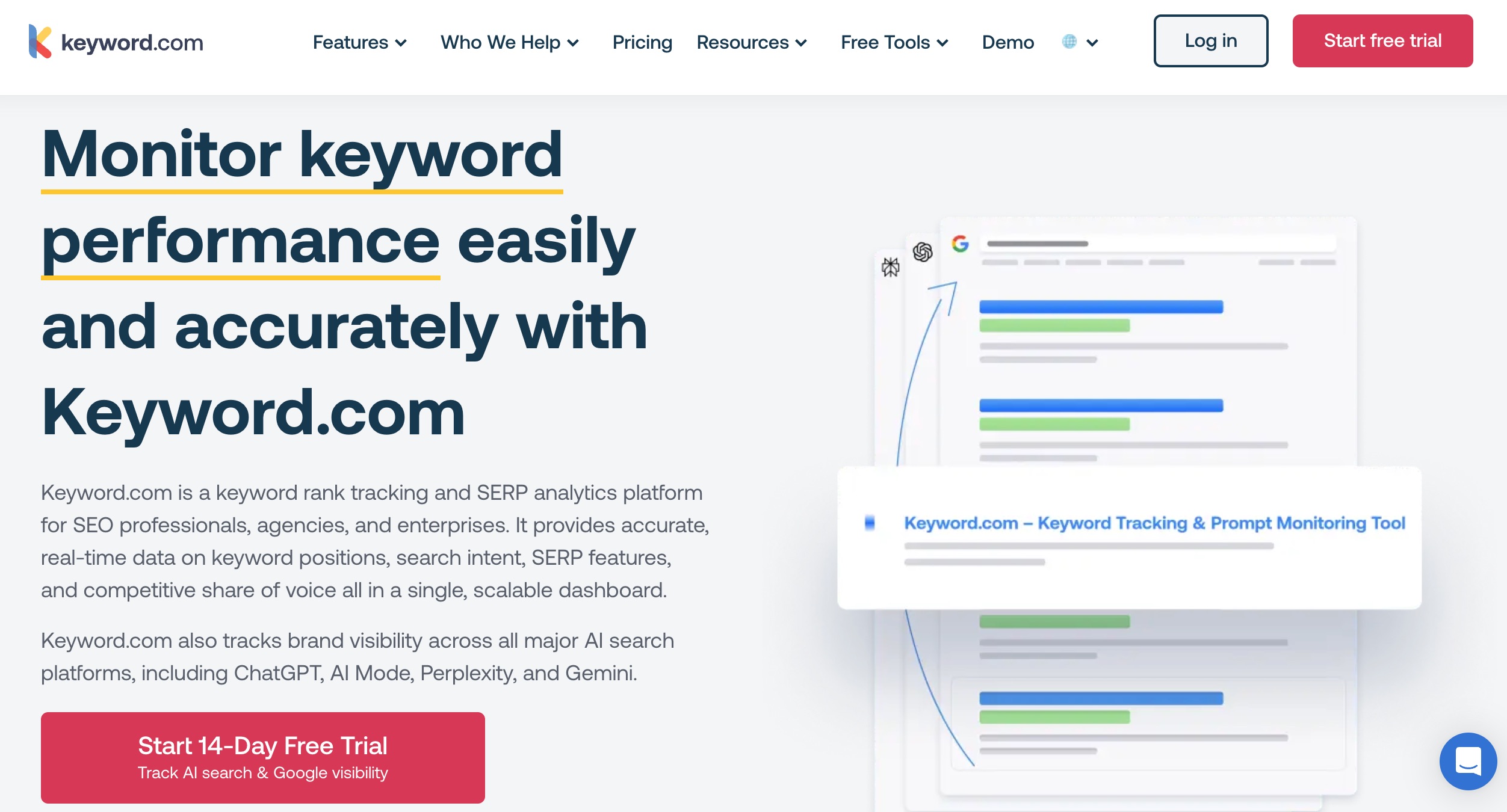
Keyword.com is a keyword rank tracking platform used by SEO teams and agencies to monitor search performance across multiple search engines. In recent updates, the platform has expanded into AI search visibility tracking, helping marketers understand how traditional rankings interact with AI-driven search features.
Using its AI Rank Tracker, teams can monitor brand visibility across platforms such as ChatGPT, Perplexity AI, Gemini, among others — identifying which prompts and keywords surface their content in AI-generated answers. Keyword.com also includes an AI Overview Tracker, allowing users to detect when keywords trigger Google’s AI Overviews and analyze how their pages appear within those results.
Beyond AI visibility, the platform maintains its core SEO functionality. Teams can track rankings across desktop and mobile devices, benchmark performance against competitors, and measure Share of Voice to understand overall share of search presence. Agencies can also generate white-label SEO reports, share live keyword dashboards with clients, and export data to tools like Looker Studio for unified reporting.
Keyword.com approaches AI search from a traditional SEO perspective. While Profound is designed as an AI-native platform that analyzes prompts and AI-generated responses directly, Keyword.com focuses on both Google SERP and LLM insights in one unified dashboard.
Profound analyzes how brands appear across AI systems in depth, while Keyword.com provides a unified visibility experience dashboard that combines AI visibility insights with traditional SERP tracking. For teams already relying on keyword monitoring, Keyword.com offers a simple way to understand both AI-driven discovery and search performance in one connected platform, without needing to adopt an entirely separate tool.
Keyword.com works best for SEO teams and agencies already using keyword rank tracking as part of their core workflow. It is particularly useful for organizations that want to:
For teams managing large keyword portfolios or multiple client accounts, Keyword.com offers a straightforward way to layer AI visibility insights on top of existing SEO reporting workflows.
The main considerations are its credit-based model and the amount of detail available in the platform. Usage can scale quickly when tracking prompts across multiple AI engines, and the granular data can make the experience harder to navigate for teams looking for a lighter-weight workflow.
Keyword.com offers a 14-day free trial with 100 keywords and 20 AI Visibility credits for their Google Platform plan. No credit card is required, and trial users get access to all core features including the Google SERP & AI Visibility Tracker, Keyword Intelligence, API access, and Live ViewKey reports. There are also Business and Enterprise plans available starting from $3 per month.
The Google API-only prices start at just $46/mo ($0.0092/keyword) for 5000 keywords. Lower rates are available for higher keyword brackets.
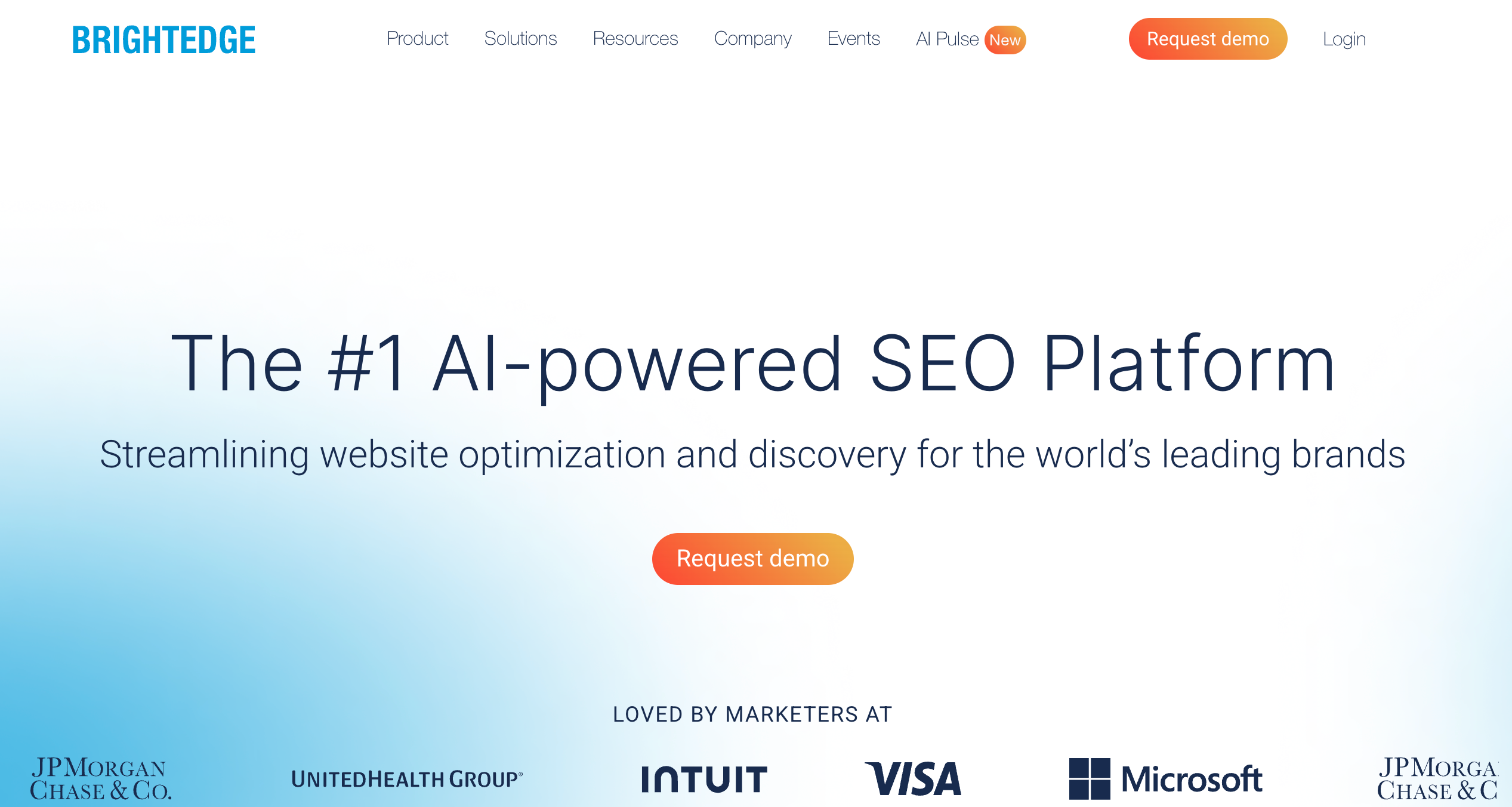
BrightEdge is an enterprise-grade SEO and content performance platform used by global brands. Using BrightEdge’s features, such as ContentIQ, you can perform large-scale site audits with AI recommendations and get your hands on real-time trend monitoring with the Instant feature.
The core platform feature is Data Cube X. It offers competitive intelligence with billions of data points, including tracking 28 different SERP features in 24 countries.
Both tools serve enterprise teams, but BrightEdge is rooted in traditional SEO. Profound is built specifically for AI search engines and AI systems.
BrightEdge fits large enterprises with mature SEO operations and internal analytics resources. Large enterprises with $100K+ annual budgets will benefit from this tool the most.
The platform has a steep learning curve and long implementation timelines. It may overwhelm smaller teams. It is known to be "data-heavy" and "unintuitive" per user feedback, and it focuses on monitoring over prescriptive execution.
Pricing is custom and typically high, aligned with enterprise contracts. To give you an idea, the typical costs are $100,000+ annually.
Pricing is based on:
There’s no free trial available.
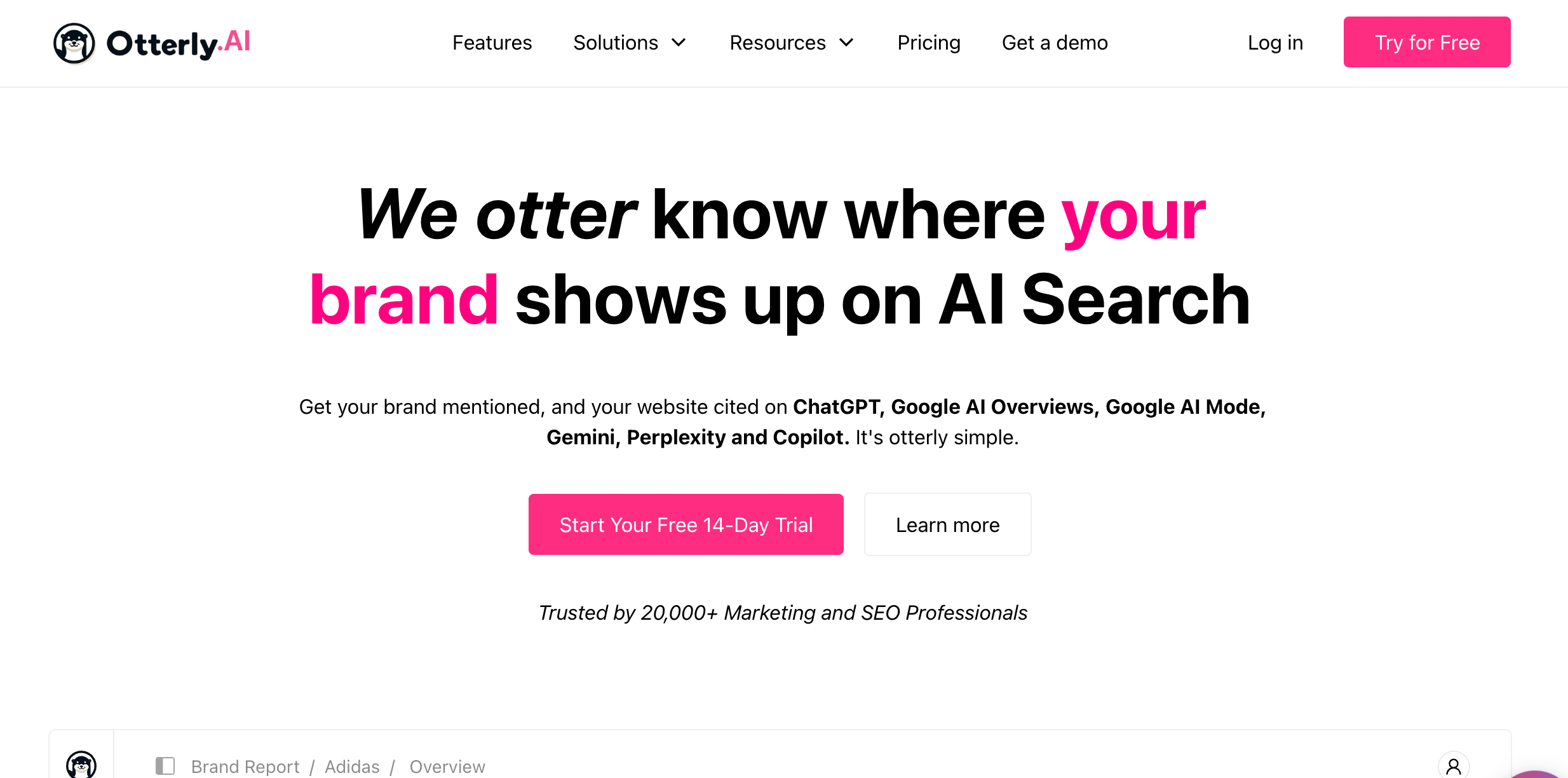
OtterlyAI is a focused AI visibility tool designed to track how brands appear in AI-generated answers across popular AI platforms. The product centers on understanding whether AI systems mention, recommend, or exclude a brand when responding to user questions.
Compared to Profound, OtterlyAI is intentionally narrower in scope. Profound supports broader competitive intelligence and enterprise reporting, while OtterlyAI concentrates on visibility monitoring and clarity. This makes OtterlyAI easier to adopt for teams that want insight into brand presence without committing to a full enterprise workflow.
Some prominent features include the Prompt Research Tool, which identifies relevant search prompts to track, and the GEO Audit Tool, which analyzes 25+ on-page factors.
OtterlyAI is best for marketing teams and brand owners wanting straightforward visibility monitoring without a full SEO platform.
It is particularly useful for teams aiming to measure share of voice in AI answers as part of a broader content strategy.
OtterlyAI does not attempt to provide a full SEO platform or advanced search optimization tooling. Teams looking for deep keyword research, attribution modeling, or automated recommendations may need additional tools. Its insights are visibility-focused rather than prescriptive.
OtterlyAI positions itself below enterprise tools with more accessible pricing. Plans are designed for smaller teams and growing companies rather than large enterprises. Here’s the breakdown:
A free trial is available for 14 days with no credit card required.
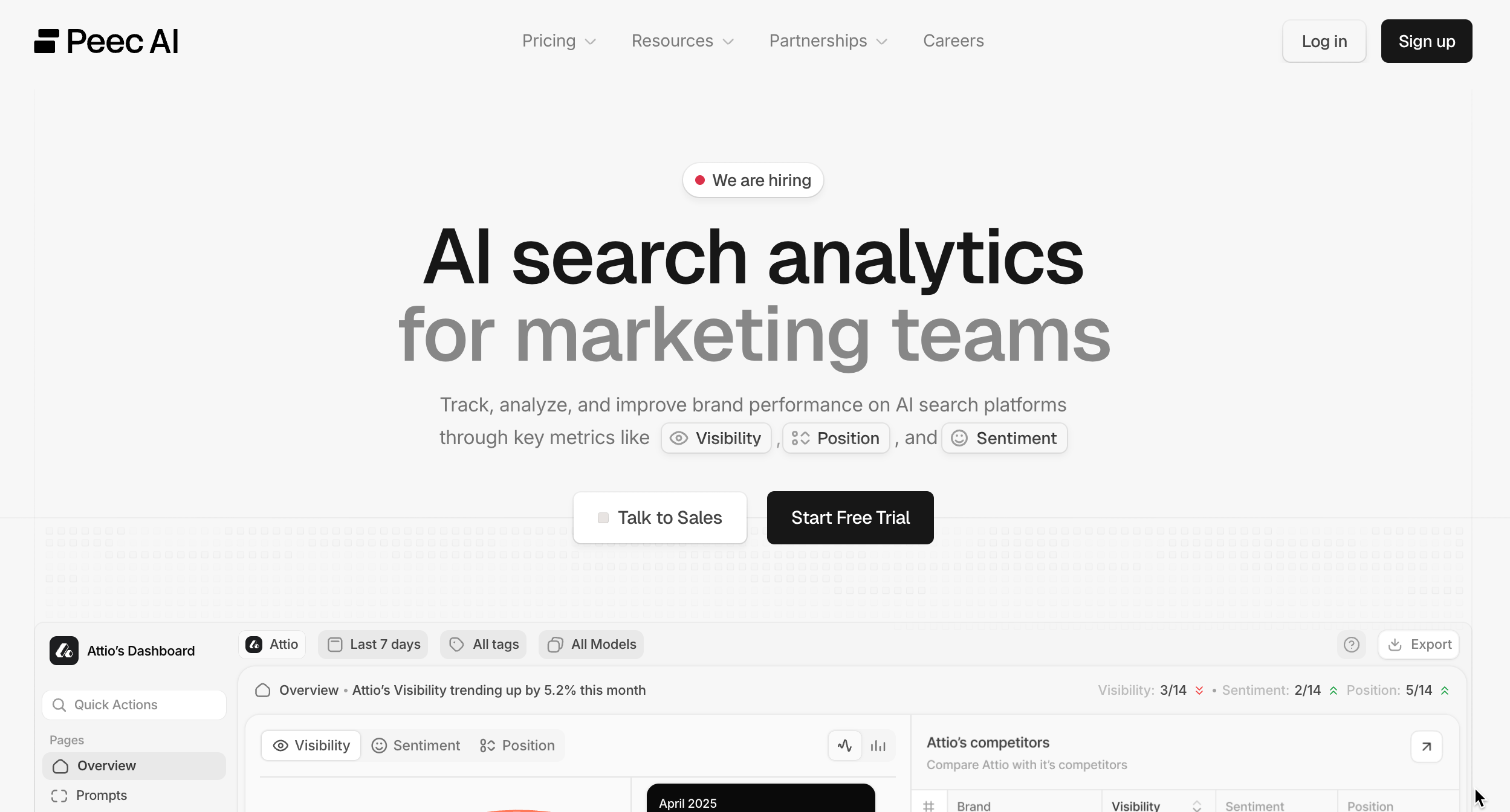
Peec AI is built to help teams quickly assess performance without navigating complex reporting layers. It supports 115+ languages, which is a major advantage for global brands.
Some other notable features include a Dashboard that offers a clean visibility overview with Share of Voice, and a Suggested Prompts feature, which is essentially the AI-generated prompt ideas based on your content.
Peec AI trades Profound’s depth for speed and simplicity. While Profound supports advanced modeling and enterprise customization, Peec AI focuses on fast insights and straightforward interpretation. This makes it more approachable for teams that prioritize execution over long-term analytics frameworks.
Peec AI is well-suited for SaaS companies, startups, and smaller teams exploring AI discovery as a new growth channel. It works best for teams that want to connect content optimization efforts to observable outcomes in AI search engines. Growth and product marketing teams can use it to validate early hypotheses.
Peec AI currently offers limited customization compared to enterprise platforms. Organizations with complex approval workflows or strict reporting requirements may find it insufficient. It is designed as an entry point, not a long-term enterprise system.
Peec AI pricing is typically positioned for mid-market customers and remains below enterprise benchmarks. Here’s the breakdown of pricing:
A free trial is available upon request.
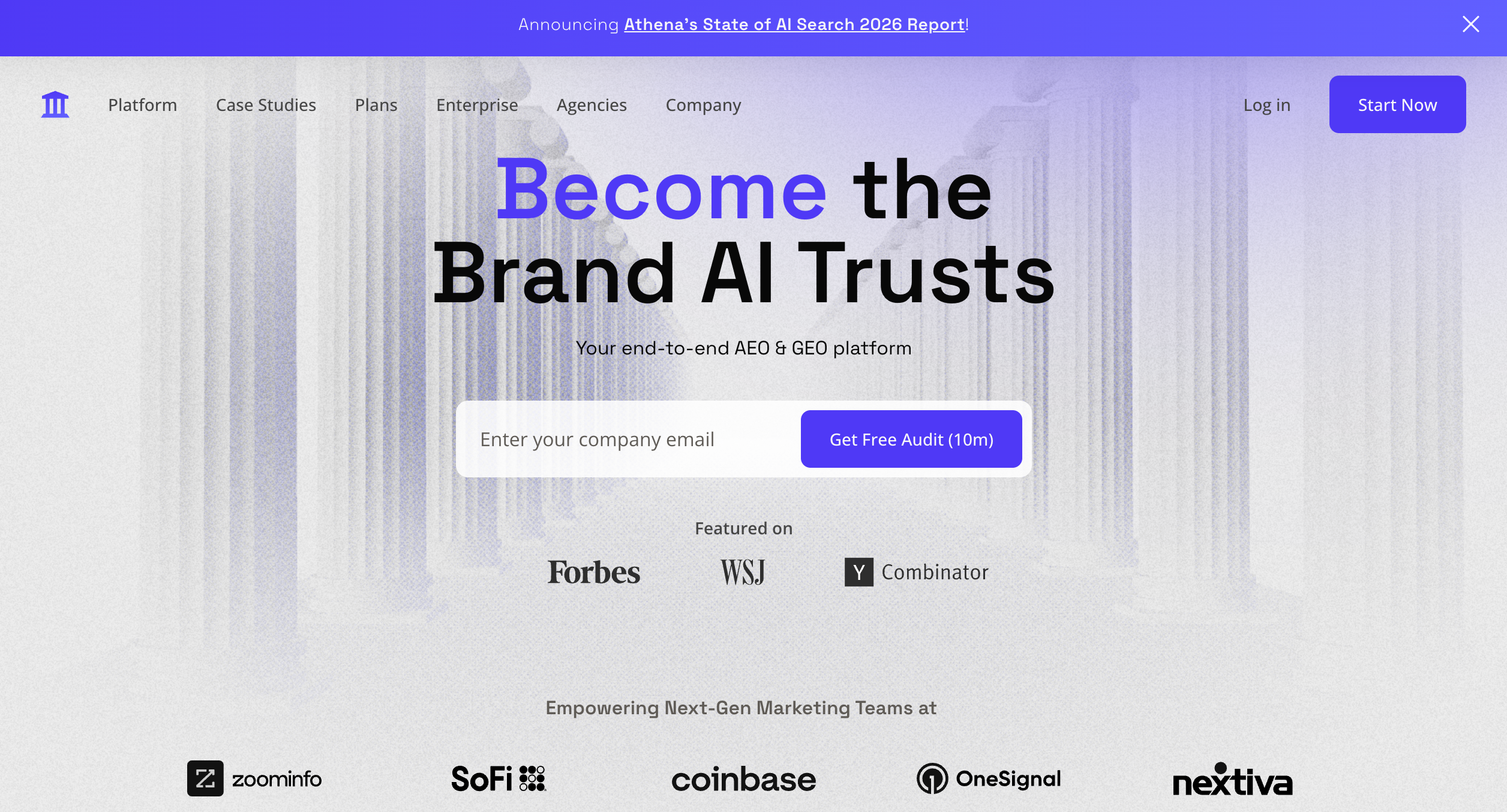
AthenaHQ is a strategic intelligence platform that connects AI-powered search behavior with content authority and competitive positioning. It focuses on how brands perform within AI-generated answers while tying those results back to broader content strategy and market context. The platform is positioned toward organizations managing AI visibility at scale.
AthenaHQ and Profound both serve enterprise teams, but their emphasis differs. Profound leans toward AI-native monitoring and modeling, while AthenaHQ integrates AI insights into a wider strategic framework. AthenaHQ places a stronger emphasis on aligning AI visibility with long-term brand and content goals.
AthenaHQ is best for large enterprises coordinating SEO, content, and AI initiatives across multiple business units. Teams managing global brands or complex messaging ecosystems benefit most from its strategic orientation. It is particularly useful when AI visibility needs to tie directly into executive reporting.
The platform’s scope and sophistication come with higher operational demands. Smaller teams may struggle to justify the cost or fully utilize the available advanced features. Implementation typically requires experienced internal stakeholders.
The Self-Serve plan starts at $295 per month, while an Enterprise plan is custom-priced depending on multiple factors. You can also get a 10-day paid trial and a discounted first month of use.
AI-driven discovery has permanently changed search optimization, but not every team needs an enterprise solution. The right tool depends on whether you need brand monitoring, benchmarking, or strategic intelligence.
Start by defining your use cases, select tools that match your team size and workflows, and measure brand visibility across AI search engines consistently. As AI continues to evolve, flexibility matters more than feature count.
.webp)
With 10 years of writing experience and a deep interest in SEO, AI, and content management, Anna’s here to break down big ideas and translate them into plain English for readers of all levels. She's got a Master's Degree in International Information and is a lifelong learner of writing and storytelling. Outside of work, she’s on the yoga mat, in a good book, or planning her next adventure with family and friends.
.svg)
.svg)
.svg)
.svg)
.svg)