
.svg)
%20(1).svg)
%20(3).svg)
Back to articles
11 Best Peec.ai Alternatives for AI Search Visibility in 2026
June 25, 2026
By
Irina Maltseva
Peec.ai helped a lot of teams get their first look at AI search visibility. It tracks how your brand shows up in ChatGPT, Perplexity, and Google AI Overviews.
The dashboard is clean. The setup is quick. For many marketers, it was the perfect starting point.
But starting points have limits.
Maybe you've hit the prompt ceiling on your plan. Maybe you need actual optimization guidance instead of just visibility reports. Or maybe you're an agency juggling multiple clients and Peec.ai's workflow doesn't quite fit. Whatever the reason, you're looking for something different.
Here are 11 Peec.ai alternatives worth considering, organized by what they do best.
Before jumping into tools, it helps to know what actually matters when comparing AI visibility platforms:
Keep these criteria in mind as you read through the options below.
With those factors in mind, here are the tools worth your attention.
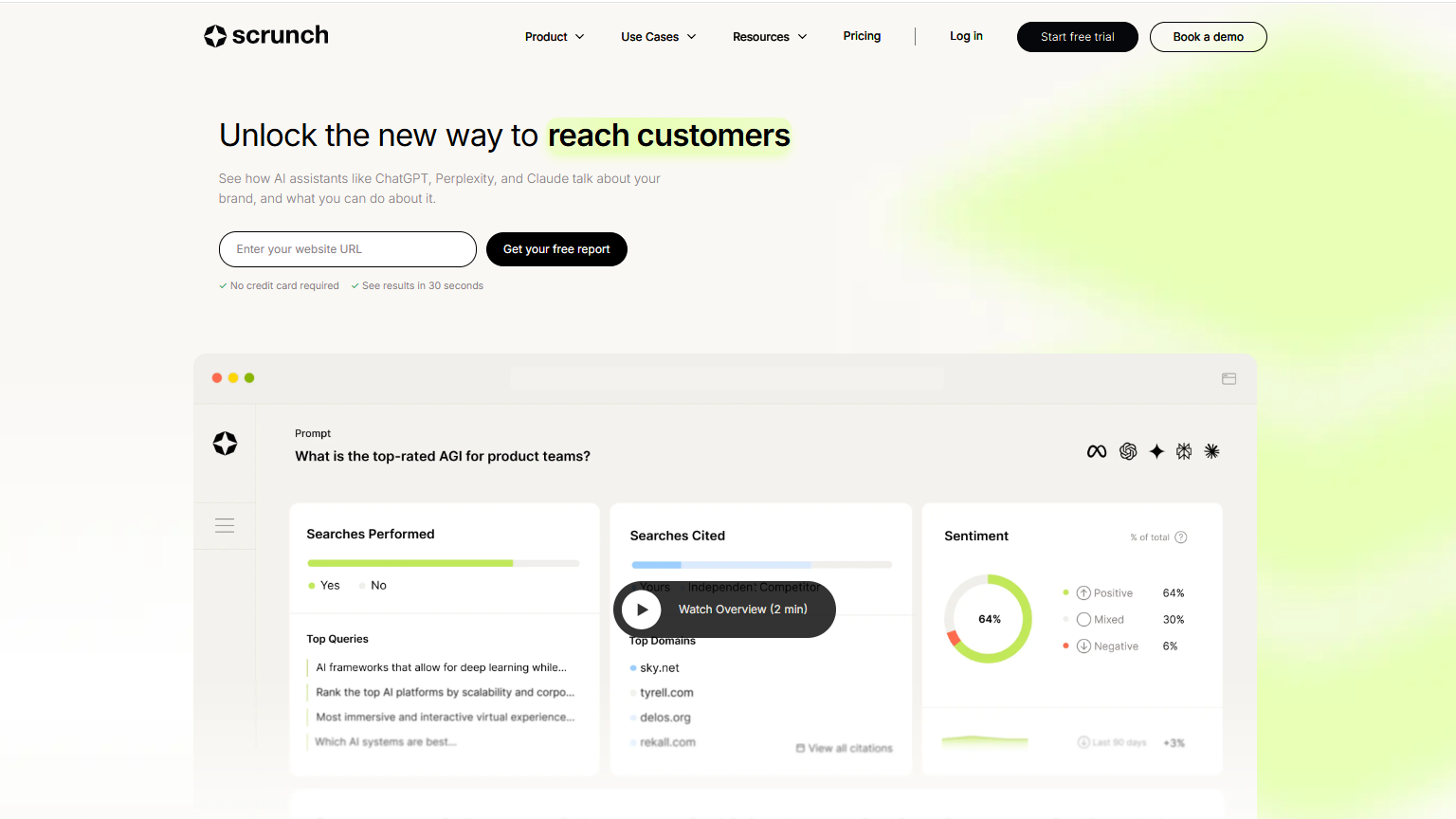
Scrunch sits at the premium end of AI visibility tools, and it earns that position with the broadest engine coverage on the market. The platform tracks ChatGPT, Claude, Perplexity, Gemini, Google AI Overviews, AI Mode, and Meta AI from a single dashboard.
What separates Scrunch from lighter alternatives is its focus on brand safety. The platform detects when AI models make false claims about your brand (hallucinations) and maps customer journeys through AI interactions. For enterprise teams worried about misinformation, this matters.
Scrunch also connects directly to GA4, so you can see actual AI referral traffic instead of just visibility scores.
Its site audit feature shows what AI crawlers see when they visit each page, which helps identify technical barriers to getting cited.
The company recently raised $15M in Series A funding and now serves over 500 brands. They've also built something called the Agent Experience Platform (AXP), which identifies AI traffic at the edge and delivers content that is optimized for AI, using dramatically fewer tokens and stripping out human‑only media and JavaScript.
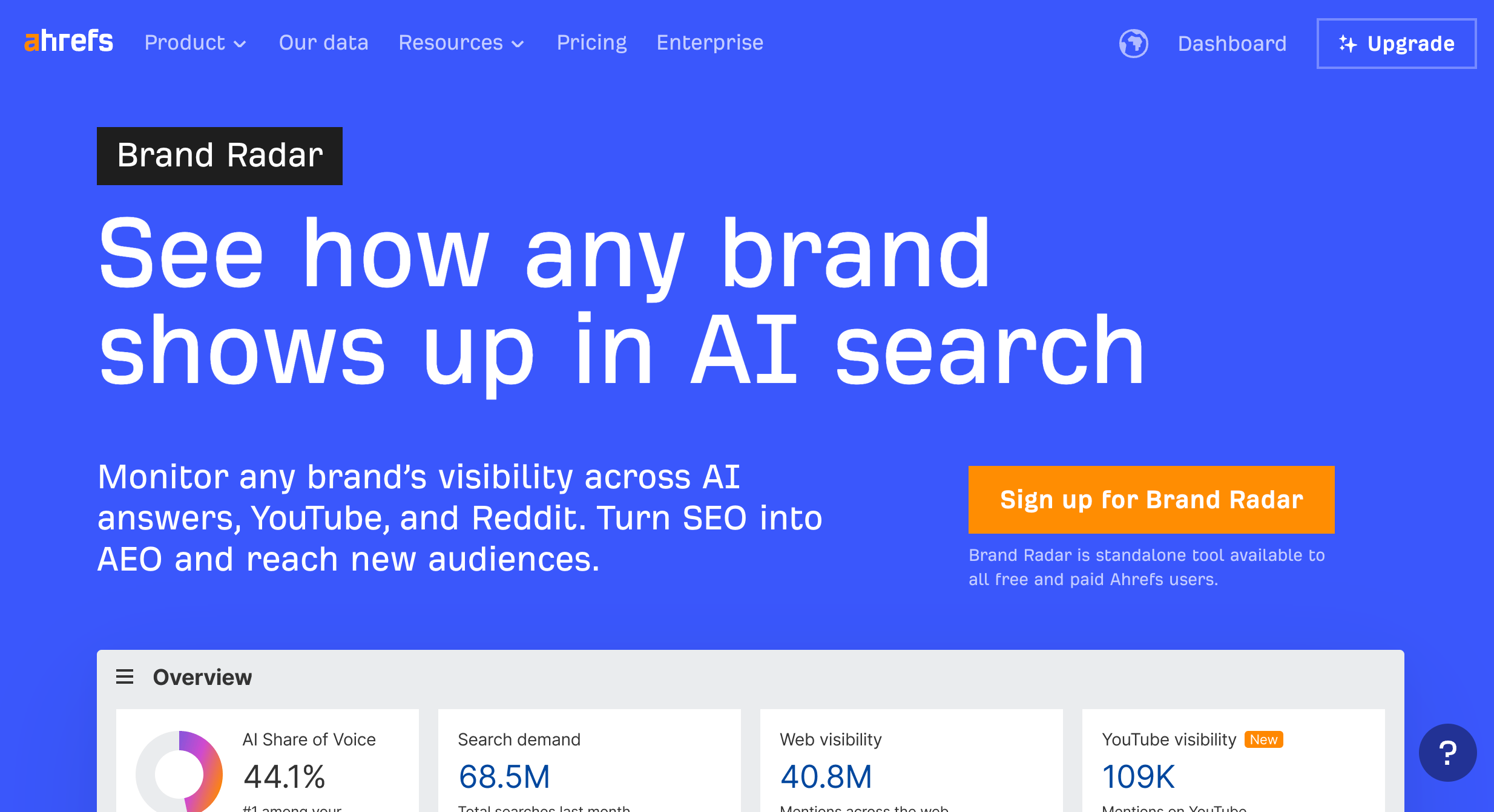
Ahrefs Brand Radar is not part of the standard Ahrefs subscription by default. Instead, it’s available as an optional add-on that both free and paid Ahrefs users can purchase. Although it wasn’t created specifically for AI search monitoring, the tool tracks signals that influence how AI systems gather information about brands — including content visibility, authority, and overall web presence.
Brand Radar is a good fit for marketing teams that already rely on the Ahrefs ecosystem and want additional insight into how their brand appears in AI-generated answers. It’s particularly useful for content and SEO teams that want to connect traditional search visibility with emerging AI discovery trends. According to Ahrefs, the platform tracks over 300 million search-backed prompts and supports 24 countries and more than 20 languages, allowing teams to monitor brand presence across multiple regions and languages.
Brand Radar was available in free beta for all paid Ahrefs users until mid-2025, but it has since moved to a paid add-on model. Current pricing includes:
You can also use custom prompts to analyze brand mentions in specific questions for $50/mo for 80 custom prompts on a Basic plan.
Finally, there's a range of free Ahrefs Webmaster Tools you can try (with limited access) , including WebAnalytics, Site Audit, Site Explorer, Social Media Manager, and AI content Helper.
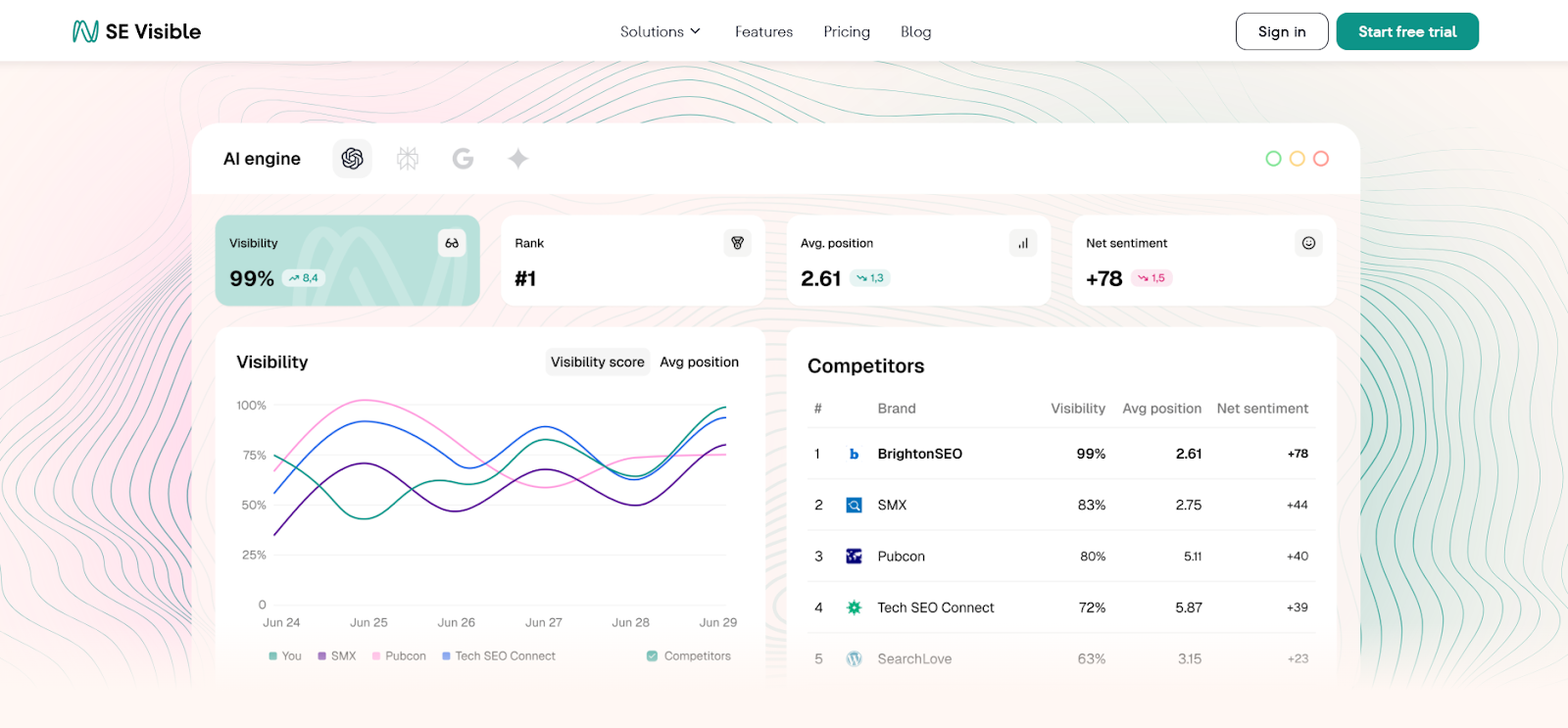
If you already use SE Ranking for traditional SEO, SE Visible is the obvious choice. It's included with your SE Ranking subscription at no extra cost, which makes it one of the most cost-effective options on this list.
The platform covers ChatGPT, AI Mode, Perplexity, Gemini, and Google AI Overviews. Weekly updates show your visibility score, sentiment, and competitor rankings.
The "No cited" feature deserves special mention: it highlights prompts where competitors appear but you don't. That's gold for identifying content gaps you can fill.
Because SE Visible lives inside SE Ranking, you get AI visibility data alongside traditional rank tracking, site audits, and backlink analysis. No switching between platforms. If you're running SEO campaigns for agencies, that integration saves serious time.
The downside? If you don't already use SE Ranking, you're committing to a full SEO suite to get AI visibility features. That might be more than you need.
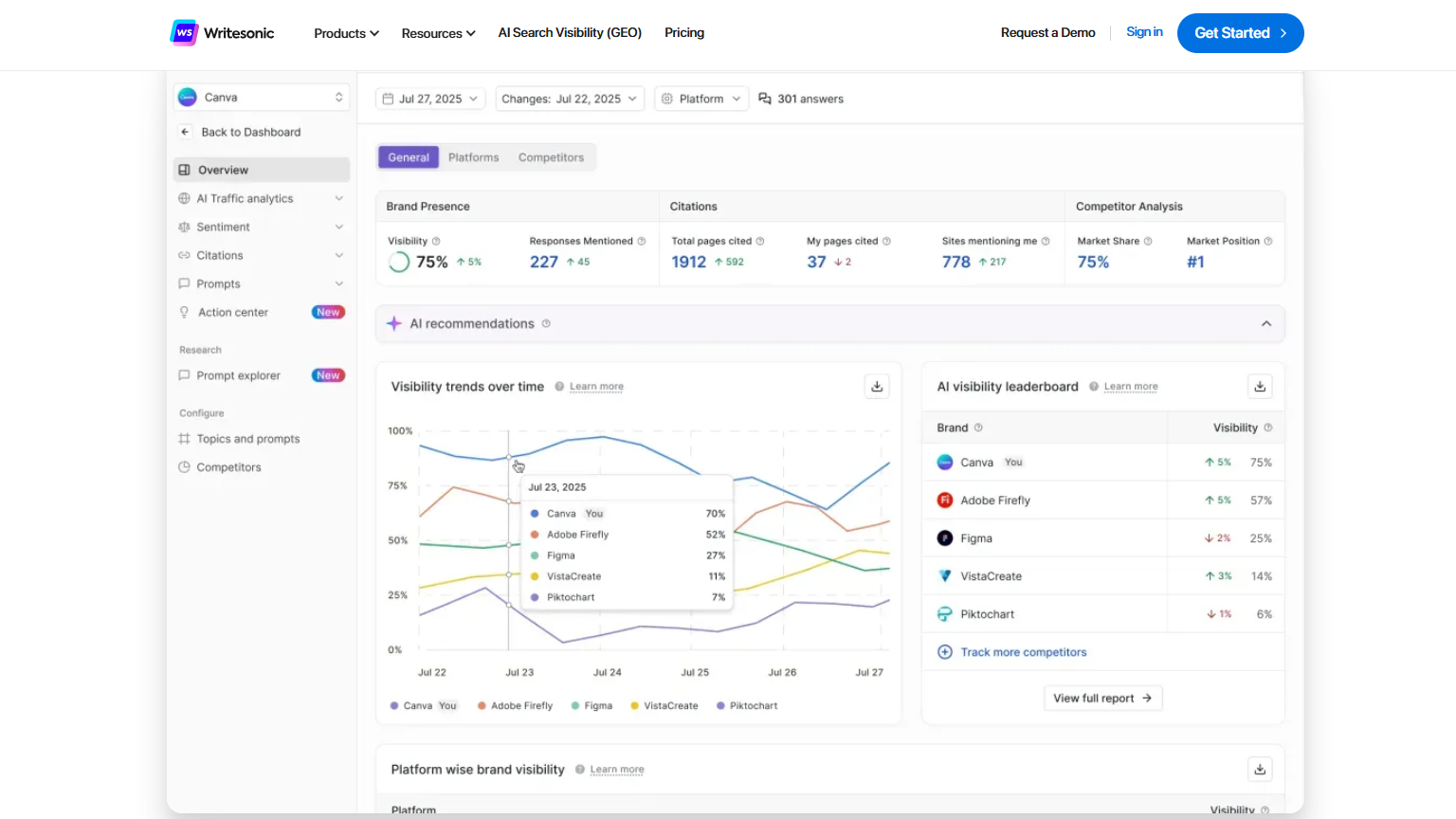
Most AI visibility tools tell you where you're invisible. Writesonic GEO tells you what to do about it.
The platform combines monitoring with a full Action Center that provides on-page, off-page, and technical recommendations.
It also includes built-in content creation tools, so you can go from "we're not showing up for this prompt" to "here's the optimized article to fix that" without leaving the platform.
Writesonic tracks real AI crawler visits to your site, not just simulated outputs. That distinction matters because it shows you which pages AI bots actually access and whether they're getting blocked by technical issues.
Coverage includes ChatGPT, Claude, Gemini, Perplexity, and Google AI Overviews. For teams that want monitoring and content production in one place, this is a strong contender.
The price tag is higher than pure monitoring tools, but you're paying for optimization workflows that would otherwise require separate software.
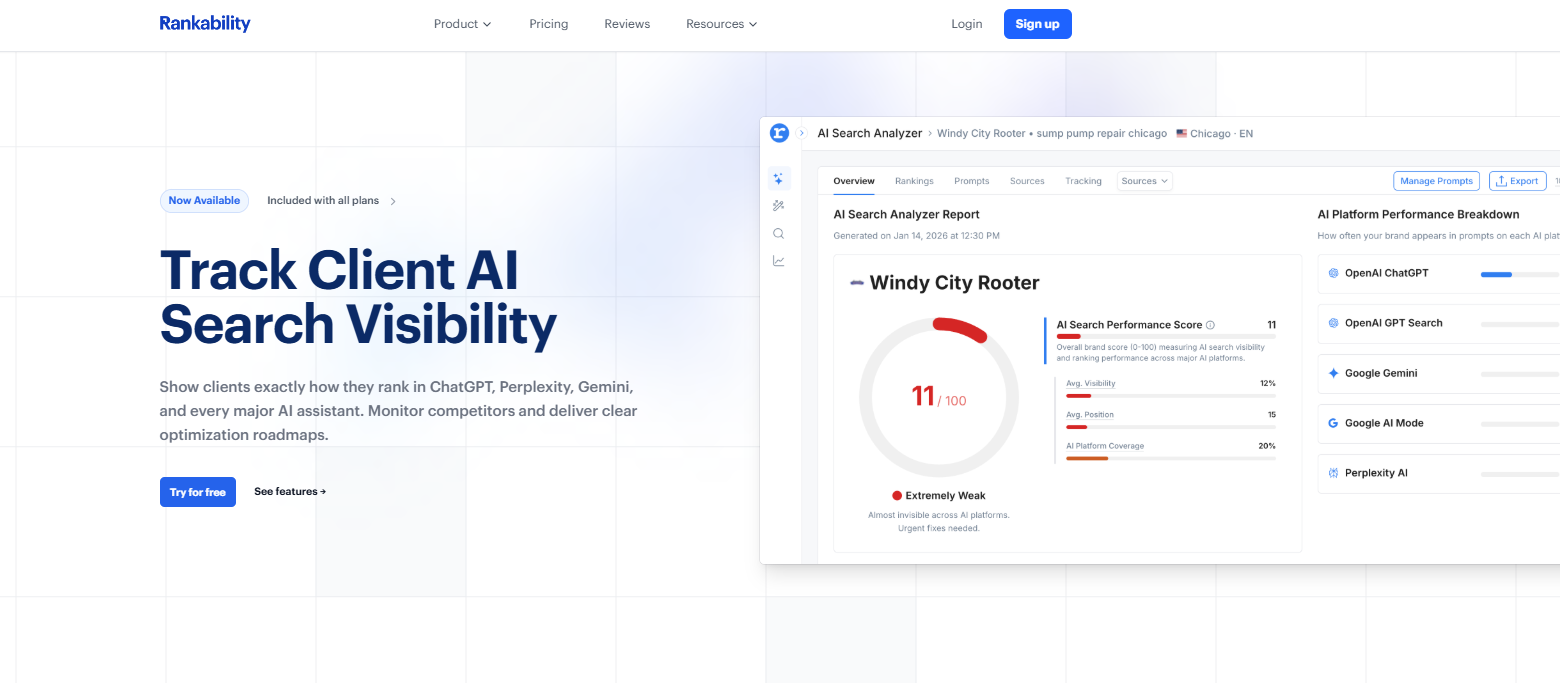
Rankability AI Analyzer was built specifically for agencies, and it shows. The platform includes white-label reporting, team certifications, and weekly mastermind sessions where agency owners share what's working.
Engine coverage is solid: ChatGPT, Gemini, Claude, Perplexity, DeepSeek, and Copilot. Real-time alerts notify you when competitor visibility shifts, so you can catch trends before your clients ask about them.
What makes Rankability different is its focus on actionable recommendations. The platform doesn't just show where you rank in AI answers. It analyzes what's getting cited and suggests specific changes to improve performance.
For agencies building out marketing automation workflows, Rankability integrates well with existing reporting stacks. CSV exports and Sheets connectors make it easy to pull data into client dashboards.
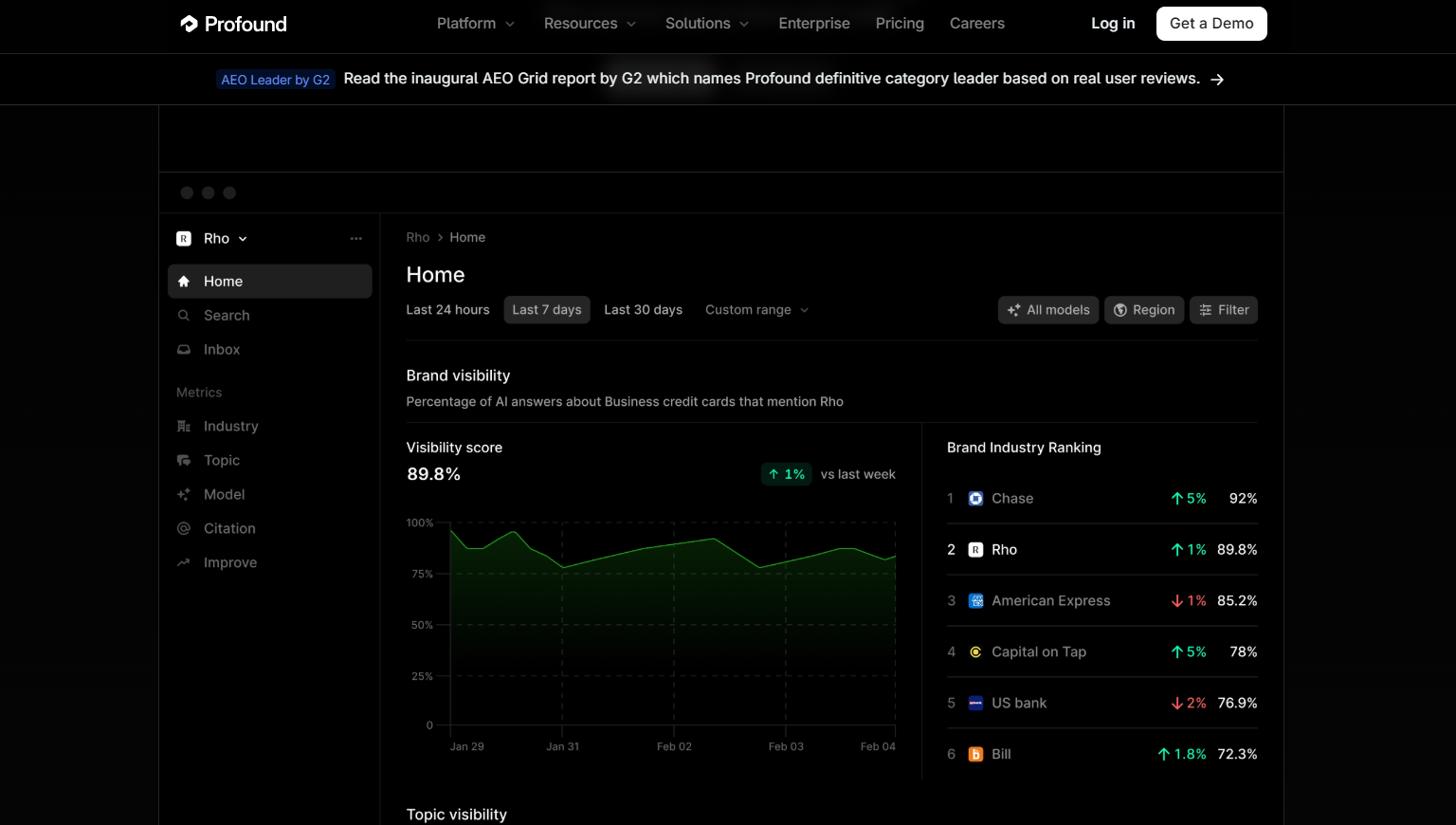
Profound targets large organizations with complex security requirements. It's SOC 2 Type II certified, offers SSO, and supports multi-team governance structures that enterprise IT departments require.
The platform's Agent Analytics feature connects to CDN providers like Cloudflare, Vercel, and Netlify to track how AI bots navigate your site. This goes deeper than most tools, showing you exactly which pages get crawled and how often.
Profound also generates AI-optimized content briefs and drafts, making it useful for teams that want to close the gap between visibility data and content production. The Answer Engine Insights and Conversation Explorer modules let you analyze AI responses at a granular level.
Enterprise features come with enterprise pricing. The Starter tier begins at $99/month, but most organizations will need the Growth tier at $399/month to access the full feature set.
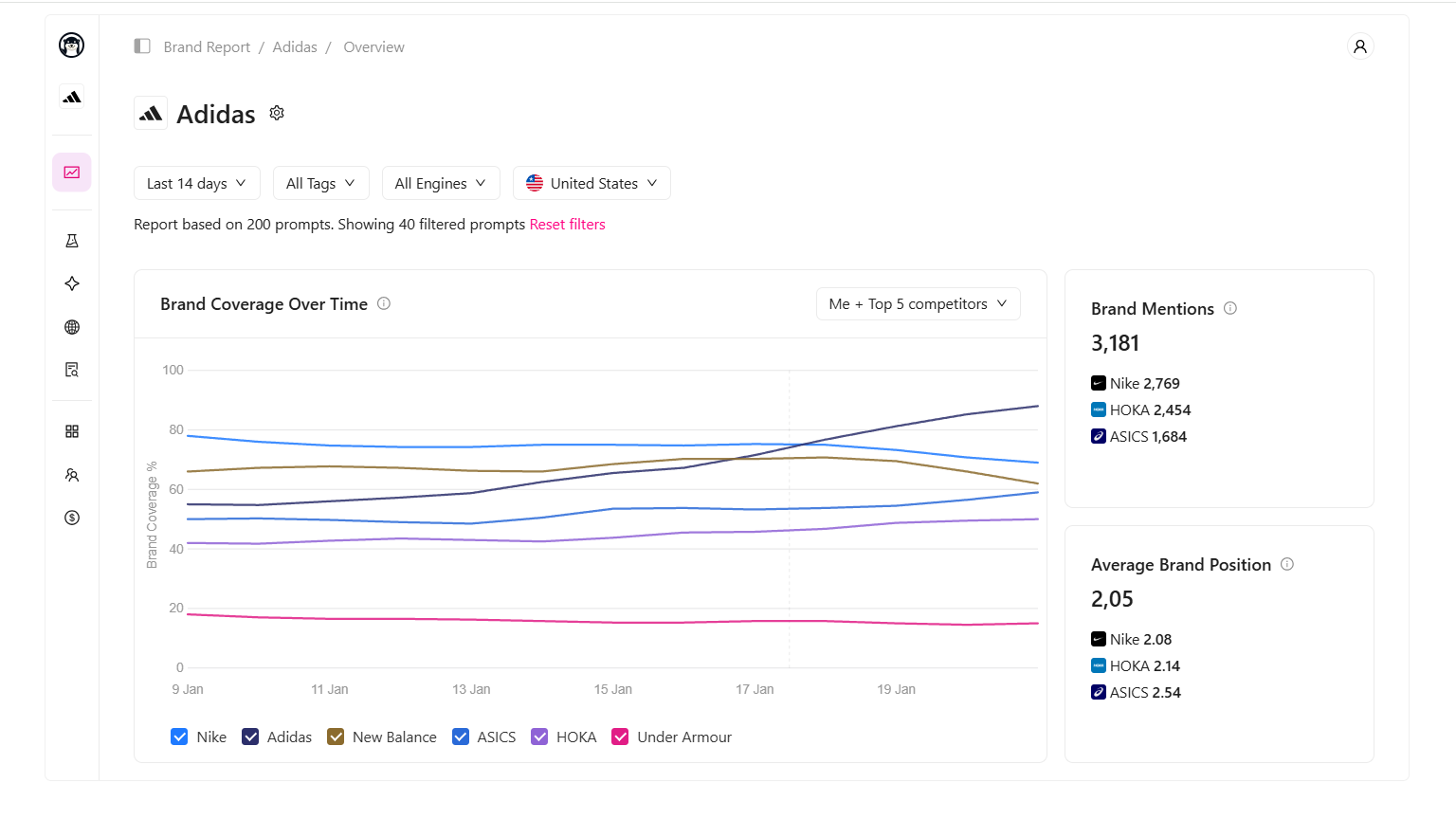
Otterly.ai keeps things simple. The interface is clean, setup takes minutes, and you get brand citation tracking across major AI platforms without wading through complex dashboards.
Sentiment analysis is the standout feature. Otterly shows whether AI responses frame your brand positively, negatively, or neutrally. For reputation monitoring, this provides quick insight without requiring a data analyst to interpret results.
The learning curve is minimal compared to enterprise tools. If you're a small team that wants visibility basics without the complexity, Otterly delivers.
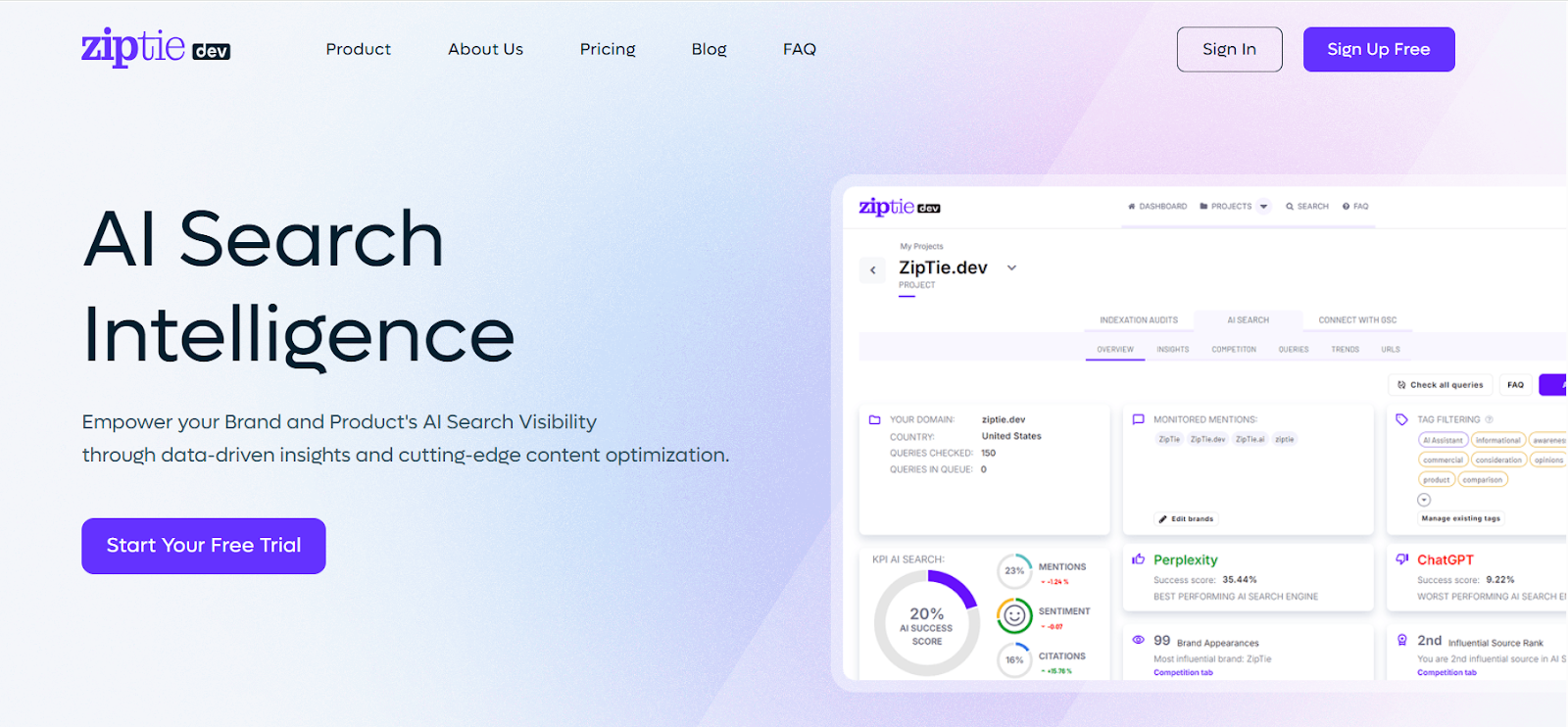
ZipTie comes from Onely, an established SEO agency with deep technical expertise. The platform focuses heavily on Google AI Overviews, capturing live results with screenshots so you can see exactly what users see.
Industry experts like Lily Ray and Aleyda Solís have publicly endorsed ZipTie for AI Overview tracking. That kind of validation matters in a space full of new entrants.
The API-first design makes ZipTie particularly useful for technical teams that want to integrate AI visibility data into custom dashboards or internal tools. If you're building something proprietary, ZipTie gives you the data pipes you need.
Coverage includes ChatGPT, Perplexity, and Google AI Overviews. It's narrower than some competitors, but the depth on AI Overviews is unmatched.
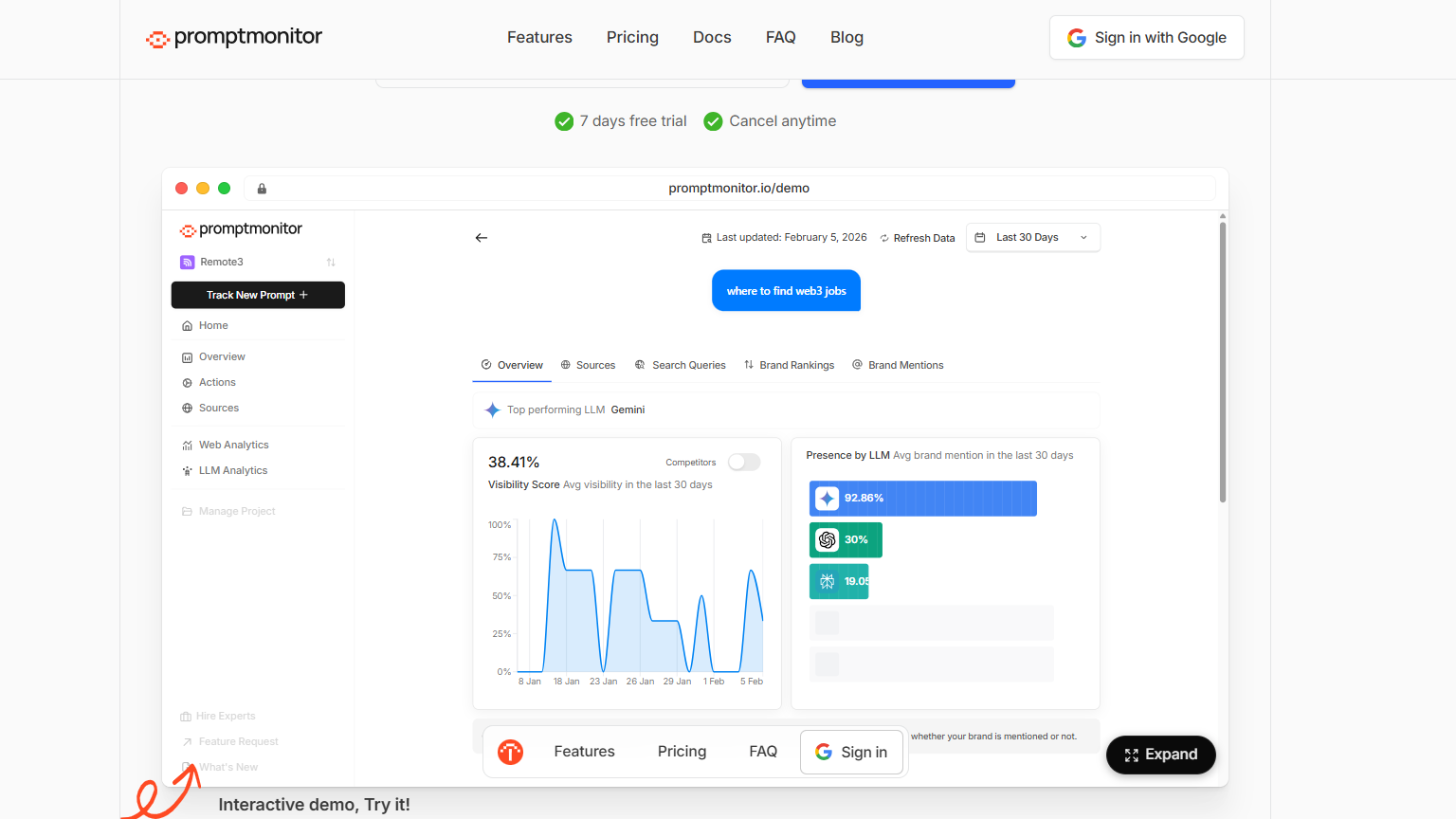
At $29/month, Promptmonitor is the most affordable dedicated AI visibility tool on this list. And unlike stripped-down free tiers, it includes features that actually matter: unlimited team seats, white-label reports, and tracking across ChatGPT, Perplexity, Claude, and AI Overviews.
One unique feature stands out. Promptmonitor extracts contact information from the sources that AI cites. That turns visibility data into outreach opportunities.
If you spot a publication that keeps getting cited for your target prompts, you now have a lead for a guest post or partnership pitch.
For startups and freelancers watching every dollar, Promptmonitor delivers core functionality without the enterprise price tag. It won't replace a full platform if you need deep optimization guidance, but for basic monitoring, it covers the essentials.
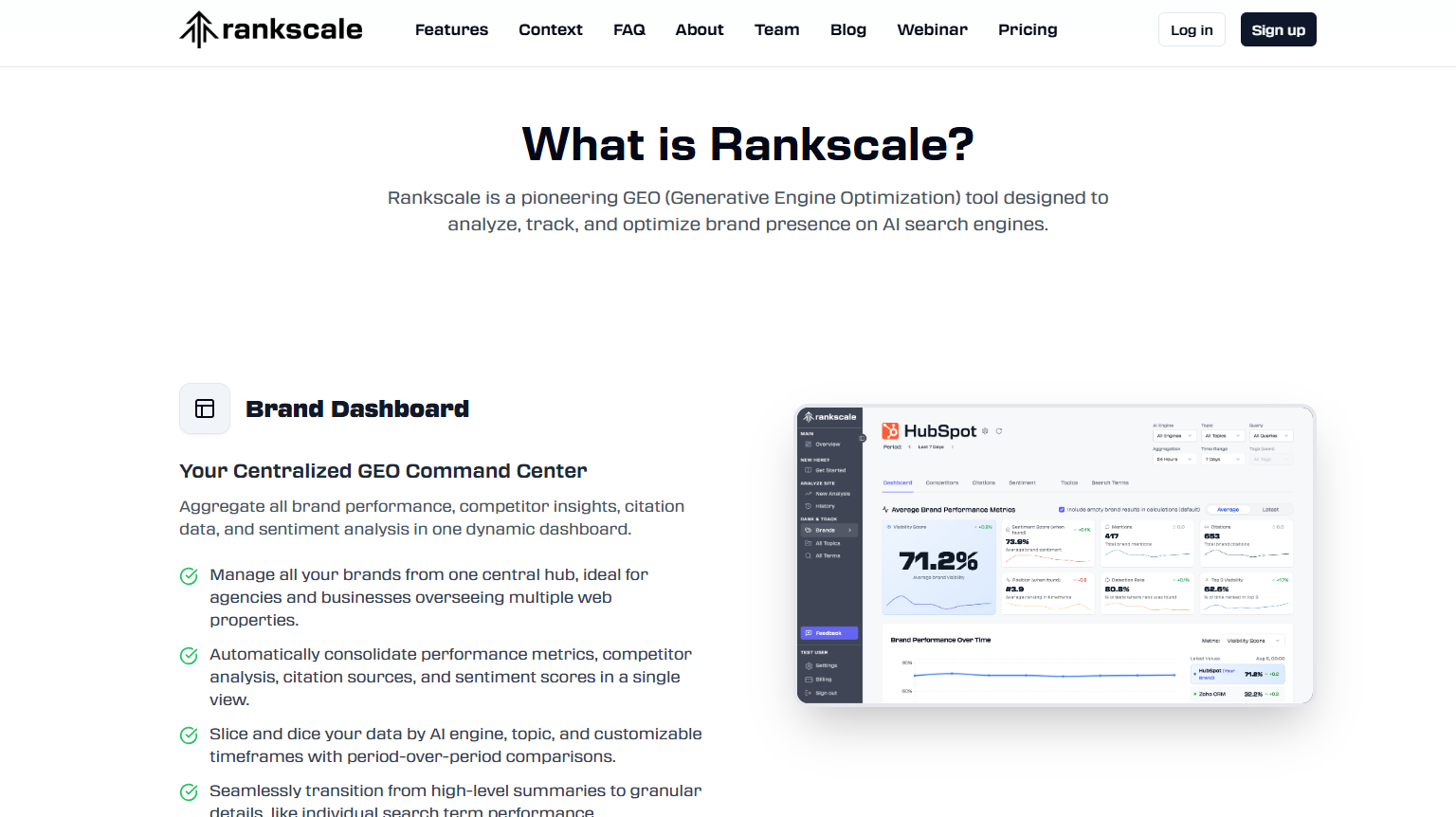
Rankscale.ai attracts SEO professionals who want data density. The platform tracks daily across ChatGPT, Claude, Perplexity, and Google AI Overviews, providing granular analytics that go beyond surface-level visibility scores.
The AI Readiness Score audits your website to identify technical issues that prevent AI crawlers from accessing your content.
Brand dashboards show citation analysis and competitive benchmarks. For teams comfortable with data-rich interfaces, Rankscale delivers.
Development moves fast. The founder leads product updates directly, often shipping new features multiple times per week based on community feedback. That responsiveness appeals to early adopters who want input into product direction.
Pricing scales from $20/month (Essential) to $780/month (Enterprise), making it accessible for small teams while offering depth for larger organizations.
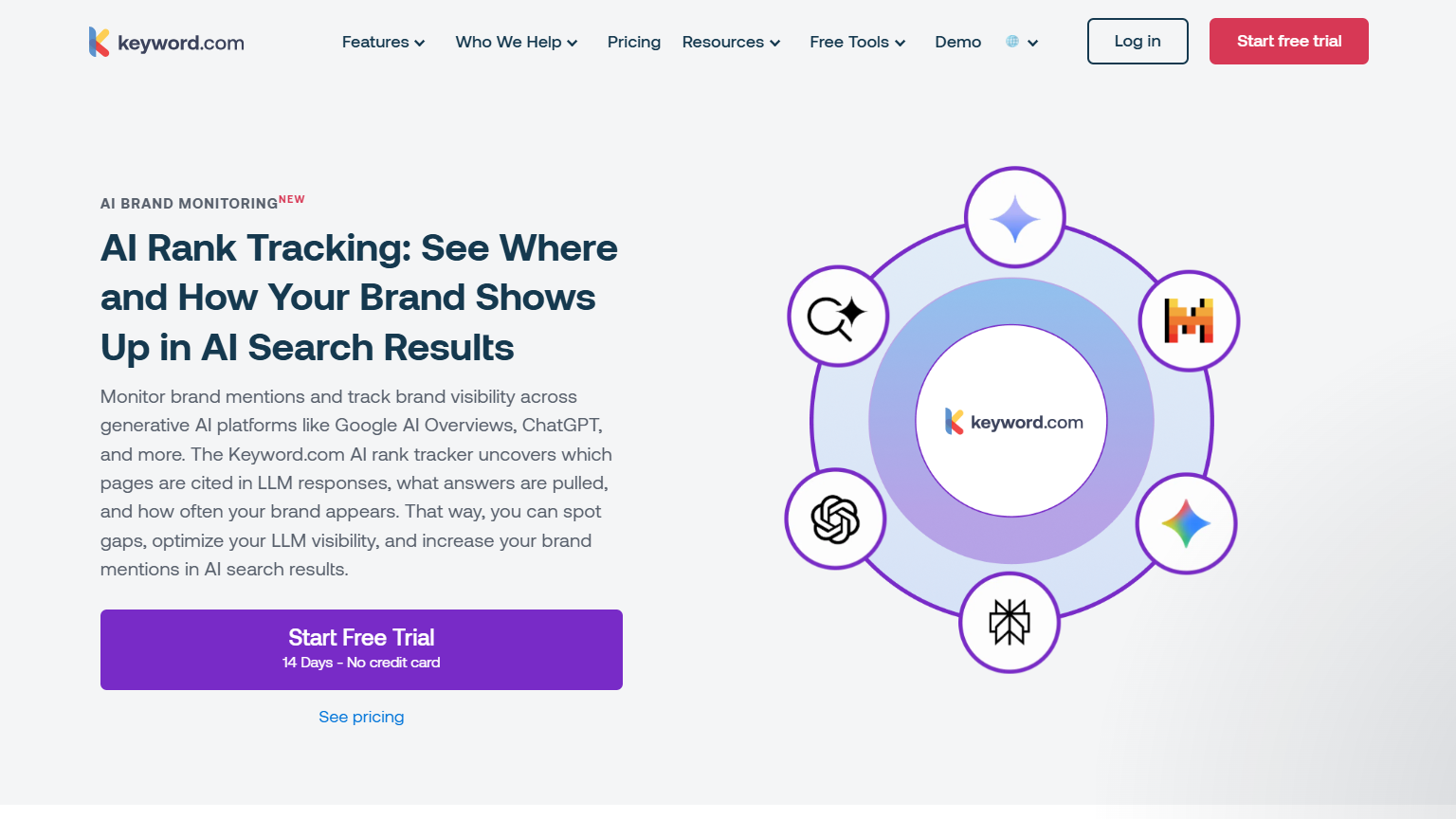
Keyword.com built its reputation on traditional rank tracking. Its AI Search Visibility component extends that foundation into generative search.
The platform identifies which keywords trigger AI Overviews and reports day-over-day changes in appearance rates. For enterprise teams already using Keyword.com for traditional SEO, adding AI visibility requires no new vendor relationships or integrations.
The focus is narrower than dedicated AI visibility platforms. You won't get the optimization guidance or content recommendations that tools like Writesonic or Rankability provide. But if you need AI Overview data alongside existing rank tracking, Keyword.com delivers a clean solution.
Here's a quick decision framework based on your primary need:
Most of these platforms offer demos or free trials. Before committing to an annual contract, run your actual prompts through 1-2 tools to see which data presentation matches how your team thinks.
For teams building broader SaaS marketing strategies, AI visibility fits into a larger picture that includes traditional SEO, content marketing, and paid acquisition. The right tool should complement your existing stack, not complicate it.
Peec.ai works well for what it does. The interface is intuitive, the suggested prompts feature helps teams get started quickly, and multi-language support serves international brands.
But as AI search grows more important, teams need tools that match their specific workflows. Some need deeper optimization guidance. Others need agency features or enterprise compliance. Still others just need affordable monitoring while they figure out how AI search fits their strategy.
The 11 alternatives above cover that range. Your job is to match your requirements to the tool that fits best.

Irina is a Founder at ONSAAS, Growth Lead at Aura, and a SaaS marketing consultant. She helps companies to grow their revenue with SEO and inbound marketing. In her spare time, Irina entertains her cat Persie and collects airline miles.
.svg)
.svg)
.svg)
.svg)
.svg)