
.svg)
%20(1).svg)
%20(3).svg)
Back to articles
The 5 Best AI Brand Visibility Tracking Tools Compared
September 7, 2026
By
Irina Maltseva
A buyer asks ChatGPT which tool solves their problem. The machine reads the web, weighs the sources it trusts, and names three brands. Yours isn't one of them, and no ranking report will tell you why, because ranking was never the thing being measured.
The question is no longer "where do I rank." It's whether the machine finds your brand, understands it correctly, and trusts it enough to recommend it. Without tracking, you're blind to how you show up inside ChatGPT, Google AI, Gemini, and Perplexity, what those engines say about you, and who they name instead. This guide ranks five tools that close that gap and gives you a step-by-step way to choose.
Your best fit depends on which engines your buyers use, your team size, whether you want a standalone tracker or one built into a search suite, and your budget.

AI search tools monitor how often your brand is mentioned in AI answers, when your pages are cited as a source, how the engines describe you (sentiment), and your AI Share of Voice against competitors, all across the prompts your buyers are actually typing. They do it across several engines at once, because a buyer in ChatGPT and a buyer in Google AI Mode see different answers about you.
The evaluator changed, so the metric changed:
One measures placement on a page. The other measures whether you made it into the composed response at all.
AI Overviews now appear in roughly a quarter of US searches and reach around 2 billion users monthly, and the rate climbs higher for the informational queries most content strategies target. The surface where buyers form opinions about your category has moved, and it moved faster than most measurement stacks did.
Six criteria separate a tool you'll keep from one you'll cancel in a quarter.
Which AI engines the tool tracks natively, and whether the ones your buyers use are in the base plan or locked behind add-ons. This single factor changes the recommendation more than any other.
How many prompts you can track before you hit a ceiling. A serious buying category burns through a small prompt allowance fast.
Whether the tool shows you which pages the engines cite, so you can see the authority signals shaping the answer rather than just the score.
Whether it measures how you're described and how much of the conversation you own against named competitors, not only whether you appear.
Whether the tool stops at a dashboard or tells you what to fix.
Whether the price holds as you add domains, seats, and engines, or multiplies quietly.
The most overlooked distinction sits inside that last one: measure-only tools versus tools that tell you what to fix. A scoreboard is useful once you know the levers. If you don't, you need a tool that ties the score to the durable things that move it: entity clarity so the machine knows exactly what your brand is, authority signals so it trusts you, and cited sources so it has something concrete to reference. Measurement without those levers is a number you can't act on.
Here's how the five stack up before the detailed reviews.
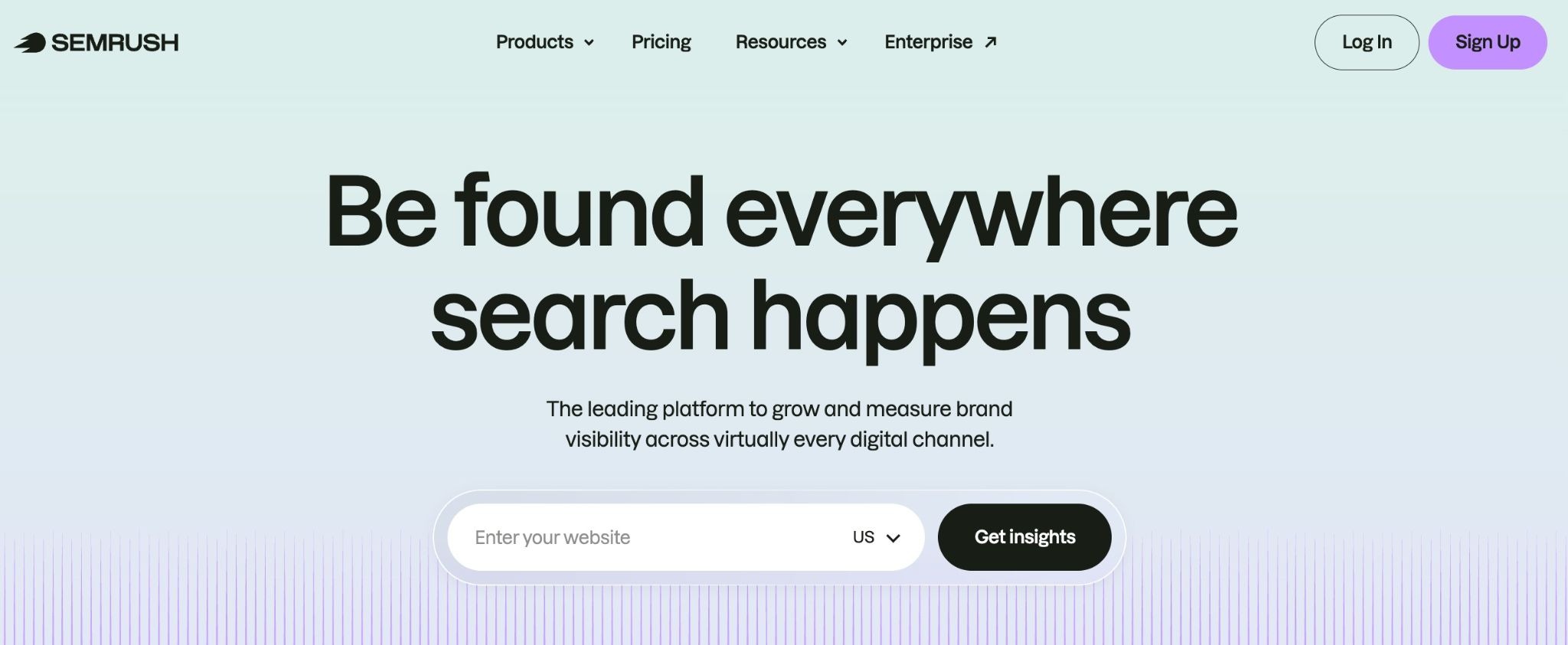
The differentiator is placement. Semrush puts AI visibility tracking inside a full search platform, so tracking, prompt research, and an AI-readiness site audit live in the same place as the rest of your search work, and on Semrush One or the SEO Toolkit that same data plugs into your AI tools through the Semrush MCP connector.
It covers ChatGPT, Google AI, Gemini, and Perplexity. The core modules are Visibility Overview, Brand Performance, Competitor Research, Prompt Research, and the AI Search Site Audit, so you can see where you stand, who's beating you, what buyers are prompting, and what on your own site is holding you back.
The MCP connector is the piece worth noting: on Semrush One or the SEO Toolkit it's included at no add-on cost, and it lets you pull Semrush data directly inside ChatGPT, Claude, Perplexity, and Gemini, so your research happens where you already work.
Pricing is $99/mo per domain billed annually, covering one domain and 25 prompts. Semrush One bundles the AI Toolkit with the SEO suite from $199/mo. Add-ons run $60/mo per 50 extra prompts and $99/mo per extra domain.
Best for: teams that want AI tracking inside a full search platform, with the data feeding the AI tools they already use.
Not ideal if: you only need AI tracking. The per-domain, per-seat model stacks quickly for agencies, and the base plan covers just one domain and 25 prompts before add-ons start adding up.
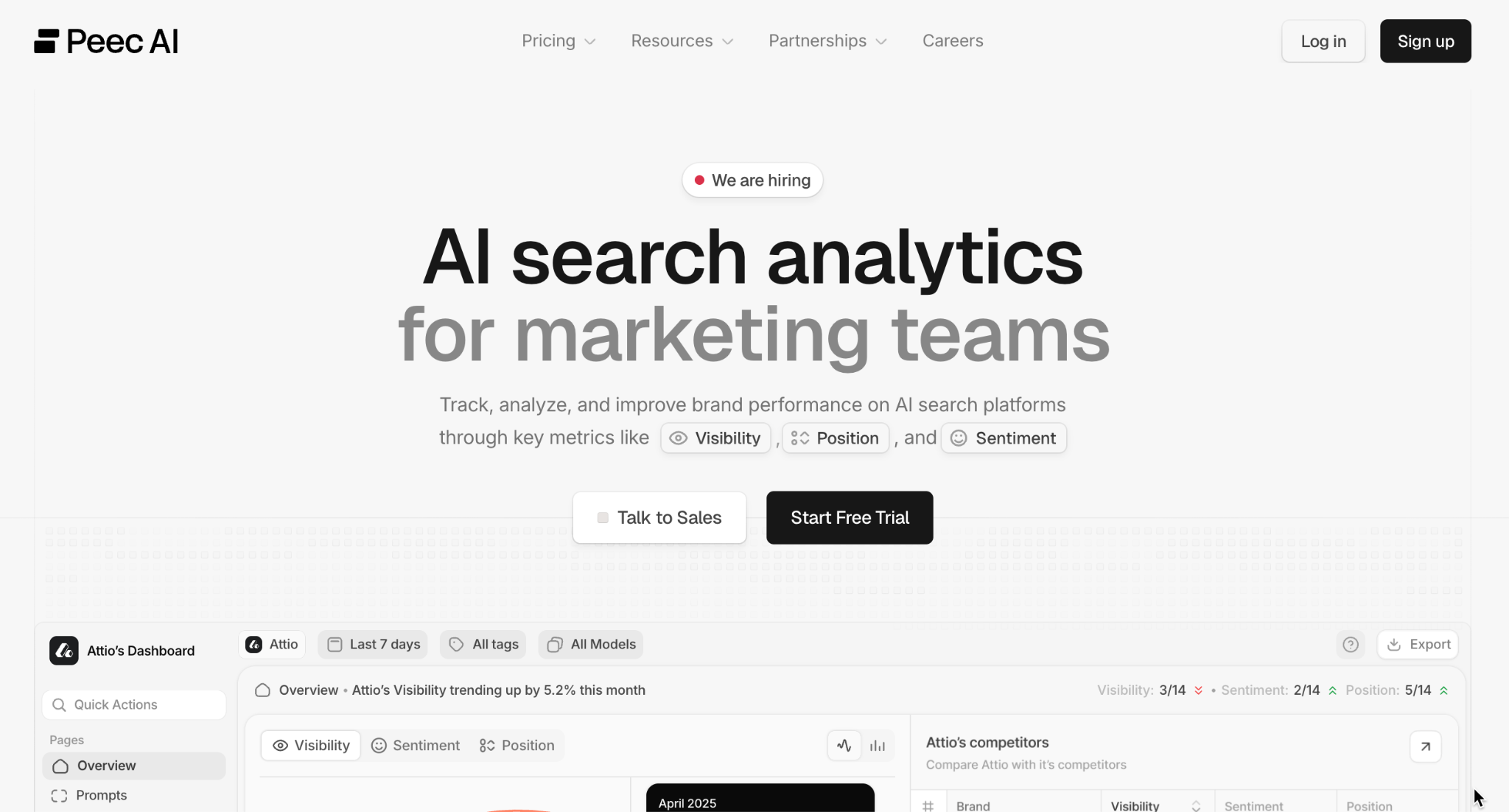
Peec AI is a clean, dedicated tracker that competes on transparency and one standout capability: sentiment analysis. Where most tools tell you whether you appeared, Peec scores how you're described, and reviewers consistently rate that sentiment work as the best in its class.
It lets you pick three engines from a list of seven (ChatGPT, Perplexity, Google AIO and AI Mode, Copilot, Gemini), with Claude available only on Enterprise. It tracks visibility, position, sentiment, AI Share of Voice, and cited sources, updated daily with country-level breakdowns. Unlimited seats come on every paid tier, which matters for teams that don't want per-user fees eating the budget.
Pricing is $95/mo Starter (50 prompts, 3 engines), $245/mo Pro, and $495/mo Advanced, with 15% off annual billing.
Best for: funded marketing teams and agencies that want a focused tracker with pricing they can read off the page.
Not ideal if: you need more than three engines without stacking add-ons, or you want a tool that hands you fixes rather than only measuring how you're doing.
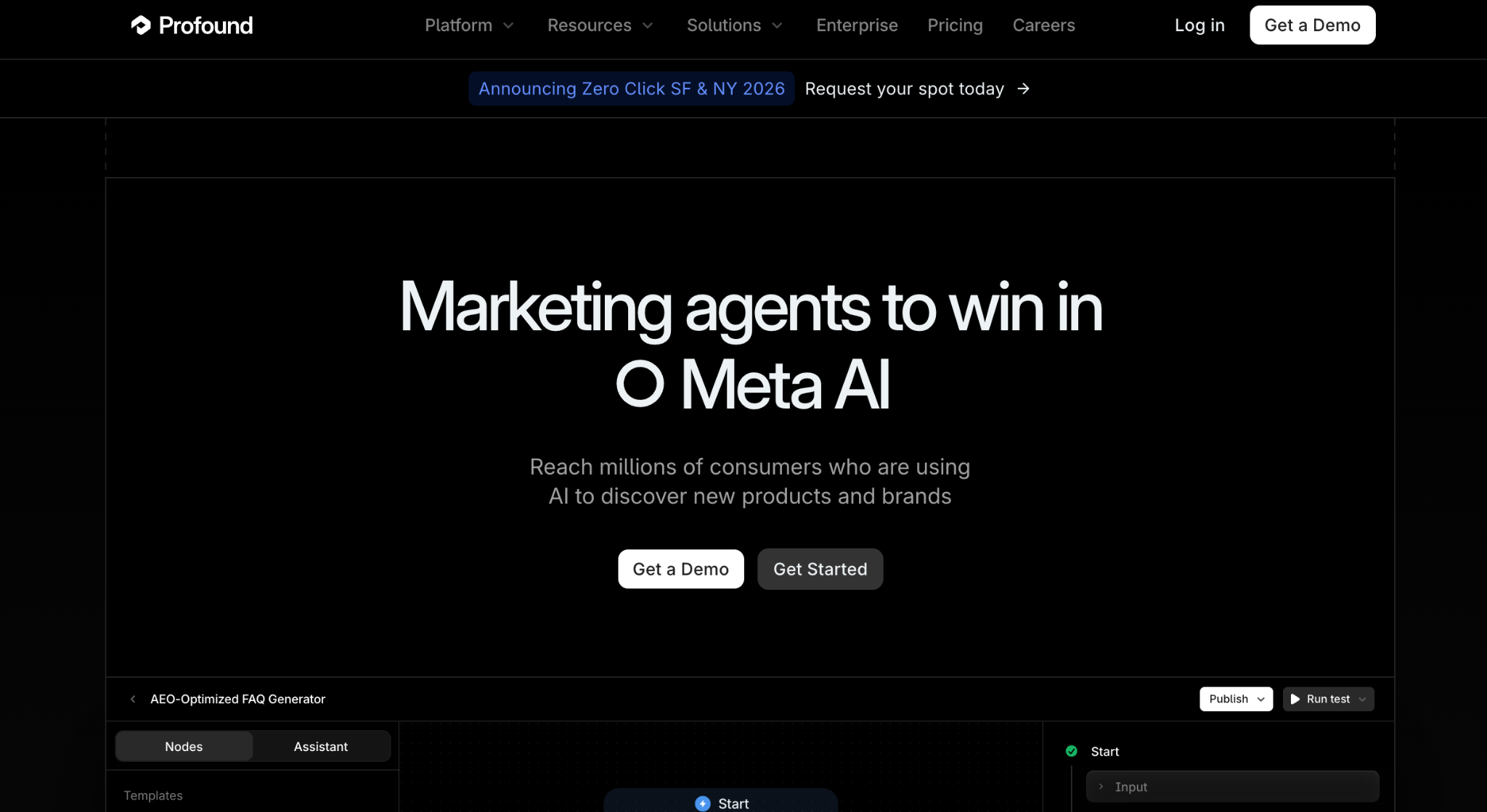
Profound leans enterprise. It's built for deep AI answer analytics and source-reference data, and its standout is prompt volume data that estimates how often people are actually asking the questions you track, which turns a visibility score into a content-strategy input.
It covers ChatGPT on the entry tier and adds engines as you move up, with the full set on Enterprise. The platform tracks brand presence, citations, and source-reference analytics across named competitors, and layers content tooling on top that acts on the data rather than only reporting it.
On pricing, Profound has moved off pure sales-led. It now publishes $99/mo Starter (ChatGPT only), $399/mo Growth (three engines), and custom Enterprise for full coverage. The $99 doorway is real but narrow; multi-engine work starts at $399, and Claude, Gemini, and the rest sit behind an Enterprise quote that independent reviews place in the low thousands per month.
Best for: larger teams that need enterprise-grade analytics and demand data they can put in front of executives.
Not ideal if: you want to self-serve cheaply and cover multiple engines from day one. The $99 tier tracks one engine, and real coverage climbs fast.
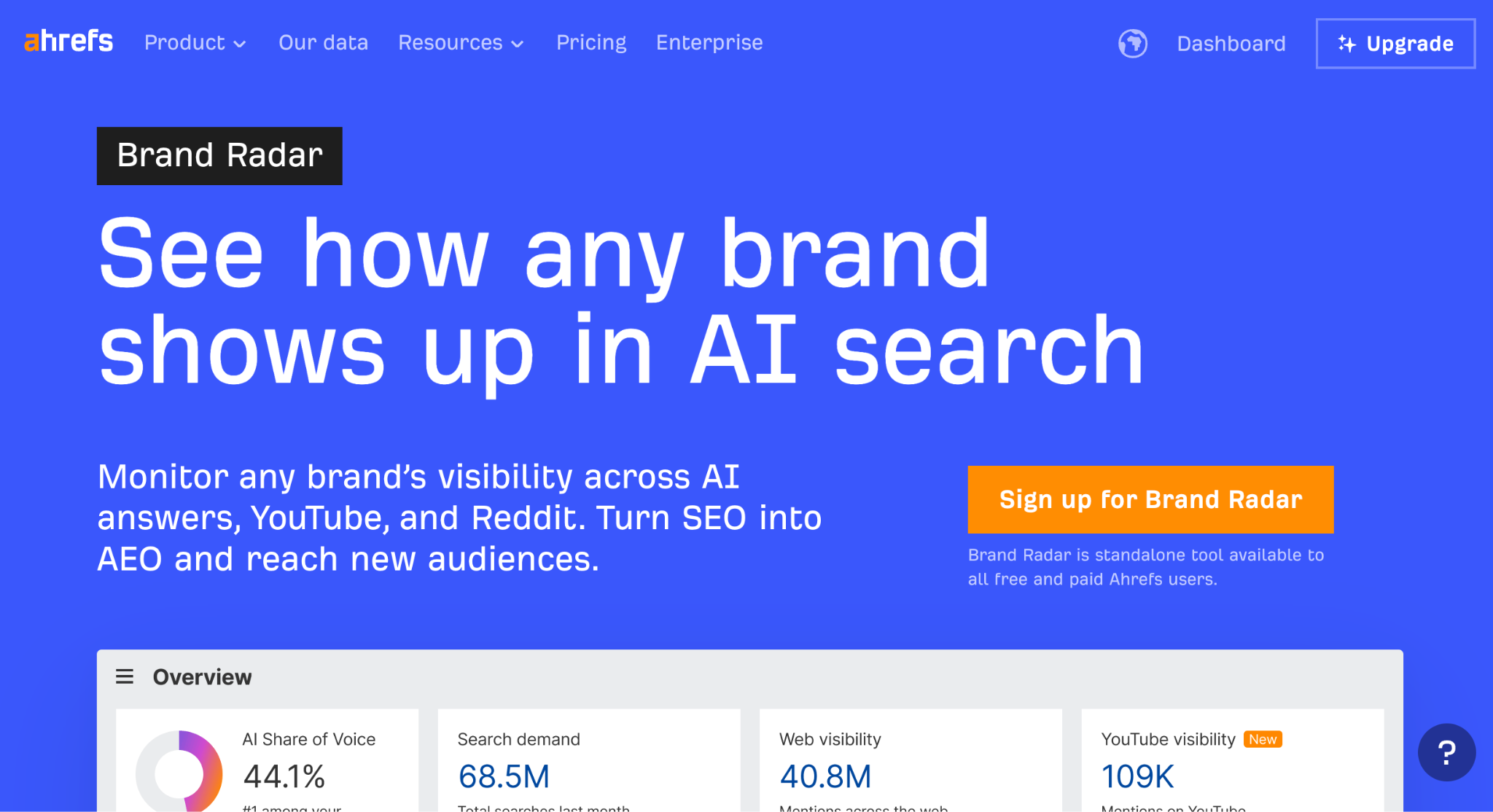
Ahrefs Brand Radar brings AI visibility onto Ahrefs' prompt index, with retroactive mention data across six engines and effectively zero setup for existing users. Its methodology is the differentiator: where most tools generate synthetic prompts based on assumptions about a platform, Brand Radar derives prompts from Ahrefs' actual keyword database, grounding the signal in documented search behavior.
It covers Google AIO, AI Mode, ChatGPT, Perplexity, Gemini, and Copilot, reporting AI Share of Voice, most-cited domains, and mentions, with custom prompt tracking on top. For a team already living in Ahrefs, the data is a natural extension of work they're already doing.
Pricing is where it gets heavy. Brand Radar is $199/mo per platform index, or $699/mo for all six, and it requires an active Ahrefs base plan starting at $129/mo, putting the realistic all-six floor around $828/mo. Independent tests have also flagged snapshot accuracy gaps, with one comparison finding the tool reported a fraction of the mentions that actually existed, so spot-check before you scale spend on it.
Best for: existing Ahrefs users focused on one or two priority engines who want AI tracking without adopting a second platform.
Not ideal if: you want low-cost multi-engine coverage. The per-platform model multiplies, and it multiplies per domain for agencies.
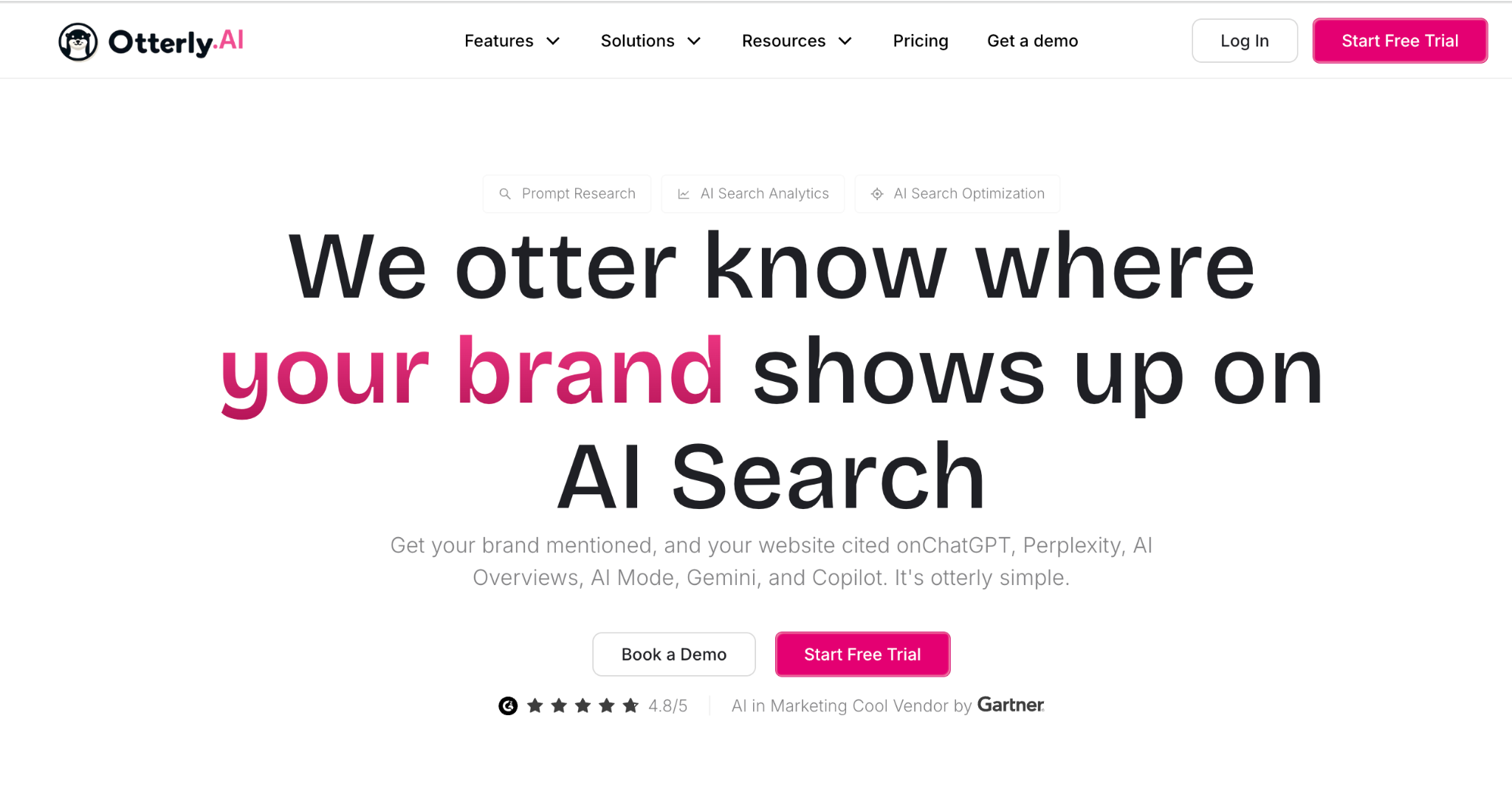
Otterly.ai is the cheapest real entry point in the category, built for teams starting out on a limited prompt set. The $29 Lite plan is a genuine plan, not a decoy: it covers all four core engines, unlimited team members, multi-country tracking, and a well-regarded GEO audit that flags what's keeping your pages out of AI answers.
It tracks visibility across your prompts daily, records which domains the engines cite, and scores your pages against the factors tied to AI citation. The catch is the prompt ceiling and the engine mix. Lite includes 15 prompts across four engines; Google AI Mode and Gemini are paid add-ons, and API and MCP access don't arrive until the Standard tier.
Pricing is $29/mo Lite (15 prompts), $189/mo Standard, and $489/mo Premium, with roughly 15% off annual billing.
Best for: small teams proving the channel on a tight prompt set before committing real budget.
Not ideal if: you track a real buying category. Fifteen prompts runs out fast, and the jump to Standard is steep once you outgrow it.
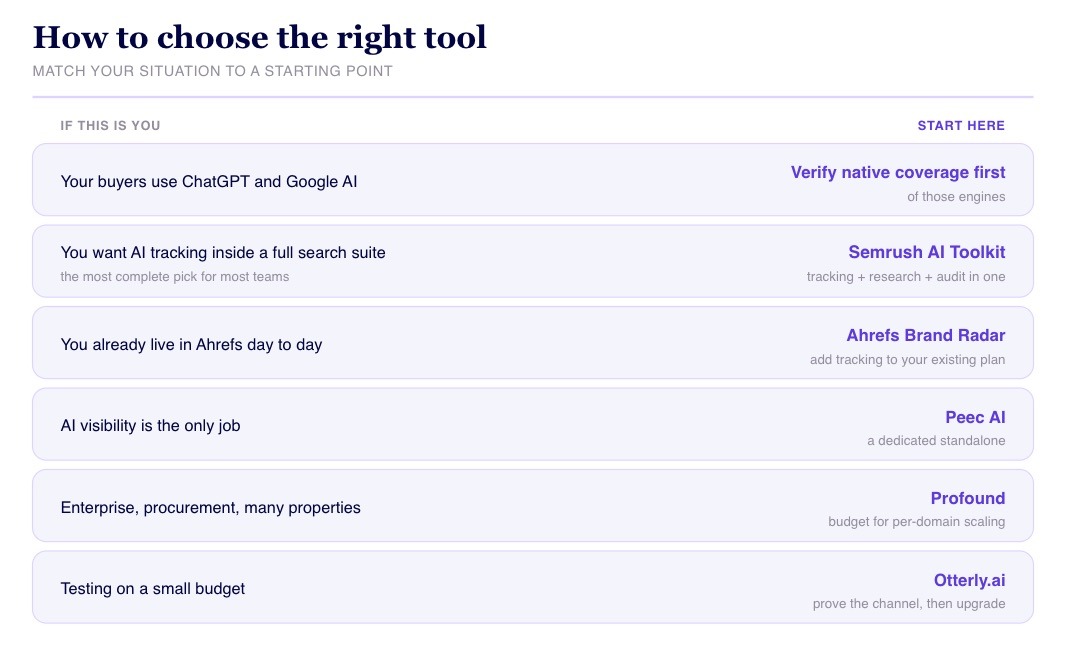
The reviews tell you what each tool is. This tells you which one is yours. Match your situation to the row that fits.
That last row matters more than it looks. These tools sample, and sampling drifts. Before you commit real budget, run identical prompts through your two finalists and check both against what the engines actually return when you prompt them yourself. The tool that matches reality wins, regardless of which had the nicer dashboard.
The right tool measures the surfaces your buyers actually use and tells you what to do next. Everything else is a preference.
Pick the tool that watches where your buyers ask, then act on what it shows you. And whatever you pick, the point is to stop guessing how AI describes you. If you'd rather keep everything in one place, Semrush One covers the most ground — you can try it free for 7 days.
Monitor the engines your buyers use to research your category, not every engine that exists. For most B2B and SaaS teams that means ChatGPT, Google AI Overviews and AI Mode, Perplexity, and Gemini. Check your own analytics for AI referral traffic to see which engines are already sending you visitors, then weight your prompt budget toward those. Adding engines your audience never touches just inflates the bill.
Rank tracking measures your position in a list of links a person scrolls through. AI visibility tracking measures whether a machine included your brand in the answer it composed instead of that list. The evaluator changed from a human scanning results to a machine writing them, so the metric changed from placement to whether you were found, understood, and trusted enough to include at all.
Most tools offer a trial rather than a permanent free tier. Otterly.ai and Peec AI both run free trials without a credit card, and Semrush offers a trial on its plans. Otterly's $29 Lite plan is the cheapest real ongoing option if you want to keep tracking past the trial. Free permanent plans are rare in this category because the underlying prompt queries cost the vendor money to run.
Treat them as directional trend data, not a precise audit. These tools sample prompts on a schedule, and AI engines return different answers to the same prompt over time, so counts vary. Independent tests have found real gaps between reported mentions and actual mentions on some tools. The safeguard is simple: run your key prompts through the engines yourself and compare. A tool whose numbers track your spot-checks is one you can trust to show trends.
For active monitoring, weekly is enough to catch movement without drowning in noise. Most tools update daily, so the data is there when you need it, but daily checking rarely changes a decision. Check more often when you've shipped something meant to move the needle, like a new comparison page or a wave of coverage, and watch whether the engines pick it up.
Some can, and this is the distinction worth paying for. Measure-only tools show you the gap but not the cause. Tools with an audit layer, like Otterly's GEO audit or Semrush's AI Search Site Audit, tie your absence to fixable causes: thin entity signals, weak authority, or pages the engines can't cite cleanly. If knowing why matters as much as knowing whether, choose a tool that connects the score to the durable levers behind it.

Irina is a Founder at ONSAAS, Growth Lead at Aura, and a SaaS marketing consultant. She helps companies to grow their revenue with SEO and inbound marketing. In her spare time, Irina entertains her cat Persie and collects airline miles.
.svg)
.svg)
.svg)
.svg)
.svg)