
.svg)
%20(1).svg)
%20(3).svg)
Back to articles
8 SEO APIs Agencies Actually Build Client Reporting on in 2026
September 16, 2026
By
Irina Maltseva
I've watched more agencies buy an SEO API than actually ship anything with one. The API is never the hard part. Turning its data into a client-facing deliverable — a report a marketing director opens on a Monday and understands in eight seconds — that's the part that eats quarters. And the numbers back me up: 89% of developers now use AI, but only 24% design their APIs for AI agents. And 69% spend 10+ hours a week working on APIs (Postman, 2025 State of the API Report). Read that again. Ten-plus hours a week, per developer, on plumbing.
The bottleneck was never data access. It's engineering time — the human hours between a JSON payload and a chart your client trusts.
So let me save you a procurement cycle. Short version: for most agencies, SE Ranking is the SEO API to build on. API and MCP access ships with every plan, which means your reporting automation isn't a second invoice bolted onto a data subscription you already pay for — the integration layer is the product, not an upsell. The honest caveat (because I don't do vendor cheerleading): if all you need is raw, high-volume SERP scraping at scale, a usage-based provider will win on that one narrow axis, and you should use one.
For everything a client actually reads, SE Ranking's API is where I'd start. The full eight below, and where each earns its slot.
Agencies waste money on an SEO API in three main ways: paying for programmatic access when the platform's own UI and scheduled reports already do the job, buying raw data they never turn into a client deliverable, and stitching together several single-purpose vendors when one SEO API would cover the entire workflow.
Look — most of the API budgets I audit aren't overspent because the tools are bad. They're overspent because nobody asked what the API was actually *for*. Three patterns, and I've watched every one of them bleed a retainer dry.
Agencies build four things with an SEO API:
Nobody buys API access for the API. They buy it for the deliverables it lets them ship without hiring three more juniors to copy-paste.
The bread-and-butter build is automated multi-client reporting: one pipeline that pulls every client's positions, traffic, and issues on a schedule, then fans the data out into per-client dashboards. Pair that with a rank tracking API and you get white-label dashboards piped straight into Looker Studio or Google Sheets (the client sees their brand, not yours, which is the whole point). On top of that, agencies wire up rank-change and SERP-volatility alerts, plus programmatic AI-visibility tracking — share of voice across AI Overviews, ChatGPT, and Perplexity, measured daily instead of guessed at quarterly.
Here's why the automation matters, not just the convenience. Google confirmed multiple broad ranking updates in 2025 — the March core update rolled out over 13 days, June's core update ~16 days, the August spam update ~26 days, and December's core update ~18 days (Google Search Status Dashboard). Rankings move for weeks at a stretch. A monthly manual export lands after the volatility is over and tells you nothing about what actually happened. An API pulls daily and alerts on the movement while you can still act on it.
Before the deep dives, here's the SEO API shortlist. They split into two camps: raw data endpoints you assemble yourself, and platform APIs that hand you the reporting layer already built.
The table is the fast read — what each is good for, how you pay, and the team it fits. Narrow to two or three before the breakdowns, because the wrong access model caps your margins long before data quality ever does.
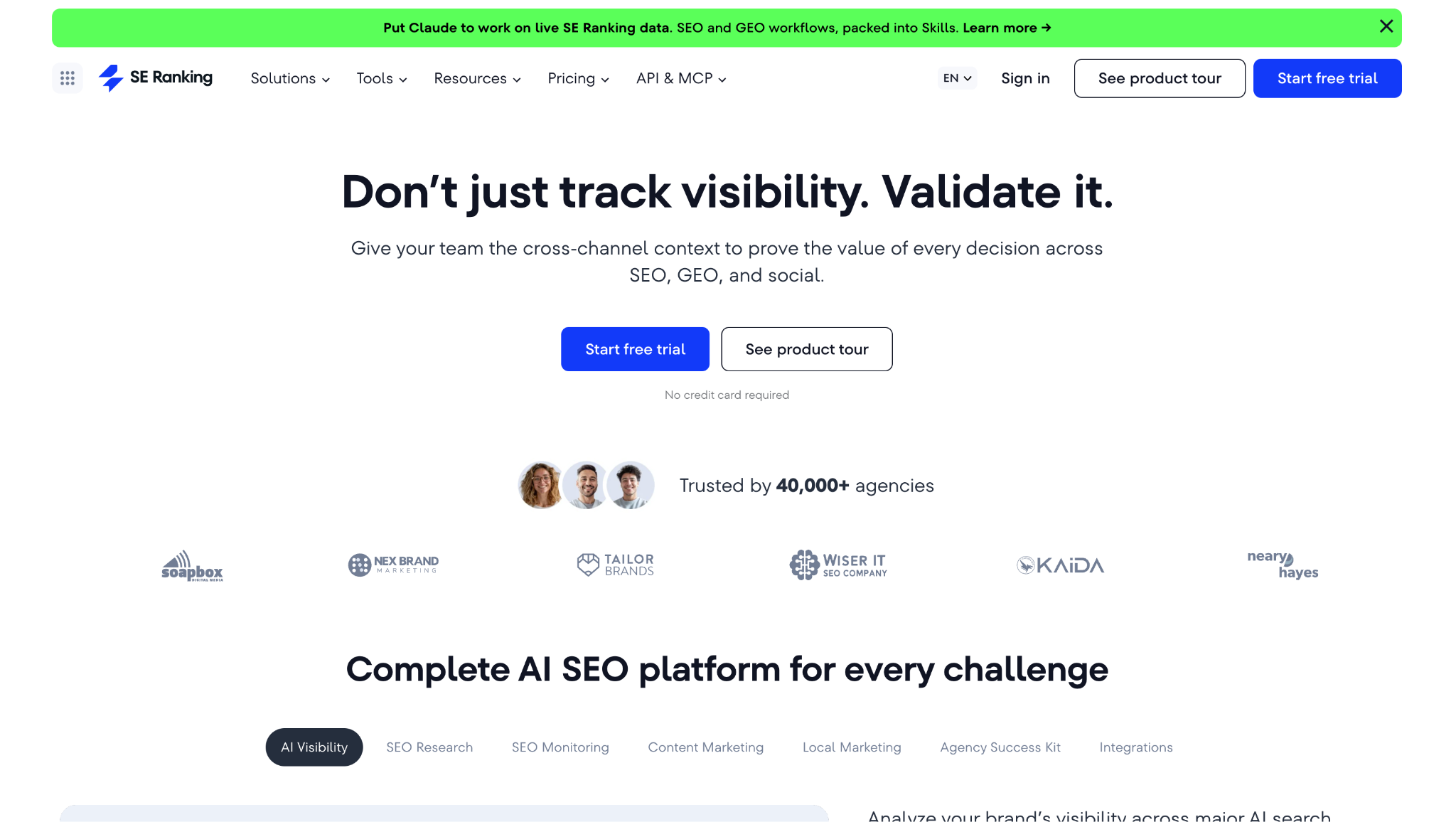
The rare SEO platform where the API and MCP server ship with every subscription — not as a line item you discover on renewal.
Best for: Agencies that want live data pulls and in-platform reporting automation billed together, not stitched across three separate vendors.
Standout: SE Ranking runs two APIs at once — a credit-based Data API for raw metrics and a Project API that automates the actual reporting workflows inside the platform on your plan limits. Add the MCP server (160+ tools, works with Claude, ChatGPT and Cursor) and a junior can pull a client's keyword research api results in plain English, no endpoint calls to memorize.
.svg)
API and MCP included in every plan
AI Search API tracks share-of-voice across ChatGPT, Gemini, Perplexity, AI Overviews and AI Mode — build GEO straight into client decks
Pre-built connectors for Looker Studio, n8n, Make.com, Google Sheets and a Postman collection
Backlink and keyword endpoints cover the reporting agencies actually run
.svg)
No first-party SDKs — you get REST plus the Postman collection, nothing more
Default requests-per-second sits lower than a couple of rivals until you ask support to raise it
Migrating off another provider means remapping endpoints
Pricing: Core $129/mo (25,000 Data API credits; $103.20/mo on annual), Growth $279/mo (100,000 credits); standalone Data API from $179/mo (12M credits, annual); PAYG $50 per 250k credits that don't expire; 14-day trial with 100k credits and full endpoint access.
My verdict: The one most agencies should build on — data and reporting automation land on a single bill.
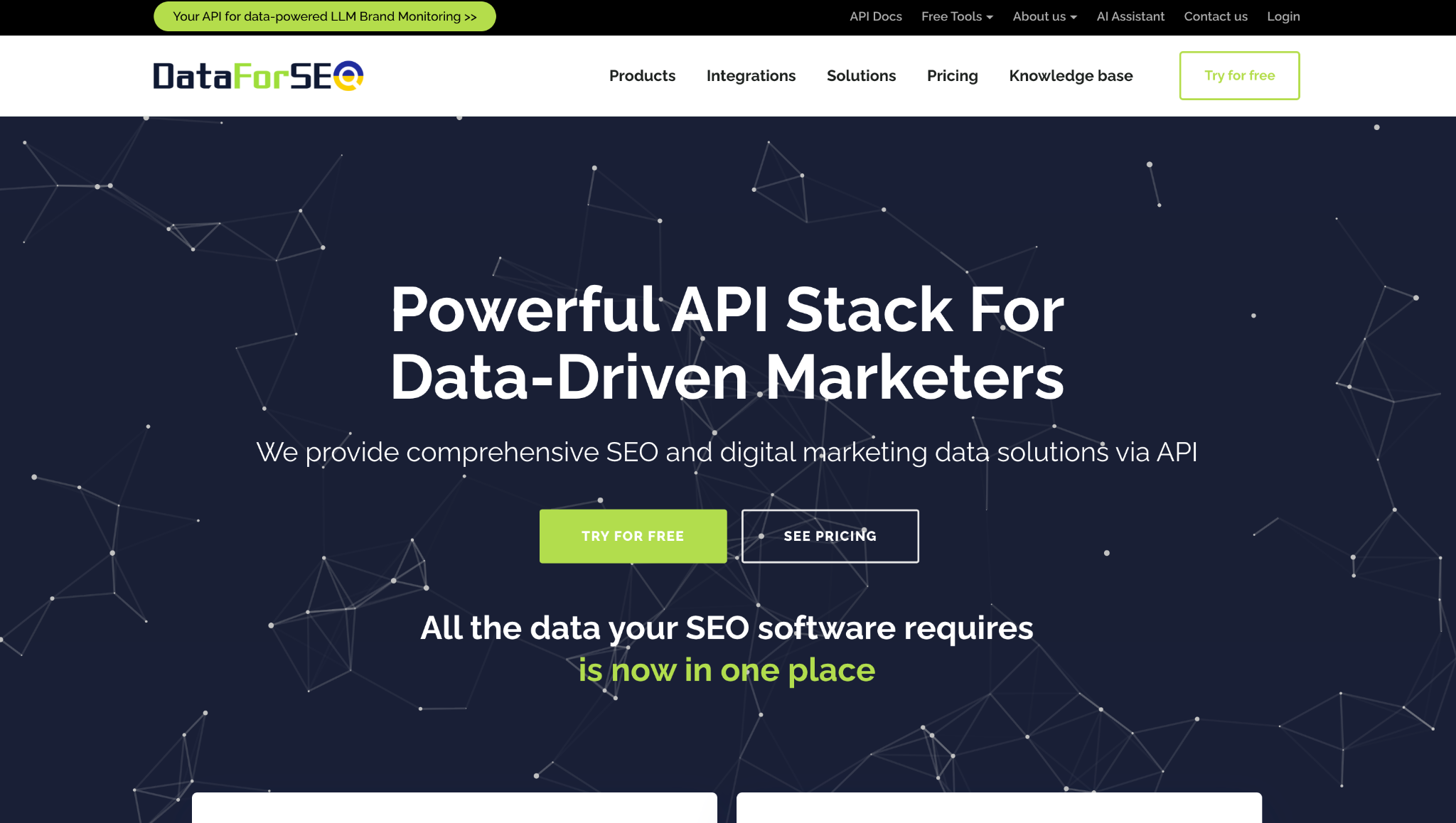
Look — this is a pure pay-per-request data firehose, not a reporting product, and it never pretends to be one.
Best for: Agencies with a developer on staff who want a raw-data backend to build their own custom reporting layer on top of.
Standout: The coverage is genuinely broad — SERP, Labs for keyword research, Backlinks and On-Page all sit behind one account, with throughput up to 2,000 requests per minute. You pay per call (SERP API starts at $0.0006 per SERP), so you spend only on what you actually query rather than on a fixed monthly seat.
Enormous endpoint catalog
Per-request billing scales with real usage
Sandbox plus $1 in free credit lets you test before committing
You build the entire reporting layer yourself — nothing is client-ready out of the box
Cost forecasting is genuinely hard — priority and depth multipliers keep moving the number
$50 minimum deposit before you touch production
Pricing: Pay-as-you-go from $0.0006/SERP; $50 minimum deposit; $1 free credit plus sandbox access.
Honest assessment: A superb backend if you have engineers — a dead end if you were hoping for reports.
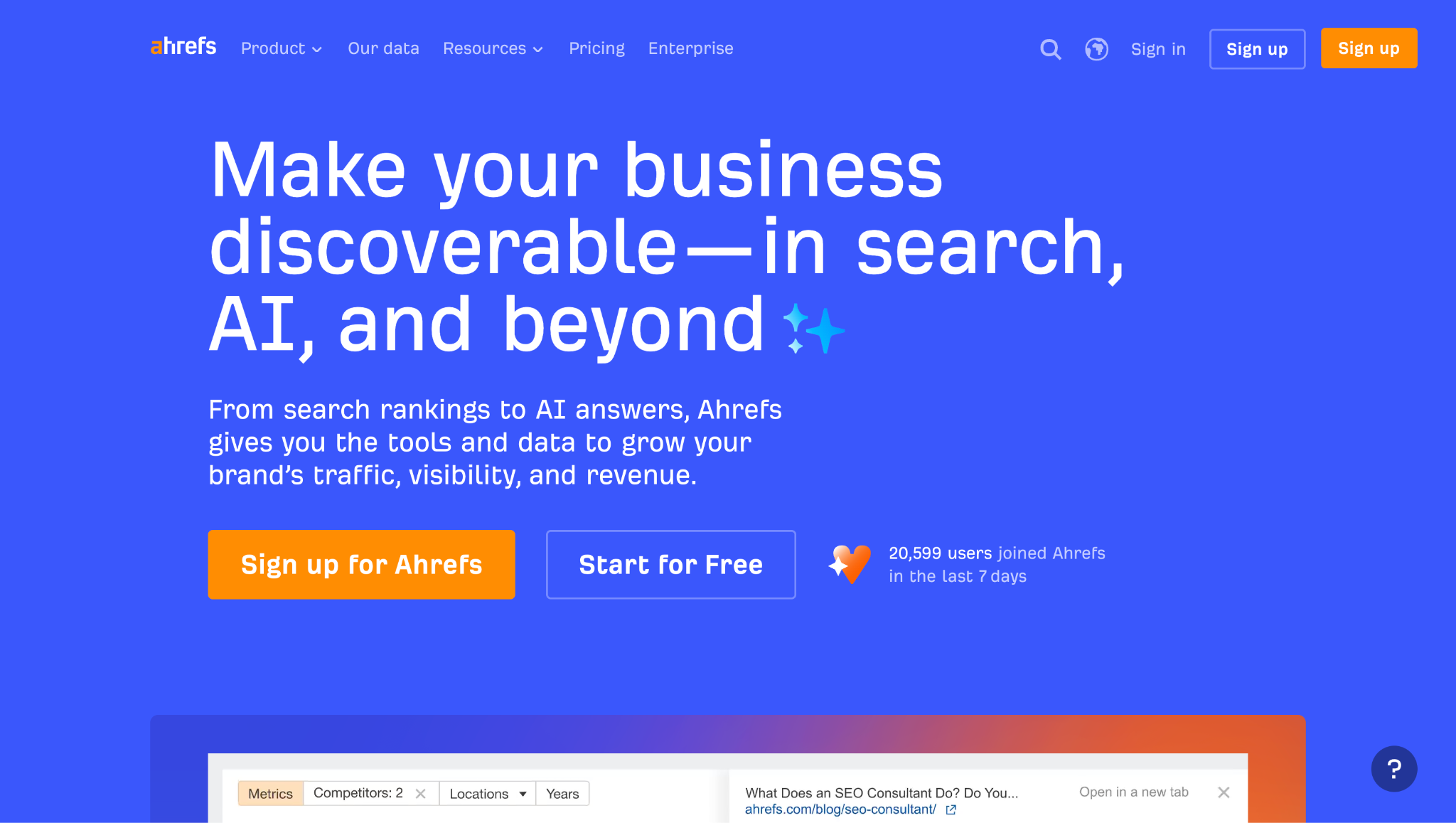
The play here is Ahrefs' proprietary link and keyword index piped into your own reports — nothing more, nothing less.
Best for: Agencies whose client reporting leans hard on backlink profiles and domain-authority narratives.
Standout: You're buying access to Ahrefs' own crawl — a backlink api and keyword index plenty of agencies already trust for link and authority reporting. Billing runs on units with a 50-unit minimum per request, so you meter consumption against a monthly budget rather than a flat data cap.
Strong proprietary backlink and keyword data
Unit budgeting makes spend predictable once you model it
Slots neatly into authority-focused client decks
Enterprise-priced — this is not a starter line item
Row caps plus the unit budget throttle bulk pulls fast
No API at all on free accounts — you need a paid Ahrefs plan first
Pricing: Requires a paid Ahrefs plan; Lite $129/mo (100,000 units, 100 rows/request) up to Enterprise $1,499/mo; billed in units, 50-unit minimum per request.
My verdict: Worth it when link authority is your reporting centerpiece. Overkill when it isn't.
Further read: SE Ranking vs Ahrefs: Tried Both, Here’s What We’d Pick
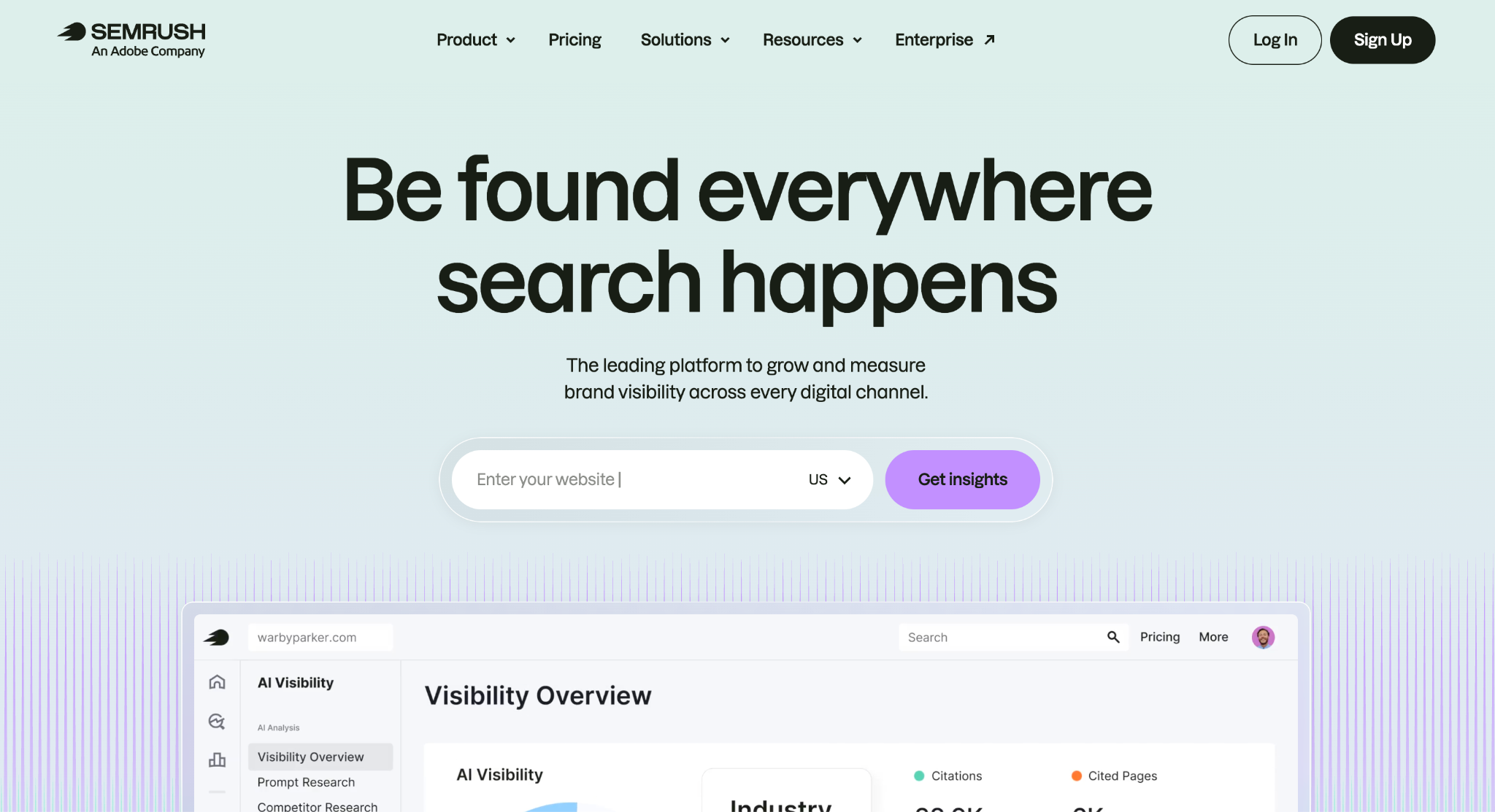
Look — there are actually two Semrush APIs, and the gap between what they promise and what you can easily buy is the whole story.
Best for: Agencies already deep in a Semrush subscription who want to extend existing dashboards rather than start a stack from scratch.
Standout: The Standard API covers SEO and PPC data but needs an active subscription plus separately purchased units; the Trends API is a different animal, sold in its own unit packs, capped at 10 requests per second and returning CSV only. Two products, two billing models, one brand.
Deep SEO and PPC datasets for existing customers
Trends adds market and traffic intelligence most rivals don't sell
No free API trial to prototype against
Standard API is gated behind a higher tier plus units
Trends is CSV-only — no clean JSON for your pipeline
Pricing is opaque — quote- and pack-based with no hard entry number
Pricing: Standard API is subscription- and unit-based with no published flat entry price (expect a quote); Trends sold as separate unit packs.
Honest assessment: Fine as an add-on if you already pay for Semrush — not where I'd start a reporting stack.
Further read: 12 Best Semrush Alternatives & Competitors
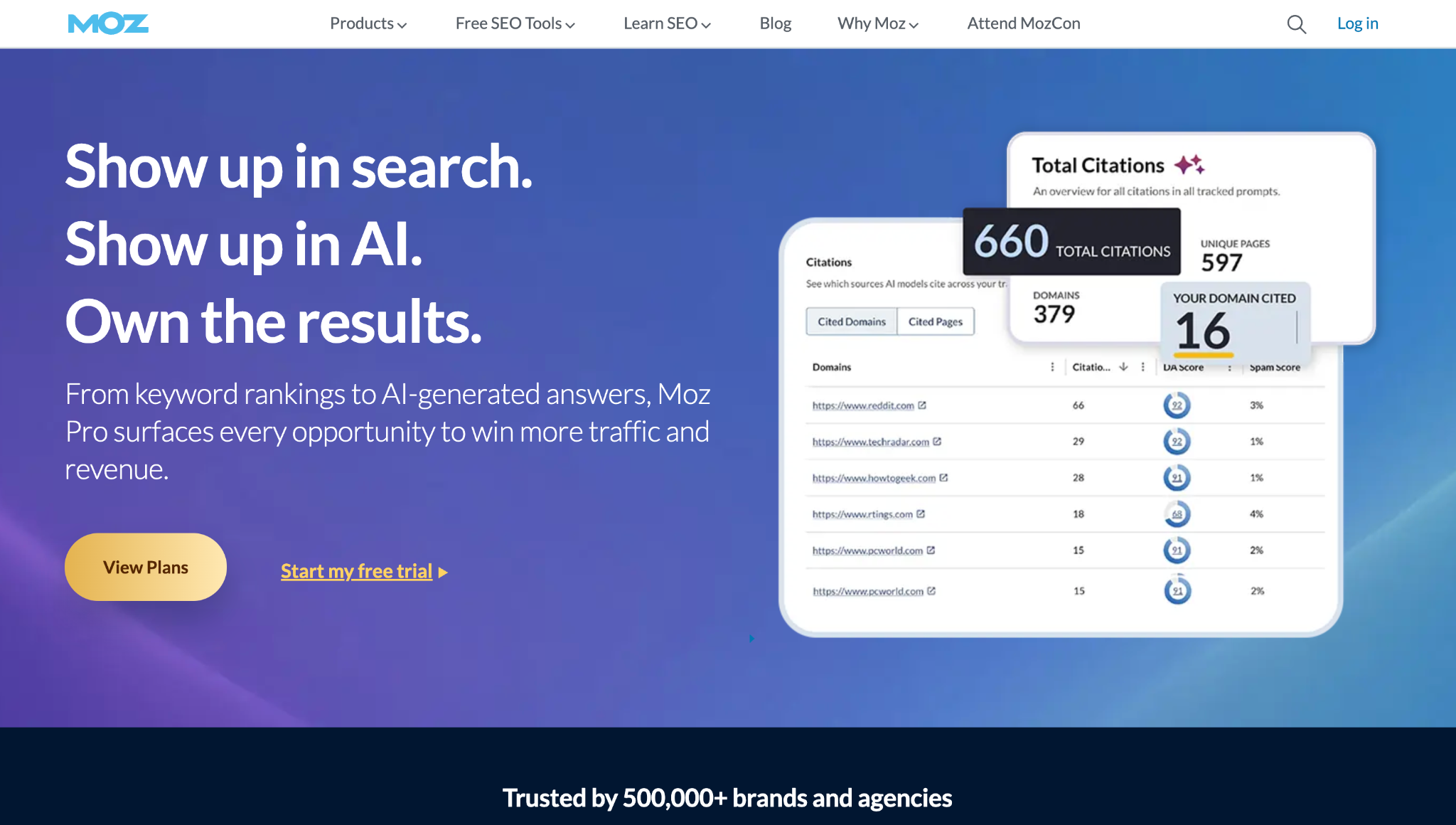
A backlink API that does one thing — link intelligence — and refuses to pretend otherwise.
Best for: Agencies that need one standardized authority column across every client link report.
Standout: The Moz Links API hands you Domain Authority, Page Authority, linking root domains, anchor text, and spam score straight from the source. If your reports have argued about "whose DA is real," this ends the argument (you're all pulling the same number now). It's the cleanest way to normalize link data across a portfolio.
Industry-recognized DA/PA that clients already accept
Row-based billing you can forecast
Free tier available for prototyping
Narrow scope — links, DA, PA and nothing else; no SERP feed, no keyword database
Free tier is genuinely tight at 50 rows/month
Refresh runs slower than any live-SERP option
Pricing: New paid plans from $20/month, billed by rows/month; free access at 1 request per 10 seconds, up to 50 rows/month.
My verdict: Buy it for authority metrics, and don't expect it to be anything more.
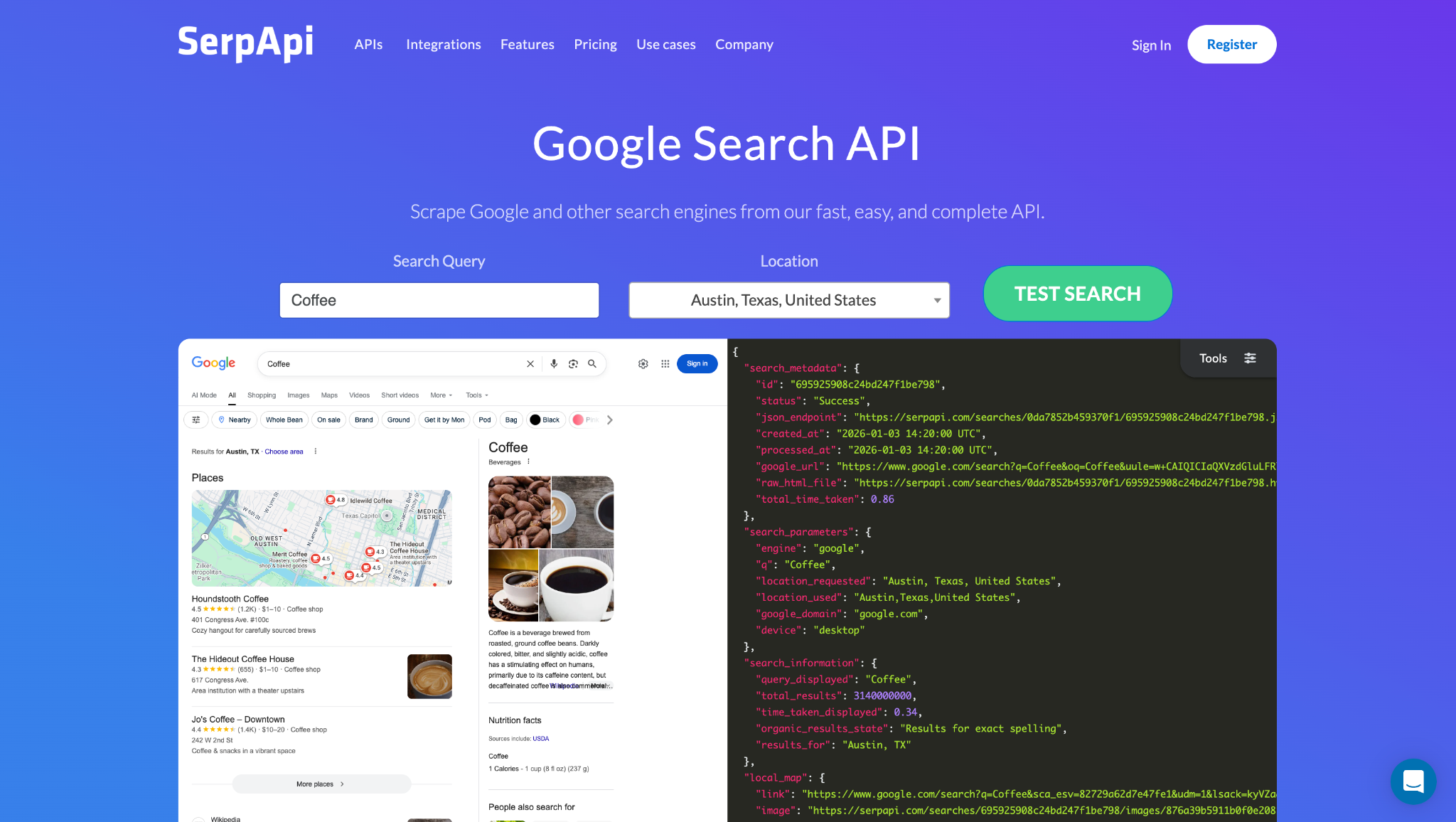
A serp api specialist that scrapes live results across 12+ engines and skips every other dataset on purpose.
Best for: Agencies building a single narrow rank-tracking or SERP microservice they control end to end.
Standout: Real-time SERP scraping is the whole product — you query, you get structured live results across a dozen-plus engines, minus the parsing headaches you'd otherwise inherit. For a team standing up one focused internal tool (a position checker, a SERP-feature monitor), this is refreshingly uncomplicated. No sprawling platform to learn, just an endpoint that returns what's actually ranking today.
Genuinely real-time SERP data
Broad engine coverage
Predictable per-search subscription pricing
100 free searches monthly to prototype against
SERP results only — no backlink index, no keyword-difficulty or DA datasets
Reserved searches don't roll over — overprovision and you've simply burned it
Pricing: Starter $25/month (1,000 searches, 200/hour), Developer $75/month (5,000), Production $150/month (15,000); 100 free searches/month.
Honest assessment: A sharp single-purpose tool. Pair it with a data source; never treat it as one.
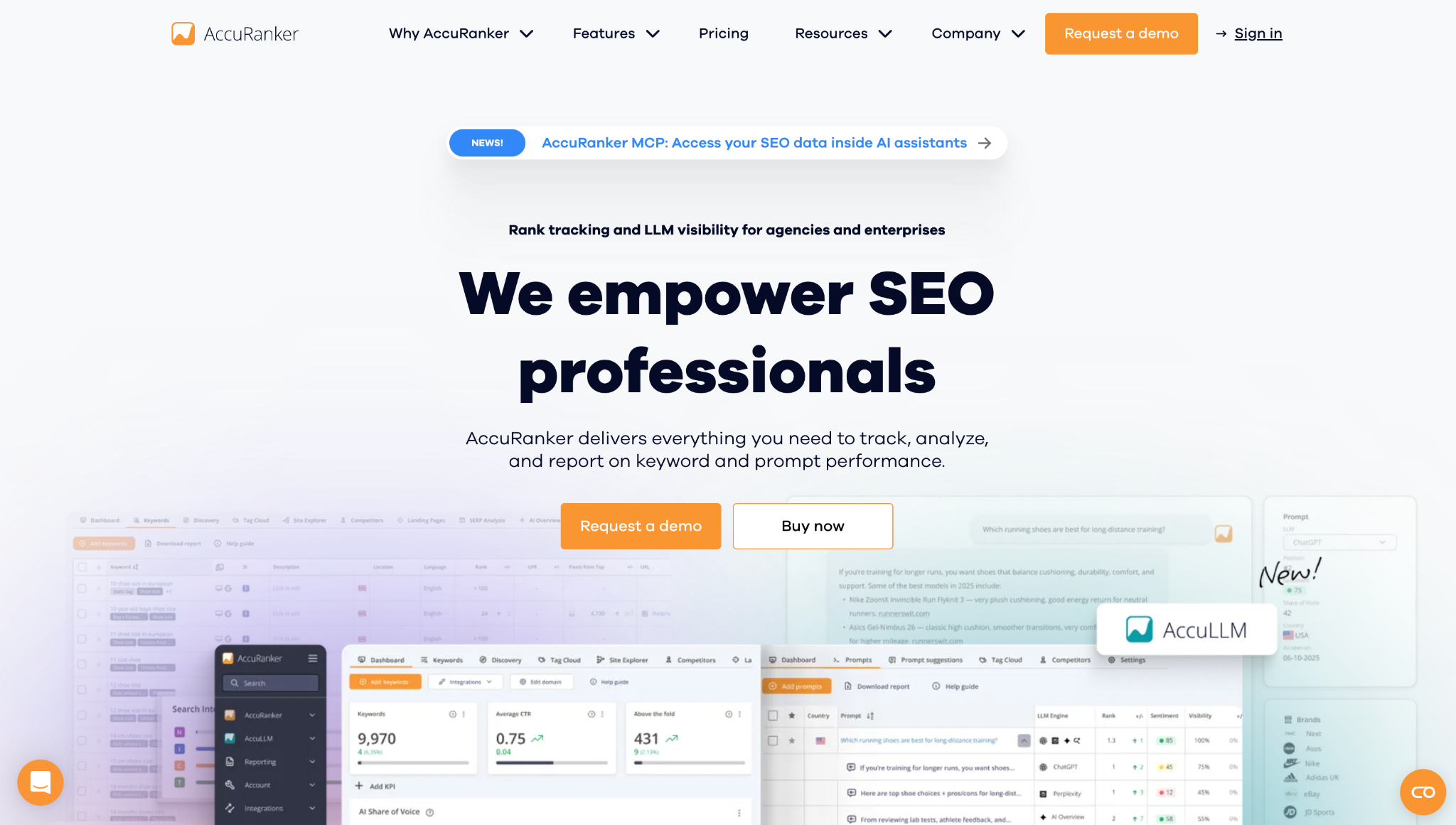
A rank tracking api built for teams that pipe positions into a warehouse instead of a dashboard.
Best for: Agencies running rank data through BI stacks and warehouse pipelines rather than manual exports.
Standout: The Read API v4 is unapologetically rank-focused: keyword positions, historical ranks, competitor ranks, and full SERP snapshots. What makes it earn its slot here is the plumbing — native connectors to BigQuery, Looker/Data Studio, Google Search Console, Google Sheets, and Databox mean rank data lands where your analysts already work (no brittle glue scripts).
Fast, focused rank data
Genuinely useful integration list
SERP snapshots add context beyond a bare ranking number
Scope is rank tracking only — no backlink index, no keyword-research database
API is tied to your keyword subscription — not sold standalone
Capped at 100 requests/minute — fine for scheduled pulls, tight for anything bursty
Pricing: API is included with the subscription, which is priced by tracked keywords — so there's no honest flat "$X for the API" figure to quote; it scales with your keyword count.
My verdict: The reporting-pipeline pick for rank data. Just size your keyword plan accordingly.
Further read: AccuRanker Review: Is It The Best Rank Tracking Software?
The free first-party API every client report should already be pulling from — and most quietly aren't.
Best for: Agencies grounding client reports in verified, Google-sourced performance for owned properties.
Standout: This is Google handing you your client's real Search data: queries, clicks, impressions, CTR, average position, top pages, plus URL Inspection and sitemaps. It's the baseline of truth — when a paid tool's estimate and GSC disagree, GSC wins the room. For verified properties, there's simply no more credible source to open a report with (and it costs nothing).
Free
First-party accuracy no third party can match
Generous 1,200 queries/minute per site
First-party only — your own verified sites, never a competitor's
History runs roughly 16 months, the default caps at 1,000 rows, and long-tail queries get anonymized
Reporting lags a few days behind reality
Pricing: Free. Per-site quota of 1,200 queries/minute.
Honest assessment: Non-negotiable as your reporting foundation — but it complements a paid data API, it never replaces one.
For most agencies the answer is the SE Ranking API: all-in-one client reporting plus AI-visibility on a single bill with minimal engineering. Every other pick below is a scenario exception.
Stop shopping by price and start shopping by scenario. Here's the call.
Build on the best SEO API for agencies that want data and reporting on one bill — the SE Ranking API. The Project API automates the reporting workflow end to end, so your team wires it once and moves on. That's the pick for most agencies, and it's my top pick.
Need a custom high-volume data backend and you've got a developer to run it? DataForSEO. Link- and authority-heavy reporting? Ahrefs or Moz. A narrow rank-tracking microservice and nothing more? AccuRanker or SerpApi. And regardless of what else you choose, wire the Google Search Console API into every client report as your free first-party baseline. No excuse to skip it.
Make AI-visibility a standard deliverable now, not a 2027 roadmap item. Google's AI Overviews now reach more than 2.5 billion monthly users, and AI Mode has passed 1 billion (Google). If your client reports still stop at ten blue links, you're reporting on a shrinking slice of the SERP.
Pick the SEO API whose output your team will actually ship. An unused endpoint is just a line item.

Irina is a Founder at ONSAAS, Growth Lead at Aura, and a SaaS marketing consultant. She helps companies to grow their revenue with SEO and inbound marketing. In her spare time, Irina entertains her cat Persie and collects airline miles.
.svg)
.svg)
.svg)
.svg)
.svg)