
.svg)
%20(1).svg)
%20(3).svg)
Back to articles
21 Best Sales Tools for Prospecting: Reviewed and Ranked
August 28, 2026
By
Irina Maltseva
According to HubSpot, 40% of salespeople report that prospecting is the most challenging part of their job. And for good reason–the mixing of outreach, data entry, research, and communication places a lot on the shoulders of professionals trying to bring potential leads into their pipeline.
To help, most sales platforms offer extensive automation tools to handle one or more of these tasks. The best of these platforms mix automation, AI, and pipeline management in a way that relieves the beleaguered salesperson from the need to juggle dozens of tasks and frees them to focus on creating real human connections.
This article will discuss the 21 best sales tools for prospecting, including their key features and prices.
Sales is ultimately a human activity that relies on communication and building connections. However, sales tools play a massive role in ensuring sales professionals can automate prospecting practices, including research, outreach, and data entry.
So, with that in mind, the benefits of B2B sales prospecting tools in prospecting become clear:
Automation tools streamline salespeople's daily work to prospect for leads–from research to email outreach to data entry. The hours these pros save daily due to prospecting tools are spent doing more important tasks, like connecting with potential customers.
Prospecting tools, especially those supported by analytics and AI, can increase the quality of your lead list. Through behavior-analyzing algorithms and in-depth databases with millions of contacts, prospecting tools can give salespeople insights that they may never have on their own, all tied to specific demographics. As a result, your sales pipeline will have high-quality leads with a better chance to convert.
Automation tools, especially those related to email automation and outbound sales, are intimately tied to enhancing salespeople's effectiveness in reaching out to their prospects.
Having an accurate sales pipeline without precise tracking analytics showing how prospects move through it is nearly impossible. For prospecting, data around email engagement (emails opened, responses, clicks, etc.) are non-negotiable if you want to build fundamental strategies around exploration.
Modern prospecting tools allow salespeople to understand how their approach does or does not work and adjust their strategies as needed.
Not all prospecting tools are equal, and many aren’t standalone. They can be included as part of a comprehensive platform or as a niche product focusing on a specific part of the outbound sales process (email, lead generation, and so on).
Prospecting's primary function is lead generation. Lead generation tools often use advanced algorithms to search databases, websites, and social media platforms to discover prospects based on factors like industry, company size, and job roles. If a salesperson had to handle these tasks independently, it would do something other than slow them down. With such a tool, they don’t have to perform all the overhead needed to create a lead pipeline–the automation handles it independently.
CRM systems like HubSpot or Salesforce help sales teams manage relationships and interactions with leads by tracking all communications, including emails, calls, and meetings. This ensures that every team member can access up-to-date information on each lead.
The primary purpose of a CRM is to centralize workflows to nurture potential leads. In a world of high-volume sales, these platforms allow salespeople to manage their contacts and build connections with leads (and guarantee higher conversion rates).
Studies show that only about 23% of sales emails are opened. While email is still the bread and butter of outbound sales, it’s still challenging to be heard above the crowd. Workflow automation makes it easier for sales pros to plan, personalize, and automate email engagement.
AI-powered tools are taking this further by planning strategic follow-ups… a critical feature considering that prospects are 9x more likely to convert when a business follows up in 5 minutes. More importantly, these tools help salespeople track email effectiveness through engagement like opens, clicks, and conversion.
While email is the backbone of most prospecting efforts, social media quickly becomes a default channel for sales teams. B2B sales relies heavily on being able to pull contact information from platforms like LinkedIn, and prospecting tools combine research and outreach to help salespeople filter leads, enrich their data, and diversify their outreach.
Speaking of data enrichment, using old or inaccurate information is simply non-negotiable. Data enrichment tools allow salespeople to ensure their contact data is accurate or expand it with more in-depth information for each lead. For example, a platform that promises to enrich data would provide the ability to pull data from LinkedIn, the web, or other sources to compare existing contact information against and, where necessary, update it. These enrichment can include web scraping, API integrations, database lookups, third-party data providers, and automated cross-referencing of public and proprietary sources.
Use this grid to compare the 21 tools before you dive into the detailed write-ups. Each row maps to a numbered entry below.

Artisan is a powerful sales tool that focuses on prospecting and lead generation. Artisan’s AI SDR, Ava, automates nearly every task-based process in the outbound sales pipeline, from data entry to research, qualification, and enrichment.
Some core features include:
Pricing
If you want to learn more about pricing and features, contact Artisan’s team of experts.

Apollo.io offers a comprehensive suite of prospecting tools, including a vast contact database, automated outreach, and email sequencing. CRM integration and lead scoring help sales teams to target the most valuable prospects.
Key features include:
Pricing

ZoomInfo is a relatively well-known player in the outbound sales and prospecting industry, providing a database with contact information covering over 100 million businesses. It’s also worked in the last few years to integrate AI tools to help with research and prospecting,
Prospecting features include:
Pricing
ZoomInfo pricing is based on a personalized quote through their sales team.

LinkedIn Sales Navigator is a powerful tool for finding and engaging with leads directly through LinkedIn. It offers advanced search, personalized recommendations, and the ability to message prospects through InMail.
Advantages include:
Pricing
Pricing requires direct contact with sales reps, but the platform includes a free trial period.
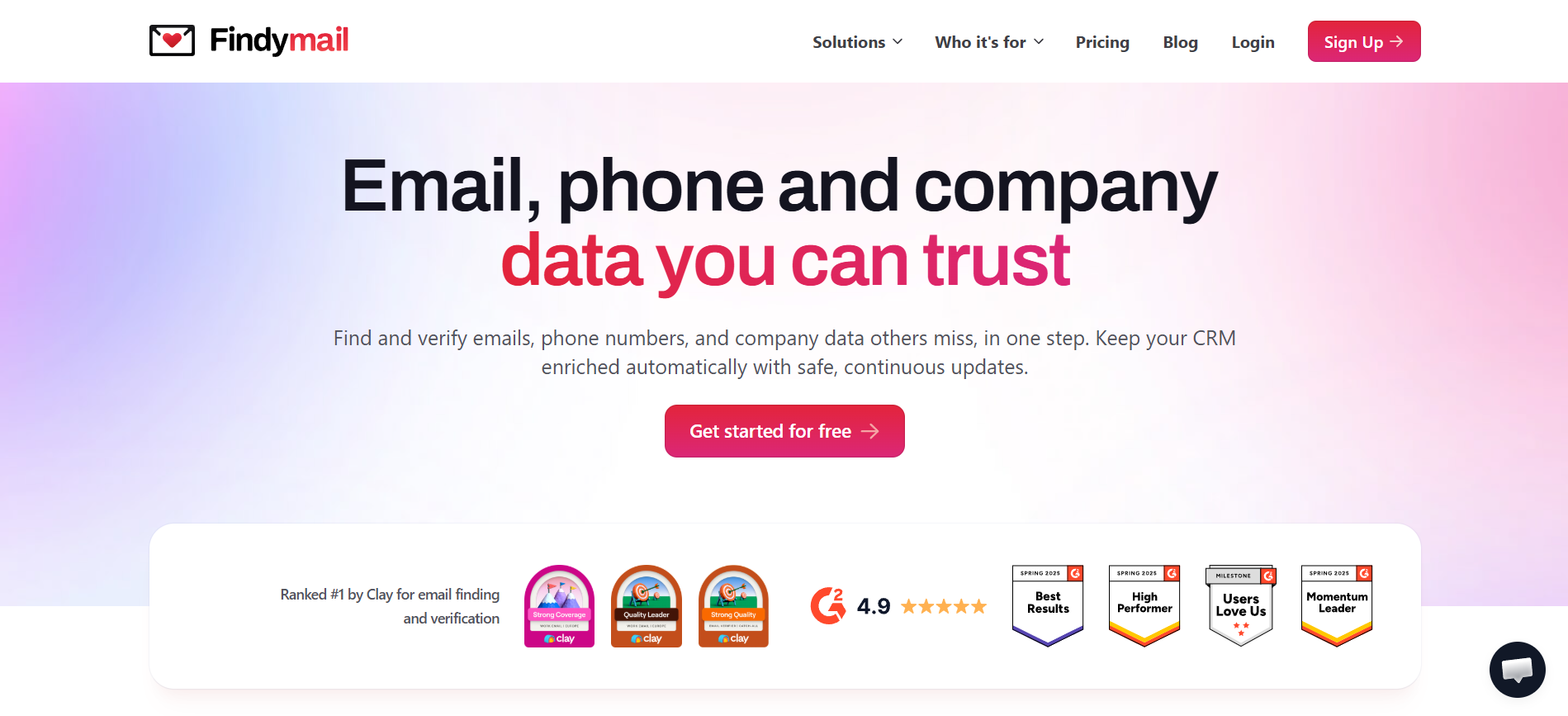
Findymail started as an email finder and verification tool, but has since evolved into a full B2B prospecting platform that covers email finding, verification, AI-powered lead sourcing, and intent signal tracking. What sets it apart from most competitors is that the contact data it sources is pulled live from the web rather than internal databases, so sales teams are working with current, reliable data rather than records that may have gone stale between refreshes.
Key features include:
Pricing

Hunter.io is, as the name suggests, an email list builder and prospecting tool. Its claim to fame is its email finder, a solution that can pull contact information for potential prospects based on the company domain or LinkedIn data. Outside of this, however, it’s pretty focused on that task and works better as part of a sales prospecting stack rather than a one-stop platform.
Hunter.io includes features like:
Pricing

Woodpecker is primarily an email outreach automation tool designed to help sales teams manage personalized emails through deliverability, lead gen, and integrations. Features like follow-up sequences and A/B testing help refine sales strategy and increase engagement.
Features included in Woodpecker include:
Pricing

Crunchbase is another well-known player in the sales industry due in no small part to its comprehensive database of tech companies and startups and their funding rounds. These companies are often positioned to expand rapidly depending on this funding and will usually need the services that your team is selling. Note, however, that the prospecting tools are bare-bone, as the main selling point is the database itself.
Features include:
Pricing

Leadfeeder helps sales teams identify anonymous website visitors by tracking their behavior and integrating this data into your CRM. It enables businesses to follow up with prospects who have already shown interest and leads heavily into data enrichment and integration features.
Leadfeader provides users with:
Pricing

Breeze Intelligence by HubSpot, formerly Clearbit, is a powerful prospecting tool plugged into debatably the biggest CRM platform. It is AI-powered and infuses automation across sales, email marketing, and operations. However, it requires buy-in with the larger HubSpot platform.
Features include:
Pricing

Cognism provides access to a global database of business contacts with detailed sales intelligence and GDPR compliance. Its intent data and compliance features benefit international prospecting. Pricing is available on request and customized based on feature needs.
Cognism comes with:
Pricing
Pricing is only available through a quote from their sales team.

Dealfront combines website visitor tracking with sales prospecting to provide real-time insights into potential buyers. While it lacks some of the features of a more comprehensive sales solution, it does help companies capture data from their websites and integrate that into their sales funnel. Note that Dealfront is primarily focused on European and EU companies.
Features include:
Pricing
Dealfront’s sales intelligence features are priced based on a quote. For the website visitor tracking, prices are:

Kaspr offers real-time contact enrichment and LinkedIn integration, helping sales teams gather up-to-date contact details for better outreach.
Features include:
Pricing

Primarily a cold email platform, Lemlist emphasizes personalized email campaigns, video emails, and support for multichannel prospecting.
Features include:
Pricing

Salesforce is a market-leading CRM that helps you manage every aspect of the sales process, from lead management to reporting and analytics. This includes an expansive list of apps and AI tools, a built-in API integration platform (MuleSoft), and AI-powered tools supporting functions across the platform.
With Salesforce, you get:
Pricing

Smartlead focuses primarily on deliverability and email warm-up. It helps optimize email outreach campaigns by improving deliverability and engagement and integrates well with your existing CMR or sales platform.
Features include:
Pricing

Overloop offers sales automation and pipeline management to help sales teams streamline their outreach. It supports email sequencing, follow-ups, and lead management.
Key features include:
Pricing
Pricing is only by request and varies based on credits purchased.

HubSpot competes with Salesforce as a leader in the sales market. It offers a comprehensive, end-to-end experience for the entire sales pipeline and emerging AI tools, advanced automation, and multichannel outreach tools.
Key features include:
Pricing

Snov.io offers a range of prospecting tools, including an email finder, verification, and outreach automation. It emphasizes many email-focused tools that make outbound sales a breeze, including the ability to run drip campaigns and track their performance.
Key features for Snov.io include:
Pricing

Lusha provides a comprehensive B2B contact database with lead enrichment and intent signals. It also helps ensure GDPR compliance, making it ideal for international prospecting.
Some core features include:
Pricing
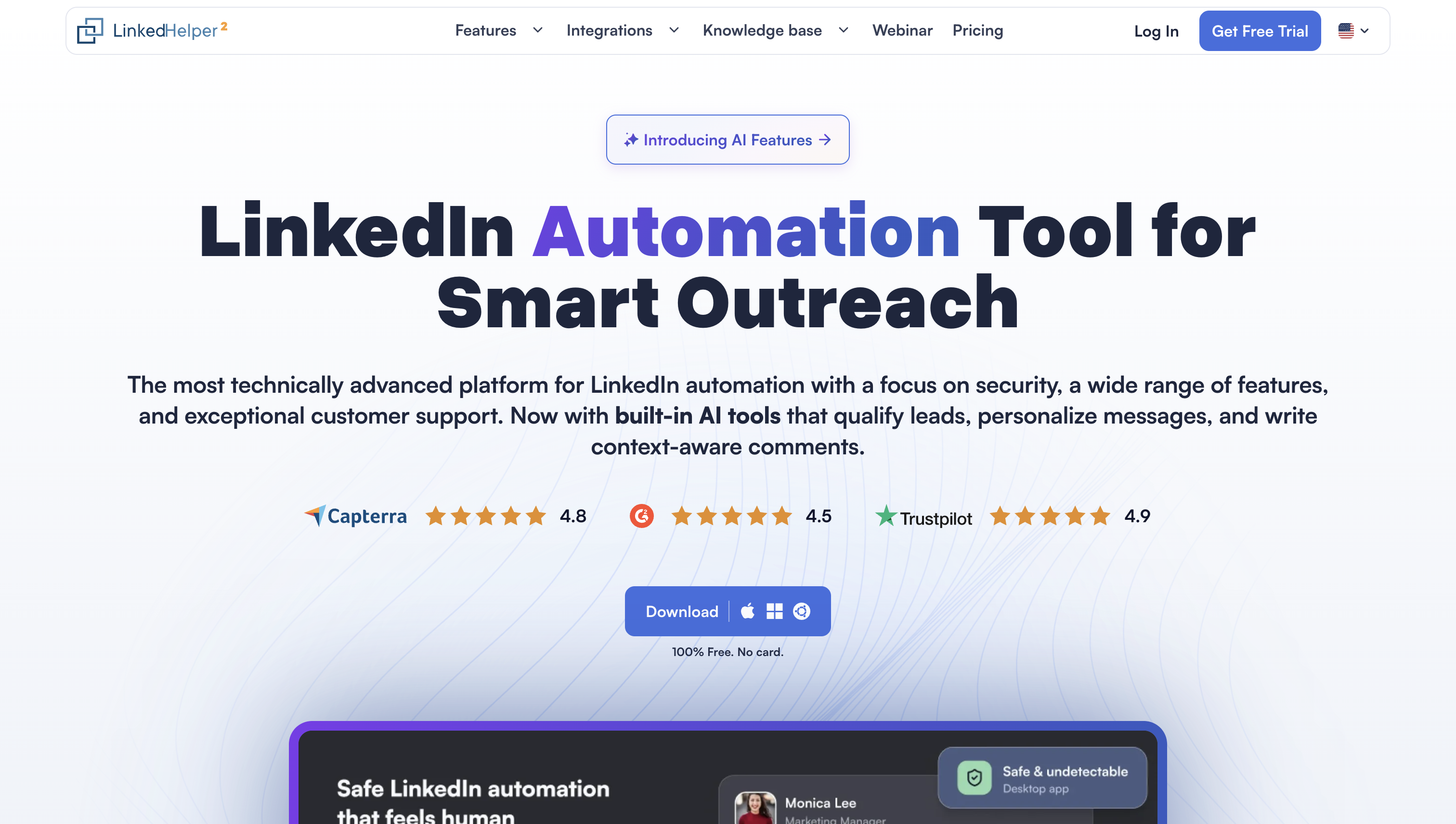
Linked Helper takes a different route to LinkedIn prospecting than the cloud platforms. It installs as an app on your own machine, which means your outreach runs through your own IP and browser session rather than a shared server, a design choice that keeps your account footprint clean and hard to detect. For agencies and teams juggling several LinkedIn profiles at once, that isolation plus a genuinely deep toolkit is the main draw.
Key features include:
Pricing
Narrowing 21 options comes down to matching a tool to how your team actually sells. Weigh these criteria before you commit:
If you need most of these in one place rather than a patchwork of point tools, look for an end-to-end platform that combines data, outreach, and automation.
There are plenty of prospecting tools on the market, and in many cases, the choice boils down to what you need to support your prospecting workflows.
This often means an end-to-end solution that can automate core processes with AI and integrate data throughout the pipeline. Platforms like Artisan and HubSpot can fill this niche in different, unique ways (whether you’re focusing on marketing integration or an AI SDR for prospecting).
Other salespeople might need a bolt-on tool to help them with research, outreach, or automation. A solution like Hunter.io is perfect for assisting sales pros get the information they need to build their prospect lists, while Crunchbase can better help teams use startups as their target accounts.
That being said, it’s essential to understand what you need and encompass it. Don’t buy a stack of disparate solutions–get a fully functional prospecting tool with the latest technologies, including AI, automation, integrations, and pipeline management.
Sales prospecting tools are software platforms that help sales teams find, research, and reach potential customers. They automate tasks like building lead lists, enriching contact data, running email or LinkedIn outreach, and tracking engagement so reps can spend more time on real conversations.
A CRM centralizes and manages relationships with contacts already in your pipeline, tracking emails, calls, and deals over time. A prospecting tool focuses on the earlier stage: discovering new leads, sourcing their contact details, and starting outreach. Many teams use both, and several tools on this list combine the two.
Match the tool to your budget, team size, and sales motion. Outbound-heavy teams need strong email automation and deliverability, while inbound teams benefit from visitor tracking and enrichment. Prioritize data accuracy and check that the tool integrates with your existing CRM and tech stack.
Yes. Several options offer free plans or trials, including Apollo.io, Hunter.io, Leadfeeder, Kaspr, Snov.io, and Lusha. Free tiers usually cap searches, credits, or contacts, so they work well for testing before you commit to a paid plan.

Irina is a Founder at ONSAAS, Growth Lead at Aura, and a SaaS marketing consultant. She helps companies to grow their revenue with SEO and inbound marketing. In her spare time, Irina entertains her cat Persie and collects airline miles.
.svg)
.svg)
.svg)
.svg)
.svg)