It’s easy to find B2B sales tools that claim to scale and automate your outbound sales process.
The tough part is sifting through all the options and building a tech stack that aligns with your current workflow. The risk of redundancies — which unnecessarily drive up costs — is also very real.
Today, we’ll narrow your search, sharing the 14 best B2B sales tools for opening and closing deals.
B2B sales tools are apps designed to support prospecting, outreach, and closing in a B2B selling environment.
They assist with, or completely automate, certain parts of the outbound sales workflow, whether that’s finding a lead’s email address, building a targeted prospecting list, sending an initial cold email, or running multichannel outreach sequences.
B2B sales tools can be divided into the following overarching categories:
You’ll also find that some B2B sales tools fall within several categories at once. For example, Apollo is a lead database and a sales engagement platform. And HubSpot Sales offers a built-in CRM, sales engagement tools, and pipeline management features.
The right tools remove the manual drag that slows outbound teams down. Here’s what they deliver in practice:
Read on to learn about the pros, cons, and pricing of the best B2B sales tools for outbound sales teams.

Artisan is an AI outbound sales platform that automates the whole lead generation process up until the hand-off to an account executive (AE).
The software’s AI BDR—who goes by the name of Ava—finds ideal leads, researches them on the web and social media, then sends highly personalized emails and LinkedIn messages, generating qualified sales meetings on autopilot.
Artisan is ideal for companies that want to scale their cold outreach and prospecting efforts without expanding their team.
While many B2B sales tools claim to be AI sales tools, Artisan is the most deserving of the name, due to the fact that it has an autonomous AI sales agent that actually handles the entire prospecting process.
.svg)
AI BDR creates and executes multichannel sequences without human intervention
Personalized messaging based on lead attributes and behavior
Brings prospecting, enrichment, and email deliverability tools into one platform
Scales well for fast-growing teams
.svg)
Requires onboarding to provide a custom user experience
Not ideal for one-off outreach
No public pricing (must reach out for a custom quote)
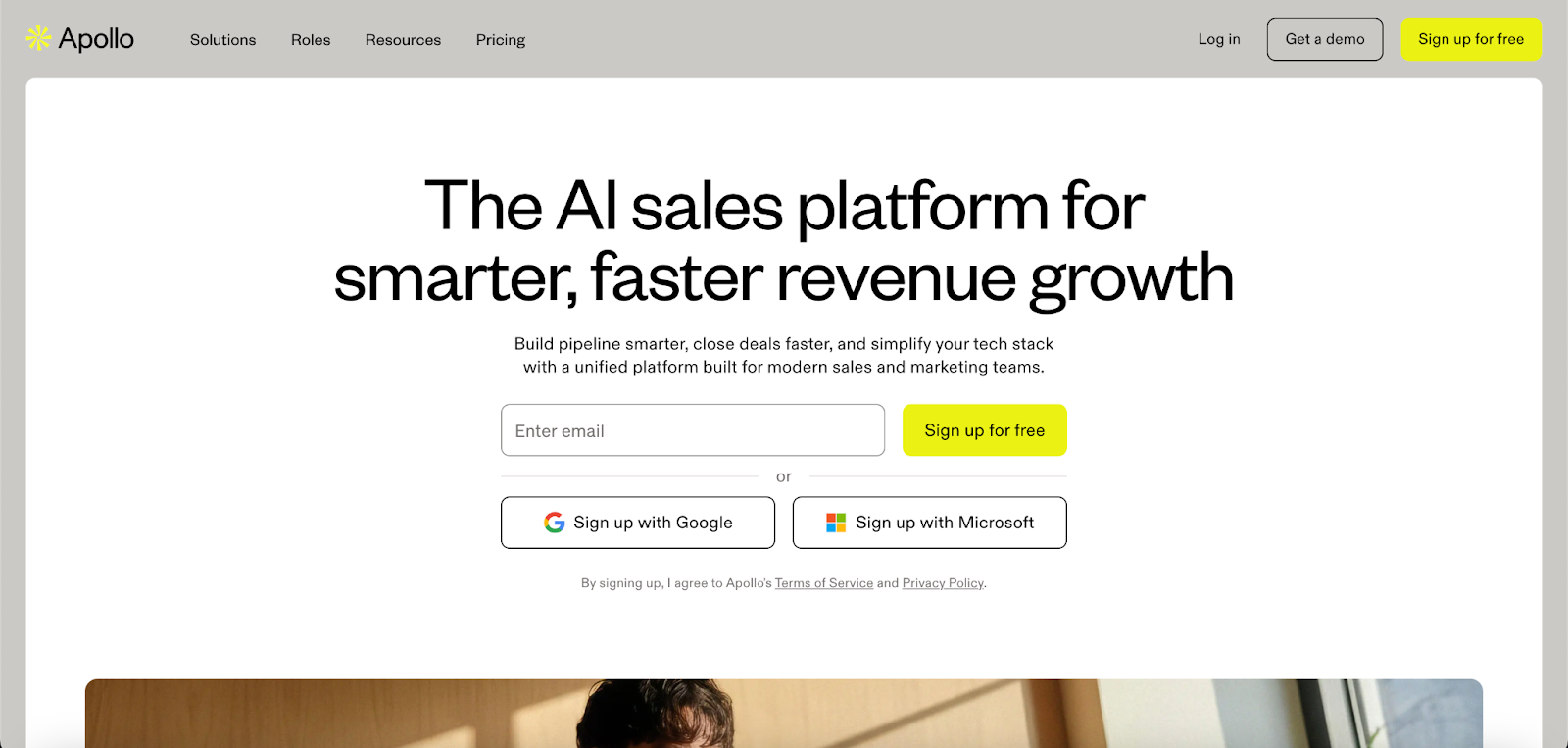
Apollo is part B2B lead database, part outreach automation platform.
This dual functionality makes it a good choice for sales teams that want to build targeted prospecting lists and engage with those leads using multichannel sequences—all in one platform.
Apollo doesn’t just offer tools for BDRs and other prospecting reps. It also comes with features for deal management, including automated admin, AI meeting prep, automated meeting follow-up, and real-time deal insights.
Affordable pricing
Combines sales intelligence and sales engagement into one platform
Brings prospecting, enrichment, and email deliverability tools into one platform
Offers a free plan
User interface can be overwhelming (a lot of features to learn)
Some data accuracy issues
Uses credit-based pricing, which can be frustrating to some users
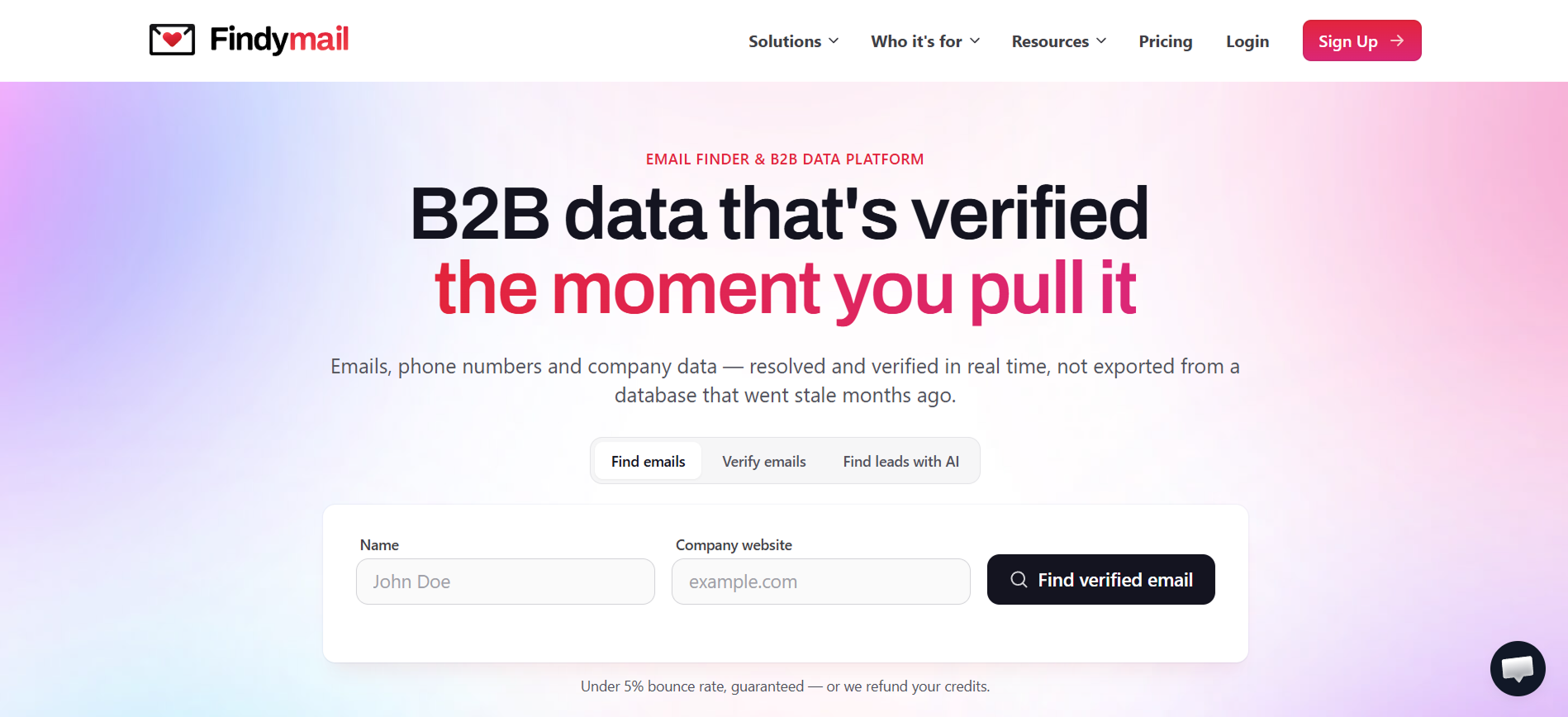
Findymail is a B2B prospecting platform that treats "verified" as a requirement, not a feature. Every contact runs through real-time verification, including catch-all domains, before it's returned, and the platform backs that up with a stated sub-5% bounce rate guarantee.
Beyond the core finder, Findymail includes Intellimatch, which lets reps describe an ICP in plain language instead of building filter stacks, and Signals, which monitors for buying events like new hires, job title changes, and keyword mentions so outreach lands at the right moment. Sales teams can pull contacts one at a time, in bulk via CSV, through native CRM and sequencer integrations, or via API.
Find and verify in one workflow, with no separate verification step
Sub-5% bounce rate guarantee
Signals adds buying-event monitoring most pure finders don't offer
Only charges credits on verified results
No built-in dialer or call-based outreach tools
Credit-based pricing means costs can scale with high-volume use

ZoomInfo is an enterprise-level sales intelligence platform with detailed firmographics, contact info, and intent data. It also comes with website visitor identification, which allows you to find which businesses are visiting your website.
The platform is expensive, with plans often starting around $15,000 per year. But the price can be worth it for account-based marketers and revenue leaders at large companies that use complex datasets to fuel their large-scale, hyper-targeted outreach.
Deep data about companies and professionals
Intent data that identifies leads searching the web for solutions like yours
Useful for ABM and large outbound organizations
Expensive entry-level pricing
Custom contracts (some key tools are priced separately as add-ons)
Moderate learning curve to access the full value of the platform
Custom quote only.

LinkedIn Sales Navigator is a worthwhile investment for B2B sales teams that do a significant portion of their prospecting and cold outreach on LinkedIn.
The tool is LinkedIn’s advanced search engine and targeting tool, designed for B2B salespeople trying to discover and research target decision-makers, track their activity, and send them personalized LinkedIn messages.
Whether you’re using it to research leads at a new account, build a prospecting list, or eliminate the InMail direct message limit, Sales Navigator is a useful social selling tool for outbound lead generation.
Rich filters for finding ideal leads
Helps identify job changes and engagement signals
No email data
Requires pairing with other outbound tools

Hunter is a lightweight email finder and verifier, making it a valuable tool for B2B small businesses doing lots of cold email outreach.
Sales teams can use Hunter to find email addresses associated with businesses and specific leads, or to verify that the email addresses you already have in your prospecting list are indeed accurate.
Hunter also comes with some basic email outreach features, including an AI writing assistant and the ability to create and run email campaigns.
Simple user interface
Offers a generous free plan (50 credits per month)
Accurate email validation
Not a full platform—only handles email finding and basic outreach
No phone number finder
Lacks AI outreach automation tools
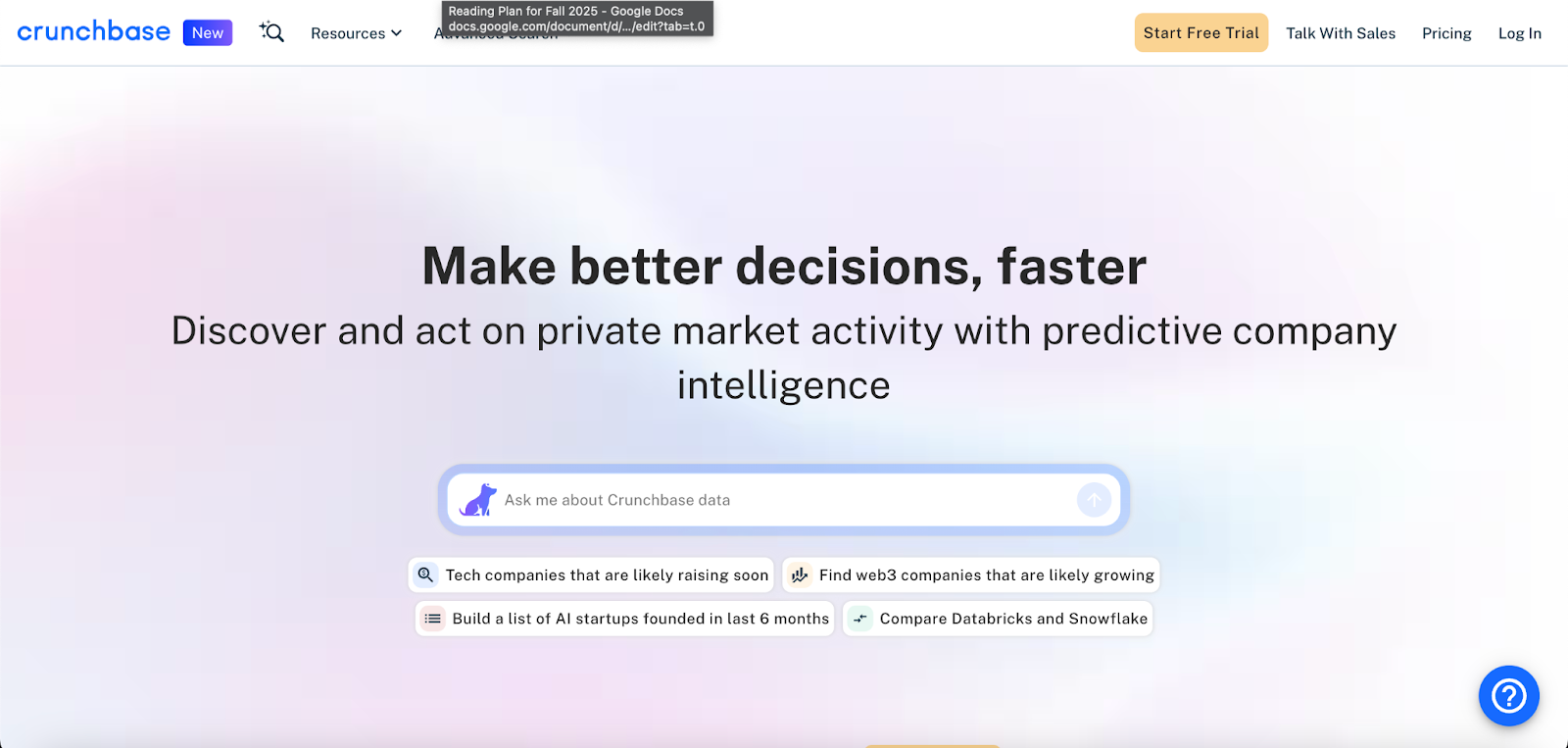
Crunchbase is an account-based B2B sales intelligence tool. It comes with a B2B database that contains intel on companies and the professionals working there.
The database’s advanced filtering function makes it easy to quickly find newly funded companies. Therefore, it’s useful if your business is targeting startups and newer companies.
On a similar note, Crunchbase’s industry filter also allows sellers to identify companies in hyperspecific industries, like administrative services, apps, biotechnology, and gaming.
Strong for market research
Easy to find funded companies
Has contact-level data like email and phone numbers
Limited outreach automation
Need to pair it with other outbound sales and email tools
CRM integrations are restricted to the Business plan
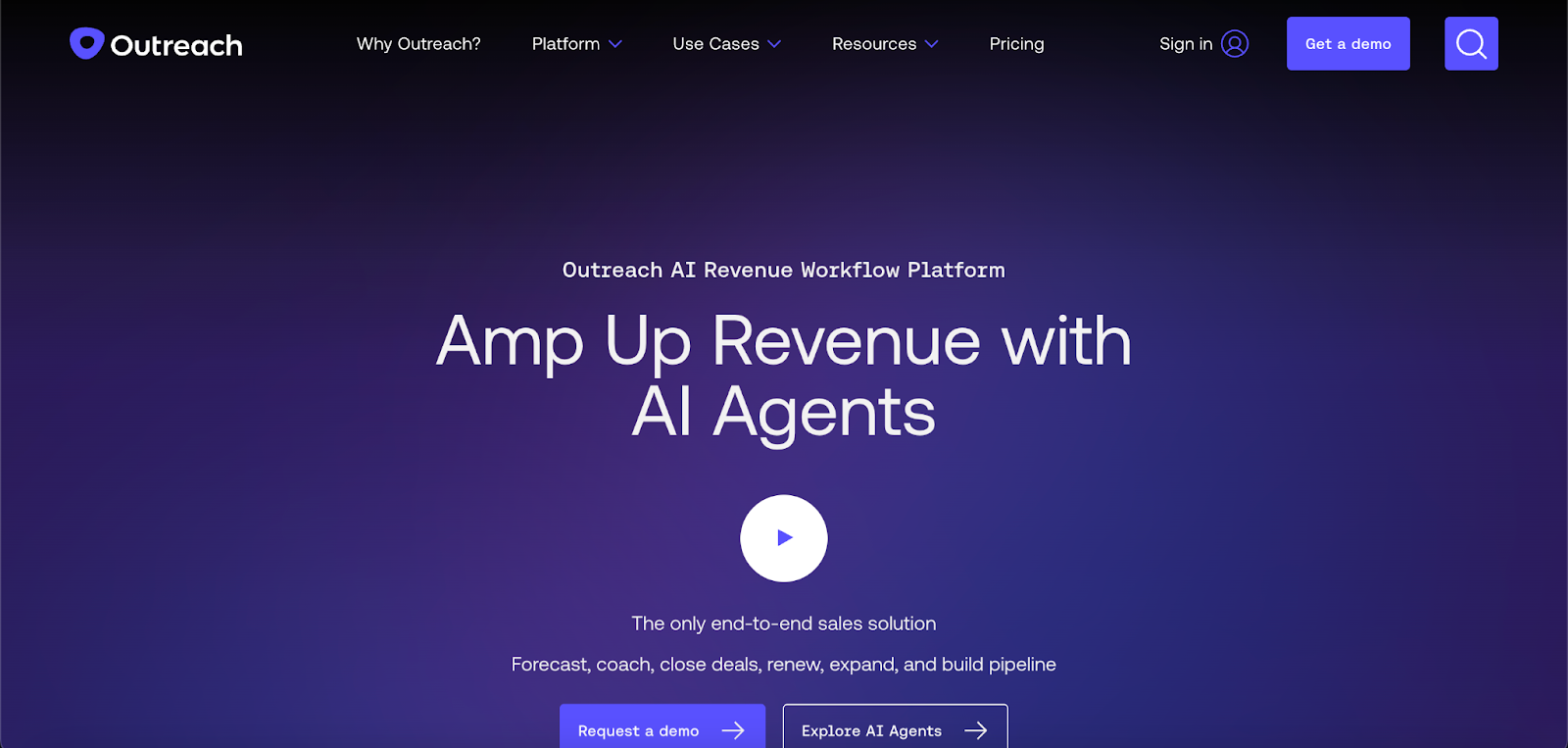
Outreach is a sales engagement platform with powerful sequencing, analytics, and automation features.
Outbound sales teams—especially BDRs—use Outreach primarily to build multi-channel outreach sequences that include cold calls, emails, and social touches, and then automate that outreach and track communications with leads.
Notably, the platform also comes with a conversation intelligence tool, which enables sales coaches to analyze rep performance, spot teachable moments, and gather insights they can use to improve their cold outbound process.
Built for high-volume SDR teams
Deep CRM integration
Includes conversation intelligence
Steep learning curve
High price point
Lacks full-scale AI outreach automation
Custom quote only.
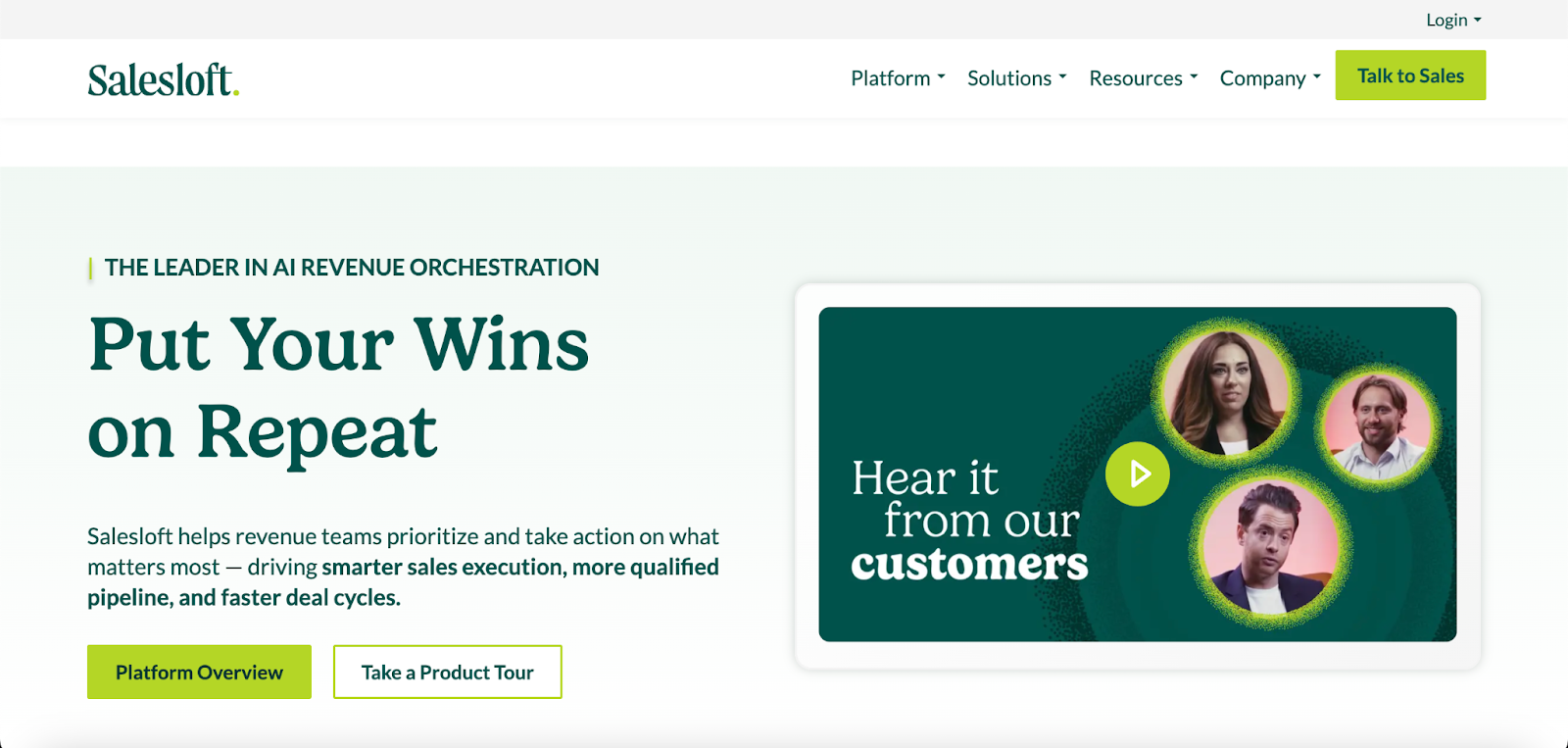
Salesloft is a sales engagement platform designed to automate cold outbound, deal follow-up, renewal campaigns, and other forms of sales outreach that rely on personalized sequences.
This range makes it a good option for mid- to large-sized companies that want to provide enablement tools to their AEs and customer success managers, as well as their SDRs.
The software, which has grown into an all-in-one revenue orchestration platform over the years, also comes with built-in call coaching, analytics, and forecasting.
Covers email, calls, and analytics
Great for sales enablement
Easy to use
Best for mid-size to enterprise teams
Can be expensive
Lacks email deliverability features
Custom quote only.
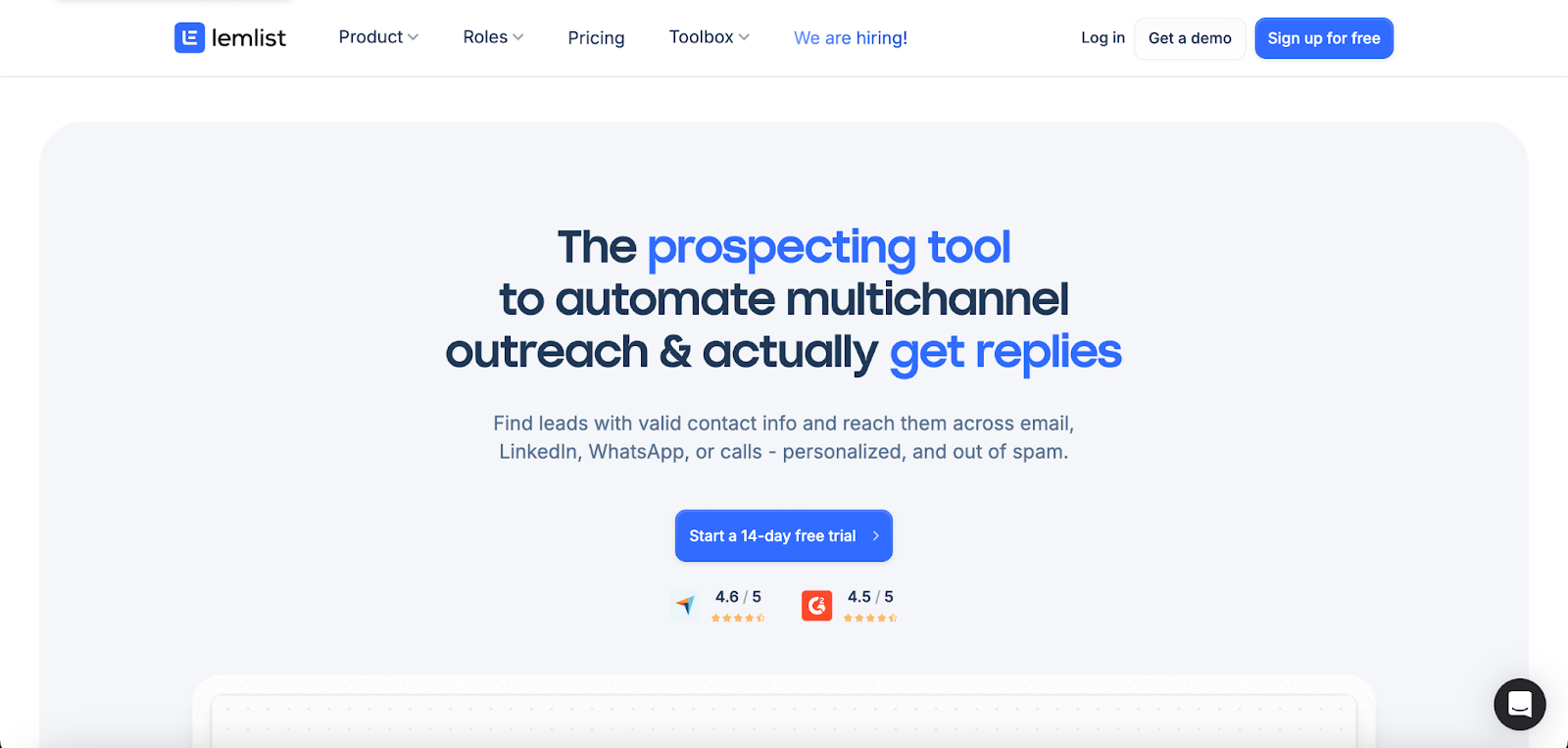
Lemlist is a prospecting tool that automates multichannel outreach via email sequences, variable templates, and AI personalization.
It also comes with a B2B contact database and a lead enrichment tool, meaning SDRs (the target users) can find and research new leads in the same platform they use for their outreach.
Uniquely, Lemlist enables sellers to include dynamic videos and images in their emails, and the platform even offers WhatsApp outreach automation, which is hard to find in other prospecting tools.
Unique personalization options
Email warmup included for deliverability
Automates WhatsApp prospecting
Best for mid-size to enterprise teams
Not ideal for teams with more complex data, forecasting, and coaching needs
Lacks CRM functions like lead management and reporting
Can be expensive for small companies

HubSpot Sales Hub is a sales-focused CRM with plenty of sales automation features that help with outbound sales. These include multichannel outreach sequences, call tracking, email templates, and conversation intelligence.
Sales Hub also comes with an AI prospecting agent that will monitor, research, and engage leads on its own.
Since it’s a full-scale CRM, the platform also comes with deal pipeline management, CPQ software, sales analytics, and reporting.
This breadth of feature coverage makes it a good choice for companies that need a platform that’s both a CRM and an AI-powered prospecting tool that will allow them to align marketing and sales.
Free tier available with basic CRM and outreach features
Easy to use and set up
Full CRM built-in
Advanced features are locked behind higher plans
Gets expensive quickly due to per-seat pricing and add-ons
Email and template limits on the Starter plan
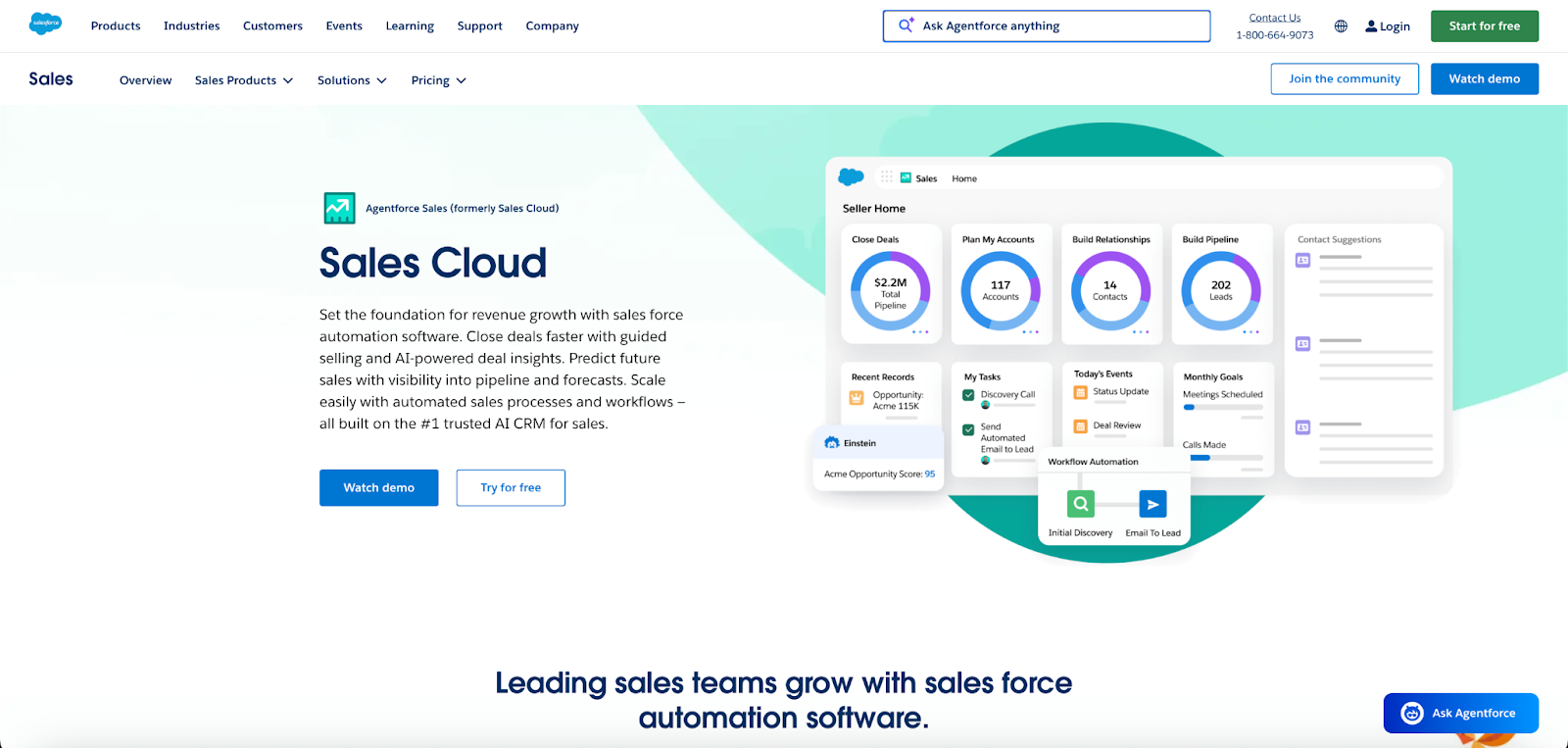
Salesforce Sales Cloud is a CRM with sales automation tools for prospecting, lead generation, and deal management.
Its sales engagement toolkit comes with multichannel sales cadences, engagement intelligence, and even AI recommendations for how to best interact with leads.
Sales professionals can also access a “Prospecting Center,” which uses buying signals and firmographic data to calculate a lead’s fit and intent, allowing sellers to prioritize the highest-value leads.
Salesforce Sales Cloud also has a built-in CRM, known for its enterprise-friendly and in-depth reporting, customizability, and forecasting.
Highly customizable software
Supports complex sales workflows
Built-in CRM
Most AI features are restricted to expensive plans
Need admin support to set up customizations
Learning curve can be steep

Lusha is a B2B email and phone number finder that helps prospecting reps discover verified company and contact information. The software also comes with a Chrome Extension that enables reps to find contact info associated with LinkedIn accounts.
Lusha is also a data enrichment tool. It will automatically fill out and update contact records in connected CRM and engagement platforms.
Notably, Lusha comes with buyer intent data, which helps reps identify companies currently searching for solutions like yours.
Quick access to verified contact data
Easy to use
LinkedIn contact info lookup
Credit-based pricing causes costs to rise quickly
Not a full prospecting platform
Contact phone number reveals costs 5 credits
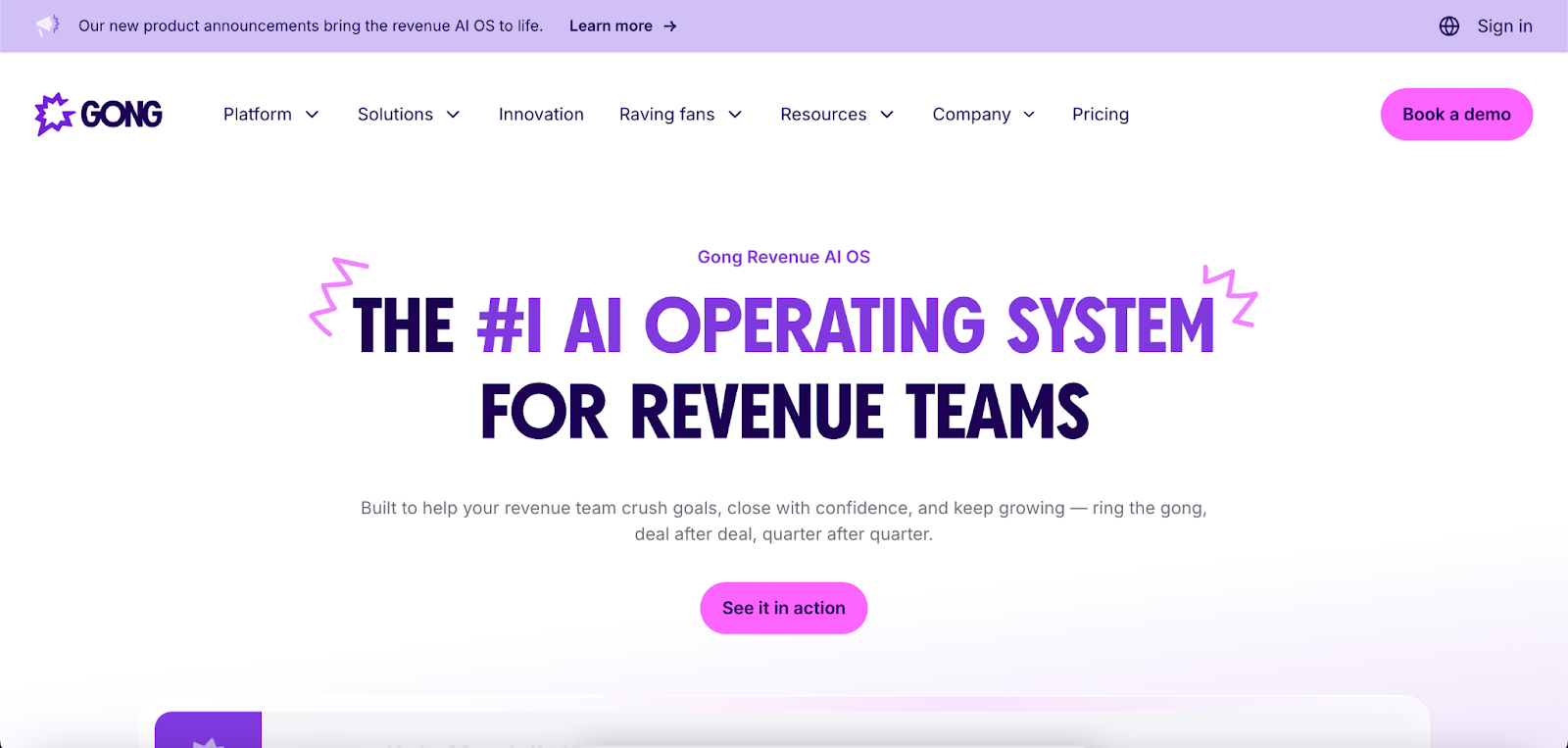
Gong is a conversation intelligence platform that records, transcribes, and analyzes sales calls and other sales interactions.
Sales managers and coaches can use it to identify best practices that lead to success and then teach these behaviors to their teams.
Gong also offers an engagement tool known as Gong Engage, which uses AI to transform previous conversations with prospects into next-step outreach messages.
Overall, Gong is great for revenue teams looking to gain deeper insight into their sales team’s performance—especially what works and what doesn’t when it comes to closing.
Useful for rep coaching and deal analysis
Strong analytics for improving sales call performance
Intuitive interface and clear dashboards
Not for early-stage teams
High cost and no free trial
Some users cite AI inaccuracies
Custom quote only.
The goal isn’t to own every category. It’s to assemble the fewest well-integrated tools that cover your outbound motion without overlap. Weigh each option against these criteria:
Run each candidate against the gaps in your current workflow. If a new tool duplicates something you already own, it adds cost and complexity without adding results.
From B2B databases and email finders to all-in-one AI sales platforms, modern B2B sales tools help sales teams save time, improve conversions, and scale without burning out.
To build an optimized, lightweight sales tech stack that supports your workflow, play around with free trials, attend live demos, and create a checklist of must-have features that solve current bottlenecks in your outbound sales process.
And don’t forget that more is not always better. On the contrary, it’s often worse. A few powerful tools that work well together can far outperform a sprawling tech stack with a million shiny new features.
Curious to see Ava in action? Book a free demo with Artisan and explore how an AI sales teammate can fit into your workflow.
.svg)

B2B sales tools are apps that support prospecting, outreach, and closing in a business-to-business selling environment. They assist with or automate parts of the outbound workflow, from finding a lead’s email to running multichannel sequences and managing pipeline.
A sales intelligence tool (like ZoomInfo or Crunchbase) helps you find and research leads through databases, firmographics, and intent data. A sales engagement platform (like Outreach or Salesloft) helps you act on those leads by building and automating multichannel outreach sequences. Many teams use one of each, though some platforms combine both.
Most teams need coverage across three areas: data and intelligence, engagement and outreach, and a CRM. That can mean as few as one all-in-one platform or two to four specialized tools. Fewer, well-integrated tools almost always outperform a sprawling stack with overlapping features.

Irina is a Founder at ONSAAS, Growth Lead at Aura, and a SaaS marketing consultant. She helps companies to grow their revenue with SEO and inbound marketing. In her spare time, Irina entertains her cat Persie and collects airline miles.
.svg)
.svg)
.svg)

.svg)
%20(1).svg)
%20(3).svg)
.svg)
.svg)