


Back to articles
6 Best AI Brand Mention Tracking Tools for Enterprises (2026)
November 12, 2026
By
Irina Maltseva
A buyer asks ChatGPT which vendor suits a large company in your category. The answer names three or four brands and leaves the rest out. Nobody clicks anything, so Search Console and web analytics show none of it. AI brand mention tracking tools fill that gap: they put your buyers' questions to AI engines every day and record who gets named, how, and from which sources.
For an enterprise, the tracking itself is the easy part. The purchase usually turns on what surrounds it: how many people can log in, whether IT can enforce single sign-on, whether the data reaches your BI stack, and whether adding a country means signing another contract. A pilot on one brand in one market looks cheap. Then the other markets, the other teams and SSO arrive, and the quote looks nothing like the trial.
This guide ranks six tools on those points. Peec AI comes first. The other five fit different buying situations.
AI brand mention tracking measures how often, where and how favorably AI engines name your brand when buyers ask category questions. A tool runs a fixed set of prompts every day across engines such as ChatGPT, Gemini, Google AI Overviews, Google AI Mode and Microsoft Copilot. It then reports mention rate, position inside the answer, sentiment, share of voice against competitors and the sources each answer cited.
For an enterprise, answers differ by engine, country and product line, and one visibility number hides most of that. According to Similarweb, ChatGPT held 53.9% of AI chatbot web visits in May 2026, Gemini 27.9% and Claude 9.2%, against roughly 76% for ChatGPT in June 2025. What AI says about your company is now spread across at least three engines that answer differently.
We compared public pricing pages and documentation and noted where a vendor publishes nothing. The order reflects our judgment of fit for a large buying team, and each entry says where another tool is the better choice. We looked at six things:
Enterprise pricing is custom, so treat every price here as the point where a negotiation starts. Annual billing takes roughly 15% to 17% off most of these plans.
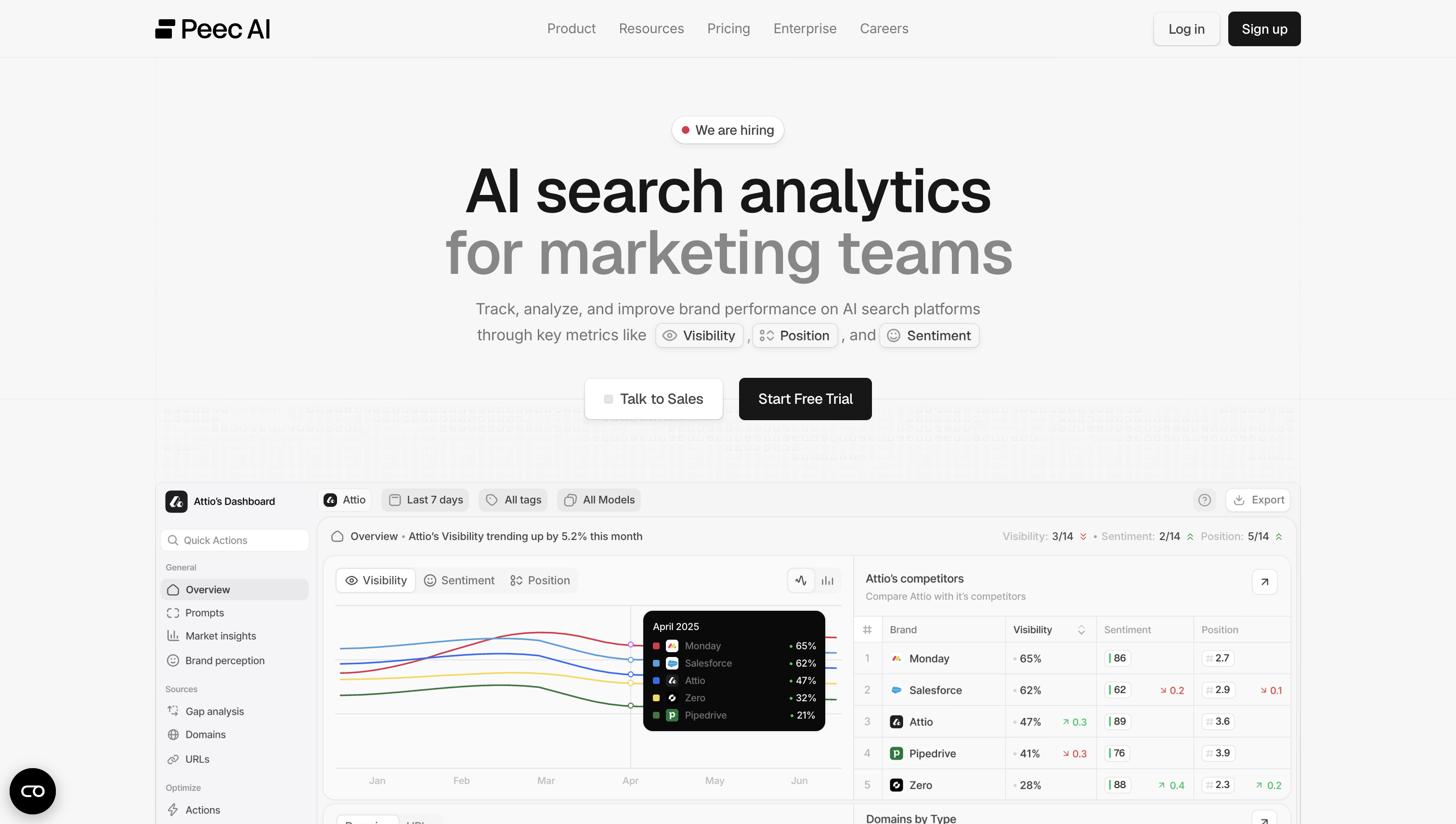
Peec AI is a Berlin-based AI search analytics platform with a New York office. More than 3,000 agencies and brands use it, and the company reports more than $15M in annual recurring revenue since launching in January 2025. It tracks visibility, position, sentiment and share of voice every day, then breaks each answer into the pages the engine read.
At enterprise scale, the pricing model is the main difference. Users are unlimited on every plan, and Peec AI does not charge per country or language. Advanced, at $495 a month for 350 prompts, works out to $1.41 per prompt with no seat limit. Sources are sorted into editorial, corporate, user-generated, reference and your own site, and a gap report lists the pages where competitors are cited and you are not. A fact-checking feature compares AI answers with facts you supply, which catches models repeating retired pricing or old positioning.
Key features
Platforms it supports: On Starter, Pro and Advanced you choose three engines from ChatGPT, Google AI Overviews, Google AI Mode, Gemini, Microsoft Copilot and Naver AI. Perplexity and other models are paid add-ons. Enterprise tracks up to 13 engines, including Claude, Perplexity, Grok, DeepSeek, Qwen and Mistral.
Best for: Enterprise marketing and SEO teams that work across several markets, brands or agencies and want one tool for all of them.
Pricing:

Pricing doesn't increase with the number of teams or countries that need access.
Source classification and gap analysis show what to fix, not just where you stand.
Enforceable SSO and role-based access for individual projects help manage team permissions.
Published pricing scales up to 350 prompts without requiring a sales call.

SSO and REST API access are limited to Enterprise, so security-led purchases require a custom quote.
Self-serve plans track three engines of your choice. Claude and access to the full 13-engine list require Enterprise.
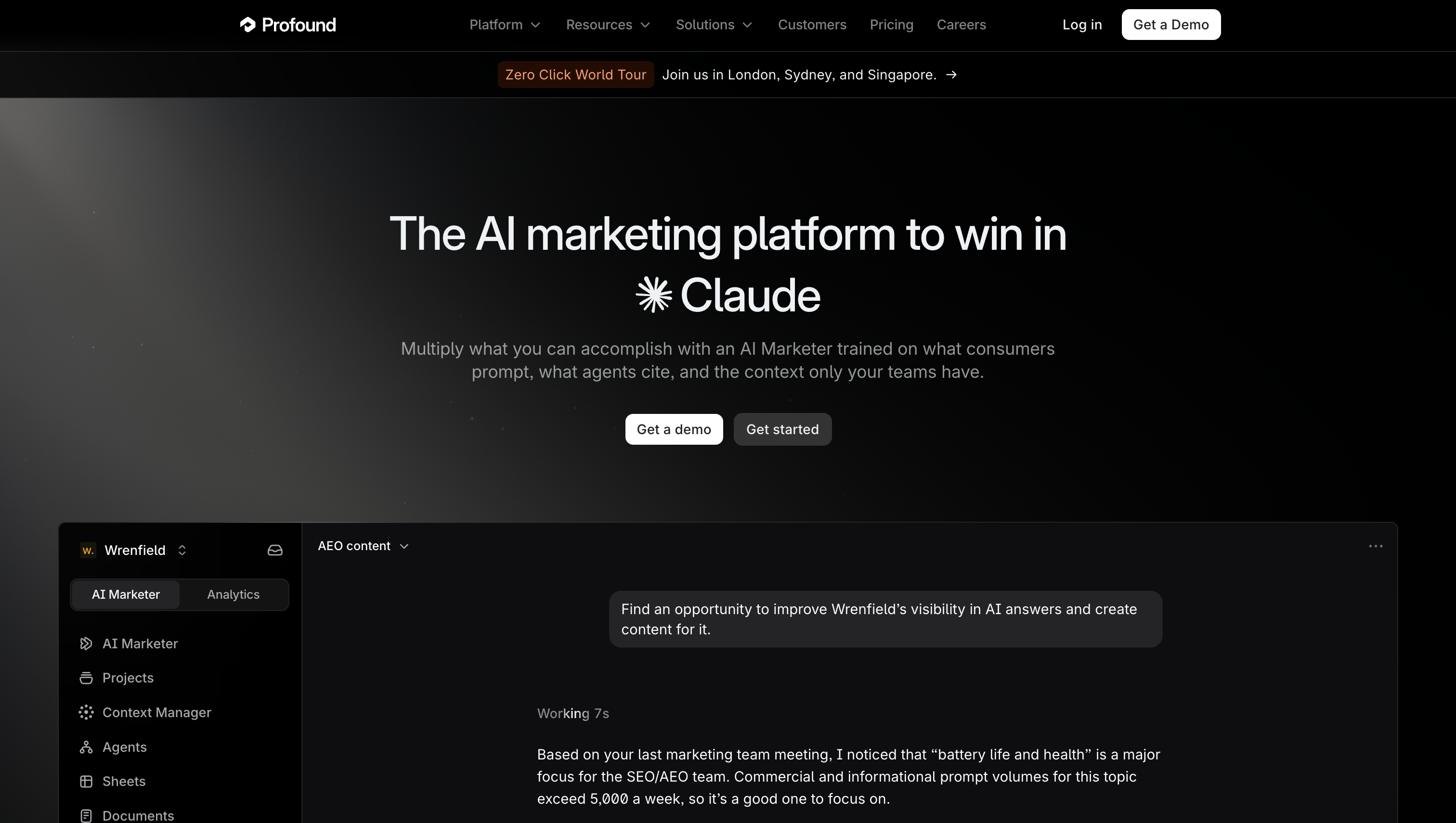
Profound suits buyers who must clear an information security review before anything else. Its Enterprise plan lists SOC 2, SSO and SAML, and the company raised a $96M Series C at a $1B valuation in February 2026, which answers the vendor-risk question quickly. It also tracks how AI crawlers and referrals reach your site through agent analytics.
Key features
Best for: Companies where compliance and vendor risk decide the purchase.
Pricing: Free 7-day trial on 50 prepared prompts, then Enterprise at a custom price.
The most complete compliance listing among the tools in this comparison.
The largest funding base in the category.
Agent analytics cover crawler activity and referral behavior.
The pricing page no longer lists self-serve tiers. After the trial, buyers must contact sales, with no published price to use in a business case.
The trial includes 50 prepared prompts, so you can't use it to test your own prompt set.
AthenaHQ was founded by two former Google Search and DeepMind engineers. Its Enterprise plan has the longest feature list of the quote-based tools: SAML and OIDC single sign-on, audit logs, a 2-hour SLA, a dedicated Slack channel and executive dashboards that feed Tableau, Power BI and Looker. An optimization agent drafts on-page and off-page actions, which helps large companies that have the analysis but not the hands to act on it.
Key features
Best for: Enterprises short on people to act on the data.
Pricing: Essential is free with 300 credits. Starter is $295/mo with 3,600 credits. Enterprise is custom. About 17% off annual billing.
Audit logs and a two-hour SLA are clearly documented, which few tools publish.
An AI agent drafts work to help turn insights into action.
Access to 11 AI engines is included from the Starter plan.
Usage is credit-based: most engines cost one credit per response, while Claude, Grok, DeepSeek, Meta AI, and Mistral cost five. Tracking a large daily prompt set can use credits quickly and push you toward Enterprise.
SSO, audit logs, and the two-hour SLA are restricted to Enterprise, not included in the $295/month Starter plan.
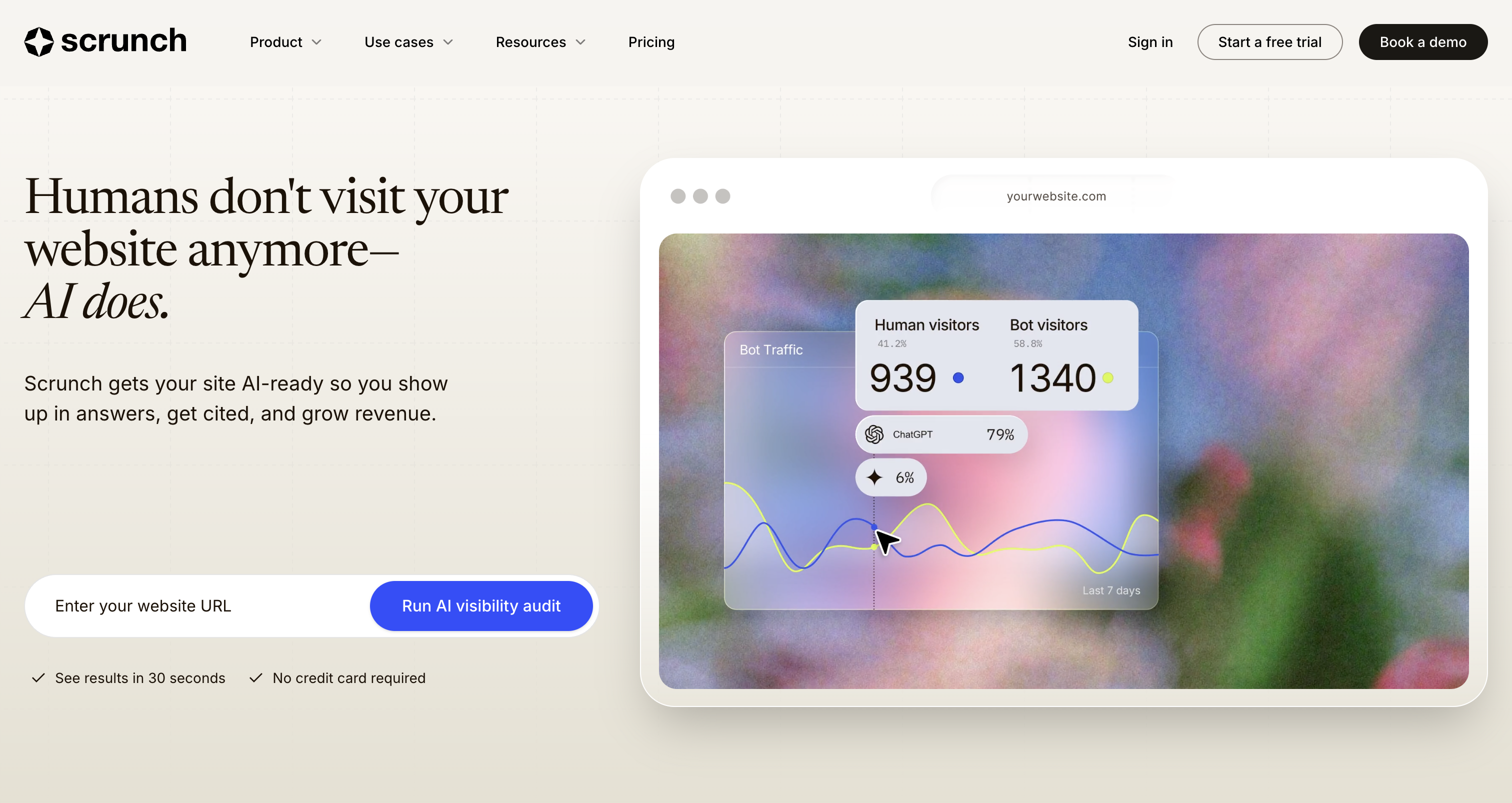
Scrunch AI publishes one self-serve plan and sells everything else by quote. Core costs $250 a month and includes 125 prompts, 5,000 responses a month, five user licenses and Google single sign-on, which is enough for a pilot with a small team.
Key features
Best for: Teams that want a published entry price, with nine engines available once they move to Enterprise.
Pricing: Core is $250/mo for 125 prompts and five user licenses. Enterprise is custom.
Five user licenses and Google single sign-on are included in the entry-level plan.
Published pricing includes 125 prompts and 5,000 responses per month.
The Core plan tracks four engines but excludes Claude, Gemini, and Google AI Mode. Tracking more than 125 prompts requires an Enterprise quote.
SAML, OIDC, and Data API access require an Enterprise quote.
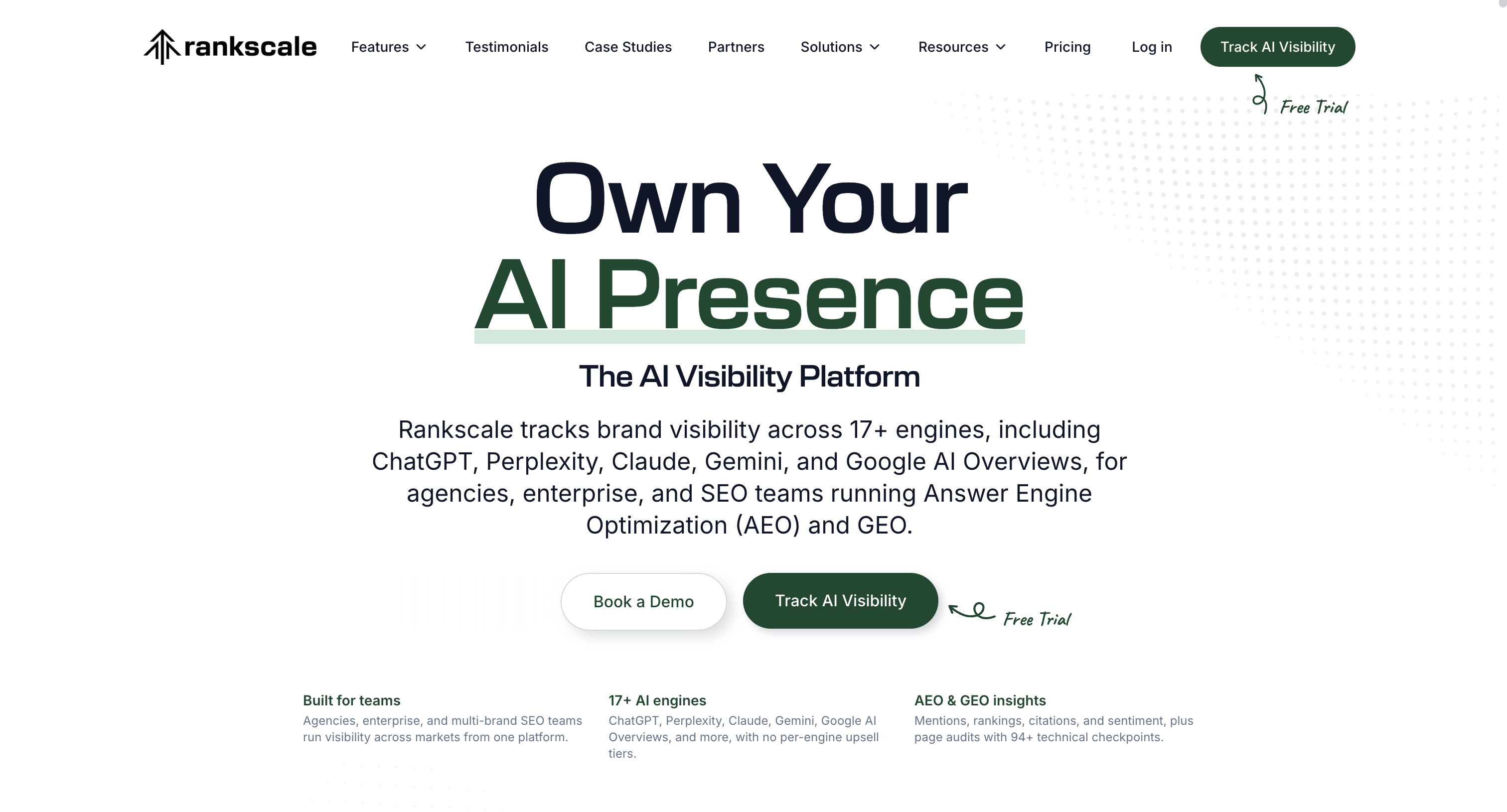
Rankscale is the only tool here with its enterprise price on the website. Enterprise is $780 a month for 12,000 credits, up to 48,000 answers, with REST API access and a dedicated partner. Claude, Copilot, ChatGPT, Perplexity, Gemini, both Google surfaces, DeepSeek and Mistral are on every paid plan.
Key features
Best for: Teams that need a published enterprise price and the widest engine list.
Pricing: Pro $99/mo, Pro+ $229/mo, Growth $385/mo, Enterprise $780/mo. About 15% off annual billing.
Published pricing lets you build a business case without a sales call.
No engine restrictions by plan tier.
Unlimited seats are included in team workspaces.
SSO, SLAs, and a dedicated success manager require a separate custom plan.
The company is bootstrapped and run by two founders, which may raise questions for some procurement teams.
Claude costs two credits per run, compared with about 0.25 credits for most engines, so your engine selection affects how far your credits go.
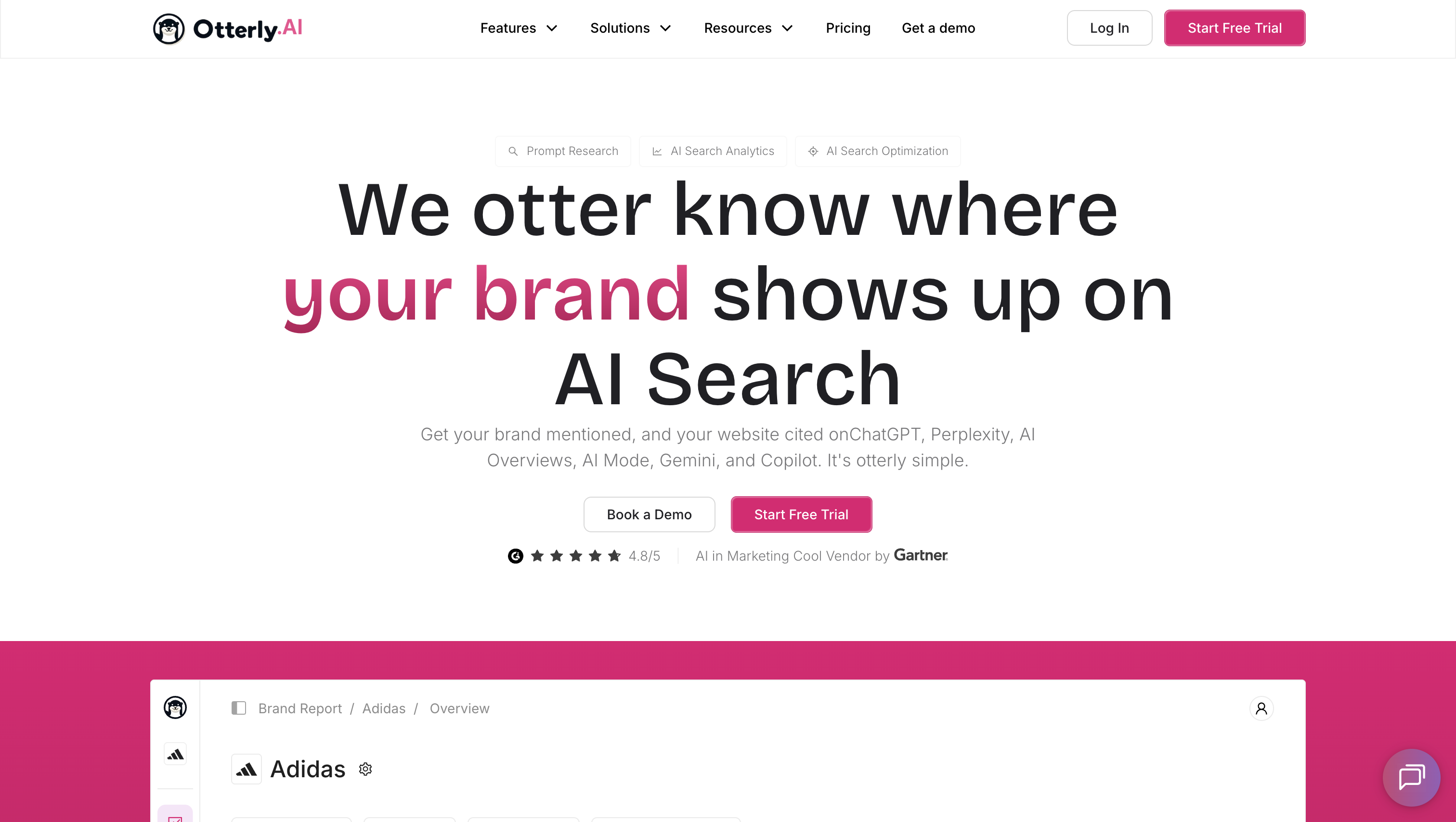
Otterly.AI has the lowest entry price in this list and gives every plan unlimited team members. Workspaces are unlimited from Standard, which helps when several business units each want their own view. It is a lighter product than the five above, and SSO sits on an Enterprise plan that starts from 1,000 prompts.
Key features
Best for: Business units that want separate workspaces at a low price.
Pricing: Lite $29/mo (15 prompts), Standard $189/mo (100 prompts), Premium $489/mo (400 prompts), Enterprise custom. Prices are for monthly billing.
Low entry price with support for multiple workspaces.
API, MCP, and Looker Studio integrations are available from the Standard plan.
Prompts are shared across workspaces, so the 100-prompt limit on Standard may be restrictive when monitoring several brands.
Costs increase when you add engines beyond the four core options.
The most common mistake is buying for the pilot. A team trials one brand in one market, picks the friendliest entry price and finds out in month four that more markets, more teams and SSO put them on a quote that bears no resemblance to the trial. Before you start a trial, write down three numbers: how many people will log in within a year, how many markets you sell in, and whether IT will require SSO. Then ask every vendor to price exactly that.
Whichever you pick, price your real workload and ask about SSO first. These tools measure. What moves the numbers is being on the pages the engines read, so favor the tool that shows you which pages those are.

Irina is a Founder at ONSAAS, Growth Lead at Aura, and a SaaS marketing consultant. She helps companies to grow their revenue with SEO and inbound marketing. In her spare time, Irina entertains her cat Persie and collects airline miles.


